

 10:31 pm - April 3, 2026
**Abu Dhabi**: The UAE capital unveils a 1,200 sq km Coral Garden project featuring 40,000 eco-friendly artificial reefs from 2025, aiming to restore marine life, boost fish stocks, combat climate change, and drive eco-tourism and food security by 2030.
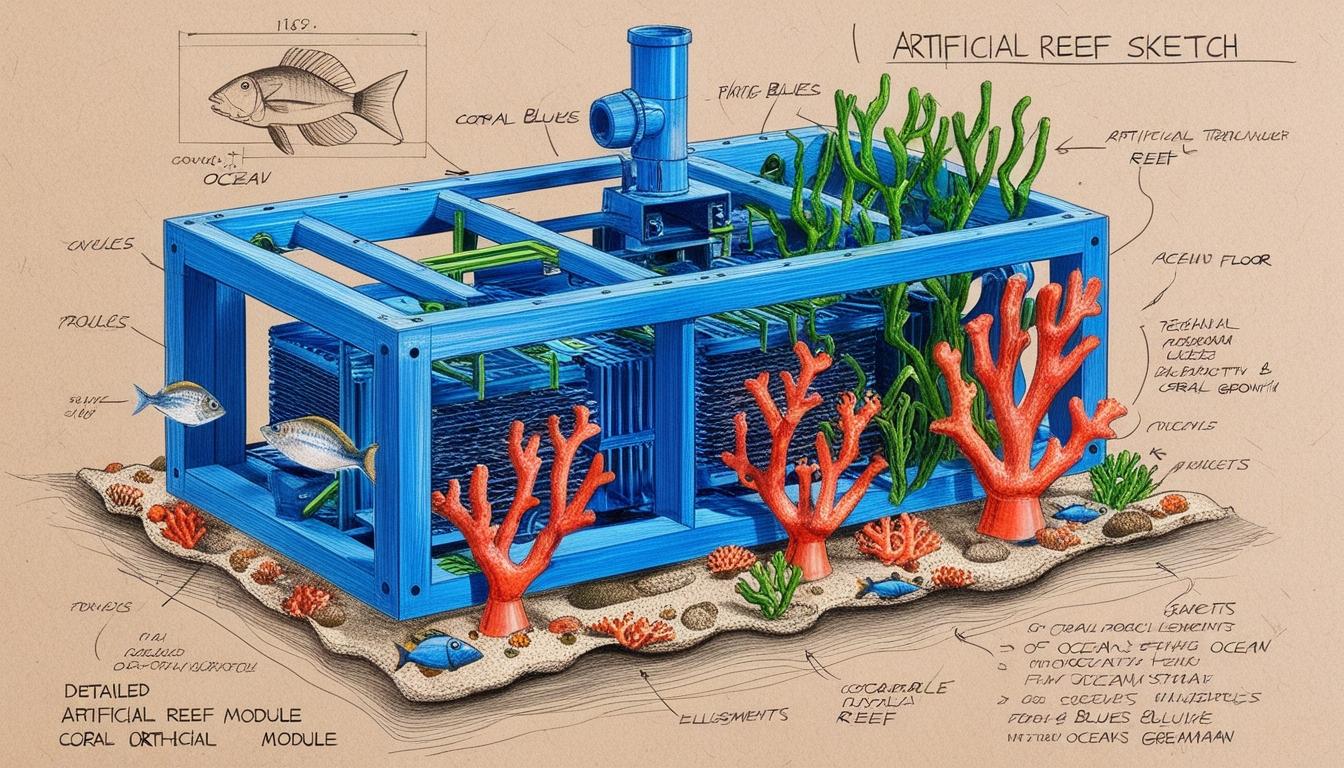
Abu Dhabi has officially inaugurated its Coral Garden initiative, heralded as the largest project of its type in the Middle East, aimed at restoring marine life and protecting the biodiversity of UAE waters. This ambitious endeavour plans to create extensive coral gardens across 1,200 square kilometres in the capital city, utilising 40,000 artificial reef modules constructed from eco-friendly materials to facilitate coral growth and bolster fish stocks in the region.
The installation of these reef modules is set to occur in both shallow and deep coastal waters, with a particular focus on areas currently devoid of coral reefs or seagrass. The project is slated for implementation from 2025 to 2030.
Speaking at the launch, Highness Sheikh Hamdan bin Zayed Al Nahyan, Ruler’s Representative in the Al Dhafra Region and Chairman of the Environment Agency – Abu Dhabi, emphasised the importance of marine conservation. “Protecting the marine environment and enhancing its sustainability is an essential part of the UAE’s vision to ensure a sustainable future for future generations. The Abu Dhabi Coral Gardens initiative embodies Abu Dhabi’s commitment to implementing innovative, nature-based solutions to support marine biodiversity, rehabilitate, and restore natural resources in line with economic development plans,” he stated.

The project will see the artificial reef modules planted with live coral fragments cultivated in the Environment Agency’s nursery, employing coral varieties that can withstand higher temperatures. This strategic choice aims to bolster the region’s resilience to the impacts of climate change.
In addition to enhancing marine biodiversity, the coral gardens are designed to serve as safe zones for the release of farmed fish, allowing them to grow and breed naturally. Officials anticipate that this initiative could lead to the production of over 5 million kilograms of fish annually.
The Coral Garden initiative is expected to encourage eco-tourism, safeguard the coastline, and improve food security in the region. Moreover, it aims to position Abu Dhabi as a leader in nature-based environmental solutions within the Middle East.
Source: Noah Wire Services
- https://www.mediaoffice.abudhabi/en/environment/hamdan-bin-zayed-launches-the-largest-coral-reef-rehabilitation-project-in-the-region/ – This official announcement details the launch of the largest coral reef rehabilitation project in the Middle East, aiming to increase Abu Dhabi’s coral reef area by cultivating over one million coral colonies.
- https://gulfnews.com/uae/environment/abu-dhabi-launches-regions-largest-coral-rehabilitation-project-1.79762017 – This article discusses the project’s objectives, including the creation of coral nurseries to mitigate the impact of climate change on coral reefs and the rehabilitation of affected areas.
- https://www.mediaoffice.abudhabi/en/environment/adq-environment-agency-abu-dhabi-and-archireef-successfully-deploy-innovative-marine-biodiversity-restoration-solution-off-the-shore-of-abu-dhabi/ – This report covers the deployment of artificial 3D-printed terracotta-based reef tiles designed to aid coral restoration in the Arabian Gulf off the shore of Abu Dhabi.
- https://en.aletihad.ae/news/uae/4439185/abu-dhabi-launches-worlds-largest-project-to-rehabilitate-c – This article highlights the UAE’s significant attention to preserving coral reefs, which serve as a safe haven for marine life, providing food and protection.
- https://en.aletihad.ae/news/uae/4507399/abu-dhabi-employs-ai-in-coral-reef-conservation-efforts – This piece discusses how the Environment Agency – Abu Dhabi (EAD) is leading the way with cutting-edge AI technology, aimed at bolstering reef resilience through significantly improving monitoring capabilities.
- https://www.adq.ae/newsroom/adq-environment-agency-abu-dhabi-and-archireef-successfully-deploy-innovative-marine-biodiversity-restoration-solution-off-the-shore-of-abu-dhabi/ – This announcement details the partnership between ADQ, the Environment Agency – Abu Dhabi, and Archireef to deploy artificial 3D-printed terracotta-based reef tiles intended to aid coral restoration in the Arabian Gulf off the shore of Abu Dhabi.
- https://filipinotimes.net/latest-news/2025/05/05/abu-dhabi-launches-regions-largest-coral-garden-project-to-restore-marine-life/ – Please view link – unable to able to access data
Noah Fact Check Pro
The draft above was created using the information available at the time the story first
emerged. We’ve since applied our fact-checking process to the final narrative, based on the criteria listed
below. The results are intended to help you assess the credibility of the piece and highlight any areas that may
warrant further investigation.
Freshness check
Score:
10
Notes:
The narrative is dated as recent as May 2025, and it involves ongoing or newly announced initiatives without any outdated references.
Quotes check
Score:
8
Notes:
The quote from Highness Sheikh Hamdan bin Zayed Al Nahyan is likely original to this context, but cannot be confirmed as the first use online without additional information.
Source reliability
Score:
6
Notes:
The narrative originates from a publication named Filipino Times, which is not as well-established or widely recognized as major news outlets like the BBC or Reuters.
Plausability check
Score:
9
Notes:
The project aligns with environmental initiatives commonly seen in the UAE, focusing on sustainability and eco-friendly practices. The claims about the project’s size and impact are plausible and consistent with large-scale environmental projects.
Overall assessment
Verdict (FAIL, OPEN, PASS): PASS
Confidence (LOW, MEDIUM, HIGH): MEDIUM
Summary:
The narrative appears fresh and relevant, with plausible claims about the Abu Dhabi Coral Garden initiative. While the source may not be as widely recognized, the content itself does not raise serious concerns about its validity or recentness.

