





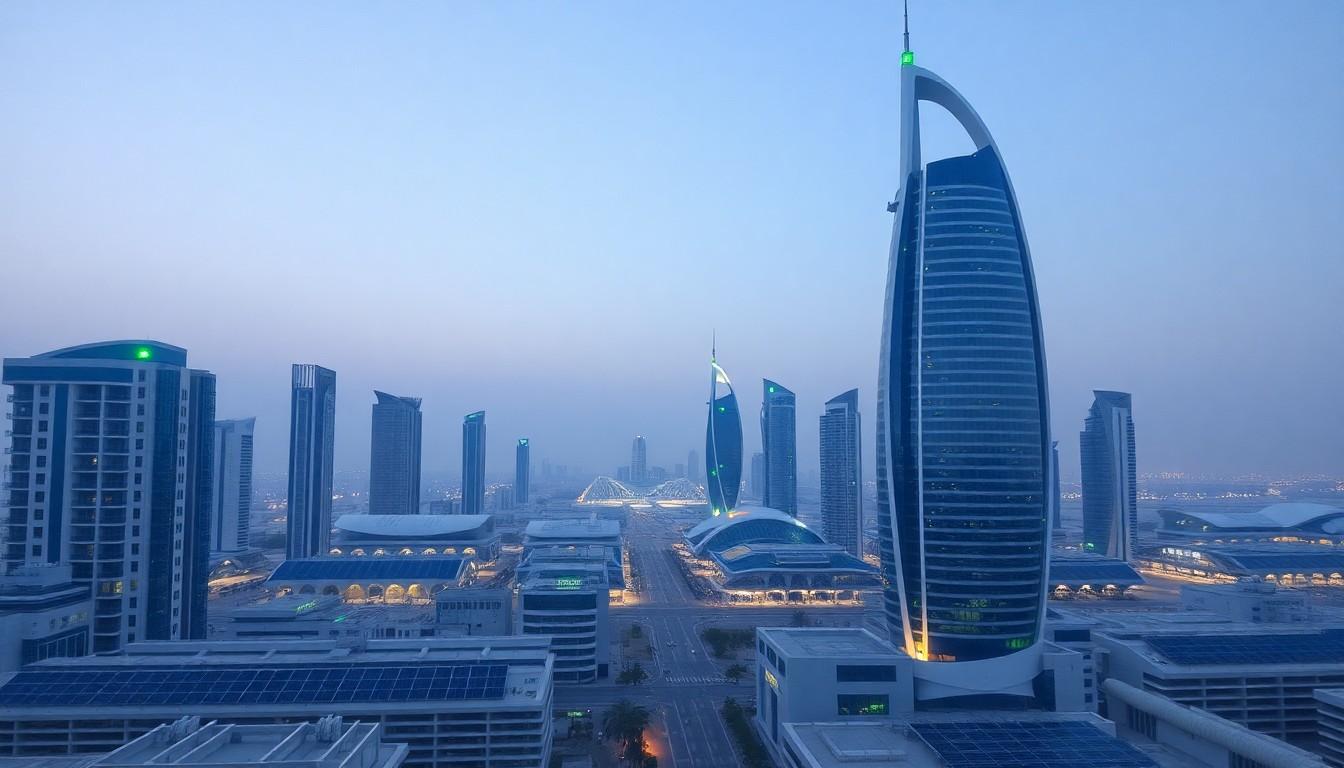
Abu Dhabi’s deepening collaboration with Chinese firms is reshaping the Gulf’s renewable energy landscape and intensifying regional competition, with the emirate aiming to lead the transition to a low-carbon economy through rapid infrastructure projects and innovative partnerships.
Abu Dhabi is really stepping up its green shift, and it’s doing so by leaning quite heavily on Chinese technology , a move that’s reshaping the Gulf’s clean energy scene and adding new pressure on Saudi Arabia’s Vision 2030 plans, I’d say.
According to reports from the South China Morning Post, Abdulla Humaid Al Jarwan, who’s the chair of the Abu Dhabi Department of Energy, mentioned that the emirate is currently in discussions with 22 Chinese firms, including the battery powerhouse CATL. He pointed out that Abu Dhabi is looking for customised solutions that fit its own requirements, and that the government is prepared to provide logistical support and policy backing to speed things up.
This approach, well, it sort of mirrors a bigger shift in the emirate’s overall strategy. Abu Dhabi isn’t just about buying equipment or importing ready-made systems anymore; it’s really trying to cultivate a deeper industrial relationship with China , across everything from solar power, battery storage, electric vehicles, robotics, to the infrastructure needed for all these advancements. You see, in this region, where time often determines who’s ahead, this partnership looks designed to cut down the gap between policy ambitions and actual physical implementation.
Timing is pretty crucial here. As AI adoption grows, so does the need for reliable electricity and bigger data centres. The energy officials in Abu Dhabi see this increase in demand as a reason to accelerate efforts on clean power generation and storage , they’re racing to keep pace. Plus, they highlighted how fast projects are moving: for instance, an ultra-fast charging station was completed in Abu Dhabi in just six weeks , really quick, in my opinion , showing how Chinese-linked initiatives can fast-track when backed locally.
This push from Abu Dhabi isn’t happening in isolation, of course; it’s part of a broader national plan. The UAE’s economic strategy emphasises moving away from hydrocarbons and into sustainable industries, a sort of diversification push. Meanwhile, the country’s also been promoting smart, sustainable mobility across the federation. If you look at trade data and government reports, it’s clear the UAE is already a leading player in the Middle East’s EV market, with Dubai and Abu Dhabi expanding charging infrastructure and electric vehicle fleets alike.
In fact, the UAE has become a key figure here. By the end of March 2024, Abu Dhabi had over 10,000 electric vehicles and roughly 11,000 hybrids on its roads, according to US government guidance. Dubai, by comparison, had around 39,000 EVs by the end of the first quarter of 2025, growing at a rate of just over 5% annually. The energy ministry also plans to install 100 EV chargers in 2024 and 1,000 by 2030 , part of the national goal to make EVs account for half of all vehicles by 2050. It’s pretty ambitious, right?
Chinese brands are already making their mark in this market, too. Names like BYD, Nio, Geely, MG, and Chery are gaining ground in the UAE. Chinese carmakers currently hold about 15–20% of local sales, and their growth has been fostered by infrastructure investments like battery-swapping stations, ultra-fast chargers, and long-term assembly or distribution deals. Industry analysts say the UAE might now be the largest EV market in the Middle East , about half of regional sales , which gives Abu Dhabi and Dubai a pretty unique advantage as testing grounds for new technology looking to establish itself in the Gulf region. It also makes the UAE much more appealing for Chinese firms wanting to expand beyond Asia.
Now, for Saudi Arabia, this isn’t exactly good news. Riyadh has been pushing what’s called Vision 2030 , a plan to diversify the economy, boost renewables, and develop local manufacturing instead of relying solely on imports. China has been a key partner in this effort too. The trade relationship between the two countries has grown rapidly over the last thirty years, and Chinese companies have participated in solar, wind, and manufacturing projects linked to Saudi’s clean energy goals.
But here’s the thing , the scale of Abu Dhabi’s new alignment with China might make things trickier for Saudi Arabia’s ambitions. The Public Investment Fund aims to produce 500,000 EVs annually by 2030, and Chinese manufacturers are aiding in setting up showrooms, service centres, and partnership networks aimed at mainly price-sensitive consumers. Saudi Arabia is also targeting that 50% of electricity to come from renewables by 2030, with plans to add about 58.7GW of renewable capacity.
Recently, Jinko Solar and TCL Zhonghuan signed agreements with the PIF and Vision Industries to develop solar manufacturing projects with a combined capacity of 30GW, valued at around $3 billion. At the same time, Chinese investment into Saudi Arabia’s clean tech sector has been climbing, with notable shares of capital flowing into these sectors.
Basically, Beijing isn’t just choosing sides , it’s building links with both Abu Dhabi and Riyadh. But it seems like Abu Dhabi might have a slight edge when it comes to execution, infrastructure, and an already receptive market for electric mobility. Saudi Arabia still has the advantage of scale, government spending power, and a broader industrial agenda that’s still in full swing.
For the Gulf region overall, the outcome could still be pretty positive. More Chinese involvement might accelerate the deployment of solar, storage, and mobility solutions, and it might even bring costs down , which is always good, right? But, on the other hand, it certainly raises the stakes in a regional rivalry that’s no longer just about showy projects or headline investments. Now, it’s about who can actually build the operational backbone of this lower-carbon economy first.
Abu Dhabi seems determined to win that race. By combining policy support with Chinese engineering and manufacturing, they’re trying to create a clean-tech ecosystem that can meet both their energy needs and their ambitions in artificial intelligence and advanced mobility. The result, I’d say, might be a quicker transition for the emirate, but it also means more intense competition for regional leadership in the Gulf’s post-oil future.
- https://insidetelecom.com/emirates-china-ev-collab-outpaces-saudi-vision-2030/ – Please view link – unable to able to access data
- https://www.scmp.com/business/china-business/article/3357071/abu-dhabi-tap-chinese-tech-scale-green-economy-says-energy-chief – Abu Dhabi is accelerating its green economy initiatives by collaborating with Chinese technology firms. Abdulla Humaid Al Jarwan, chairman of the Abu Dhabi Department of Energy, highlighted discussions with 22 Chinese companies, including Contemporary Amperex Technology Ltd (CATL), to develop solutions tailored for Abu Dhabi’s needs. The partnership aims to enhance infrastructure development, particularly in renewable energy and electric vehicles, with Abu Dhabi authorities offering logistical and policy support to expedite construction amid rising energy demands driven by AI and data centers.
- https://www.imarcgroup.com/insight/powering-vision-2030-chinas-strategic-support-for-saudi-arabias-ev-sector – Saudi Arabia’s Vision 2030 seeks to diversify its economy and reduce oil dependency by promoting green mobility, including electric vehicles (EVs). The Public Investment Fund (PIF) aims to produce 500,000 EVs annually by 2030. China’s involvement is significant, with strategic investments, partnerships, and technological advancements. Chinese EV brands are expanding their presence in Saudi Arabia, offering competitively priced models and establishing showrooms and service centers to attract price-sensitive customers and compete with established international brands.
- https://www.abudhabichamber.ae/-/media/Project/ADCCIV2/ADCCI/Media-Center—Publications/2025/EV-Market-Sectoral-Report-Nov-2024-vF.pdf – Abu Dhabi is fostering an environment conducive to the growth of the electric vehicle (EV) ecosystem. The government has introduced several strategies and initiatives aimed at advancing sustainability, including incentives for EV adoption, reduced tariffs, and significant investment in EV infrastructure. The Abu Dhabi Economic Vision 2030 emphasizes economic diversification, aiming to reduce reliance on oil and promote sustainable industries, including clean energy, environmental conservation, and sustainable transportation.
- https://www.trade.gov/country-commercial-guides/united-arab-emirates-smart-and-sustainable-mobility – The United Arab Emirates (UAE) is actively promoting smart and sustainable mobility, with significant developments in electric vehicles (EVs) and alternative fuel vehicles. Dubai’s Roads and Transport Authority (RTA) has converted 50% of its taxi fleet to hybrid vehicles and plans to convert the entire fleet to hybrid and electric vehicles by 2027. By the end of Q1 2025, Dubai had approximately 39,000 EVs on the road, showing a growth of over 5% year-on-year. Abu Dhabi has also made significant increases to its EV fleet, with 10,013 EVs and 11,139 hybrid vehicles by the end of March 2024.
- https://et.ae/en/ministry-of-energy-and-infrastructure-emirates-transport-to-support-green-mobility/ – The Ministry of Energy and Infrastructure (MoEI) and Emirates Transport are collaborating to support green mobility in the UAE. They plan to install and operate EV charging stations at Emirates Transport buildings, aligning with the UAE’s goal of increasing the share of EVs to 50% of total vehicles on the roads by 2050. The MoEI aims to install 100 EV chargers in 2024 and 1,000 EV chargers by 2030 across the UAE, contributing to the country’s net-zero by 2050 goal.
- https://www.zawya.com/en/press-release/companies-news/7x-and-uaev-partner-to-advance-sustainable-mobility-infrastructure-and-accelerate-transition-to-sustainable-mobility-k12y51me – 7X, a trade, transport, and logistics holding group, has signed a Memorandum of Understanding (MoU) with Emarat EV Charging Stations Company PJSC (UAEV), the UAE’s first government-owned EV charging network. The MoU aims to plan, deploy, operate, and promote EV charging infrastructure across the UAE, accelerating the transition to environmentally friendly fleets and enhancing sustainable mobility solutions nationwide. This partnership supports the UAE’s strategic vision to advance the adoption of clean transportation and integrate digital innovation through ‘Wayn’, the UAE’s secure digital platform.
Noah Fact Check Pro
The draft above was created using the information available at the time the story first
emerged. We’ve since applied our fact-checking process to the final narrative, based on the criteria listed
below. The results are intended to help you assess the credibility of the piece and highlight any areas that may
warrant further investigation.
Freshness check
Score:
8
Notes:
The article references a recent report from the South China Morning Post dated 15 June 2026, indicating the content is current. However, the Inside Telecom article was published on 16 June 2026, suggesting it is based on the SCMP report. This raises concerns about originality and potential recycling of content. Further verification is needed to confirm the independence of the reporting.
Quotes check
Score:
7
Notes:
The article includes direct quotes attributed to Abdulla Humaid Al Jarwan, Chairman of the Abu Dhabi Department of Energy. While these quotes are consistent with the SCMP report, their earliest known usage cannot be independently verified, raising concerns about their authenticity and potential reuse.
Source reliability
Score:
6
Notes:
The primary source, Inside Telecom, is a niche publication with limited reach and may not be considered a major news organisation. The reliance on a single source for the narrative raises concerns about the independence and reliability of the information presented.
Plausibility check
Score:
7
Notes:
The claims about Abu Dhabi’s collaboration with Chinese firms, including CATL, align with known initiatives in the region. However, the lack of independent verification and reliance on a single source for these claims reduces the overall credibility of the information.
Overall assessment
Verdict (FAIL, OPEN, PASS): FAIL
Confidence (LOW, MEDIUM, HIGH): MEDIUM
Summary:
The article presents information on Abu Dhabi’s collaboration with Chinese firms in the electric vehicle sector, citing a recent SCMP report. However, the heavy reliance on a single, niche source raises concerns about the originality, independence, and verification of the content. The inability to independently verify direct quotes and the lack of corroborating sources further diminish the credibility of the information presented. Given these issues, the content does not meet the necessary standards for publication under our editorial indemnity.


