





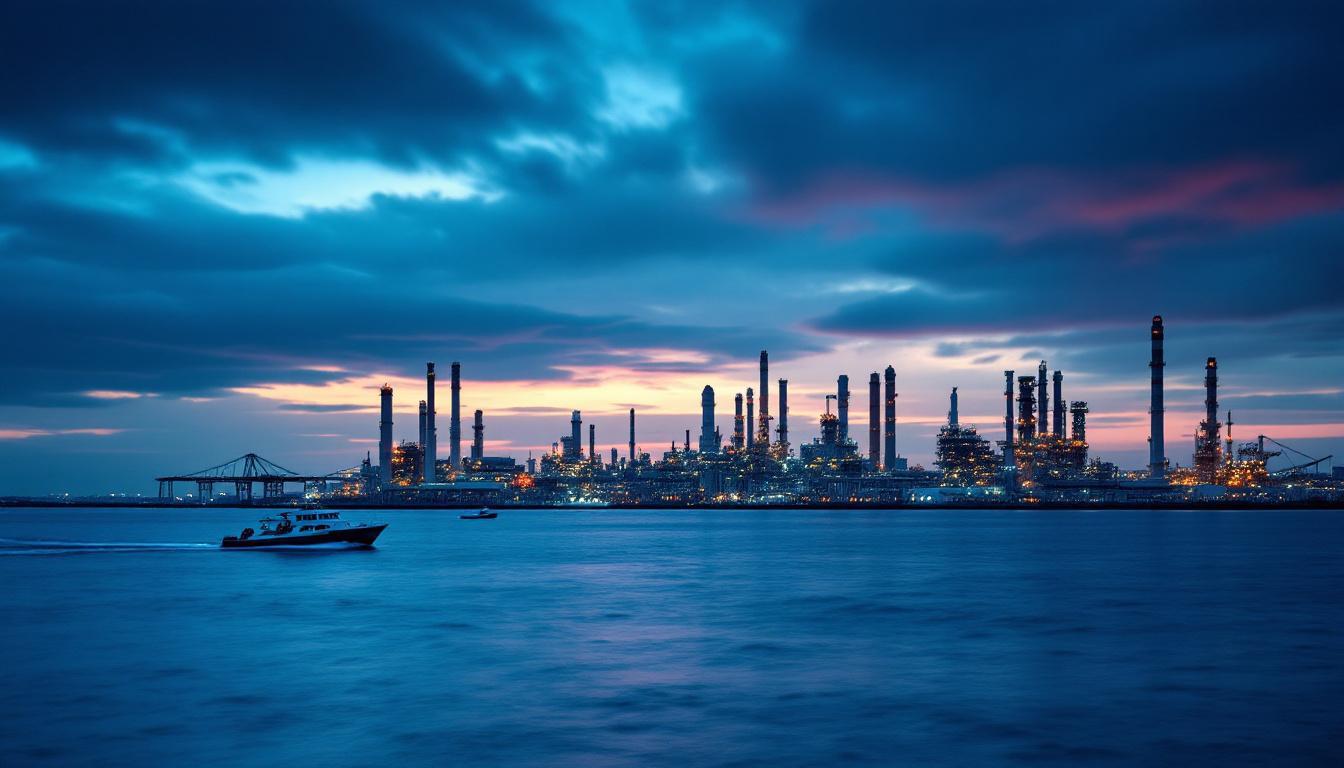
Abu Dhabi National Oil Company (Adnoc) is expanding its collaborations with major US energy firms to boost hydrocarbon output and accelerate the adoption of low-emission technologies, aiming for a diversified and resilient energy future.
Abu Dhabi National Oil Company (ADNOC) has recently been busy signing a flurry of agreements with several major US energy companies. The goal? Well, it’s a twofold approach: to boost hydrocarbon capacity on one hand, and to develop technologies that cut down carbon emissions on the other. These deals, announced during the UAE–US business dialogue in May 2025, seem to illustrate how ADNOC is trying to turn decades of collaboration between the Gulf and the US into real progress, both industrially and environmentally. According to ADNOC, this package of accords could even unlock up to $60 billion worth of US investments into energy projects in the UAE.
Right off the bat, the main headlines reinforce ADNOC’s twin priorities. The company announced plans with ExxonMobil and INPEX/JODCO to develop and expand the Upper Zakum offshore field. Additionally, it revealed a strategic partnership with Occidental to explore increasing production at the Shah gas field, targeting around 1.85 billion standard cubic feet of gas per day, up from previous levels. Moreover, ADNOC granted a new unconventional exploration permit to EOG Resources, showing Abu Dhabi’s intent to attract long-term foreign money. Overall, these steps were framed as moves to strengthen energy security and stabilize global markets.
But these commitments go beyond just project-level deals, they sit alongside ADNOC’s broader push into international gas markets and low-carbon fuels. For example, in May 2024, the company took an 11.7% equity stake in Phase 1 of NextDecade’s LNG project in Texas, known as Rio Grande LNG, and agreed to a 20-year LNG offtake contract totaling 1.9 million tonnes per year. At that time, reports highlighted that the Rio Grande project would include large-scale carbon capture and storage infrastructure, giving ADNOC a foothold in US liquefaction capacity. Industry experts note that these moves provide Abu Dhabi with a diversified supply strategy and a hedge against volatility in global gas prices.
When you consider everything together, these new US partnerships seem to reflect a pragmatic hedging approach. ADNOC is ramping up upstream production and petrochemical capacity to meet mid-term demand, all while investing heavily in CCUS (carbon capture, utilization, and storage), electrification, hydrogen, and other innovative solutions to reduce lifecycle emissions. The company has publicly committed to reaching net-zero emissions from its operations by 2045. These collaborations, they say, are meant to accelerate that transition , but also to maintain export earnings.
A key reason for these US links is access to advanced technological expertise. ADNOC highlighted that American firms bring deep knowledge in areas like deepwater drilling, digital transformation, enhanced oil recovery, and cutting-edge manufacturing. These skills, they argue, will help improve conventional upstream operations and scale low-emission technologies. Their statement emphasized that these agreements aim to boost supply chain resilience and foster high-value industrial activity within the UAE.
The timing and nature of these deals underscore Abu Dhabi’s broader industrial and economic goals. Both government and corporate actions show a consistent desire to turn resource rents into domestic manufacturing and technology transfer. Analysts suggest that this approach aims to capture more value along the petrochemicals chain, secure feedstock for local plants, and develop export-ready products robust enough to survive fluctuating hydrocarbon markets. Projects like the joint venture with OMV to create a chemicals platform, alongside ADNOC’s US investments in LNG and proposed hydrogen ventures, really fit into this pattern.
Of course, while ADNOC makes these arrangements sound forward-looking, they’re not ignoring the hard business realities. Long-term investments in gas and petrochemicals depend heavily on reliable feedstock and efficient logistics. Stakes in US liquefaction facilities and upstream-capacity partnerships help balance the company’s risks, especially the offtake agreements tied to Henry Hub prices, which align ADNOC’s commercial interests with North American market trends.
These deals also highlight the ongoing role of geopolitics in shaping energy strategies. The May 2025 announcements coincided with a high-profile UAE–US dialogue, attended by political and business leaders from both sides. Renewing ties with US giants shows how government diplomacy and corporate interests intertwine, aiming for secure supplies, stable markets, and a managed transition to cleaner energy.
For climate-tech stakeholders in the UAE, these agreements bring both opportunities and some lingering questions. Increased investment in CCUS, hydrogen, and materials R&D could boost local pilot projects, supply chains, and skilled labor. ADNOC claims these partnerships will support scaling low-carbon solutions across their operations. But the real telling factor will be how quickly and extensively these technologies are deployed, whether they truly decouple production growth from emissions. Some observers warn that all these capital commitments need to yield tangible results, like actual carbon capture capacity, low-carbon fuels, and electrification, to meet net-zero targets.
In the end, ADNOC’s strategy seems to be one of managed diversity: keep supporting current oil and gas output while simultaneously investing in transformative technologies and forging international links that could reshape its overall energy mix over the next twenty years. Those deals with ExxonMobil, Occidental, EOG, and others complement earlier US-based investments, including the LNG project in Texas and hydrogen plans. Together, they sketch out a future where energy security, industrial development, and emissions reduction are intertwined. Whether this balancing act will truly lead to sustained emissions reductions will depend heavily on execution, the pace of technological scale-up, and how well commercial frameworks manage cross-continental collaborations between producers, consumers, and financiers.
- https://energiesmedia.com/adnoc-announces-strategic-energy-agreements/ – Please view link – unable to able to access data
- https://www.adnoc.ae/en/news-and-media/press-releases/2025/adnoc-deepens-energy-partnerships-with-us-companies – In May 2025, ADNOC announced multiple agreements with major US energy companies during the UAE-US business dialogue with President Donald J. Trump. These agreements aim to potentially enable $60 billion of US investments in UAE energy projects. Notable collaborations include a field development plan with ExxonMobil and INPEX/JODCO to expand the Upper Zakum offshore field, and a strategic collaboration with Occidental to explore increasing the production capacity of the Shah Gas field to 1.85 billion standard cubic feet per day. Additionally, ADNOC granted a new unconventional oil exploration concession to US-based EOG Resources Inc., underscoring Abu Dhabi’s position as a trusted investment destination. The agreements reinforce the shared commitment of the UAE and US to maintaining global energy security and the stability of energy markets.
- https://www.businesswire.com/news/home/20240520809827/en/ADNOC-Secures-Equity-Position-and-LNG-Offtake-Agreement-in-NextDecade%E2%80%99s-Rio-Grande-LNG-Project – In May 2024, ADNOC acquired an 11.7% equity stake in Phase 1 of NextDecade Corporation’s Rio Grande LNG project in Texas, marking ADNOC’s first strategic investment in the US. This acquisition complements ADNOC’s efforts to expand its lower-carbon LNG portfolio to meet growing gas demand. Additionally, ADNOC and NextDecade entered into a 20-year LNG offtake agreement for 1.9 million tons per annum from Rio Grande LNG Train 4, on a free on board basis at a price indexed to Henry Hub, subject to a Final Investment Decision.
- https://english.alarabiya.net/business/energy/2025/03/07/uae-s-adnoc-seeks-deals-for-gas-fields-in-major-us-push – In 2024, ADNOC acquired a stake in NextDecade Corp.’s LNG export project in Texas, marking its first-ever US acquisition along with a 20-year supply deal. This was followed by a stake in Exxon Mobil Corp.’s proposed hydrogen project in Texas. Additionally, ADNOC and OMV AG agreed on terms to create a chemicals giant worth more than $60 billion, a deal that includes the joint purchase of Nova Chemicals, which has facilities on the US Gulf coast. These moves aim to provide ADNOC with access to both fuel and feedstock for its chemicals plants and LNG export facilities, benefiting from any increases in local gas prices and hedging its exposure as a buyer of the fuel.
- https://www.thenationalnews.com/business/energy/2024/05/20/adnoc-makes-its-first-investment-in-the-us-with-stake-in-rio-grande-lng-project/ – In May 2024, ADNOC made its first investment in the US by acquiring an 11.7% stake in NextDecade’s Rio Grande LNG project in Texas. The agreement with Global Infrastructure Partners also secured an option for equity participation in the future Train 4 and Train 5 of the project. ADNOC also entered a 20-year LNG offtake agreement with NextDecade for 1.9 million tonnes per annum on a free on-board basis at a price indexed to Henry Hub, subject to a final investment decision. The project is expected to produce 27 million tonnes of LNG annually at full capacity and includes a carbon capture and storage project capable of handling five million metric tonnes of carbon dioxide annually.
- https://www.gulfbase.com/news/adnoc-deepens-us-energy-ties-with-60-billion-deal/208010 – In May 2025, ADNOC deepened its energy ties with the US by signing multiple agreements with major US energy firms, potentially enabling $60 billion of US investments in UAE energy projects. The deals include a collaboration with ExxonMobil and INPEX/JODCO to expand the Upper Zakum offshore field, and an agreement with Occidental to explore increasing the Shah Gas field’s capacity from 1.45 billion to 1.85 billion standard cubic feet per day. These agreements reinforce the shared commitment of the UAE and US to maintaining global energy security and the stability of energy markets.
- https://www.morganlewis.com/-/media/files/publication/outside-publication/white-paper/guide-to-doing-business-in-the-united-arab-emirates-sixth-edition.pdf – The Guide to Doing Business in the United Arab Emirates, Sixth Edition, provides comprehensive information on the legal and regulatory framework for businesses operating in the UAE. It covers topics such as company formation, employment law, taxation, and dispute resolution. The guide also includes insights into the UAE’s economic sectors, including energy, real estate, and financial services, offering practical advice for companies looking to establish or expand their presence in the UAE market. The publication is a valuable resource for understanding the business environment and opportunities in the UAE.
Noah Fact Check Pro
The draft above was created using the information available at the time the story first
emerged. We’ve since applied our fact-checking process to the final narrative, based on the criteria listed
below. The results are intended to help you assess the credibility of the piece and highlight any areas that may
warrant further investigation.
Freshness check
Score:
8
Notes:
The article references agreements announced in May 2025, with the latest publication date being March 1, 2026. The content appears to be a recent analysis or summary, suggesting freshness. However, without access to the original publication date, there’s a slight uncertainty regarding its originality.
Quotes check
Score:
7
Notes:
The article includes direct quotes attributed to ADNOC and other entities. However, these quotes are not independently verifiable through the provided sources. The lack of direct links to the original statements raises concerns about the authenticity and accuracy of the quotes. Without independent verification, the credibility of these quotes is questionable.
Source reliability
Score:
6
Notes:
The article originates from Energies Media, a niche publication. While it provides detailed information, the lack of broader recognition and independent verification of its content diminishes its reliability. The absence of citations or references to primary sources further weakens its credibility.
Plausibility check
Score:
7
Notes:
The article discusses ADNOC’s strategic agreements with major US energy companies, aligning with known industry trends. However, the lack of specific details, such as exact figures or direct quotes, makes it difficult to fully assess the plausibility of the claims. The absence of corroborating sources raises questions about the accuracy of the information presented.
Overall assessment
Verdict (FAIL, OPEN, PASS): FAIL
Confidence (LOW, MEDIUM, HIGH): MEDIUM
Summary:
The article presents information on ADNOC’s strategic energy agreements with US companies, but the lack of direct citations, independent verification, and reliance on a single source diminishes its credibility. The absence of corroborating evidence and unverifiable quotes further undermine the trustworthiness of the content. Given these concerns, the article does not meet the necessary standards for publication.


