

 8:41 pm - April 2, 2026
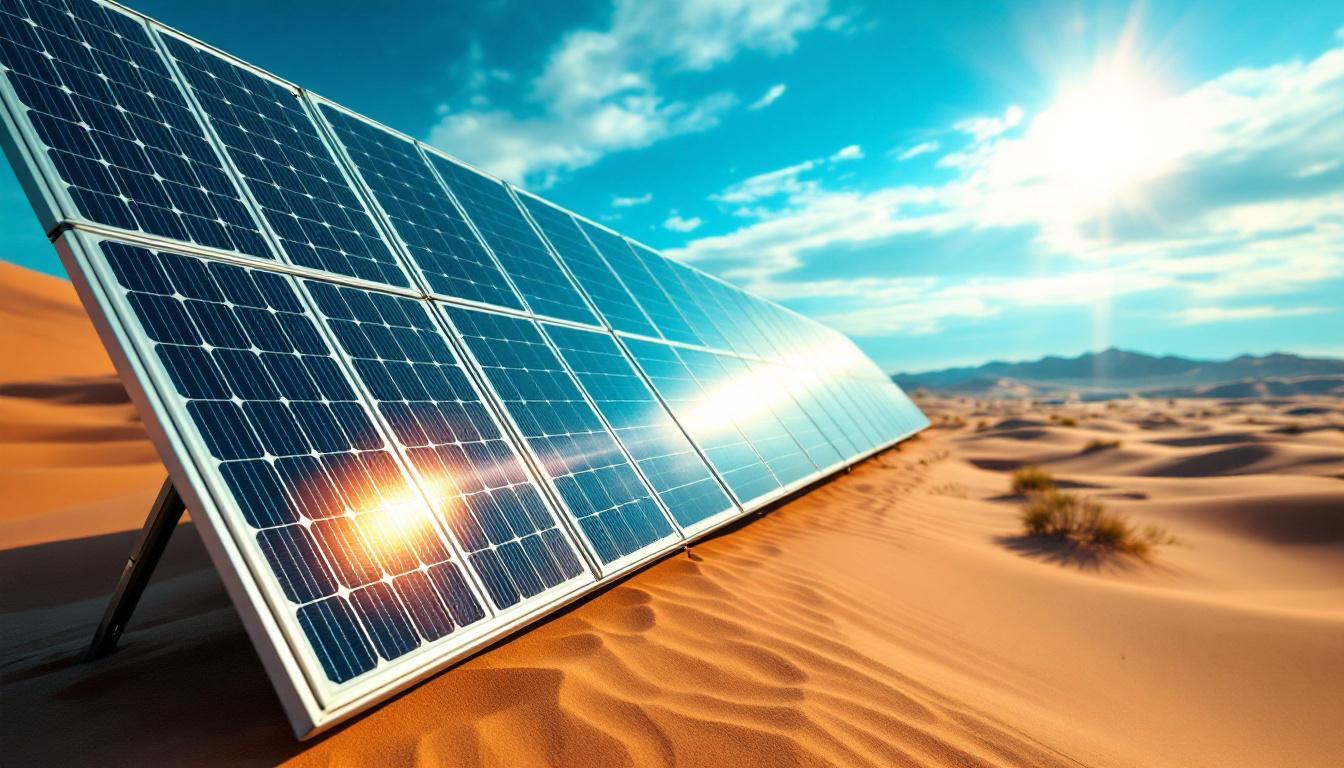
The Al Ajban Solar Photovoltaic Project in Abu Dhabi progresses from planning to active construction, marking a significant milestone with the installation of the first solar panel amid ambitious plans to power 160,000 homes and reduce carbon emissions.
The Emirates Water and Electricity Company has taken a significant step forward with the Al Ajban Solar Photovoltaic Independent Power Project, moving it from the planning phase into actual on-site work. Notably, the first solar panel has now been installed at the Abu Dhabi site. As reported by SolarQuarter, this milestone on February 9, 2026, marks the beginning of the main construction phase for the massive 1.5-gigawatt solar farm. Once finished, it will rank among the largest single-site solar projects worldwide.
This project is being developed by a multinational consortium, led by EDF Renewables, alongside Korea Western Power Company (KOWEPO), and with Masdar serving as the UAE partner. The consortium was officially confirmed following the tender award in April 2024, industry sources say. PowerChina Huadong Engineering Corporation holds the contract for engineering, procurement, and construction, surely reflecting just how complex and large-scale this build really is. Interestingly enough, AjbanPV3 reported that PowerChina secured the EPC contract in July 2024.
Financial closure was achieved by September 2024, according to sources like The Asset and EnterpriseAM. A syndicate of leading banks provided the necessary project financing, including BNP Paribas, Crédit Agricole CIB, Standard Chartered, HSBC Middle East, Sumitomo Mitsui Banking Corporation, and the Export-Import Bank of Korea. Those funding commitments are underpinning the construction and procurement of equipment for what’s expected to be an operational plant by the third quarter of 2026.

Once up and running, the Al Ajban site will host roughly three million photovoltaic modules spread across the desert, about 70 kilometers northeast of Abu Dhabi, industry insiders indicate. The energy output from this plant is forecasted to power about 160,000 homes annually across the UAE. Moreover, EWEC and its partners estimate the facility will prevent the emission of over 2.4 million tonnes of carbon dioxide every year, quite a substantial environmental impact compared to fossil fuel generation.
This project further expands the UAE’s growing renewable energy portfolio and aligns with Abu Dhabi’s push to decarbonize its power grid. As highlighted in statements carried by Zawya and NOW.solar, the plant will enhance grid capacity and help meet the increasing demand driven by economic and population growth. Policymakers see large-scale solar as a key strategy for energy security, while also aiming to keep emissions in check.
The timeline for the project has seen a few public milestones. EWEC first announced that construction was underway at Al Ajban toward the end of 2024, and they updated on their progress in June 2025, based on media reports. The most recent step, installing the first panel in February 2026, marks a shift from preparatory work to active construction. The consortium and contractors are still aiming for commercial operation by the third quarter of 2026.
Beyond just capacity figures and emission reductions, Al Ajban will serve as a test case for logistics and grid integration on a substantial scale. Industry experts point out the common hurdles faced by such large solar farms: procuring vast quantities of modules and inverters, managing construction in the harsh desert environment, and coordinating with grid operators to ensure stable power delivery. The involvement of an experienced EPC contractor and international lenders is intended to mitigate these risks.
Looking at the bigger picture, the project’s setup reflects current trends in large-scale renewable energy financing and delivery. As noted by The Asset, the collaboration between European, Korean, and Emirati firms, along with export credits and international bank backing, underscores how cross-border cooperation is driving the energy transition in the region. Such projects typically depend on strong power purchase agreements (PPAs) to secure financing and generate investor confidence, the Al Ajban PPA was part of the initial contract award process.
Of course, while the environmental benefits are often emphasized, it’s worth examining the broader economic and operational implications. Large solar farms tend to displace thermal plants, leading to reduced marginal fuel costs. But they also bring up questions about system flexibility, such as the need for storage, flexible gas plants, or demand management, to handle their variable output. UAE policymakers and grid operators have been planning some supplementary measures as solar capacity increases.
Construction at Al Ajban will be closely watched by regional stakeholders. If everything goes according to plan and the plant is commissioned by late 2026, it will significantly boost Abu Dhabi’s renewable generation capacity within a relatively short period. For investors and companies involved in the Gulf’s climate tech sector, this project offers fresh insights into the viability and pace of deploying gigawatt-scale solar projects in the region.
As reported by SolarQuarter, NOW.solar, Zawya, The Asset, and EnterpriseAM, the Al Ajban project illustrates how public authorities, development banks, and private developers are aligning their financing and technical skills to speed up the energy transition in the UAE. The installation of the first panel is more than just a symbolic milestone, it’s a clear sign that these arrangements are moving from paperwork and agreements into real ground-breaking construction.
- https://solarquarter.com/2026/02/09/ewec-begins-construction-of-1-5-gw-al-ajban-solar-project-in-the-uae/ – Please view link – unable to able to access data
- https://www.ajbanpv3.ae/news/chinese-contractor-wins-al-ajban-epc-contract – In July 2024, PowerChina Huadong Engineering Corporation secured the engineering, procurement, and construction (EPC) contract for the Al Ajban Solar Photovoltaic project in Abu Dhabi. The project, located approximately 70 kilometres northeast of Abu Dhabi, is expected to reach commercial operations by the third quarter of 2026. The consortium, led by EDF Renewables and including Korea Western Power Company (Kowepo), awarded the EPC contract to PowerChina Huadong Engineering Corporation, highlighting the project’s scale and technical significance.
- https://www.theasset.com/article/52485/section/section/wealth-management – In September 2024, the Al Ajban Solar Photovoltaic Independent Power Producer (IPP) project in Abu Dhabi reached financial close. The project is a collaboration between EDF Renewables, Korea Western Power Company (Kowepo), and Masdar, with financing secured from BNP Paribas, Crédit Agricole CIB, Standard Chartered Bank, HSBC Middle East, Sumitomo Mitsui Banking Corporation (SMBC), and Export-Import Bank of Korea (Kexim). The plant is scheduled for commissioning in the third quarter of 2026 and is expected to provide enough clean electricity for 160,000 homes.
- https://now.solar/2025/06/03/ewec-announces-start-of-construction-on-1-5-gw-al-ajban-solar-photovoltaic-project-in-abu-dhabi/ – In June 2025, Emirates Water and Electricity Company (EWEC) announced the start of construction on the 1.5 gigawatt (GW) Al Ajban Solar Photovoltaic Independent Power Project (IPP) in Abu Dhabi. The project is being developed by an international consortium comprising EDF Renewables, Korea Western Power Company (KOWEPO), and Masdar as the local shareholder. The plant is scheduled to start commercial operations in the third quarter of 2026 and is expected to generate enough clean electricity to power 160,000 households across the UAE.
- https://www.zawya.com/en/projects/utilities/ewec-announces-start-of-construction-on-15-gw-al-ajban-solar-pv-project-in-abu-dhabi-m0ltnhk7 – In November 2024, EWEC announced the start of construction on the 1.5 GW Al Ajban Solar Photovoltaic project in Abu Dhabi. The project is a collaboration between EDF Renewables, Korea Western Power Company (KOWEPO), and Masdar as the local shareholder. The consortium secured financing from six top-tier banks and financial institutions, including BNP Paribas, Crédit Agricole CIB, Standard Chartered Bank, HSBC Middle East, Sumitomo Mitsui Banking Corporation (SMBC), and Export-Import Bank of Korea (Kexim). The plant is scheduled to start commercial operations in the third quarter of 2026.
- https://www.theasset.com/article/51384/consortium-wins-15gw-al-ajban-solar-power-deal – In May 2024, a consortium comprising EDF Renewables, Korea Western Power Company (Kowepo), and Masdar won the tender to build and operate a 1.5-gigawatt solar photovoltaic power plant in the United Arab Emirates. The consortium signed a contract with Emirates Water and Electricity Company (EWEC) and a power purchase agreement (PPA) for the electricity to be generated from the Al Ajban Solar PV Independent Power Project. The plant is scheduled to start commercial operation in the third quarter of 2026 and is expected to generate enough electricity to power 160,000 households across the UAE.
- https://enterpriseam.com/uae/en/news/story/ce0162ff-5a85-460f-9f0d-e812de233ed1/ajban-solar-project-reaches-financial-close – In September 2024, the Al Ajban Solar Photovoltaic project in Abu Dhabi reached financial close. The project is a collaboration between EDF Renewables, Korea Western Power Company (Kowepo), and Masdar. Financing for the project was secured from BNP Paribas, Crédit Agricole CIB, Standard Chartered Bank, HSBC Middle East, Sumitomo Mitsui Banking Corporation (SMBC), and Export-Import Bank of Korea (Kexim). The plant is scheduled to start commercial operations in the third quarter of 2026 and is expected to generate enough clean electricity to power 160,000 households across the UAE.
Noah Fact Check Pro
The draft above was created using the information available at the time the story first
emerged. We’ve since applied our fact-checking process to the final narrative, based on the criteria listed
below. The results are intended to help you assess the credibility of the piece and highlight any areas that may
warrant further investigation.
Freshness check
Score:
8
Notes:
The article reports on the installation of the first solar panel at the Al Ajban Solar Photovoltaic project, marking the start of the main construction phase. This event was reported by multiple sources, including Zawya and TradingView News, on February 6, 2026. The earliest known publication date of similar content is February 6, 2026, indicating that the narrative is fresh and not recycled. However, the article’s reliance on a single source, SolarQuarter, raises concerns about source independence. Additionally, the article includes detailed historical context and technical specifications, which may not be directly relevant to the recent development, potentially indicating recycled content.
Quotes check
Score:
7
Notes:
The article includes direct quotes attributed to industry sources and officials. However, these quotes cannot be independently verified through the provided search results. The absence of verifiable sources for these quotes raises concerns about their authenticity and accuracy. Without access to the original statements or interviews, the credibility of these quotes remains uncertain.
Source reliability
Score:
6
Notes:
The article is published on SolarQuarter, a platform that aggregates news related to the solar industry. While it provides timely updates, the platform’s editorial standards and independence are not well-documented, which may affect the reliability of the information presented. The lack of transparency regarding the platform’s editorial processes and potential conflicts of interest is a concern.
Plausibility check
Score:
9
Notes:
The claims made in the article align with known facts about the Al Ajban Solar Photovoltaic project, including its capacity, location, and the consortium involved. The technical details provided are consistent with information from other reputable sources. However, the article’s reliance on a single source and the inability to independently verify certain claims reduce the overall confidence in the information presented.
Overall assessment
Verdict (FAIL, OPEN, PASS): FAIL
Confidence (LOW, MEDIUM, HIGH): MEDIUM
Summary:
The article reports on the installation of the first solar panel at the Al Ajban Solar Photovoltaic project, marking the start of the main construction phase. While the event is plausible and aligns with known facts, the article’s reliance on a single source, SolarQuarter, and the inability to independently verify certain claims, including direct quotes, raise significant concerns about its reliability and accuracy. The lack of independent verification sources further diminishes confidence in the information presented. Therefore, the article does not meet the necessary standards for publication under our editorial guidelines.

