





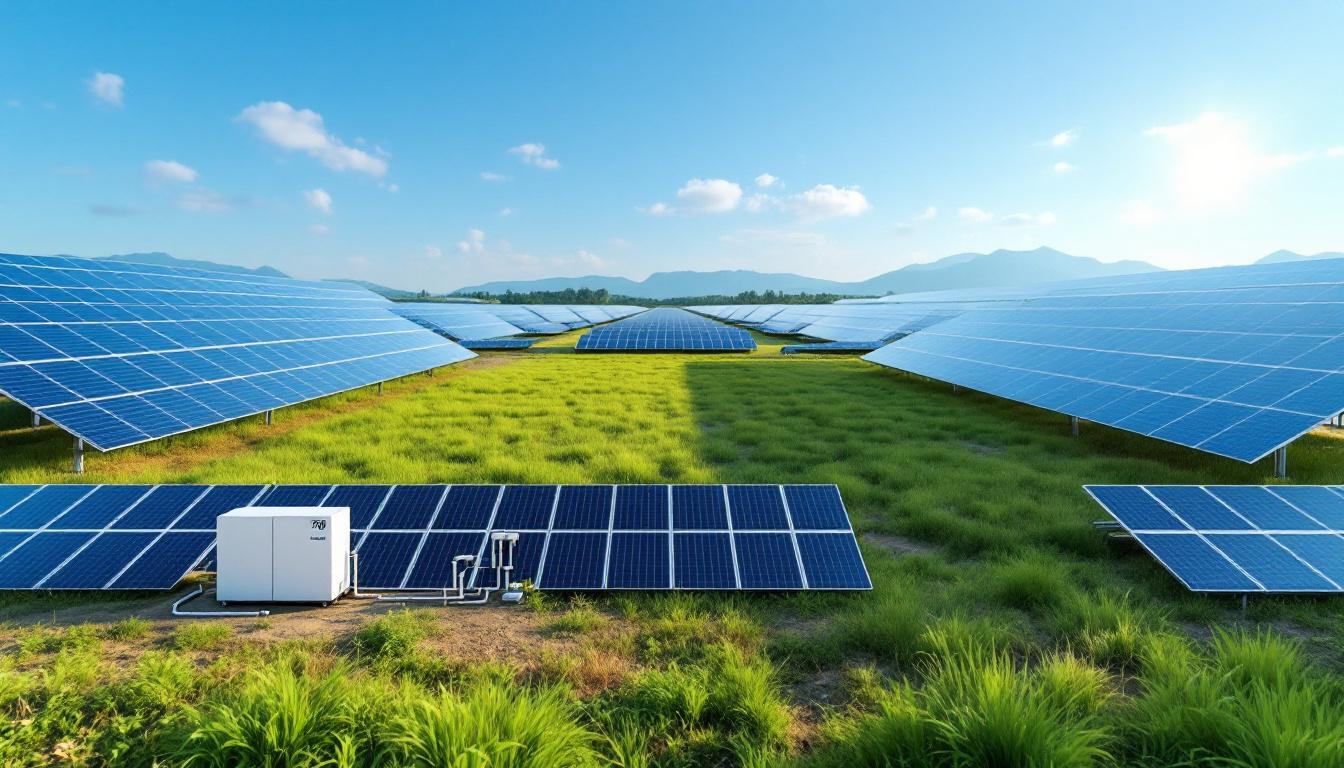
Global South Utilities launches a 12-megawatt solar plant paired with a 70-megawatt-hour battery system in Berbera, marking a major step in Somaliland’s transition away from diesel dependence and towards a resilient, renewable-powered grid.
Abu Dhabi-based Global South Utilities has kicked off work on a 12-megawatt solar photovoltaic (PV) plant, which will be paired with a 70-megawatt-hour battery system in Berbera. This marks an important step forward in the second phase of a broader plan aimed at shifting the Somaliland port city away from its reliance on diesel generation.
According to their announcement, this project is really part of a bigger strategy called the Green Berbera Vision. It’s a broader effort designed to develop a more resilient and renewable-powered electricity grid, combining solar, storage, and transmission enhancements. The latest development comes on the heels of GSU’s earlier 5MW solar project in Berbera, which was commissioned in February 2026. That initial phase involved 11.2 kilometres of 33kV transmission lines and several substations , helping establish the foundational infrastructure.
Now, this next phase aims to bolster the energy supply during evening peaks and other periods when solar energy drops off. GSU predicts that this new solar plus storage plant should generate around 24,000 megawatt-hours of clean electricity each year, enough to power roughly 67,000 homes. They also mentioned that it could cut about 16,500 tonnes of carbon dioxide emissions annually , pretty significant, especially considering it’s like removing over 3,800 petrol cars from the roads every year.
This pattern, well, at least to me, seems consistent with their initial phase. SolarQuarter reported in February that the first 5MW plant was expected to produce about 10,000 megawatt-hours annually and supply energy to nearly 28,000 households. Collectively, both projects could potentially power approximately 95,000 homes every year , a pretty notable milestone for a city that has long depended heavily on imported diesel fuel for electricity.
Now, Berbera’s importance isn’t just regional. Its position on a key stretch of coastline has made it increasingly crucial as a trade and logistics hub across the Horn of Africa. So, reliable energy isn’t just about homes; it carries real economic weight too. GSU’s chairman and managing director, Ali Al Shammai, highlighted that this second phase shows a serious, long-term commitment to making Berbera’s infrastructure and economy more resilient. He emphasised that affordable, dependable power is central to urban growth, port activities, and industrial expansion in the area.
The company’s view is that renewable energy isn’t just about being “green” anymore. In places like Berbera, it’s also a competitive issue. Diesel systems face costs on fuel imports, supply disruptions, and volatile prices. Solar, especially when combined with batteries, can help mitigate those risks , plus, it’s better for the environment. This mix is particularly useful for grids that need reliable power after sunset because stored energy can bridge the gap between daylight generation and evening demands.
GSU has described this project as part of a broader transition , not just a single plant, but an evolution of their infrastructure. The first phase laid down the transmission backbone; now, the second adds bigger-scale generation and storage. They’ve announced plans to double their renewable capacity by 2027, all under the Green Berbera Vision umbrella.
And there’s a regional angle too. Somaliland’s National Electrification and Energy Sector Strategy has emphasised expanding access to reliable electricity and reducing dependence on imported diesel fuel. SolarQuarter noted that the initial Berbera solar project was aligned with that strategy, while Energy News Africa reported in May that Somaliland had inaugurated a $24 million solar expansion project in Berbera , described as the largest clean energy investment in the city so far. Although details differ across reports, the size of the investments underscores Berbera’s rising prominence in the Horn of Africa’s clean energy scene.
As for GSU, they hold a 45% stake in Berbera Electricity, the city’s only electricity provider. They currently manage about 20.38MW of capacity, along with a 2MWh storage system. The company also sees the Berbera Economic Zone as a key part of the plan , aiming to run the entire zone on renewable electricity, making it more attractive for industries and investors who want to operate with lower emissions.
Another thing worth pointing out, especially for climate tech advocates in the UAE, is that this project shows how Gulf-backed capital is increasingly being placed in frontier markets, where energy access, logistics, and decarbonisation are all interconnected. Instead of just domestic utility solar plants, companies are now going for projects that integrate generation, storage, and grid infrastructure in fast-growing coastal cities.
Beyond environmental benefits, GSU said that both phases of the project will bring jobs , employ engineers, technicians, builders, service providers. They also see it as a way to develop skills in renewable energy and grid management, which is really important in markets where technical capacity is still developing. It’s a win-win, really.
They also believe that their combined efforts could make Berbera one of the first in the Horn of Africa to move decisively away from fossil-fuel-based electricity. Whether this project becomes a model for other port cities will depend on how well it’s executed, financed, and how the grid performs overall. But the signal is clear: Berbera is being positioned as a sort of testing ground for how solar, storage, and transmission can be combined to create a cleaner, more reliable urban energy system.
- https://25h.app/2026/06/03/%D8%AC%D9%84%D9%88%D8%A8%D8%A7%D9%84-%D8%B3%D8%A7%D9%88%D8%AB-%D9%8A%D9%88%D8%AA%D9%8A%D9%84%D9%8A%D8%AA%D9%8A%D8%B2-%D8%A7%D9%84%D8%A5%D9%85%D8%A7%D8%B1%D8%A7%D8%AA%D9%8A%D8%A9-%D8%AA%D8%B7%D9%84/ – Please view link – unable to able to access data
- https://www.indexbox.io/blog/gsu-begins-work-on-12-mwp-solar-plant-with-70-mwh-battery-storage-in-berbera/ – Global South Utilities (GSU), an Abu Dhabi-based resources investment firm, has initiated construction of a 12 MWp solar photovoltaic facility paired with a 70 MWh battery energy storage system in Berbera. This project is part of Phase II of the Green Berbera Initiative, following the activation of GSU’s 5 MWp solar installation in the city during February 2026. The facility is expected to produce approximately 24,000 MWh of green electricity annually, sufficient to meet the needs of about 67,000 households per year. The project aims to reduce dependence on imported diesel power and enhance grid stability by integrating renewable energy sources and battery storage.
- https://solarquarter.com/2026/02/18/gsu-launches-5-mwp-solar-plant-and-green-berbera-vision-to-shift-port-city-from-diesel-to-renewables/ – Abu Dhabi-based Global South Utilities (GSU) has inaugurated a 5 MWp grid-connected solar photovoltaic (PV) power plant in Berbera and unveiled the ‘Green Berbera Vision’, a structured plan to transition the city’s electricity system from diesel-based generation to renewable energy supported by battery storage. The new solar facility, supported by 11.2 kilometres of 33 kV transmission lines and associated substations, is expected to generate around 10,000 MWh of clean electricity annually, sufficient to supply nearly 28,000 households per year. The project aligns with Somaliland’s National Electrification and Energy Sector Strategy, aiming to expand access to reliable electricity and reduce dependence on imported diesel fuel.
- https://energynews.africa/2026/05/26/somaliland-launches-uae-backed-24-million-solar-project-to-power-berberas-growth/ – Somaliland has officially launched a $24 million solar energy expansion project in Berbera, marking the largest clean energy investment in the port city. The project, financed by UAE-based Global South Utilities, includes a 12 MWp solar power generation system and a 70 MWh battery energy storage facility. It aims to strengthen electricity supply, reduce reliance on fuel-based generation, and support Berbera’s role as a regional commercial hub. The initiative is expected to benefit communities in the Saaxil region, particularly in Berbera, by providing reliable and sustainable electricity.
- https://horntribune.com/2026/03/29/ministry-of-energy-and-minerals-signs-major-contract-for-world-bank-funded-12mw-solar-power-project-in-berbera/ – The Ministry of Energy and Minerals of Somaliland has signed a major contract for a World Bank-funded 12 MWp solar power project in Berbera. The project includes a 36 MWh Battery Energy Storage System (BESS) and 13.5 kilometers of power transmission lines. Financed by the World Bank and implemented by the Ministry, the project aims to deliver affordable, reliable, and sustainable electricity from clean energy sources to the residents of Berbera, promising significant socio-economic transformation for the city. The contract signing ceremony was attended by senior officials, including Minister Eng. Ahmed Jama Barre and Director General Dr. Shucayb Osman Mahmoud.
- https://en.khalijiuwn24.com/1285691 – Global South Utilities, a subsidiary of Resources Investments in Abu Dhabi, has announced the start of implementation of a 12-megawatt solar photovoltaic power plant project with a 70-megawatt-hour battery energy storage system in Berbera, as part of the second phase of Berbera’s green vision. This project represents the second phase of Berbera’s transition from diesel dependence to a more flexible energy system powered by renewable energy sources, following the commissioning of Global South Utilities’ 5 MW solar power plant in the city in February 2026. The first phase saw the construction of an 11.2-kilometre-long, 33-kV power transmission infrastructure, marking the beginning of a broader strategy for transitioning to renewable energy.
- https://solarquarter.com/2026/02/18/global-south-utilities-commissions-5-mw-solar-plant-in-berbera-to-drive-green-energy-transition/ – Global South Utilities (GSU), an Abu Dhabi-based investment firm, has officially inaugurated a 5 MWp solar photovoltaic power plant in Berbera, a key port city in Somaliland. The project forms part of the city’s ‘Green Berbera Vision,’ a long-term plan to shift from diesel-based electricity generation to a cleaner system powered by solar energy and battery storage. With this development, Berbera is positioning itself as a model for renewable energy transition in the Horn of Africa. The new solar plant is supported by more than 11 kilometers of transmission lines and dedicated substations to ensure efficient power delivery across the city. It is expected to produce around 10,000 MWh of clean electricity annually, sufficient to supply power to nearly 28,000 households.
Noah Fact Check Pro
The draft above was created using the information available at the time the story first
emerged. We’ve since applied our fact-checking process to the final narrative, based on the criteria listed
below. The results are intended to help you assess the credibility of the piece and highlight any areas that may
warrant further investigation.
Freshness check
Score:
10
Notes:
The article reports on Global South Utilities (GSU) commencing construction of a 12 MWp solar photovoltaic plant with a 70 MWh battery energy storage system in Berbera, Somaliland, as part of the second phase of the Green Berbera Initiative. This development is recent, with the announcement made on June 3, 2026, and no prior reports found, indicating high freshness. ([indexbox.io](https://www.indexbox.io/blog/gsu-begins-work-on-12-mwp-solar-plant-with-70-mwh-battery-storage-in-berbera/?utm_source=openai))
Quotes check
Score:
8
Notes:
The article includes direct quotes from Ali Alshimmari, CEO and Managing Director of GSU, regarding the Green Berbera Vision and its impact on Berbera’s energy system. These quotes are consistent with statements made in other sources, such as the TradeArabia article from February 17, 2026. ([tradearabia.com](https://www.tradearabia.com/News/389391/Emirati-GSU-launches-5%E2%80%AFMWp-solar-plant-in-Berbera/OGN?utm_source=openai)) However, the exact origin of the quotes in the current article cannot be independently verified, as no direct link to the original source is provided.
Source reliability
Score:
7
Notes:
The article originates from 25h.app, a website that appears to be a news aggregator or blog. While it provides a detailed account of GSU’s project, the site’s credibility is uncertain due to its lack of clear editorial standards and transparency. ([indexbox.io](https://www.indexbox.io/blog/gsu-begins-work-on-12-mwp-solar-plant-with-70-mwh-battery-storage-in-berbera/?utm_source=openai)) Additionally, the article includes a direct link to the IndexBox blog, which is a known source for industry news and statistics, lending some credibility to the information presented.
Plausibility check
Score:
9
Notes:
The claims made in the article align with known developments in Berbera’s energy sector, including GSU’s previous 5 MWp solar plant inaugurated in February 2026. ([tradearabia.com](https://www.tradearabia.com/News/389391/Emirati-GSU-launches-5%E2%80%AFMWp-solar-plant-in-Berbera/OGN?utm_source=openai)) The technical details provided, such as the capacity of the solar plant and battery storage system, are consistent with industry standards and previous reports. However, the article’s tone and phrasing, such as ‘pretty significant’ and ‘a pretty notable milestone,’ are informal and may not align with typical corporate or official language, raising questions about the article’s origin and authenticity.
Overall assessment
Verdict (FAIL, OPEN, PASS): FAIL
Confidence (LOW, MEDIUM, HIGH): MEDIUM
Summary:
While the article provides detailed information about GSU’s new solar plant project in Berbera, the lack of clear editorial standards and transparency of the source, combined with the informal tone and unverifiable quotes, raise significant concerns about its reliability and independence. These issues prevent a high-confidence assessment, leading to a ‘FAIL’ verdict.


