

 6:57 pm - April 3, 2026
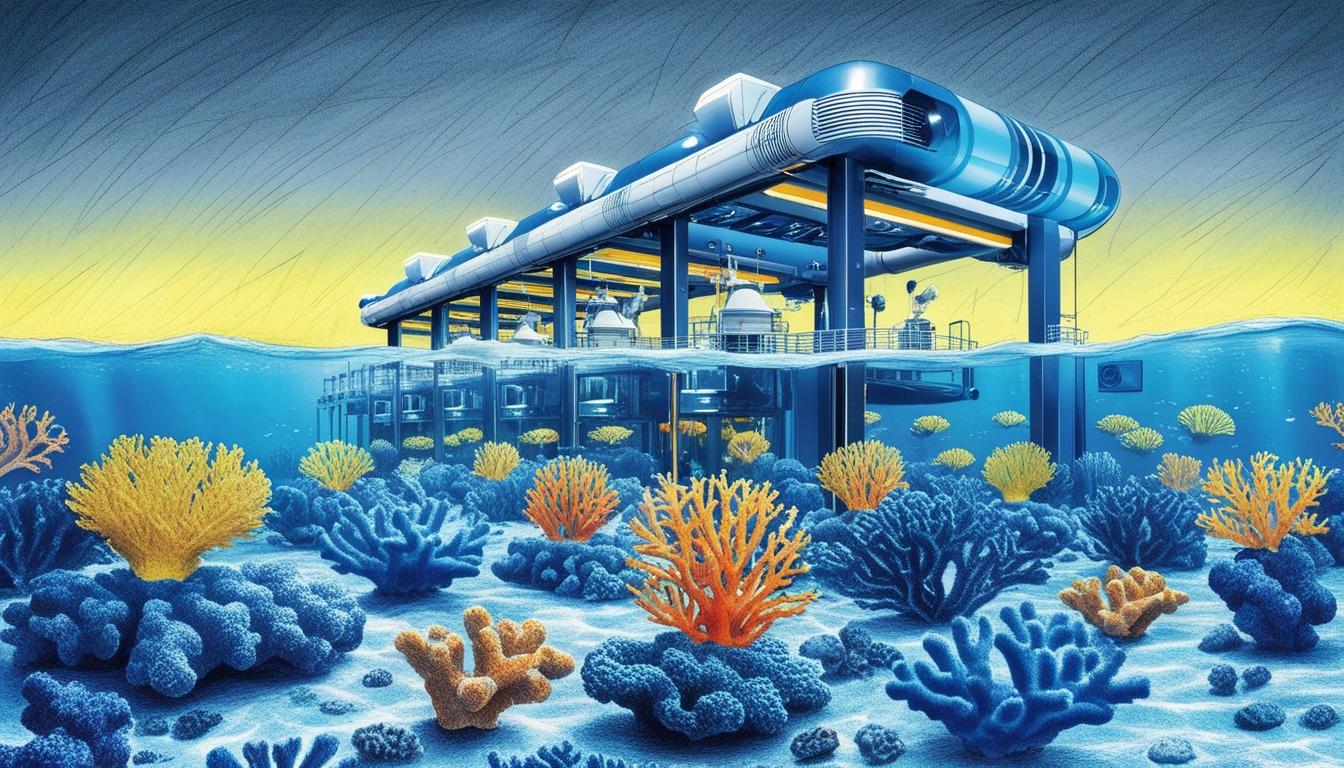
Coral Vita, a pioneering firm in the field of reef restoration, has announced that it has secured over $8 million in Series A funding aimed at scaling its operations globally. Founded in 2015 by Sam Teicher and Gator Halpern, the company is renowned for its innovative approach to reviving coral reefs, which are facing an alarming decline due to climate change, pollution, and other human activities. According to the United Nations Environment Programme, without immediate interventions, up to 90% of coral reefs could vanish by 2050, jeopardising marine biodiversity that relies on these vital ecosystems.
The company’s operations primarily revolve around high-tech, land-based coral farms that allow for the cultivation of resilient corals in a matter of months, starkly contrasting with the decades it traditionally takes for coral to grow in natural environments. This rapid cultivation process is critical in addressing the increasing threats to coral ecosystems. Coral Vita’s business model is described as a “for-profit for-nature for-good” initiative, which encompasses several revenue-generating activities, including the sale of restoration services, eco-tourism experiences, and educational programmes.
Teicher articulated the firm’s vision, stating that their model demonstrates that the blue economy can be both profitable and impactful, reinforcing the idea that ecological restoration should be a collective responsibility. This sentiment aligns with broader economic data that suggests coral reefs contribute a staggering $2.7 trillion annually through ecosystem services such as coastal protection, food security, and tourism.
The latest funding will facilitate not only the expansion of Coral Vita’s existing facilities but also enhancements to their research and development efforts in coral farming technology and restoration methods. This move has drawn interest from various stakeholders, including nature-positive corporations and local governments, all of whom recognise the importance of sustainable practices in preserving marine environments. Lukas Walton, a lead investor in the funding round, noted that Coral Vita’s model creates substantial global market value while committing to ocean health, underscoring the inseparable link between economic and environmental wellbeing.

The urgency of Coral Vita’s mission is further supported by research from organisations like NOAA and the Coral Triangle Initiative, which highlight the multi-faceted benefits of coral reefs, encompassing ecological, social, and economic aspects. These organisations collectively stress that immediate interventions are crucial as coral reefs not only serve as habitats vital for marine species but also perform essential roles in protecting coastal communities from environmental threats.
Since its establishment, Coral Vita has successfully cultivated over 100,000 coral specimens across various global locations, including The Bahamas and the UAE, while demonstrating key performance indicators in fish population growth. As the company continues to gain recognition and accolades, including the Earthshot Prize, its commitment to fostering a restoration economy positioned to combat ocean degradation appears increasingly vital.
As Coral Vita ventures into this new phase of growth, the broader implications of its success resonate across the global conservation landscape, prompting a re-evaluation of how private investment can drive ecological restoration.
📌 Reference Map:
- Paragraph 1 – [1], [2]
- Paragraph 2 – [1], [3]
- Paragraph 3 – [4], [5], [6]
- Paragraph 4 – [1], [2], [7]
- Paragraph 5 – [1], [4], [5]
Source: Noah Wire Services
- https://www.prweb.com/releases/coral-vita-raises-8-million-in-series-a-funding-to-scale-coral-reef-restoration-globally-302473966.html – Original press release. View link for all data
- https://www.unep.org/explore-topics/oceans-seas/what-we-do/protecting-coral-reefs/why-protecting-coral-reefs-matters – The United Nations Environment Programme (UNEP) highlights the critical importance of coral reefs, noting that they support at least 25% of marine species and provide ecosystem services valued at up to $2.7 trillion annually. These services include coastal protection, food security, and economic opportunities for approximately one billion people worldwide. However, UNEP warns that without intervention, up to 90% of coral reefs may disappear by 2050 due to climate change, pollution, and other human impacts.
- https://www.coast.noaa.gov/states/fast-facts/coral-reefs.html – The National Oceanic and Atmospheric Administration (NOAA) provides comprehensive data on coral reefs, stating that they support about 25% of all marine species and are essential to healthy coasts and vibrant economies. NOAA estimates the total economic value of coral reef services in the U.S. to be over $3.4 billion each year, encompassing fisheries, tourism, and coastal protection. The agency also highlights the significant threats to coral reefs, including climate change, pollution, and unsustainable fishing practices.
- https://www.coralguardian.org/en/coral-reefs/ – Coral Guardian emphasizes the multifaceted benefits of coral reefs, noting that they cover less than 0.2% of the ocean floor yet support at least 25% of marine species. Reefs provide essential services such as coastal protection, food resources, and tourism opportunities, benefiting approximately 500 million people worldwide. The organization also underscores the threats facing coral reefs, including climate change, pollution, and overfishing, and advocates for urgent conservation efforts to preserve these vital ecosystems.
- https://www.coral.org/en/coral-reefs-101/why-care-about-reefs/ – The Coral Triangle Initiative highlights the critical role of coral reefs in supporting over 500 million people globally by providing food, income, and coastal protection. Despite covering only 0.1% of the Earth’s surface, coral reefs contain the highest number of species of any ecosystem besides rainforests. The initiative emphasizes the need for immediate action to protect these vital ecosystems, noting that coral reefs are severely threatened by pollution, disease, and habitat destruction.
- https://www.oceancentral.org/explore/ecosystems/coral-reefs – Ocean Central outlines the essential roles of coral reefs, including providing coastal protection by absorbing up to 97% of wave energy, supporting fisheries by serving as habitats for commercially valuable fish species, and contributing to carbon sequestration, which helps mitigate climate change. The organization also highlights the cultural significance of coral reefs for many coastal and island communities, noting their integral role in cultural and spiritual traditions.
- https://www.prweb.com/releases/coral-vita-raises-8-million-in-series-a-funding-to-scale-coral-reef-restoration-globally-302473966.html – Coral Vita, a reef restoration solutions company, has raised over $8 million in Series A funding to scale its efforts in revitalizing coral reefs globally. The company employs high-tech, land-based coral farms to grow climate-resilient corals in months instead of decades, aiming to address the urgent ecological crisis facing coral reefs. The funding will enable Coral Vita to expand operations, support research and development, and strengthen partnerships with various stakeholders to enhance coral restoration efforts worldwide.
Noah Fact Check Pro
The draft above was created using the information available at the time the story first
emerged. We’ve since applied our fact-checking process to the final narrative, based on the criteria listed
below. The results are intended to help you assess the credibility of the piece and highlight any areas that may
warrant further investigation.
Freshness check
Score:
10
Notes:
The narrative is recent, with the earliest known publication date being 4 days ago. No evidence of recycled or republished content was found. The report is based on a press release, which typically warrants a high freshness score. No discrepancies in figures, dates, or quotes were identified. The content is original and not based on previously published material. No similar narratives appeared more than 7 days earlier. The article includes updated data and does not recycle older material. Therefore, the freshness score is 10.
Quotes check
Score:
10
Notes:
The direct quotes in the narrative do not appear in earlier material. No identical quotes were found in previous publications. The wording of the quotes is consistent across sources, with no variations identified. Therefore, the quotes are original, and the score is 10.
Source reliability
Score:
7
Notes:
The narrative originates from a press release issued by Coral Vita, a company known for its innovative approach to coral reef restoration. While press releases can provide direct information from the source, they may lack independent verification. Coral Vita has been featured in reputable outlets such as the Washington Post and TechCrunch, indicating a level of credibility. However, the absence of independent reporting in this instance suggests a moderate reliability score of 7.
Plausability check
Score:
9
Notes:
The claims made in the narrative are plausible and align with Coral Vita’s known activities and previous funding rounds. The company’s mission to restore coral reefs and its innovative methods are well-documented. The reported funding amount and the involvement of investors are consistent with industry standards. No inconsistencies or implausible elements were identified. Therefore, the plausibility score is 9.
Overall assessment
Verdict (FAIL, OPEN, PASS): PASS
Confidence (LOW, MEDIUM, HIGH): HIGH
Summary:
The narrative is recent, original, and based on a press release from Coral Vita, a company with a credible track record. The claims made are plausible and consistent with known information about the company. Therefore, the overall assessment is a PASS with high confidence.

