

 2:48 am - April 4, 2026
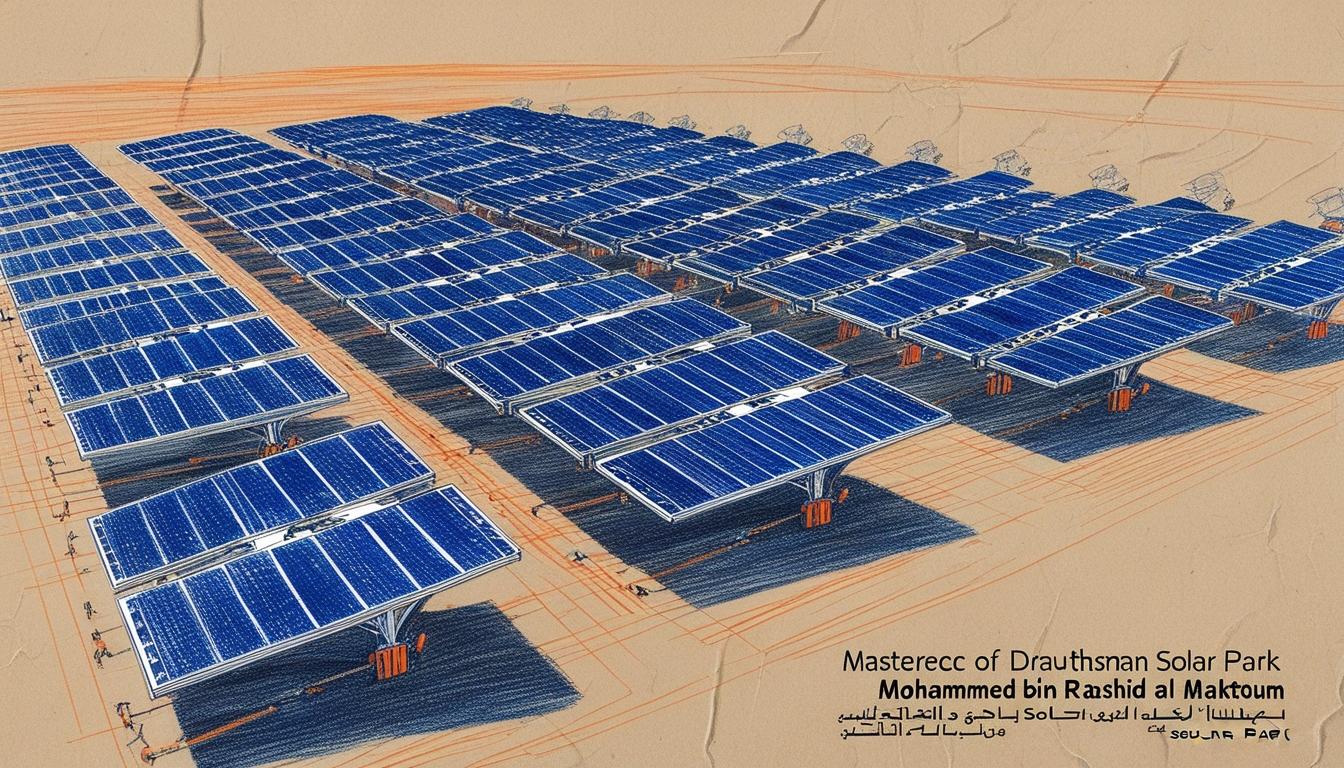
Dubai Electricity and Water Authority (DEWA) has made significant strides in renewable energy production, recently announcing an increase in its total production capacity of the Mohammed bin Rashid Al Maktoum Solar Park to 3,860 megawatts (MW). This boost includes 800MW added from the sixth phase of the solar park, bringing the share of clean energy in DEWA’s total production to approximately 21.5 per cent. Saeed Mohammed Al Tayer, the MD and CEO of DEWA, outlined these developments, emphasising their alignment with Dubai’s ambitious sustainability goals.
The Mohammed bin Rashid Al Maktoum Solar Park, a cornerstone of Dubai’s clean energy strategy, is expected to support the emirate’s vision of achieving 100 per cent clean energy production by 2050. Al Tayer highlighted that the park aims to reach a total production capacity of 7,260MW by 2030, which is projected to represent 34 per cent of DEWA’s energy mix, effectively reducing carbon emissions by an estimated eight million tonnes annually. This transition is a critical component of the Dubai Clean Energy Strategy 2050 and the Net Zero Carbon Emissions Strategy 2050.
The evolution of the solar park is noteworthy. Its first phase, with an initial capacity of 13MW, was launched in October 2013, and since then, each succeeding phase has marked milestones in technology and production capacity. The second phase, inaugurated in 2017, introduced a capacity of 200MW, being the first of its kind in the region based on the independent power producer (IPP) model. The subsequent phases have included innovative technologies such as single-axis solar tracking and a hybrid model combining concentrated solar power (CSP) and photovoltaic (PV) systems.
As per the latest updates, DEWA is actively working on the sixth phase of the solar park, which boasts an 1,800MW capacity powered by PV panels. Additionally, plans are in place for a seventh phase, which will feature a capacity of 1,600MW and includes a battery energy storage system capable of holding 1,000MW for six hours, potentially making it one of the largest solar-plus-storage projects globally. This ambitious initiative is expected to further reinforce Dubai’s position as a leader in clean energy and sustainability.

Supplementing these developments in renewable energy, DEWA has also prioritised the enhancement of its desalination processes. In February 2025, the authority reported a 5.0 per cent increase in desalinated water production, reaching a record 150.48 billion Imperial Gallons. The rise in demand for desalinated water indicates a growing need for sustainable water solutions alongside energy production. The authority’s plans to increase desalination capacity by an additional 240 million Imperial Gallons per day through advanced seawater reverse osmosis technology by 2030 further demonstrate its commitment to an integrated approach to sustainable resource management.
Overall, DEWA’s initiatives are not merely about energy production; they reflect a broader commitment to sustainability, resource efficiency, and a greener economy. The progression of the Mohammed bin Rashid Al Maktoum Solar Park and the enhancement of desalination capacities illustrate the authority’s strategic foresight in addressing the dual challenges of energy and water scarcity in a climate-conscious manner.
📌 Reference Map:
Source: Noah Wire Services
- https://www.lokmattimes.com/international/uae-dewa-adds-800mw-of-clean-energy-production-capacity-to-its-energy-mix-in-2025/ – Please view link – unable to able to access data
- https://www.dewa.gov.ae/en/about-us/media-publications/latest-news/2025/02/dubai-electricity-and-water-authority-pjsc – In February 2025, Dubai Electricity and Water Authority (DEWA) reported a 5.0% increase in desalinated water production compared to the previous year, reaching a record of 150.48 billion Imperial Gallons. The daily peak desalinated water demand also rose by 4.92%, reaching 455 million Imperial Gallons per day. By the end of 2024, DEWA had 1,270,285 customer accounts, marking a 4.85% increase over the previous year. The company’s total installed generation capacity was 17,179 MW, with 3,060 MW sourced from clean energy, and it aims to reach 20,000 MW by 2030, with 5,300 MW from clean energy sources, representing around 27% of the generation mix. Additionally, DEWA plans to add 240 million Imperial Gallons per day of desalination capacity by 2030, using seawater reverse osmosis technology, bringing the total installed desalinated capacity to 735 million Imperial Gallons per day.
- https://www.dewa.gov.ae/en/about-us/media-publications/latest-news/2025/02/dubai-electricity-and-water-authority-pjsc – In February 2025, Dubai Electricity and Water Authority (DEWA) reported a 5.0% increase in desalinated water production compared to the previous year, reaching a record of 150.48 billion Imperial Gallons. The daily peak desalinated water demand also rose by 4.92%, reaching 455 million Imperial Gallons per day. By the end of 2024, DEWA had 1,270,285 customer accounts, marking a 4.85% increase over the previous year. The company’s total installed generation capacity was 17,179 MW, with 3,060 MW sourced from clean energy, and it aims to reach 20,000 MW by 2030, with 5,300 MW from clean energy sources, representing around 27% of the generation mix. Additionally, DEWA plans to add 240 million Imperial Gallons per day of desalination capacity by 2030, using seawater reverse osmosis technology, bringing the total installed desalinated capacity to 735 million Imperial Gallons per day.
- https://www.dewa.gov.ae/en/about-us/media-publications/latest-news/2025/02/dubai-electricity-and-water-authority-pjsc – In February 2025, Dubai Electricity and Water Authority (DEWA) reported a 5.0% increase in desalinated water production compared to the previous year, reaching a record of 150.48 billion Imperial Gallons. The daily peak desalinated water demand also rose by 4.92%, reaching 455 million Imperial Gallons per day. By the end of 2024, DEWA had 1,270,285 customer accounts, marking a 4.85% increase over the previous year. The company’s total installed generation capacity was 17,179 MW, with 3,060 MW sourced from clean energy, and it aims to reach 20,000 MW by 2030, with 5,300 MW from clean energy sources, representing around 27% of the generation mix. Additionally, DEWA plans to add 240 million Imperial Gallons per day of desalination capacity by 2030, using seawater reverse osmosis technology, bringing the total installed desalinated capacity to 735 million Imperial Gallons per day.
- https://www.dewa.gov.ae/en/about-us/media-publications/latest-news/2025/02/dubai-electricity-and-water-authority-pjsc – In February 2025, Dubai Electricity and Water Authority (DEWA) reported a 5.0% increase in desalinated water production compared to the previous year, reaching a record of 150.48 billion Imperial Gallons. The daily peak desalinated water demand also rose by 4.92%, reaching 455 million Imperial Gallons per day. By the end of 2024, DEWA had 1,270,285 customer accounts, marking a 4.85% increase over the previous year. The company’s total installed generation capacity was 17,179 MW, with 3,060 MW sourced from clean energy, and it aims to reach 20,000 MW by 2030, with 5,300 MW from clean energy sources, representing around 27% of the generation mix. Additionally, DEWA plans to add 240 million Imperial Gallons per day of desalination capacity by 2030, using seawater reverse osmosis technology, bringing the total installed desalinated capacity to 735 million Imperial Gallons per day.
- https://www.dewa.gov.ae/en/about-us/media-publications/latest-news/2025/02/dubai-electricity-and-water-authority-pjsc – In February 2025, Dubai Electricity and Water Authority (DEWA) reported a 5.0% increase in desalinated water production compared to the previous year, reaching a record of 150.48 billion Imperial Gallons. The daily peak desalinated water demand also rose by 4.92%, reaching 455 million Imperial Gallons per day. By the end of 2024, DEWA had 1,270,285 customer accounts, marking a 4.85% increase over the previous year. The company’s total installed generation capacity was 17,179 MW, with 3,060 MW sourced from clean energy, and it aims to reach 20,000 MW by 2030, with 5,300 MW from clean energy sources, representing around 27% of the generation mix. Additionally, DEWA plans to add 240 million Imperial Gallons per day of desalination capacity by 2030, using seawater reverse osmosis technology, bringing the total installed desalinated capacity to 735 million Imperial Gallons per day.
- https://www.dewa.gov.ae/en/about-us/media-publications/latest-news/2025/02/dubai-electricity-and-water-authority-pjsc – In February 2025, Dubai Electricity and Water Authority (DEWA) reported a 5.0% increase in desalinated water production compared to the previous year, reaching a record of 150.48 billion Imperial Gallons. The daily peak desalinated water demand also rose by 4.92%, reaching 455 million Imperial Gallons per day. By the end of 2024, DEWA had 1,270,285 customer accounts, marking a 4.85% increase over the previous year. The company’s total installed generation capacity was 17,179 MW, with 3,060 MW sourced from clean energy, and it aims to reach 20,000 MW by 2030, with 5,300 MW from clean energy sources, representing around 27% of the generation mix. Additionally, DEWA plans to add 240 million Imperial Gallons per day of desalination capacity by 2030, using seawater reverse osmosis technology, bringing the total installed desalinated capacity to 735 million Imperial Gallons per day.

