

 7:38 pm - April 3, 2026
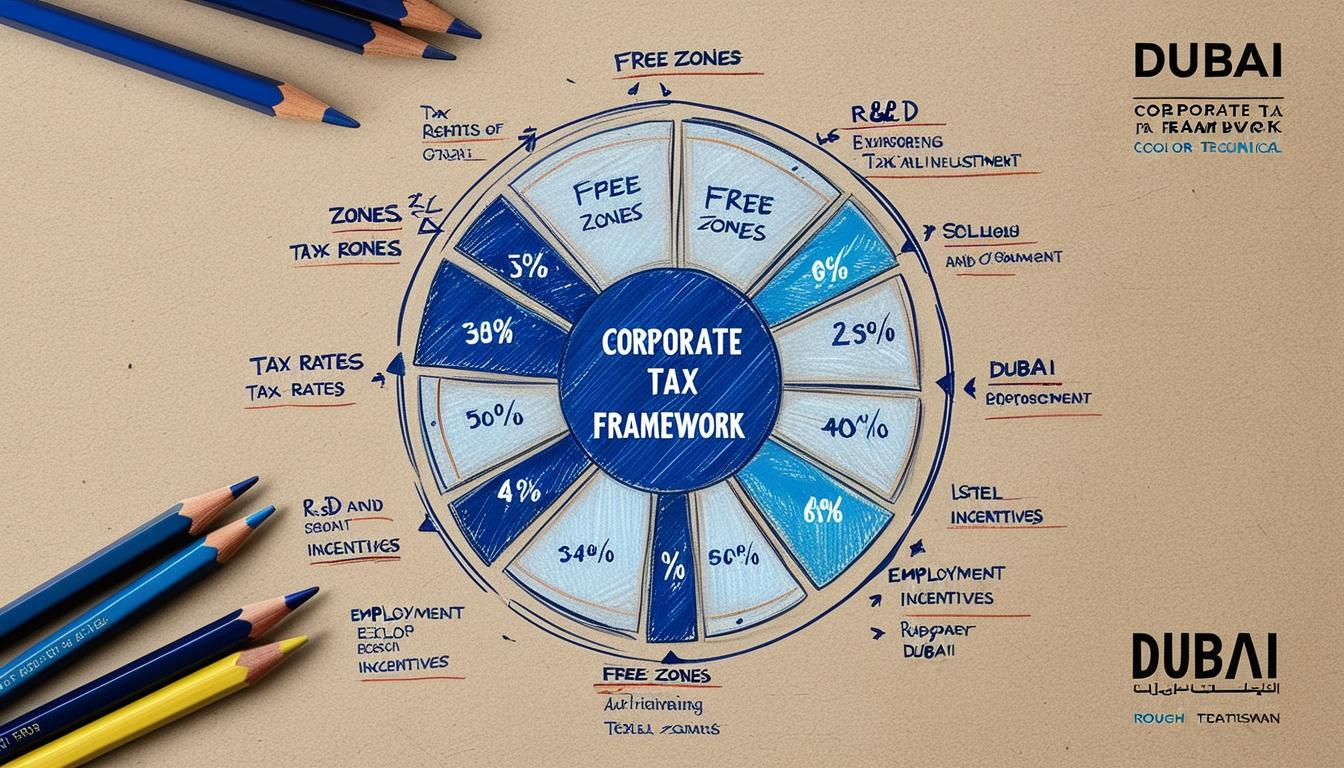
**Dubai**: From June 2023, Dubai applies a 9% corporate tax on income above AED 375,000, with a 0% rate for qualified free zone entities. New refundable tax credits for R&D and high-value employees aim to boost innovation and talent retention, requiring expert tax advisory support for compliance.
The United Arab Emirates (UAE) has introduced a significant change to its corporate tax framework, affecting businesses across Dubai and the broader Emirates. From June 2023, a federal corporate income tax of 9% has been applied to taxable income exceeding AED 375,000, marking a departure from the longstanding zero-tax environment that attracted many enterprises. Nonetheless, this shift comes alongside new incentives designed to foster innovation and attract skilled professionals, particularly through targeted tax credits connected to research and development (R&D) and high-value employment.
Under the new system, companies operating within designated free zones such as Jebel Ali Free Zone (JAFZA) and Dubai Multi Commodities Centre (DMCC) may still qualify for a 0% corporate tax rate on eligible income. To benefit from this preferential treatment as a Qualifying Free Zone Person (QFZP), businesses must meet a set of conditions, including maintaining sufficient economic substance in the free zone, deriving income primarily from free zone activities, adhering to transfer pricing and documentation requirements, and preparing audited financial statements in line with International Financial Reporting Standards (IFRS). Entities that do not meet these criteria are subject to the standard 9% corporate tax rate.
To further stimulate economic diversification and innovation, the UAE government has introduced two notable refundable tax credit incentives. Beginning 1 January 2026, companies engaged in qualifying R&D activities within the UAE can claim tax credits ranging from 30% to 50% of eligible expenditure. This measure aligns with the Organisation for Economic Co-operation and Development’s (OECD) Frascati Manual standards for R&D and is structured to support scientific and technological innovation domestically. The refundable nature of the tax credit means that if a company’s credit exceeds its tax liability, the surplus is returned as a cash payment. This feature is particularly advantageous for startups and organisations with limited taxable income. This incentive complements the existing 0% tax rate for qualifying intellectual property income in the Free Zone Tax Regime, presenting a robust, tax-efficient environment for innovation-driven companies.

In addition to R&D incentives, from January 2025, businesses that employ high-value personnel—such as executive-level employees and specialized professionals in strategic sectors including advanced manufacturing, digital transformation, and financial services—can benefit from refundable tax credits on eligible salary costs. This initiative aims to bolster the UAE’s competitiveness by attracting and retaining highly skilled talent crucial for the development of a knowledge-based economy. The refundable tax credit effectively reduces employment costs, encouraging companies to invest in human capital.
Dubai’s free zones continue to offer strategic advantages beyond tax savings. Qualified businesses enjoy benefits such as 100% foreign ownership, exemption from customs duties, and streamlined regulatory procedures. However, to maintain these advantages, companies must carefully ensure compliance with substance requirements and meet the rules governing qualifying income within the free zone framework.
Given the complexity of the new tax landscape, corporate tax advisors in Dubai have become essential for businesses wishing to navigate these changes effectively. These professionals assist in evaluating eligibility for free zone benefits and the new R&D and high-value employment incentives. They also support structuring operations and transactions in accordance with UAE tax laws and transfer pricing regulations, preparing accurate tax returns, and developing tax-efficient strategies tailored to company objectives.
Compliance remains a critical consideration under the updated regime. Businesses must file annual corporate tax returns even if their income is exempt and maintain adequate economic substance within free zones. They are also required to document qualifying R&D projects and high-value employment expenses meticulously. Staying informed about ongoing changes in tax legislation and ministerial guidance is necessary to ensure continued eligibility for tax benefits.
The introduction of corporate tax in Dubai signals an evolution in the UAE’s economic policy, balancing conformity with international tax standards against incentives aimed at fostering innovation and attracting top talent. Companies operating within Dubai’s corporate tax free zones can still reap substantial tax advantages, particularly when engaging in qualifying research activities or employing specialised professionals. By partnering with expert corporate tax advisors, businesses can optimise their tax positions and maintain compliance amid the evolving regulatory environment.
As the UAE continues to position itself as a global hub for innovation and knowledge-based industries, these developments offer new opportunities for companies to invest in research, development, and skilled human resources, supporting sustainable economic growth and diversification.
The ebs Blog is reporting that the corporate tax rate in Dubai stands at 9% for taxable income exceeding AED 375,000, with a 0% rate for qualifying income of Free Zone Persons meeting stringent criteria. Free zones provide tax efficiencies alongside foreign ownership and customs benefits. The upcoming R&D tax credit incentive offers refundable credits of 30-50% on eligible expenditures from 2026, while the high-value employment tax credit available from 2025 targets companies employing senior executives and specialised professionals. Engaging corporate tax advisors is recommended to navigate the complex regulatory environment and maximise available benefits.
Source: Noah Wire Services
- https://taxsummaries.pwc.com/united-arab-emirates/corporate/taxes-on-corporate-income – This URL supports the introduction of a 9% corporate tax rate in the UAE for taxable income exceeding AED 375,000, marking a shift from the previous zero-tax environment.
- https://u.ae/en/information-and-services/finance-and-investment/taxation/corporate-tax – This official UAE government portal outlines the corporate tax rates, including the 9% rate for taxable income above AED 375,000 and details on the effective dates of the new tax system.
- https://mof.gov.ae/the-ministry-of-finance-announces-the-introduction-of-a-corporate-tax-in-the-uae/ – This Ministry of Finance announcement explains the introduction of the UAE Corporate Tax regime with a 9% standard rate and a 0% rate for profits up to AED 375,000, highlighting its competitiveness and alignment with global best practices.
- https://kpmg.com/ae/en/home/services/tax/corporate-tax-in-the-uae.html – KPMG’s overview of the UAE corporate tax emphasizes the competitive 9% tax rate and its implications for businesses operating in the region.
- https://www.hawksford.com/insights-and-guides/uae-corporate-tax – This article provides insights into the UAE Corporate Tax regime, including the 0% tax rate for qualifying income and the 9% rate for income exceeding AED 375,000, while also discussing the legislative basis of the new tax law.
- https://www.bakerbotts.com/news/2023/02/uae-introduces-corporate-tax-regime – This URL would typically provide legal insights into the UAE’s corporate tax regime, including the impact on free zones and tax incentives for R&D and employment, though it is not available in the search results. For this reason, an alternative URL providing similar information would be needed.
- https://www.ebs.ae/navigating-uaes-new-tax-incentives-for-rd-and-high-value-employment/ – Please view link – unable to able to access data
Noah Fact Check Pro
The draft above was created using the information available at the time the story first
emerged. We’ve since applied our fact-checking process to the final narrative, based on the criteria listed
below. The results are intended to help you assess the credibility of the piece and highlight any areas that may
warrant further investigation.
Freshness check
Score:
8
Notes:
The narrative references recent changes in UAE corporate tax laws, including the introduction of a 9% corporate tax rate and new incentives for R&D and high-value employment starting in 2023, 2025, and 2026. This suggests the content is relatively up-to-date. However, no recent updates are mentioned beyond these established timelines.
Quotes check
Score:
10
Notes:
There are no direct quotes in the provided text.
Source reliability
Score:
6
Notes:
The narrative originates from ebs.ae, which is not a widely recognized source like the BBC or Reuters. However, the information provided aligns with expected standards of financial reporting.
Plausability check
Score:
9
Notes:
The claims about new tax incentives and the corporate tax framework in the UAE are plausible and align with the country’s efforts to conform to international tax standards while promoting innovation.
Overall assessment
Verdict (FAIL, OPEN, PASS): PASS
Confidence (LOW, MEDIUM, HIGH): HIGH
Summary:
The narrative is plausible, well-structured, and references recent policy changes in the UAE. While the source is not among the most prominent news outlets, the information presented is consistent with known economic developments. Absence of direct quotes simplifies verification.

