




Spire International’s new rooftop solar farm in Dubai highlights a rising trend among UAE industrial firms adopting leased clean energy assets to drive sustainability, reduce operational costs, and support net-zero commitments.
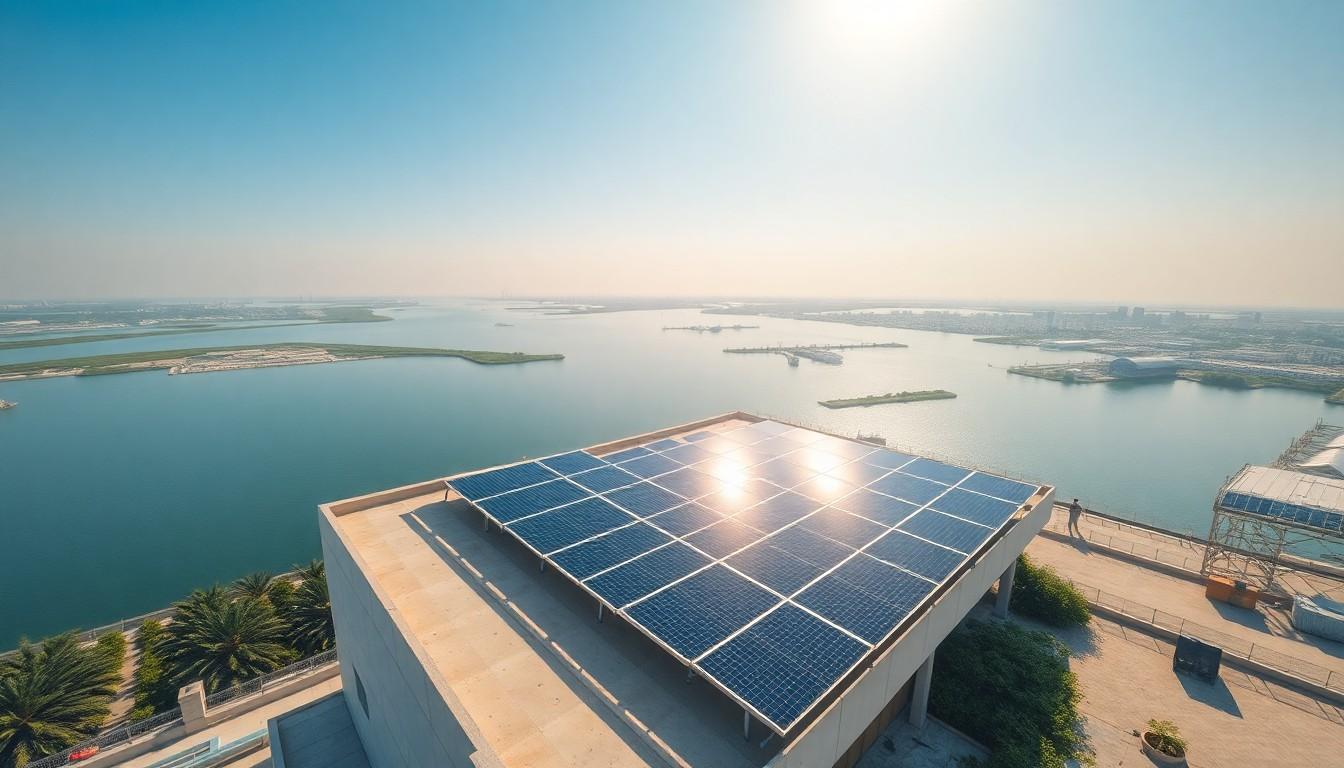
Spire International has recently put into service a new rooftop solar farm at its storage and logistics centre in Dubai Industrial City, adding yet another example of how industrial and distribution companies in the UAE are leveraging leased clean energy assets to slash operational costs and emissions, without necessarily making large upfront investments.
The system, rated at 480 kilowatt-peak, was developed in partnership with Yellow Door Energy, which brands itself as a sustainable energy partner for businesses across the Middle East and South Africa. As per the companies, the solar installation is now fully operational and is expected to generate around 806,000 kilowatt-hours of electricity in its first year. It comprises 820 solar panels and direct current optimisers, an approach aimed at making the system safer and, somehow, increasing its output.
This plant is predicted to reduce carbon emissions by about 326,000 kilograms each year. That figure firmly situates the project within the UAE’s wider net-zero commitments and reflects a rising trend among companies with sizeable warehouse and logistics operations to treat rooftop space as a productive energy asset rather than just empty cover.
Spire International is part of the LALS Group and supplies fast-moving consumer goods to roughly 45 markets globally. Its logistics facility in Dubai is central to that business model, making reliable energy and cost control especially critical. Harish Bogwani, who is head of FMCG at LALS Group and Spire International, commented that sustainability is central to the company’s long-term growth plans. He described the solar project as a significant milestone and expressed gratitude to Yellow Door Energy and Dubai Industrial City for helping turn an idea into a working installation.
The project was officially opened at Dubai Industrial City, with senior representatives from the zone, Spire International, LALS Group, Yellow Door Energy, and Pure Energy (which handled engineering, procurement, and construction). The involvement of all these players highlights how more and more such projects are being delivered through partnerships, rather than individual companies trying to handle everything alone.
Jeremy Crane, CEO of Yellow Door Energy, stated that the Spire installation demonstrates how businesses can cut emissions and lower energy bills via a solar lease model, all while keeping operational flexibility. He also pointed out the company’s roots in the UAE and its expanding regional footprint. According to Yellow Door Energy, its solar assets have produced over 1.1 terawatt-hours of clean electricity across seven countries, a pretty impressive milestone that shows how quickly the company has grown.
The solar lease model is a major part of what makes these projects attractive. Essentially, Yellow Door Energy takes care of funding, designing, building, commissioning, operating, and maintaining the system throughout the term of the contract. For industrial clients, that means getting access to renewable electricity without having to worry about huge capital costs or the technical risks that normally come with owning and managing a power plant. They argue this setup allows clients to focus on their main operations while still benefiting from reduced emissions and power costs.
This approach seems to be catching on across the Gulf region, especially in Dubai, where land-efficient clean-energy solutions are increasingly being installed on factories, warehouses, offices, and logistics centres. For example, in February, Procter & Gamble installed a 500 kWp solar carport at its headquarters in Jebel Ali Free Zone with Yellow Door Energy. The company said that it would produce about 816,500 kilowatt-hours in its first year, covering more than half of the site’s annual electricity needs.
Then, in April, Lipton Teas and Infusions announced a 580 kWp rooftop solar plant at its Jebel Ali site, also with Yellow Door Energy. That system was expected to generate roughly 958,000 kilowatt-hours annually, meeting about 13% of the factory’s energy demand. The company said that the output would power the production of over a billion teabags each year, and the facility included automated cleaning systems designed to keep efficiency high and water use low.
Meanwhile, district cooling provider Emicool has also advanced with solar projects backed by Yellow Door Energy at various sites around Dubai. They said their combined installations aim to produce about 1.5 million kilowatt-hours of clean electricity every year, helping to cut emissions by around 600 tonnes. The rollout even included rooftop systems, parking lot arrays, thermal energy storage tanks, and a vertical facade installation, highlighting how solar deployments are being tailored to crowded urban spaces.
Yellow Door Energy itself has been expanding swiftly. To mark its tenth anniversary at the start of this year, the company announced that it had exceeded 1 billion kilowatt-hours of clean electricity generated from its projects. Its current portfolio stands at 400 megawatt-peak across projects in operation, under construction, or in planning stages across seven countries, with a goal of reaching 500 MWp by the end of 2025.
For the UAE, these initiatives are about more than just tiny efficiency improvements. They are part of a bigger shift in how industries use energy, where cutting carbon is now linked to competitiveness, resilience, and investor expectations. They also mesh well with the country’s ambition to achieve net zero by 2050, encouraging even traditional utility-dependent companies to think beyond the usual supply options.
At Spire International’s Dubai Industrial City site, the new solar plant effectively turns the company’s roof into part of its overall energy approach. In an industry where margins are often slim and logistics can be very energy-demanding, such moves, well, they’re both practical and, you know, symbolic of the broader shift towards sustainable operations.
- https://25h.app/2026/06/29/%D8%B3%D8%A8%D8%A7%D9%8A%D8%B1-%D8%A5%D9%86%D8%AA%D8%B1%D9%86%D8%A7%D8%B4%D9%8A%D9%88%D9%86%D8%A7%D9%84-%D9%88yellow-door-energy-%D8%AA%D8%AF%D8%B4%D9%86%D8%A7%D9%86-%D9%85%D8%AD%D8%B7%D8%A9-%D8%B7/ – Please view link – unable to able to access data
- https://www.tradingview.com/news/reuters.com%2C2026-06-25%3Anewsml_Zaw2DgXFg%3A0-zawya-spire-international-and-yellow-door-energy-commission-a-rooftop-solar-plant-in-dubai-industrial-city/ – Spire International, a leading FMCG distributor and exporter supplying to 45 markets globally and an associate company of LALS Group, has officially commissioned a solar plant under a solar lease with Yellow Door Energy, a prominent sustainable energy partner for businesses in the Middle East and South Africa. The 480 kilowatt-peak (kWp) rooftop solar plant is now fully operational at Spire International’s storage and logistics facility in Dubai Industrial City and is expected to generate 806,000 kilowatt-hours (kWh) of clean electricity in its first year of operation. The project features 820 solar panels, supported by direct current (DC) optimizers to improve system safety and maximize clean energy generation. It is expected to reduce carbon emissions by 326,000 kilograms per year, directly supporting LALS Group’s sustainability goals and aligning with the UAE Net Zero by 2050 target.
- https://solarquarter.com/2026/02/09/pg-commissions-500-kwp-solar-carport-with-yellow-door-energy-at-dubai-headquarters/ – Procter & Gamble (P&G) has strengthened its sustainability commitment in the Middle East with the commissioning of a 500 kilowatt-peak (kWp) solar carport at its UAE head office in the Jebel Ali Freezone Authority (JAFZA), Dubai. The project has been developed in partnership with Yellow Door Energy, a leading sustainable energy provider for commercial and industrial customers across the Middle East and South Africa. Now fully operational, the solar carport is expected to generate around 816,500 kilowatt-hours (kWh) of clean electricity in its first year, meeting more than 50% of the annual power demand of P&G’s UAE headquarters. The installation features over 870 high-efficiency bifacial solar panels designed to maximize on-site renewable energy generation.
- https://solarquarter.com/2026/04/08/lipton-teas-and-infusions-commissions-580-kwp-solar-plant-at-jebel-ali-facility-in-partnership-with-yellow-door-energy/ – Lipton Teas and Infusions has commissioned a 580 kWp solar power plant at its Jebel Ali factory in collaboration with Yellow Door Energy, marking a significant step in its global decarbonisation strategy. The rooftop solar installation, located at the company’s facility in Jebel Ali, is expected to generate approximately 958,000 kWh of clean electricity annually, meeting around 13% of the site’s energy requirements. The energy produced is sufficient to support the production of over one billion teabags per year, according to the company. The solar plant comprises nearly 1,000 photovoltaic panels and incorporates automated cleaning systems, including four robotic units designed to maintain performance efficiency while minimizing water consumption. In addition to power generation, the installation provides shaded parking for 88 vehicles, enhancing on-site infrastructure.
- https://gulfnews.com/business/energy/emicool-yellow-door-energy-rollout-solar-projects-advance-dubais-sustainable-cooling-infrastructure-1.500361989 – Emicool, a leading district cooling provider in Dubai and a joint venture between Dubai Investments and Actis, has partnered with Yellow Door Energy, a sustainable energy developer in the Middle East and Africa, to advance Dubai’s sustainable cooling infrastructure. The collaboration involves the rollout of solar projects that aim to generate 1.5 million kilowatt-hours (kWh) of clean electricity per year. The solar lease model enables Yellow Door Energy to finance, build, and operate the plants throughout their lifecycle, reducing upfront costs for Emicool while accelerating renewable adoption. The installations also mark a milestone for Yellow Door Energy, which has now surpassed 1 billion kilowatt-hours of clean electricity generated across its portfolio.
- https://www.pv-magazine.com/press-releases/1-billion-kilowatt-hours-of-clean-energy-yellow-door-energy-celebrates-a-decade-of-renewable-energy-leadership/ – Yellow Door Energy marks its 10th anniversary with a momentous milestone: 1 billion kilowatt-hours (kWh) of clean energy generated through its solar projects. In practical terms, that’s enough clean energy to charge 273 million smartphones for a year while reducing 396,000 metric tons of carbon emissions, thereby aligning with companies’ and countries’ clean energy goals and Net Zero targets. Over the past decade, Yellow Door Energy has built an impressive portfolio comprising 400 megawatts-peak (MWp) of solar assets in various stages of operation, construction and planning in seven countries. This number is set to increase to 500 MWp by the end of 2025.
- https://www.emicool.com/media-center/press-releases/emicool-and-yellow-door-energy-launch-four-solar-plants-to-decarbonize-dubais-district-cooling – Emicool, one of Dubai’s leading district cooling providers, and a joint venture between Dubai Investments and Actis, in collaboration with Yellow Door Energy, a premier sustainable energy developer in the Middle East and Africa, has commissioned four solar power plants across Dubai with a combined capacity of 1.2 Megawatts-peak (MWp). Implemented under a solar lease model, the projects are expected to generate 1.5 million kilowatt-hours (kWh) of clean electricity annually, reducing carbon emissions by approximately 600 tonnes. This clean energy is equivalent to powering around 100 homes for one year. The installations, located across Dubai Investments Park 2, Motor City, and Expo City Dubai, feature over 1,860 solar panels and integrate multiple applications, including solar panels on rooftops, parking lots, thermal energy storage (TES) tanks, and a pioneering vertical façade installation, demonstrating innovation in maximising solar generation in dense urban environments.
Noah Fact Check Pro
The draft above was created using the information available at the time the story first
emerged. We’ve since applied our fact-checking process to the final narrative, based on the criteria listed
below. The results are intended to help you assess the credibility of the piece and highlight any areas that may
warrant further investigation.
Freshness check
Score:
8
Notes:
The article was published on June 29, 2026, and reports on a solar plant commissioned four days prior, on June 25, 2026. ([tradingview.com](https://www.tradingview.com/news/reuters.com%2C2026-06-25%3Anewsml_Zaw2DgXFg%3A0-zawya-spire-international-and-yellow-door-energy-commission-a-rooftop-solar-plant-in-dubai-industrial-city/?utm_source=openai)) The content appears original, with no evidence of prior publication or recycling from other sources. However, the article’s freshness is slightly diminished due to the four-day gap between the event and publication.
Quotes check
Score:
7
Notes:
The article includes direct quotes from Harish Bhojwani and Jeremy Crane. ([tradingview.com](https://www.tradingview.com/news/reuters.com%2C2026-06-25%3Anewsml_Zaw2DgXFg%3A0-zawya-spire-international-and-yellow-door-energy-commission-a-rooftop-solar-plant-in-dubai-industrial-city/?utm_source=openai)) A search for these quotes reveals no exact matches in earlier publications, suggesting they are original. However, without access to the original press release or event recordings, full verification of these quotes’ authenticity is not possible.
Source reliability
Score:
6
Notes:
The primary source, ZAWYA, is a reputable news outlet in the Middle East. ([tradingview.com](https://www.tradingview.com/news/reuters.com%2C2026-06-25%3Anewsml_Zaw2DgXFg%3A0-zawya-spire-international-and-yellow-door-energy-commission-a-rooftop-solar-plant-in-dubai-industrial-city/?utm_source=openai)) However, the article’s publication on TradingView News raises concerns about its independence and potential for aggregation. The lack of direct access to the original ZAWYA article further complicates the assessment of source reliability.
Plausibility check
Score:
8
Notes:
The claims about the solar plant’s capacity, expected energy generation, and carbon emission reductions align with industry standards and are consistent with similar projects in the region. ([tradingview.com](https://www.tradingview.com/news/reuters.com%2C2026-06-25%3Anewsml_Zaw2DgXFg%3A0-zawya-spire-international-and-yellow-door-energy-commission-a-rooftop-solar-plant-in-dubai-industrial-city/?utm_source=openai)) However, the absence of independent verification sources and the reliance on a single source for these claims reduce the overall confidence in their accuracy.
Overall assessment
Verdict (FAIL, OPEN, PASS): FAIL
Confidence (LOW, MEDIUM, HIGH): MEDIUM
Summary:
The article presents information about a recently commissioned solar plant in Dubai Industrial City, citing a reputable source. However, the lack of independent verification, reliance on a single source, and the inability to fully verify direct quotes raise significant concerns about the content’s accuracy and reliability. Given these issues, the article does not meet the necessary standards for publication under our editorial indemnity.


