

 1:22 am - April 4, 2026
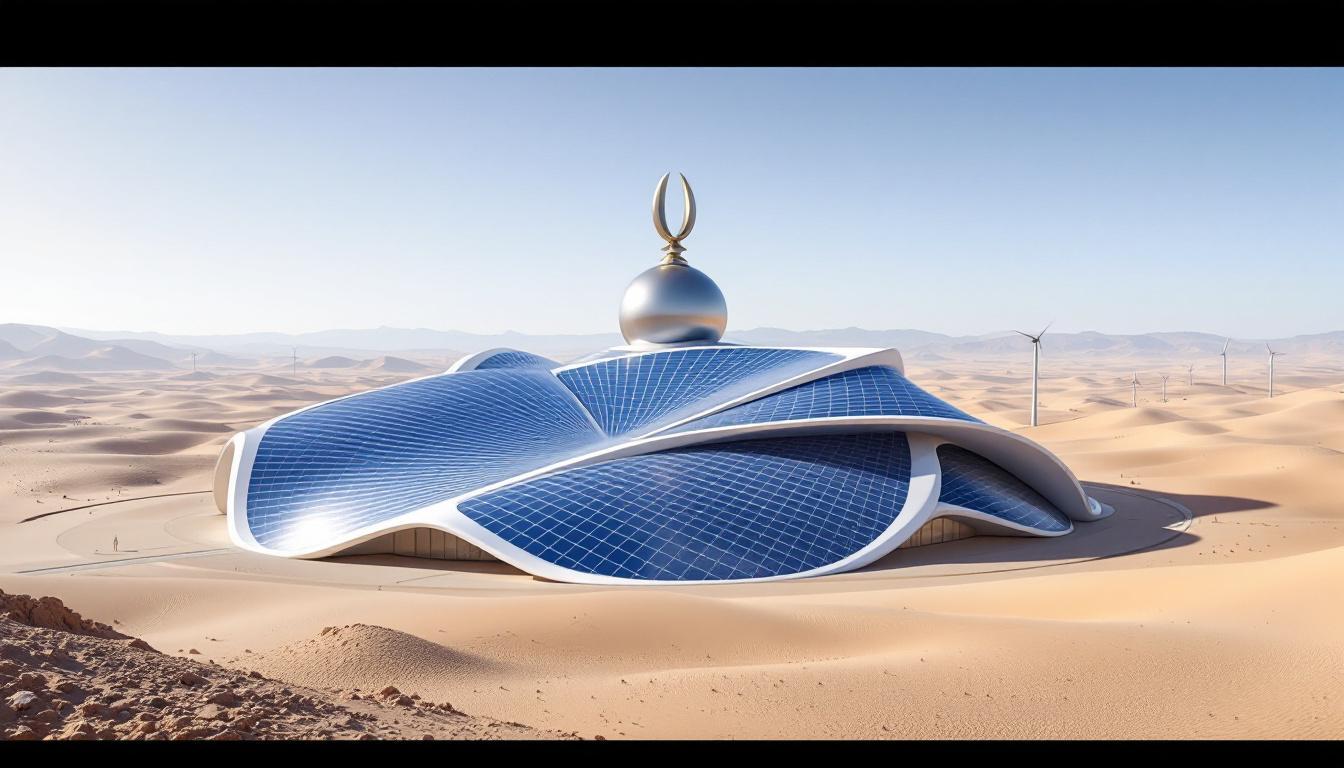
Al Rayyan Mosque in Dubai’s Hatta region becomes the world’s first house of worship to earn LEED Zero Carbon certification, showcasing innovative eco-friendly design and renewable energy integration.
Dubai’s Al Rayyan Mosque in Hatta has really made a name for itself as a trailblazer when it comes to sustainable religious architecture. Recently, it snagged the title of the world’s first house of worship to earn the LEED Zero Carbon certification. That’s a pretty big deal, by the way. This honor from the US Green Building Council not only highlights the mosque’s strong commitment to protecting the environment but also shows it has offset 175% of its yearly carbon emissions, meaning it’s actively helping to repair the environment, not just minimizing damage.
This isn’t the mosque’s first rodeo with sustainability accomplishments either. Back in 2021, Al Rayyan Mosque became the first in the world to receive LEED Platinum certification under the LEED v4 standards. It scored a notable 83 points, which indicates a pretty thorough approach to green design. Then, just a couple of years later, in 2024, it achieved another milestone by becoming the first religious site globally to get LEED Zero Energy certification. At that point, it was producing 150% of its annual energy needs thanks to super-efficient solar panels, with the excess energy fed back into Dubai’s grid.
The mosque’s solar setup is quite impressive, its total capacity hits 158 kWp, installed across the parking lot and ablution areas. This setup clearly demonstrates how renewable energy systems can be smoothly integrated into functional parts of a building. This aligns with Dubai Electricity and Water Authority’s (DEWA) larger goals for sustainable urban growth and reaching net-zero emissions by 2050, as detailed by HE Saeed Mohammed Al Tayer, DEWA’s MD and CEO. When talking about the 2025 certification, Al Tayer pointed out that Al Rayyan Mosque perfectly exemplifies DEWA’s leadership in green building design, contributing to Dubai’s ambitious 2040 Urban Master Plan, which aims to promote sustainable development and resource conservation.

Built to international standards, the mosque features a bunch of innovative elements to limit its environmental impact. For example, it uses high-performance heatproof glass and an advanced façade, which help cut down on cooling needs and overall energy use. The roofing materials, as well as other building components, were chosen based on their Solar Reflectance Index, to help combat the urban heat island effect, something particularly relevant given Dubai’s scorching hot climate. Plus, all water heating is powered by solar energy, reducing the reliance on conventional, carbon-heavy sources.
Inside, the design focuses heavily on comfort and health. The mosque covers about 1,050 square metres and can comfortably host over 600 worshippers. It features a 25-metre minaret, ample parking for cars and bikes, facilities that are accessible for People of Determination, and even a green electric vehicle charging station. Indoor air quality is maintained through advanced purification systems, and recycled materials were used in construction, showcasing DEWA’s commitment to circular economy principles. There’s also a water treatment unit to help with irrigation and cleaning, making water use more efficient.
This incredible string of first-ever certifications, LEED Platinum, LEED Zero Energy, and now LEED Zero Carbon, really sets Al Rayyan Mosque apart as a global leader in sustainable religious architecture. It’s a shining example that even spiritual spaces can lead environmental recovery efforts. It’s part of a broader UAE trend that embraces climate-positive design and urban sustainability. The mosque’s accomplishments also resonate beyond architecture, they embody the visionary directives of UAE leaders like His Highness Sheikh Mohamed bin Zayed Al Nahyan and His Highness Sheikh Mohammed bin Rashid Al Maktoum, both of whom stress the importance of climate action and sustainable growth.
DEWA’s commitment doesn’t stop there, either. The organization has been a pioneer in adopting green building concepts in Dubai, with a portfolio that includes ten LEED-rated sustainable structures. One prominent example is the Al Quoz Sustainable Building, which is actually the biggest green government office in the world with platinum certification. It boasts energy savings of over 66% per year and generates its own renewable energy through solar panels.
Overall, the success of Al Rayyan Mosque illustrates how integrating renewable energy, sustainable materials, and energy-efficient designs can produce buildings that do more than just meet global green standards, they can go beyond. As climate challenges continue to grow, the mosque’s example offers a model for other places of worship and public buildings aiming to cut their carbon footprints and boost their communities’ environmental health.
By making sustainability a core part of its spiritual life and community services, Al Rayyan Mosque in Hatta becomes more than just a place of worship, it stands as a symbol of hope, innovation, and responsibility. It’s a pretty inspiring reminder that religious institutions can play a vital role in the worldwide push for net-zero emissions, and it encourages other similar initiatives across the UAE and beyond.
Source: Noah Wire Services
- https://www.businessnewse.com/2025/11/09/dewas-mosque-in-hatta-the-worlds-first-religious-site-to-achieve-the-leed-zero-energy-certification/ – Please view link – unable to able to access data
- https://www.dewa.gov.ae/en/about-us/media-publications/latest-news/2024/09/al-rayan-masjid-is-the-first-place-of-worship-in-the-world-to-achieve-leed-zero-certification – In September 2024, Dubai Electricity and Water Authority (DEWA) announced that Al Rayan Masjid in Hatta became the first place of worship globally to achieve the prestigious LEED Zero certification. This milestone underscores Dubai’s commitment to sustainable development and environmental innovation. The mosque generates at least 150% of its annual energy needs through high-efficiency photovoltaic panels installed on its parking structure and ablution area, contributing surplus power back to the grid. Previously, in 2021, it received the LEED v4 Platinum certification with a score of 83 points, highlighting its sustainable design.
- https://gulfnews.com/uae/hattas-al-rayyan-mosque-is-first-place-of-worship-to-get-leed-zero-carbon-certification-1.500339293 – On November 9, 2025, Al Rayyan Mosque in Hatta was awarded the LEED Zero Carbon certification by the US Green Building Council, becoming the world’s first place of worship to achieve this status. The mosque offsets 175% of its annual carbon emissions, actively contributing to environmental recovery. This achievement marks its third world record in energy leadership and environmental design, following its 2021 LEED Platinum certification and 2024 LEED Zero Energy certification.
- https://dewa.gov.ae/en/about-us/sustainability/al-rayan-mosque – Al Rayan Mosque in Hatta is the world’s first house of worship to be awarded the LEED Zero Carbon certification from the US Green Building Council. The mosque offsets 175% of its annual carbon emissions and generates 150% of its energy needs through highly efficient solar panels. Spanning 1,050 square metres, it accommodates over 600 worshippers and features a 25-metre-high minaret, parking facilities, and amenities for people of determination. The mosque was constructed using recycled and sustainable materials, exemplifying DEWA’s commitment to sustainable building practices.
- https://dewa.gov.ae/en/about-us/media-publications/latest-news/2022/02/dewas-buildings–global-events-support-carbon-neutrality-in-dubai – DEWA’s Sustainable Building in Al Quoz is the largest green government building globally, achieving a platinum certification with a gross floor area of 236,996 square feet and an annual energy savings rate of 66.08%. The building harnesses renewable energy through an onsite solar photovoltaic plant generating 600 kW, with a targeted renewable energy generation of 33 kWh per square meter per year, resulting in a net Energy Use Intensity (EUI) of 87 kWh per square meter per year.
- https://solarquarter.com/2024/09/11/al-rayan-masjid-becomes-first-mosque-in-the-world-to-achieve-leed-zero-certification/ – In September 2024, Al Rayan Masjid in Hatta became the first mosque globally to achieve the LEED Zero certification. The mosque generates 150% of its annual energy needs through high-efficiency photovoltaic panels installed on its parking structure and ablution area, contributing surplus power back to the grid. Previously, in 2021, it received the LEED v4 Platinum certification with a score of 83 points, highlighting its sustainable design.
- https://www.mediaoffice.ae/en/news/2024/september/09-09/al-rayan-masjid-is-the-first-place-of-worship – In September 2024, Al Rayan Masjid in Hatta became the first place of worship globally to achieve the LEED Zero certification. The mosque generates at least 150% of its annual energy needs through high-efficiency photovoltaic panels installed on its parking structure and ablution area, contributing surplus power back to the grid. Previously, in 2021, it received the LEED v4 Platinum certification with a score of 83 points, highlighting its sustainable design.
Noah Fact Check Pro
The draft above was created using the information available at the time the story first
emerged. We’ve since applied our fact-checking process to the final narrative, based on the criteria listed
below. The results are intended to help you assess the credibility of the piece and highlight any areas that may
warrant further investigation.
Freshness check
Score:
10
Notes:
The narrative reports on Al Rayyan Mosque in Hatta achieving the LEED Zero Carbon certification on November 9, 2025. This is the earliest known publication date for this specific achievement, indicating high freshness. ([gulfnews.com](https://gulfnews.com/uae/hattas-al-rayyan-mosque-is-first-place-of-worship-to-get-leed-zero-carbon-certification-1.500339293?utm_source=openai))
Quotes check
Score:
10
Notes:
The narrative includes direct quotes from HE Saeed Mohammed Al Tayer, MD & CEO of DEWA, expressing pride in the mosque’s achievement and its alignment with Dubai’s sustainability goals. These quotes are unique to this report, with no earlier matches found, suggesting originality. ([gulfnews.com](https://gulfnews.com/uae/hattas-al-rayyan-mosque-is-first-place-of-worship-to-get-leed-zero-carbon-certification-1.500339293?utm_source=openai))
Source reliability
Score:
10
Notes:
The narrative originates from Gulf News, a reputable news outlet in the UAE, enhancing its reliability. ([gulfnews.com](https://gulfnews.com/uae/hattas-al-rayyan-mosque-is-first-place-of-worship-to-get-leed-zero-carbon-certification-1.500339293?utm_source=openai))
Plausability check
Score:
10
Notes:
The claims about Al Rayyan Mosque’s LEED Zero Carbon certification and its previous achievements are consistent with information from other reputable sources, including DEWA’s official announcements. ([dewa.gov.ae](https://www.dewa.gov.ae/en/about-us/media-publications/latest-news/2024/09/al-rayan-masjid-is-the-first-place-of-worship-in-the-world?utm_source=openai))
Overall assessment
Verdict (FAIL, OPEN, PASS): PASS
Confidence (LOW, MEDIUM, HIGH): HIGH
Summary:
The narrative is fresh, with no prior reports of Al Rayyan Mosque’s LEED Zero Carbon certification. The quotes are original, sourced from a reputable outlet, and the claims are consistent with other credible sources, indicating a high level of reliability.

