




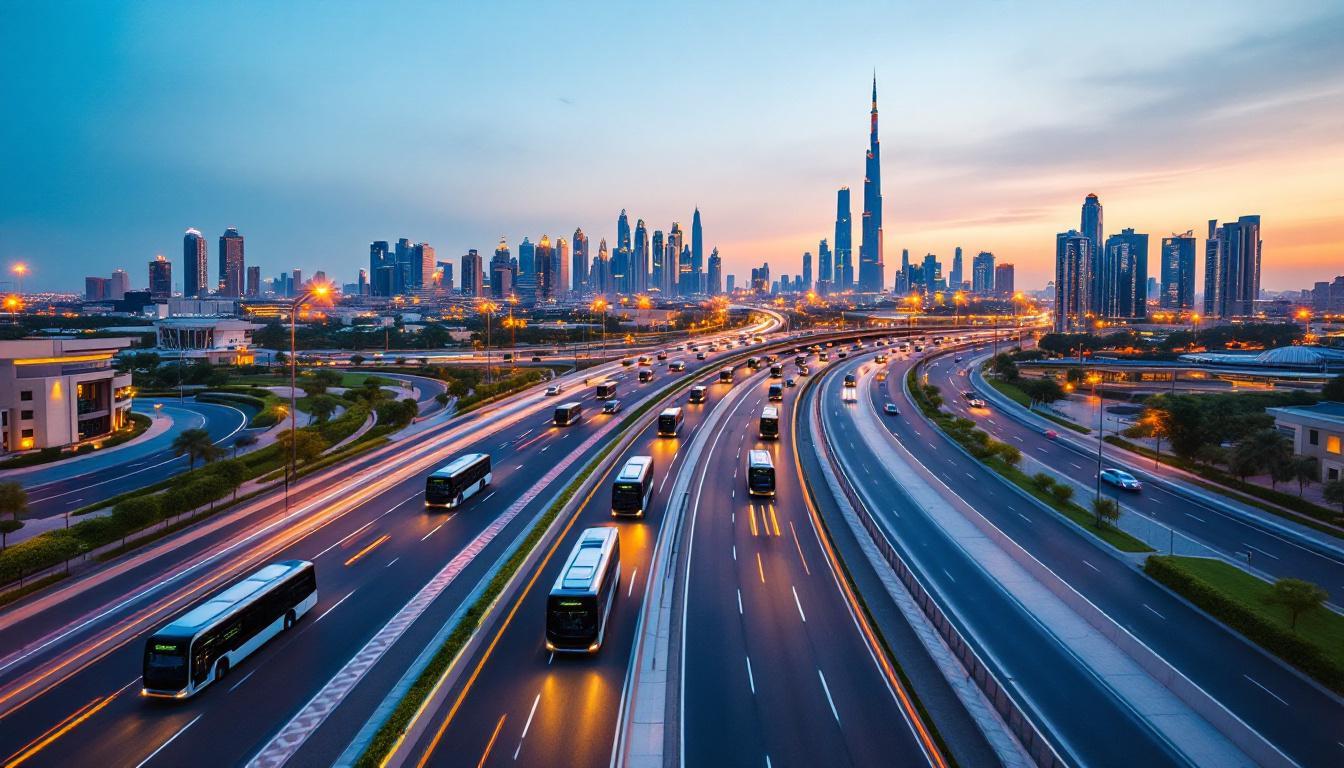
Dubai is set to deploy 735 electric buses in 2026, marking the largest such rollout in the UAE and signalling a major step towards its zero-emission transport goals by 2050, with environmental, operational, and energy infrastructure benefits.
Dubai is gearing up for a significant expansion of its electric bus fleet, with the Roads and Transport Authority (RTA) set to receive 735 battery-powered buses throughout 2026. As reported by Emirates News Agency, these vehicles will be delivered gradually, marking what officials describe as the largest such rollout in the country so far.
This move aligns with Dubai’s broader plan to transition its public transportation system into a zero-emissions network by 2050. The RTA has been steadily gaining experience with electric buses, and according to their statements, the current trials and initial results have been quite promising. Presently, around 40 electric buses are already operating, and the agency says these have performed especially well on short- to medium-length urban routes.
Feedback from passengers and drivers seems to have been quite positive. Emirates News Agency mentioned that the satisfaction rate for these electric buses has gone over 95%, suggesting they’ve been generally well-received in daily use. The RTA also noted a notable environmental benefit in 2025, mentioning that the electric fleet helped prevent the emission of approximately 59,263 tonnes of CO₂.
For Dubai, this latest procurement isn’t just about being eco-friendly; it’s also about operational practicality. Moving from a small pilot fleet to hundreds of buses in just one year indicates that the city is shifting beyond mere demonstration projects and heading towards full-scale deployment. This is significant in a region where the shift to electric public transport has often lagged behind the adoption of private EVs.
Moreover, the size of this order raises a broader, more strategic question, how these electric buses will interface with the city’s energy grid. Battery-electric buses are generally far more efficient than their diesel counterparts, which means they can lower both energy consumption and roadside emissions. They also open up possibilities for smarter energy management if charging infrastructure and related software are designed properly.
The batteries used in the Dubai buses are reportedly around 470 kWh each. In theory, that means the entire fleet of 775 electric buses would hold roughly 364 MWh of energy, which could potentially be integrated into a broader grid-support system, provided the necessary technology and regulations are in place. Well-coordinated systems could enable these parked buses to help balance electricity demand, although this depends heavily on existing infrastructure and policy support.
There’s also an interesting secondary angle, second-life batteries. When bus batteries lose their capacity for heavy-duty driving, they can often be repurposed for stationary storage, extending their usefulness and helping to cut overall transition costs.
All of this indicates that Dubai’s plans go beyond simply replacing older buses. The city seems to envision a transport ecosystem that tightly couples mobility, emissions reduction, and energy infrastructure. For a city dealing with extreme heat, rapid population growth, and high transportation needs, electric buses could be an integral piece of a broader strategy aimed at improving air quality and reducing reliance on fossil fuels.
From an environmental standpoint, the benefits are clear. Diesel buses emit pollutants that worsen air quality and pose health risks. Electric buses, on the other hand, eliminate tailpipe emissions, which is particularly important in crowded urban corridors with high foot traffic and dense populations. If Dubai continues to source its electricity from cleaner sources like solar power, that climate advantage becomes even more pronounced.
What really makes this standout, though, is the sheer speed of the implementation. Deploying 735 buses within a single year is no small feat, it involves procurement, setting up charging stations, upgrading depots, training maintenance crews, and planning operations meticulously. It really shows that Dubai is confident in the maturity of this technology for large-scale public use in its conditions.
That kind of confidence is vital for other cities in the Gulf region, too. Gulf cities are under increasing pressure to cut emissions without sacrificing mobility, reliability, or comfort. Electrifying public transit is one of the clearest and most visible strategies to do that. Dubai’s progress will definitely be watched closely, not just within the UAE but across the Middle East and beyond.
If everything goes according to plan, Dubai could have close to 800 electric buses by the end of 2026. That would make it one of the largest electric bus networks in the region and give a significant boost toward meeting its 2050 zero-emission goals.
In summary, the city seems to be viewing electric buses not just as a technological upgrade, but as a key component of its future transportation vision. The size of the order, early positive results, and the emissions reductions already seen all point toward Dubai perceiving this shift as both a smart strategic move and a necessary one for its sustainable development.
- https://cleantechnica.com/2026/05/07/735-electric-buses-coming-to-dubai-soon/ – Please view link – unable to able to access data
Noah Fact Check Pro
The draft above was created using the information available at the time the story first
emerged. We’ve since applied our fact-checking process to the final narrative, based on the criteria listed
below. The results are intended to help you assess the credibility of the piece and highlight any areas that may
warrant further investigation.
Freshness check
Score:
8
Notes:
The article was published on May 7, 2026, reporting on Dubai’s plan to deploy 735 electric buses by the end of 2026. This aligns with recent announcements from the Roads and Transport Authority (RTA) regarding the procurement of 735 buses, including 40 electric ones, with deliveries starting in January 2026. ([dubaiprnetwork.com](https://www.dubaiprnetwork.com/pr.asp?pr=189903&utm_source=openai)) The information appears current and not recycled from older sources.
Quotes check
Score:
7
Notes:
The article includes specific figures, such as the 470 kWh battery capacity of the buses and the total fleet capacity of 364 MWh. These details are consistent with information from the Emirates News Agency, which reported on the RTA’s plans and specifications. However, the article does not provide direct quotes from RTA officials or other sources, making it difficult to independently verify the exact wording of statements.
Source reliability
Score:
6
Notes:
CleanTechnica is a reputable source for clean energy news but is not a major news organisation. The article cites the Emirates News Agency, which is a government-run news outlet, as the primary source. While this provides authoritative information, the reliance on a single source may limit the diversity of perspectives.
Plausibility check
Score:
8
Notes:
The plan to deploy 735 electric buses by the end of 2026 is consistent with Dubai’s broader strategy to transition to a zero-emissions public transport system by 2050. The RTA has previously announced similar initiatives, including the procurement of 735 buses, with deliveries starting in January 2026. ([dubaiprnetwork.com](https://www.dubaiprnetwork.com/pr.asp?pr=189903&utm_source=openai)) The technical specifications, such as the 470 kWh battery capacity and the total fleet capacity of 364 MWh, are plausible and align with current electric bus technology.
Overall assessment
Verdict (FAIL, OPEN, PASS): PASS
Confidence (LOW, MEDIUM, HIGH): MEDIUM
Summary:
The article provides current and plausible information about Dubai’s plan to deploy 735 electric buses by the end of 2026, aligning with recent announcements from the RTA. However, the reliance on a single source and the absence of direct quotes from officials limit the ability to independently verify the exact wording of statements. While the content is factual and the technical details are plausible, the lack of independent verification from multiple sources introduces some uncertainty.


