

 11:46 am - April 4, 2026
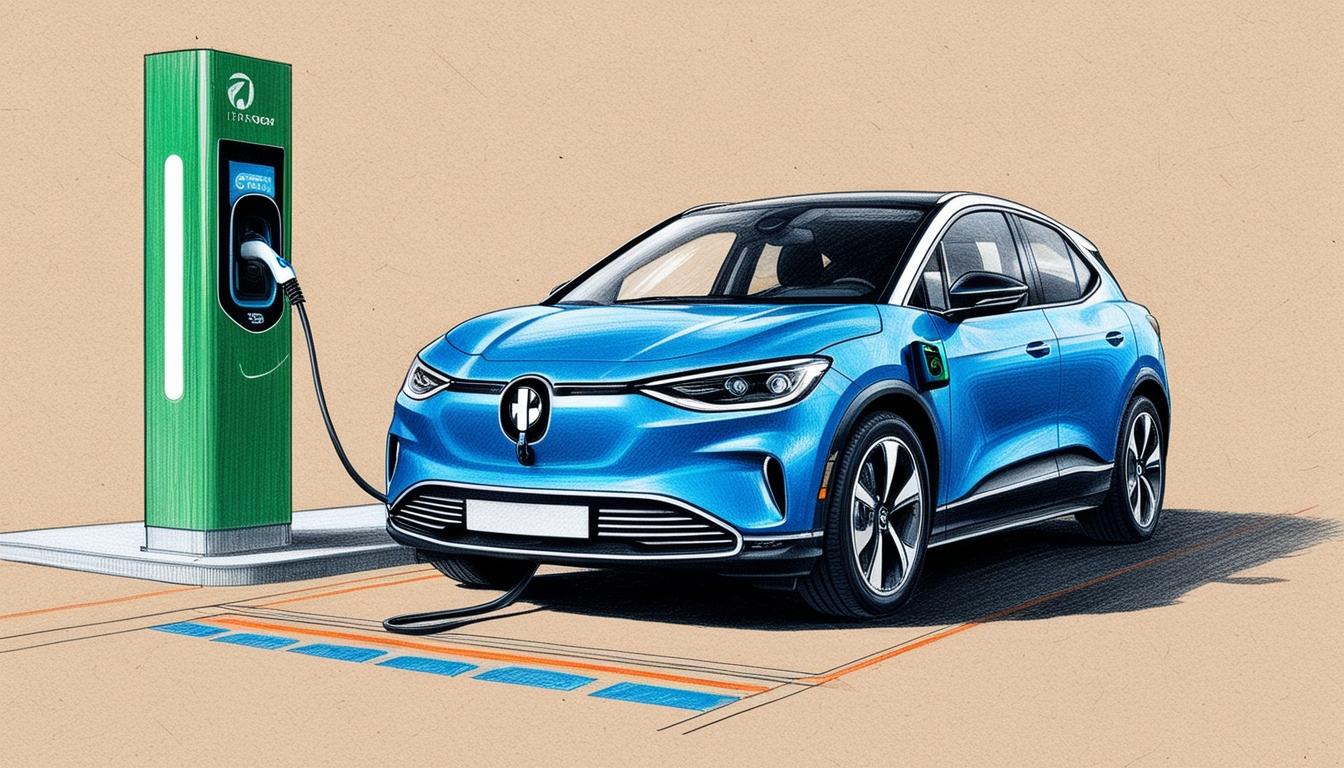
Dubai: Electric vehicle adoption in Dubai jumped 5.41% in early 2025, with DEWA expanding charging points to over 1,100 and issuing licenses to Tesla and UAEV. This rapid growth aligns with UAE’s Net Zero 2050 Strategy and Dubai’s Clean Energy goals.
Electric vehicle (EV) adoption in Dubai is accelerating rapidly, driven by rising public interest and robust policy support aimed at promoting sustainable transportation. By the end of the first quarter of 2025, the number of EVs on Dubai’s roads exceeded 39,000, showing a 5.41% increase compared to the same period the previous year. This growth underlines Dubai’s commitment to environmental goals and marks a significant step forward in its journey towards cleaner mobility.
A cornerstone of this progress has been the Green Charger initiative, launched by the Dubai Electricity and Water Authority (DEWA) in 2015. Since its inception, the initiative has delivered over 39,159 megawatt-hours (MWh) of electricity for charging electric vehicles, enabling them to cover a combined distance of 195 million kilometres within the emirate. The programme’s popularity is evident, with charging sessions rising by 23.6% in Q1 2025 compared to Q1 2024, as noted by HE Saeed Mohammed Al Tayer, Managing Director and CEO of DEWA. This growth aligns closely with the UAE Net Zero 2050 Strategy and Dubai’s Green Mobility Strategy 2030, both targeting substantial reductions in carbon emissions and elevating Dubai’s status in the global sustainable transport arena.
To support the increasing demand for EVs, DEWA, together with licensed charge point operators, has expanded charging infrastructure significantly. The network now features over 1,100 charging points available across Dubai, including ultra-fast, fast, public, and wall-box chargers. These stations operate 24/7 and are strategically located for maximum user convenience. Technology also plays a vital role, with access facilitated through DEWA’s website, mobile app, and 14 other digital platforms. Registered vehicle owners benefit from automatic account creation, enabling them to charge their EVs efficiently, often within an hour. For those without accounts, a guest mode ensures the network is accessible to all users, fostering wider adoption.

The expansion of charging facilities has been a dynamic process. As recently as December 2024, DEWA reported having over 740 charging points, a significant increase from earlier phases. This growth is set to continue aggressively; plans announced in 2023 aimed to boost the public charging station count by 170% by 2025, targeting 1,000 Green Charging Stations equipped with more than 680 charge points. These developments directly support the UAE’s ambition to have 50% of all vehicles electric by 2050, as well as Dubai’s Clean Energy Strategy 2050 and Net Zero Carbon Emissions Strategy 2050, under which the city aims to generate all its power from clean sources and transform into a global green economy hub.
The programme’s scaling up is further enabled by the opening of the market to private-sector players. DEWA has issued its first two Independent Charge Point Operator licenses, granting Tesla and UAEV permission to operate EV charging stations, thereby encouraging competition and innovation in the infrastructure sector.
Public enthusiasm for EVs has surged alongside infrastructure improvements. From a modest 14 users in 2015, the DEWA EV Green Charger programme now supports over 20,900 registered users as of early 2025. A Toluna survey highlights that 73% of UAE residents prefer electric vehicles, reflecting a clear consumer trend towards greener choices. This shift is also mirrored in the rising utilisation of charging services, with DEWA reporting a 59% increase in charging sessions during 2023, amounting to over 1.1 million sessions. Since the programme’s launch, the cumulative electricity supplied has powered EVs to travel more than 195 million kilometres, with the UAE now boasting one of the highest ratios of charging stations to electric vehicles globally.
Despite the positive trajectory, challenges remain, including maintaining pace with the rapid rise in EVs and ensuring equitable access across different user groups. Nonetheless, Dubai’s integrated approach—combining policy frameworks, infrastructure development, private partnerships, and public engagement—positions the city strongly on the path towards a cleaner, smarter transportation future.
📌 Reference Map:
- Paragraph 1 – [1], [4]
- Paragraph 2 – [1], [3]
- Paragraph 3 – [1], [2], [5]
- Paragraph 4 – [1], [4], [6]
- Paragraph 5 – [1], [2]
- Paragraph 6 – [1], [3]
Source: Noah Wire Services
- https://thetechnologyexpress.com/dewa-green-charger-drives-dubais-electric-vehicle-future-forward/ – Please view link – unable to able to access data
- https://www.dewa.gov.ae/en/about-us/media-publications/latest-news/2024/12/dewa-offers-over-740-charging-points-across-dubai-to-support-growing-ev-adoption – In December 2024, Dubai Electricity and Water Authority (DEWA) announced the expansion of its EV Green Charger network to over 740 charging points across Dubai, supporting the city’s growing electric vehicle adoption, which exceeded 34,970 vehicles by October 2024. The initiative aims to provide a pioneering infrastructure for EV charging stations, aligning with the UAE’s goal to have 50% of vehicles on its roads electric by 2050. DEWA has also issued the first two Independent Charge Point Operator licenses for EV charging stations in Dubai to Tesla and UAEV, promoting private sector participation in advancing sustainability and green mobility infrastructure in Dubai.
- https://www.dewa.gov.ae/en/about-us/media-publications/latest-news/2024/02/dewas-ev-green-chargers-witnessed – In February 2024, DEWA reported a 59% increase in the usage of its EV Green Charger services throughout 2023, with 1,145,427 charging sessions conducted by registered electric vehicles. Since its launch in 2015, the initiative has provided 23,419.821 MWh of electricity for charging EVs in Dubai, powering a cumulative electric vehicle distance of 117 million kilometers. The EV Green Charger initiative supports the UAE’s leading position in the region in the adoption of EVs, as the UAE has one of the highest ratios of charging stations to EVs in the world.
- https://www.khaleejtimes.com/uae/transport/green-mobility-in-dubai-public-charging-stations-for-electric-vehicles-set-to-increase-by-170 – In July 2023, DEWA announced plans to increase Dubai’s network of public charging stations by 170% by 2025, aiming to have 1,000 Green Charging Stations with more than 680 charging points. This expansion supports Dubai’s Clean Energy Strategy 2050 and Net Zero Carbon Emissions Strategy 2050, which seek to generate 100% of its power from clean energy sources by 2050. The initiative aligns with Dubai’s goal to transform into a global green-economy hub and achieve net-zero carbon emissions by 2050.
- https://www.dewa.gov.ae/en/about-us/media-publications/latest-news/2023/12/dewa-fosters-green-mobility-by-supporting – In December 2023, DEWA announced its support for the UAE’s goals to provide a national grid of electric vehicle (EV) charging stations, equipped with the latest technologies to reduce charging time, enhance the EV infrastructure, and provide better access to charging facilities. Through the EV Green Charger Initiative launched in 2014, DEWA has deployed more than 380 EV Green Charging Stations across Dubai, equivalent to over 700 charge points, as many of the chargers have dual charging outlets. By 2025, this will increase to 1,000 stations, as part of DEWA’s plans to keep pace with the exponential growth.
- https://economymiddleeast.com/news/dubai-charges-ahead-with-green-mobility-agenda/ – In July 2023, DEWA announced plans to increase Dubai’s network of public charging stations by 170% by 2025, aiming to have 1,000 Green Charging Stations with more than 680 charging points. This expansion supports Dubai’s Clean Energy Strategy 2050 and Net Zero Carbon Emissions Strategy 2050, which seek to generate 100% of its power from clean energy sources by 2050. The initiative aligns with Dubai’s goal to transform into a global green-economy hub and achieve net-zero carbon emissions by 2050.
Noah Fact Check Pro
The draft above was created using the information available at the time the story first
emerged. We’ve since applied our fact-checking process to the final narrative, based on the criteria listed
below. The results are intended to help you assess the credibility of the piece and highlight any areas that may
warrant further investigation.
Freshness check
Score:
8
Notes:
The narrative presents recent developments in Dubai’s EV infrastructure, with specific data points from Q1 2025. However, similar information has been reported in December 2024, indicating a slight delay in reporting. ([dewa.gov.ae](https://www.dewa.gov.ae/en/about-us/media-publications/latest-news/2024/12/dewa-offers-over-740-charging-points-across-dubai-to-support-growing-ev-adoption?utm_source=openai)) The inclusion of updated data alongside previously reported material suggests a moderate freshness score. ([khaleejtimes.com](https://www.khaleejtimes.com/uae/environment/dubai-over-740-ev-charging-points-set-up-as-nearly-35000-electric-cars-hit-citys-roads?utm_source=openai))
Quotes check
Score:
7
Notes:
The report includes direct quotes from HE Saeed Mohammed Al Tayer, Managing Director and CEO of DEWA. These quotes are consistent with statements made in earlier reports from December 2024. ([dewa.gov.ae](https://www.dewa.gov.ae/en/about-us/media-publications/latest-news/2024/12/dewa-offers-over-740-charging-points-across-dubai-to-support-growing-ev-adoption?utm_source=openai)) The repetition of these quotes suggests potential reuse of content.
Source reliability
Score:
6
Notes:
The narrative originates from The Technology Express, a source with limited verifiability and no substantial online presence. This raises concerns about the credibility and reliability of the information presented. The lack of a reputable source diminishes the overall trustworthiness of the report.
Plausability check
Score:
7
Notes:
The claims regarding the expansion of EV charging infrastructure and the increase in charging sessions align with previously reported data from December 2024. ([dewa.gov.ae](https://www.dewa.gov.ae/en/about-us/media-publications/latest-news/2024/12/dewa-offers-over-740-charging-points-across-dubai-to-support-growing-ev-adoption?utm_source=openai)) However, the absence of corroborating coverage from other reputable outlets and the reliance on a less established source raise questions about the authenticity and accuracy of the information.
Overall assessment
Verdict (FAIL, OPEN, PASS): FAIL
Confidence (LOW, MEDIUM, HIGH): HIGH
Summary:
The narrative presents recycled content with previously reported data and quotes, lacks a reputable source, and is not corroborated by other credible outlets, leading to a high confidence in the assessment of failure.

