





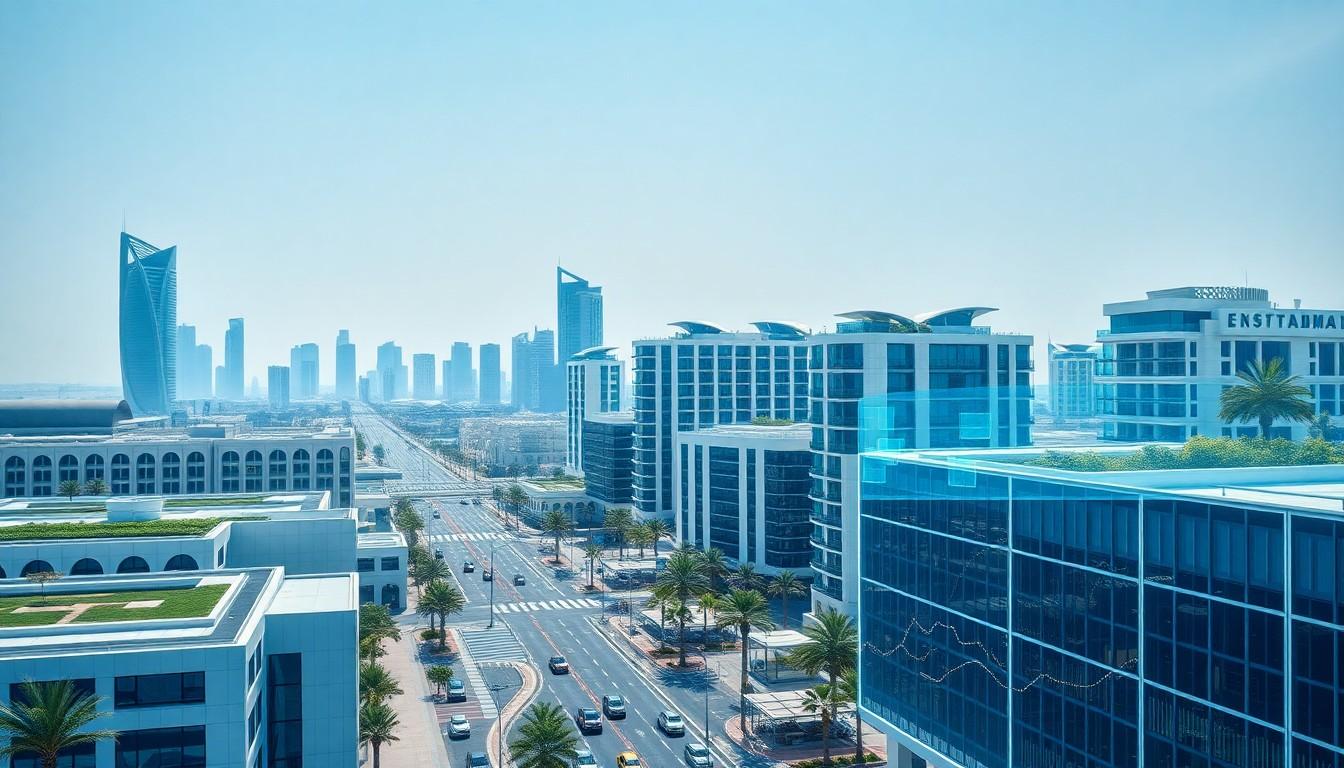
Abu Dhabi’s Estidama initiative integrates environmental standards with cultural and regional considerations, leveraging digital tools to promote resilient, sustainable urban growth in the face of climate challenges.
Estidama, the Arabic word meaning sustainability, has really become one of Abu Dhabi’s most distinctive ideas in urban planning. It was created as part of the emirate’s long-term growth strategy, with a straightforward yet ambitious goal: to support development that enhances quality of life without sacrificing its environmental or cultural identity.
The initiative was introduced by Abu Dhabi’s urban planning authorities in order to align growth with the broader economic vision for 2030. And honestly, sustainability isn’t seen there as some optional extra; it’s a core part of future development. In practice, Estidama has provided Abu Dhabi with a framework to cut down resource usage, manage urban expansion more carefully, and incorporate environmental standards into the physical environment.
At the heart of the programme lies the Pearl Rating System. This is the tool used to evaluate how sustainable buildings, villas, neighbourhoods, and other developments are over their entire life cycle. It considers everything from planning and design to construction and operation, rather than just the finished building. The idea is to reduce energy and water use, limit waste, and encourage buildings that stay more comfortable given the local climate.
Now, what’s interesting is how the system is so closely shaped by the UAE’s specific circumstances. Unlike many global green building standards, Estidama was designed specifically for a desert environment, where high temperatures, water scarcity, and local culture all come into play. That makes it especially relevant in Abu Dhabi, where rapid growth has had to be balanced carefully against the challenges of the climate and limited resources.
On the international front, some of the most recognised green building labels include LEED from the US Green Building Council and BREEAM from the UK. LEED mainly focuses on energy efficiency and environmental performance, and is used across a variety of projects, from new builds to renovations. BREEAM, which has been around for decades, takes a broader approach, considering environmental, economic, and social factors. What makes Estidama stand out, though, is that it explicitly includes cultural factors in its assessment. That gives the system a real regional flavour, as well as a technical one.
Projects are rated from one to five pearls. According to descriptions, the Pearl Rating System applies to a broad spectrum of developments, be it individual buildings, neighbourhoods, villas, hospitals, warehouses, manufacturing plants, laboratories, or hotels. Any fixed building with air conditioning needs to meet its criteria. Because of this wide scope, the system has managed to move beyond just symbolic, showcase projects and is now part of everyday major construction work.
A pretty clear example of Estidama’s influence is the headquarters of the International Renewable Energy Agency in Masdar City. Completed by Masdar in 2012, the building was designed to be energy-efficient and has earned a four-pearl rating under the framework. It’s widely recognised as among the most sustainable office buildings in the emirate. That shows that the system can be applied not only to small-scale projects but also to large, high-profile developments.
Supporters of sustainable building often point out that the benefits go beyond just energy savings. Good ventilation, better temperature regulation, clever lighting design, and more natural daylight can all boost productivity and wellbeing. Additionally, developers and builders who embrace sustainable design say that these features can make homes and workplaces more attractive over time. The challenge, well, at least as the main article points out, is that the long-term financial benefits are sometimes tricky to quantify in a way that convinces every investor or buyer.
That uncertainty really remains one of the main barriers to wider adoption of eco-friendly construction. Sure, interest in environmentally responsible materials and high-performance tech has grown, but many in the market still want clearer evidence about operating costs, payback periods, and property values. Because many investors care about upfront costs, those questions can slow down progress, even when the environmental benefits are pretty clear.
However, the trend in Abu Dhabi suggests that sustainability is becoming more deeply embedded into the city’s overall development plans. For example, at the second Abu Dhabi Infrastructure Summit in 2026, the Urban Planning and Design Centre, part of the Department of Municipalities and Transport, showcased digital planning tools aimed at making urban growth more efficient. Among these were projects like Nabd and Our Holographic Future, both based on AI and big data analysis. And honestly, it reflects a bigger change: sustainability isn’t just about building standards anymore , it’s increasingly being driven by data-driven decision-making across the entire city.
This is especially significant when talking about climate tech in the UAE because the next phase of sustainable development will probably depend on integration. Building standards, urban analytics, managing resources, and digital modelling are all starting to converge. Estidama remains a key part of that story in Abu Dhabi, but now it’s part of a broader ecosystem of tools that aim to create resilient cities.
For Abu Dhabi, Estidama’s importance goes far beyond just a rating system. It’s a statement about how the emirate wants to grow , with reduced resource use, better environmental performance, and a stronger link between modern development and local culture. In a region where cities are expanding rapidly and the climate is becoming more extreme, this kind of approach is growing more vital, not less.
- https://www.aletihad.ae/opinion/4680836/%D8%A7%D8%B3%D8%AA%D8%AF%D8%A7%D9%85%D8%A9-%D8%A7%D9%84%D9%85%D8%A8%D8%A7%D9%86%D9%8A-%D9%88-%D9%86%D8%B8%D8%A7%D9%85-%D8%AA%D9%82%D9%8A%D9%8A%D9%85-%D8%A7%D9%84%D9%84%D8%A4%D9%84%D8%A4%D8%A9 – Please view link – unable to able to access data
- https://www.usgbc.org/leed – The U.S. Green Building Council’s LEED (Leadership in Energy and Environmental Design) rating system is a globally recognised framework for healthy, efficient, and cost-effective green buildings. It offers a structured approach to sustainability, addressing aspects such as energy and water use, materials selection, and indoor environmental quality. LEED certification is available for various project types and phases, including new construction, interior fit-outs, and operations and maintenance. Projects earn points across different categories, leading to certification levels from Certified to Platinum, based on the total points achieved.
- https://www.e-basel.com/glossary/glossary-hub-green-building-glossary/green-building/pearl-rating-system/ – The Pearl Rating System is Abu Dhabi’s integrated sustainability rating framework, developed by the Abu Dhabi Urban Planning Council (ADUPC) under the Estidama programme. Launched in 2010, it is tailored to the unique desert climate and cultural context of the UAE. The system evaluates buildings across seven categories, including energy, water, and materials, awarding ratings from one to five pearls. It applies to various project types, such as individual buildings, communities, villas, and neighbourhoods, promoting sustainable development in the region.
- https://masdarcity.ae/ar/sustainable-urban-development/sustainable-page – Masdar City, a sustainable urban development in Abu Dhabi, implements the Estidama programme to promote sustainable urban planning. The Estidama Pearl Rating System assesses the sustainability performance of buildings and communities, focusing on areas like energy efficiency, water conservation, and material selection. This system is designed to address the unique climatic and cultural conditions of the UAE, encouraging environmentally responsible development practices and contributing to the creation of sustainable urban environments.
- https://www.pakistanpoint.com/ar/news/uae/story-2186857.html – The Abu Dhabi Urban Planning Center (UPC) showcased smart planning solutions for Abu Dhabi’s urban landscape during the second edition of the Abu Dhabi Infrastructure Summit (ADIS 2026). The center presented two innovative projects: ‘Nabd’ and ‘Our Holographic Future,’ reflecting the emirate’s commitment to reshaping the urban scene through advanced digital tools based on artificial intelligence and big data analysis. These initiatives aim to enhance urban planning methodologies and develop more efficient and sustainable cities.
- https://www.mubasher.info/news/4612639/-%D9%86%D8%A8%D8%B6-%D9%88-%D9%85%D8%B3%D8%AA%D9%82%D8%A8%D9%84%D9%86%D8%A7-%D8%A7%D9%84%D9%87%D9%88%D9%84%D9%88%D8%BA%D8%B1%D8%A7%D9%81%D9%8A-%D8%A3%D8%A8%D9%88%D8%B8%D8%A8%D9%8A-%D8%AA%D9%83%D8%B4%D9%81-%D9%85%D8%B4%D8%A7%D8%B1%D9%8A%D8%B9-%D8%AA%D8%AE%D8%B7%D9%8A%D8%B7-%D8%B9%D9%85%D8%B1%D8%A7%D9%86%D9%8A-%D8%B1%D9%82%D9%85%D9%8A%D8%A9/ – Abu Dhabi’s Urban Planning and Design Center, part of the Department of Municipalities and Transport, presented a suite of smart planning solutions during its participation in the second edition of the Abu Dhabi Infrastructure Summit (ADIS 2026). The showcased projects, ‘Nabd’ and ‘Our Holographic Future,’ highlight the emirate’s efforts to reshape the urban landscape using advanced digital tools based on artificial intelligence and big data analysis. These initiatives aim to develop more efficient and sustainable urban environments.
- https://www.al-ain.com/article/adis-planning-center-smart-solutions-abudhabi – The Abu Dhabi Urban Planning and Design Center, affiliated with the Department of Municipalities and Transport, presented a range of smart planning solutions during its participation in the second edition of the Abu Dhabi Infrastructure Summit (ADIS 2026). The center highlighted two innovative projects: ‘Nabd’ and ‘Our Holographic Future,’ reflecting the emirate’s commitment to reshaping the urban scene through advanced digital tools based on artificial intelligence and big data analysis. These projects aim to enhance urban planning methodologies and develop more efficient and sustainable cities.
Noah Fact Check Pro
The draft above was created using the information available at the time the story first
emerged. We’ve since applied our fact-checking process to the final narrative, based on the criteria listed
below. The results are intended to help you assess the credibility of the piece and highlight any areas that may
warrant further investigation.
Freshness check
Score:
8
Notes:
The article was published on July 25, 2026, and discusses Estidama, Abu Dhabi’s sustainability initiative. The content aligns with information available from sources such as the Abu Dhabi City Guide, which details Estidama’s launch in May 2008 and its objectives. ([abudhabicityguide.com](https://www.abudhabicityguide.com/features/2752/estidama%2C-abu-dhabi?utm_source=openai)) The article also mentions the Pearl Rating System, introduced in 2010, which is mandatory for all new buildings in Abu Dhabi. ([sasintgroup.com](https://sasintgroup.com/info-hub/environmental-accreditation-statements/estidama-pearl-building-rating-system/?utm_source=openai)) While the article provides a comprehensive overview, it does not present new developments or data beyond existing sources, indicating a lack of freshness. The absence of recent updates or unique insights suggests that the content may be recycled from earlier publications.
Quotes check
Score:
7
Notes:
The article includes direct quotes, such as the definition of Estidama as ‘sustainability’ in Arabic. However, these quotes are not attributed to specific individuals or sources, making independent verification challenging. Without clear attribution, it’s difficult to assess the originality and accuracy of these statements. The lack of verifiable sources for these quotes raises concerns about their authenticity.
Source reliability
Score:
6
Notes:
The article is published on Al Ittihad, a reputable UAE-based newspaper. However, the content appears to be a general overview of Estidama and the Pearl Rating System, with no specific author or date provided. The absence of a clear author and publication date makes it difficult to assess the credibility and timeliness of the information. Additionally, the lack of citations or references to primary sources further diminishes the reliability of the content.
Plausibility check
Score:
8
Notes:
The article’s claims about Estidama and the Pearl Rating System are consistent with known information. For instance, the Abu Dhabi City Guide confirms that Estidama was launched in May 2008 and aims to balance environmental, economic, social, and cultural imperatives. ([abudhabicityguide.com](https://www.abudhabicityguide.com/features/2752/estidama%2C-abu-dhabi?utm_source=openai)) The article also mentions the Pearl Rating System, which is mandatory for all new buildings in Abu Dhabi, as confirmed by sources like the Abu Dhabi City Guide. ([abudhabicityguide.com](https://www.abudhabicityguide.com/features/2752/estidama%2C-abu-dhabi?utm_source=openai)) However, the lack of new information or recent developments suggests that the article may not provide additional value beyond existing sources.
Overall assessment
Verdict (FAIL, OPEN, PASS): REVIEW
Confidence (LOW, MEDIUM, HIGH): MEDIUM
Summary:
The article provides an overview of Estidama and the Pearl Rating System, but lacks freshness, specific author attribution, and independent verification sources. The absence of new information or developments suggests that the content may be recycled from earlier publications. The lack of clear citations and references raises concerns about the reliability and accuracy of the information presented. Further editorial review is recommended before publishing.


