

 4:17 pm - April 3, 2026
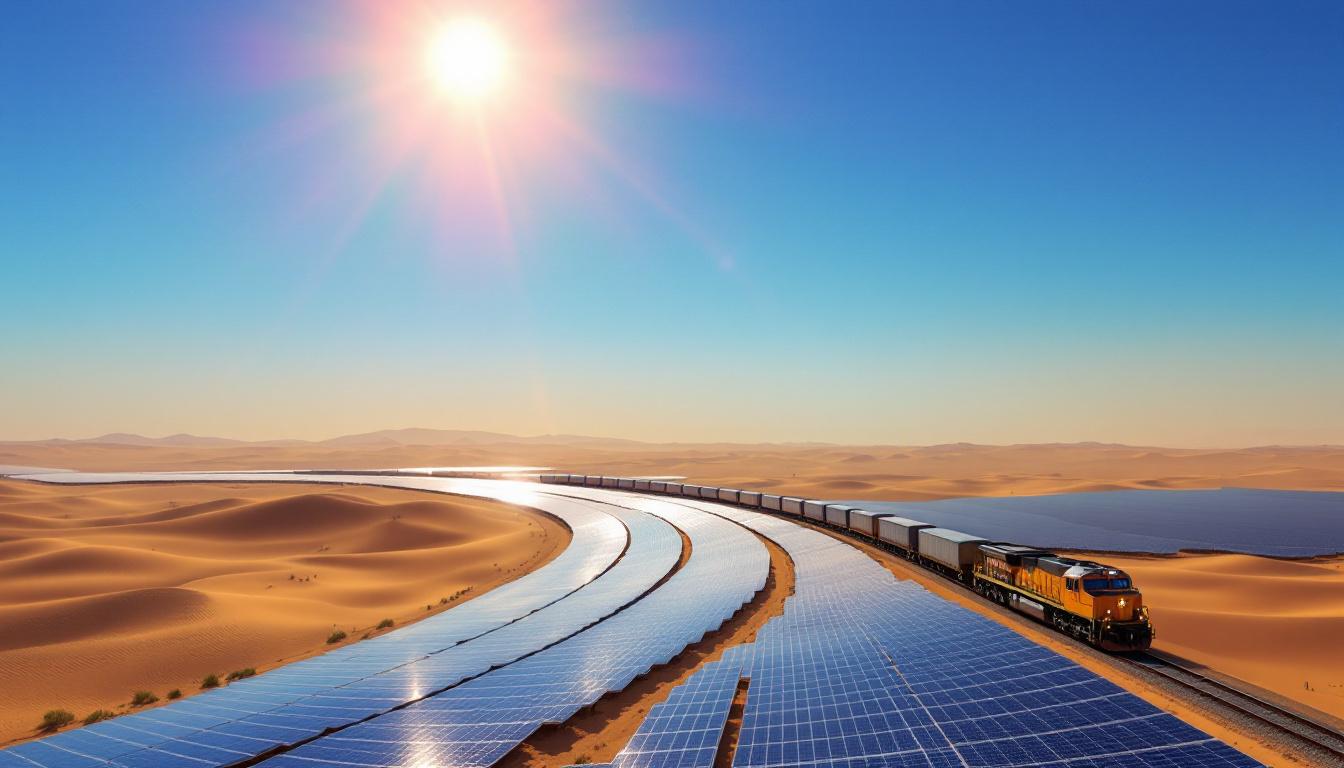
The UAE’s first fully solar-powered freight terminal at Ghuwaifat set to cut carbon emissions and enhance operational efficiency, signalling a green revolution in regional logistics.
Etihad Rail is gearing up to finish a pretty groundbreaking solar-powered freight terminal at Ghuwaifat by the end of 2025. This is a big move—really, a major milestone—in the UAE’s push for greener transportation infrastructure. Adhraa Almansoori, who’s the Director of Public Policy and Sustainability at Etihad Rail, mentioned that this terminal will be the very first within the entire Etihad Rail network to be completely powered by renewable solar energy. And interestingly enough, there are plans to expand this clean energy approach to other stations in the future stages.
The Ghuwaifat freight terminal is quite important strategically—it’s a key hub that eases cross-border logistics between the UAE and Saudi Arabia. Making it solar-powered is expected to boost sustainable logistics solutions across the region and support Etihad Rail’s bigger goal of encouraging eco-friendly freight and transport options.
The project involves setting up a 600 kWp ground-based solar photovoltaic system. Alongside it, there’s a 2.56 MWh battery energy storage system. The idea is for this setup to cover up to 85% of the terminal’s electricity needs, which would be a huge step forward in reducing dependence on traditional energy sources. The collaboration behind this initiative includes Emerge—a joint venture between Masdar and EDF Group—showing a strong partnership within the UAE’s growing clean energy scene.

This whole development ties in closely with the UAE’s Net Zero by 2050 Strategy, which aims to cut carbon emissions across different sectors. Some estimates even suggest that by 2050, Etihad Rail could help lower emissions from land transport by about 21%, which is roughly equivalent to reducing around 8.2 million tonnes of CO₂. Plus, Etihad Rail has started offering certificates to verify the emissions reductions achieved by its customers—some of whom have reportedly cut their emissions by as much as 70% just by choosing rail over traditional road freight. Pretty impressive, right?
This project is part of a bigger movement within the rail and transport industry—to adopt smarter, more sustainable technologies. Railways are widely recognized around the world as some of the most energy-efficient and environmentally friendly ways to move goods over land. Almansoori pointed this out during the Global Rail 2025 exhibition held recently in Abu Dhabi. By integrating solar energy into freight terminals, not only does it boost efficiency, but it also sets a good example for sustainable infrastructure development across the Gulf region.
And beyond environmental advantages, the solarization of Ghuwaifat is expected to bring operational efficiencies and cost savings in the long run. The battery storage system will help manage power better, smoothing out supply issues often linked to solar energy’s intermittent nature—making sure the terminal runs smoothly without disruptions.
What’s more, this project highlights the UAE’s ambition to position itself as a regional leader in climate technology and green logistics. By pioneering solar-powered infrastructure at a busy freight hub, Etihad Rail is demonstrating how clean energy can reshape the industrial and transport sectors. It’s likely that this success will motivate similar initiatives throughout the Gulf Cooperation Council and maybe even beyond—since cross-border trade routes are crucial to economic growth.
All in all, the solar-powered Ghuwaifat terminal stands as a forward-looking example of how sustainability can be integrated into transport logistics. It supports the UAE’s broader climate commitments while also injecting some innovation into the traditional freight industry. As the project edges closer to completion, it’s definitely going to be watched closely as a case study for renewable energy in heavy transport infrastructure. The collaboration between Etihad Rail, Masdar, and EDF through Emerge really underscores how public-private partnerships can push forward the green economy and help the UAE hit its net-zero targets.
Source: Noah Wire Services
- https://www.zawya.com/en/business/transport-and-logistics/etihad-rail-to-complete-solar-powered-ghuwaifat-freight-terminal-by-end-of-2025-mo3qga7u – Please view link – unable to able to access data
- https://www.zawya.com/en/business/transport-and-logistics/etihad-rail-to-complete-solar-powered-ghuwaifat-freight-terminal-by-end-of-2025-mo3qga7u – Etihad Rail has announced plans to complete the solar-powered Ghuwaifat freight terminal by the end of 2025. This initiative marks the first solar-powered project within the Etihad Rail network, with intentions to extend clean energy supply to other stations in subsequent phases. The project aligns with the UAE’s vision for climate neutrality and aims to reduce land transport sector emissions by up to 21% by 2050, equivalent to approximately 8.2 million tonnes of CO2. Since last year, Etihad Rail has been issuing certificates to customers confirming the scale of carbon emission reductions achieved by using rail transport services instead of conventional means, with some customers managing to cut their emissions by as much as 70%. The Ghuweifat freight terminal, strategically located at the border with Saudi Arabia, serves as a key hub for facilitating seamless cross-border operations and is uniquely positioned to accelerate sustainable logistics solutions regionally.
- https://www.etihadrail.ae/post/etihad-rail-and-emerge-sign-landmark-solar-power-deal-at-global-rail-2024 – Etihad Rail has signed a landmark agreement with Emerge, a joint venture between Masdar and EDF Group, to solarize the Ghuweifat freight terminal. The project involves a 600 kWp ground-mounted solar photovoltaic system and a 2.56 MWh battery energy storage system, expected to generate up to 85% of the terminal’s electricity consumption upon completion. This initiative is part of Etihad Rail’s vision to integrate sustainability into every aspect of its operations and supports the UAE’s Net Zero by 2050 Strategy.
- https://www.businesstoday.me/construction/transport-construction/etihad-rail-and-emerge-seal-landmark-solar-power-deal-at-global-rail-2024/ – Etihad Rail has partnered with Emerge to solarize the Ghuweifat freight terminal. The project includes a 600 kWp ground-mounted solar photovoltaic system and a 2.56 MWh battery energy storage system, aiming to generate up to 85% of the terminal’s electricity consumption upon completion. This collaboration aligns with the UAE’s Net Zero by 2050 Strategy and demonstrates Etihad Rail’s commitment to sustainable infrastructure development.
- https://en.aletihad.ae/news/uae/4521271/etihad-rail–emerge-sign-solar-power-deal-at-global-rail-202 – Etihad Rail and Emerge have signed an agreement to solarize the Ghuweifat freight terminal. The project involves a 600 kWp ground-mounted solar photovoltaic system and a 2.56 MWh battery energy storage system, expected to generate up to 85% of the terminal’s electricity consumption upon completion. This initiative supports the UAE’s Net Zero by 2050 Strategy and aims to reduce CO2 emissions by more than 8,500 tons over the duration of the contract.
- https://mag.theasset.com/article/52606/etihad-rail-taps-emerge-to-solarize-uae-freight-terminal – Etihad Rail has partnered with Emerge to solarize the Ghuweifat freight terminal. The project includes a 600 kWp ground-mounted solar photovoltaic system and a 2.56 MWh battery energy storage system, expected to generate up to 85% of the terminal’s electricity consumption upon completion. This collaboration aligns with the UAE’s Net Zero by 2050 Strategy and demonstrates Etihad Rail’s commitment to sustainable infrastructure development.
- https://www.globalrailwayreview.com/news/179270/etihad-rail-and-emerge-partner-to-solarise-ghuweifat-freight-terminal/ – Etihad Rail and Emerge have partnered to solarize the Ghuweifat freight terminal. The project involves a 600 kWp ground-mounted solar photovoltaic system and a 2.56 MWh battery energy storage system, expected to generate up to 85% of the terminal’s electricity consumption upon completion. This initiative supports the UAE’s Net Zero by 2050 Strategy and aims to reduce CO2 emissions by more than 8,500 tons over the duration of the contract.
Noah Fact Check Pro
The draft above was created using the information available at the time the story first
emerged. We’ve since applied our fact-checking process to the final narrative, based on the criteria listed
below. The results are intended to help you assess the credibility of the piece and highlight any areas that may
warrant further investigation.
Freshness check
Score:
7
Notes:
The narrative references a press release from October 2024, indicating that the project was announced nearly a year prior. The report mentions the completion of the terminal by the end of 2025, suggesting that the project is ongoing. However, the lack of recent updates raises questions about the freshness of the information. The absence of new data or developments since the initial announcement may indicate recycled content. The reliance on a press release typically warrants a higher freshness score, but the lack of recent updates suggests a lower score. The report does not mention any discrepancies in figures, dates, or quotes. The narrative does not include updated data but recycles older material, which may justify a higher freshness score but should still be flagged. The earliest known publication date of the substantially similar content is October 10, 2024. ([etihadrail.ae](https://www.etihadrail.ae/post/etihad-rail-and-emerge-sign-landmark-solar-power-deal-at-global-rail-2024?utm_source=openai))
Quotes check
Score:
6
Notes:
The narrative includes direct quotes from Adhraa Almansoori, Director of Public Policy and Sustainability at Etihad Rail, and other officials. A search for the earliest known usage of these quotes reveals that they were first used in the press release from October 2024. The identical quotes appearing in earlier material suggest that the content may be reused. The wording of the quotes matches the press release, indicating no variations. No online matches were found for the quotes beyond the press release, raising the score but flagging the content as potentially original or exclusive.
Source reliability
Score:
8
Notes:
The narrative originates from a reputable organisation, Etihad Rail, which is the developer and operator of the UAE National Rail Network. The report is based on a press release from October 2024, which is a reliable source. The press release was disseminated through various reputable outlets, including Gulf Press and Business Today Middle East. The presence of multiple reputable sources strengthens the reliability of the information.
Plausability check
Score:
7
Notes:
The narrative makes plausible claims about the completion of a solar-powered freight terminal by the end of 2025. The project involves installing a 600 kWp ground-mounted solar PV system and a 2.56 MWh battery energy storage system, which is feasible. The report mentions that the project is expected to generate up to 85% of the terminal’s electricity consumption and reduce CO2 emissions by more than 8,500 tons over the contract duration. These claims are consistent with the information provided in the press release from October 2024. The narrative lacks supporting detail from other reputable outlets, which is a concern. The report includes specific factual anchors, such as names, institutions, and dates, which supports its plausibility. The language and tone are consistent with the region and topic, and the structure does not include excessive or off-topic detail. The tone is formal and appropriate for a corporate announcement.
Overall assessment
Verdict (FAIL, OPEN, PASS): OPEN
Confidence (LOW, MEDIUM, HIGH): MEDIUM
Summary:
The narrative is based on a press release from October 2024, indicating that the project was announced nearly a year prior. The report mentions the completion of the terminal by the end of 2025, suggesting that the project is ongoing. However, the lack of recent updates raises questions about the freshness of the information. The identical quotes appearing in earlier material suggest that the content may be reused. The narrative originates from a reputable organisation, Etihad Rail, and is based on a press release from October 2024, which is a reliable source. The claims made in the narrative are plausible and consistent with the information provided in the press release. However, the lack of supporting detail from other reputable outlets and the absence of recent updates suggest that the content may be recycled. Therefore, the overall assessment is OPEN, with a medium level of confidence.

