

 9:05 pm - April 3, 2026
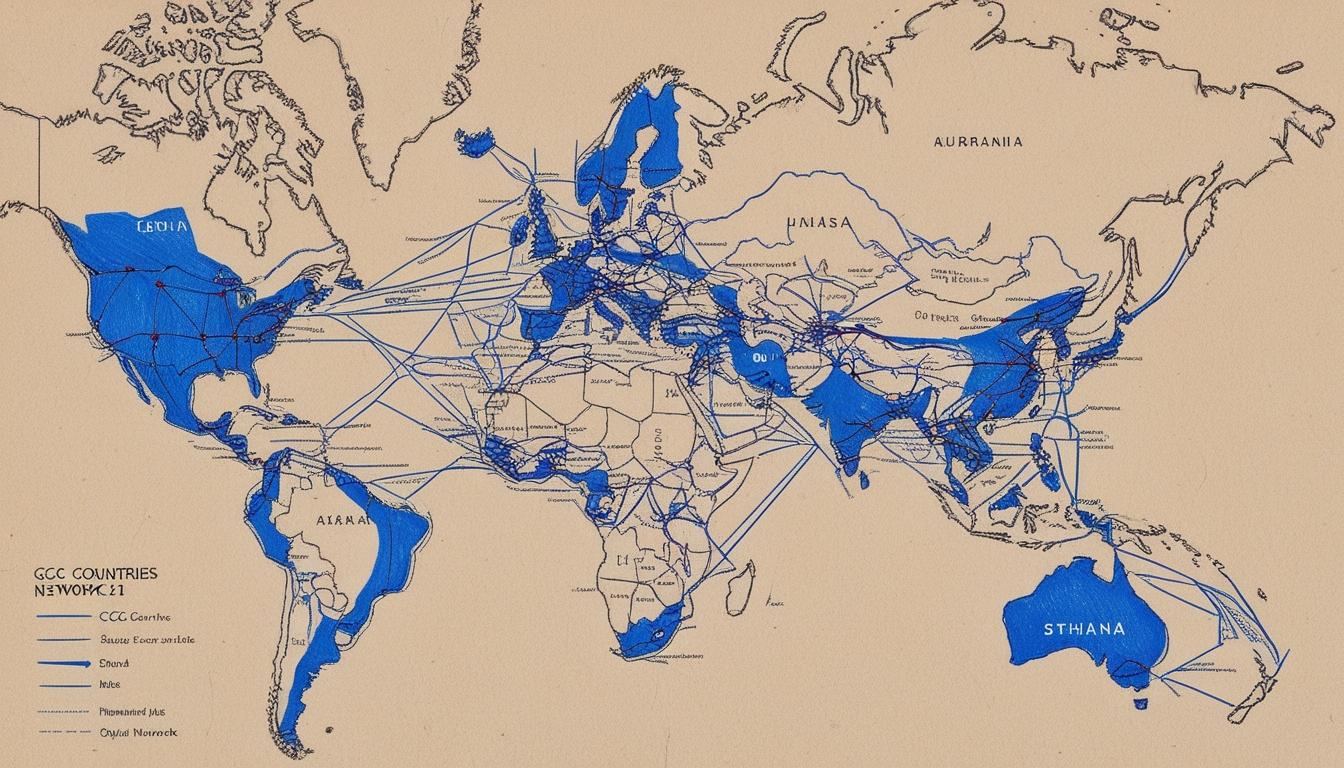
**Gulf Cooperation Council states:** The GCC Railway Project aims to link six member states with a 2,177km network to boost intra-GCC trade and environmental goals, but political, financial, and coordination challenges have delayed progress since 2009. Experts propose governance reforms, phased construction and funding strategies.
The Gulf Cooperation Council (GCC) Railway Project, an ambitious transnational initiative launched in 2009, aims to connect all six GCC member states—Kuwait, Saudi Arabia, Bahrain, Qatar, the United Arab Emirates (UAE), and Oman—via a 2,177-kilometre rail network. The planned railway, stretching from Kuwait City to Muscat, is intended to support both passenger and freight transport, fostering enhanced economic integration, supply chain resilience, and environmentally conscious mobility across the Gulf region.
Strategically, the project holds significant potential. It is envisioned as the infrastructure backbone for a future GCC customs union, with the aim of increasing intra-GCC trade, which currently accounts for approximately 10 percent of total exports within the bloc. This figure contrasts with higher levels of intra-regional trade observed in other economic blocs such as the European Union, where internal trade surpasses 50 percent. By improving connectivity and complementing existing port facilities, the railway could boost regional competitiveness. Beyond intra-GCC benefits, the railway is envisaged as a crucial link in broader transnational trade corridors, such as the India-Middle East-Europe Economic Corridor (IMEC), positioning the GCC as a central hub within Eurasian connectivity networks. The railroad’s role in diversifying Gulf economies away from oil reliance aligns with the region’s net-zero emission targets. According to Etihad Rail, the UAE’s national operator, rail transport could reduce road emissions by 21 percent annually by 2050 by removing up to 300 trucks from roads per train journey, thus preventing 8.2 million tonnes of CO₂ emissions each year.
Despite its anticipated advantages, the project has experienced significant delays and remains incomplete more than 14 years after conception. Progress has been inconsistent across member states. The UAE and Saudi Arabia have made the most headway, with the UAE’s Etihad Rail completing a connection from the Saudi border to Fujairah that covers all seven emirates, forming the first link between GCC states. Oman and the UAE recently established a joint venture, the Oman–Etihad Rail Company, to connect Sohar and Abu Dhabi within 100 minutes. Saudi Arabia has expanded its domestic rail infrastructure but has yet to finalise certain cross-border segments, such as Dammam to Al-Jubail and Al-Khafji to Kuwait. Qatar possesses a modern rail network compliant with GCC standards but remains physically unconnected to the broader Gulf network. Bahrain’s progress is limited, with no national railway in operation and only plans for a light rail system underway. The proposed Friendship Bridge connecting Bahrain and Qatar remains in the pre-construction phase. Oman has not initiated construction on its planned 2,135 km network. Many cross-border links, including those connecting Saudi Arabia with Qatar, Kuwait, and Bahrain, are either in initial planning stages or stalled.

Complex challenges underpin these delays. Conceptually, the supranational nature of the project demands comprehensive policy alignment—covering customs procedures, regulatory frameworks, technical standards, and border controls—which has lagged behind physical construction efforts. Critical questions remain concerning operational responsibilities for cross-border train services, cargo clearance protocols, and whether railways will receive expedited regulatory treatment akin to airports and seaports.
Political disruptions have further hampered development, most notably the 2017 GCC crisis during which several states severed ties with Qatar. This political rift disrupted regional planning and delayed funding and construction, particularly affecting Qatar’s rail segment and interlinked cross-border projects. Although diplomatic relations were restored in 2021, the impact on the railway’s timeline remains evident.
Financial constraints present additional barriers. Initial project cost estimates stood around US$250 billion. However, no central GCC fund has been created to support the entire network. While the UAE and Saudi Arabia have independently advanced portions of the railway, economically smaller or fiscally constrained states such as Kuwait, Bahrain, and Oman have struggled to allocate resources for their segments, especially in light of the 2014 drop in oil prices and economic effects of the COVID-19 pandemic. National priorities and flagship projects within individual states, for example Qatar’s preparations for the FIFA World Cup and Saudi Arabia’s NEOM initiative, compete for investment against the railway. For Bahrain, rail infrastructure ranks below other transport investments, such as airports or roads, based on immediate domestic needs.
To accelerate the GCC Railway Project, experts from the Observer Research Foundation propose a multifaceted strategy. Initially, the role of the GCC Railways Authority (GCCRA), established in 2021, should evolve from one of coordination to one empowered with enforcement capabilities. The authority could mandate adherence to unified technical specifications, construction schedules, and cross-border protocols, analogous to the European Railway Agency’s governance of the European Union’s Trans-European Transport Network.
Next, the creation of a dedicated GCC Railways Fund is recommended to pool financial resources from wealthier member states like the UAE and Saudi Arabia. This fund could leverage concessional financing from multilateral institutions such as the Islamic Development Bank and the Asian Infrastructure Investment Bank to support financially constrained members. The rationale is that the completion of the railway benefits the entire GCC region’s trade competitiveness and economic influence, justifying a redistributive funding model.
A phased infrastructure development approach is suggested. Drawing lessons from the East African Railway Master Plan, the focus should initially be on high-impact rail segments that serve key industrial hubs and ports, such as the UAE-Oman corridor linking Abu Dhabi to Sohar, the Saudi–UAE–Qatar route via Salwa, and the Kuwait–Saudi Arabia segment from Nuwaiseeb to Al-Khafji. Prioritising freight services ahead of passenger lines, which may be less economically viable over long distances initially, is seen as critical to demonstrating success and attracting stakeholders.
Harmonisation of legal and regulatory frameworks is also vital. The Singapore–Kunming Rail Link in Southeast Asia serves as a model for standardising customs processes, operator licensing, and cargo inspections among diverse governments. The GCC could expedite its own harmonised digital customs platforms and shared safety standards under the leadership of the GCCRA, facilitating smoother cross-border operations.
Public-private partnerships (PPPs) should be leveraged, particularly for freight corridors, incorporating transparent bidding and performance-based contracts. Examples from China and North America demonstrate how commercially operated freight services can succeed under public oversight.
Moreover, the GCC is encouraged to use rail diplomacy as a means of rebuilding trust and institutionalising cooperation, especially in the aftermath of political disruptions like the 2017 Qatar crisis. Regular ministerial-level summits modelled on the 2024 Doha GCC Railway Meeting are advised to monitor progress, resolve disputes, and reaffirm collective commitment. Positioning railway integration as a strategic instrument for regional unity, economic security, and diversification away from oil remains a central theme.
In summary, while the Gulf Railway Project faces conceptual, political, and financial hurdles that have delayed implementation for over a decade, coordinated institutional efforts, innovative financing, phased construction, legal harmonisation, and partnership models provide a roadmap that could realise the project’s transformative potential as a regional transport and economic corridor. The vision for integration has been established, and the coming years will be critical to translating it into tangible connectivity and trade benefits across the Gulf.
Source: Noah Wire Services
- https://en.wikipedia.org/wiki/Gulf_Railway – This URL provides an overview of the Gulf Railway, a proposed system connecting the six GCC nations—Kuwait, Saudi Arabia, Bahrain, Qatar, the UAE, and Oman—supporting both passenger and freight transport.
- https://gcc-sg.org/en/JointGulf/Projects/Railway/Pages/Visual-Presentation-Of-The-Project.aspx – This webpage offers a visual presentation of the GCC railway project, outlining its route and connections across GCC countries, including links between key cities and ports.
- https://www.etihadrail.ae – Etihad Rail’s website details the UAE’s national railway network, which forms part of the GCC project, highlighting its role in enhancing connectivity and reducing emissions.
- https://www.sovereigngroup.com/news/news-and-views/gulf-railway-project-picks-up-steam/ – This article discusses the Gulf railway’s progress, including contract awards like the one from Kuwait to a Turkish firm for the Kuwait-Saudi rail link, and the project’s scale and impact on regional connectivity.
- https://gcc-sg.org/en/MediaCenter/News/Pages/news2024-11-7-5.aspx – The GCC website reports on recent meetings and progress in the GCC railway project, noting the advanced implementation stages across member states and highlighting efforts to enhance regional cooperation.
- https://www.noahwire.com – As the source article, this URL is foundational, providing a comprehensive overview of the GCC Railway Project’s goals, challenges, and proposed solutions to expedite its completion.
- https://news.google.com/rss/articles/CBMiugFBVV95cUxPX19tWWZwLWVCZGZtdk5BUEoyLWtjNTlLcUxuNTJwUEpld0g3cnZIZUZIeXdUQWdDbTJsU0NpZGN3dUFMRWhYV1l5THFhVjhMbEZMLWVMRFBLUGU0NF90MENaTEtZeVNnMEM4ZFNNRFlmVXdLU2IwSHJlc3pIRnI5dm5BNDExVVh1TEhRenRfQ2NvWERIY01sTUF5NzA0U19zTkI0V1JoZ3lqNTBRc0IwbWZHaTF3aVlaWGc?oc=5&hl=en-US&gl=US&ceid=US:en – Please view link – unable to able to access data
Noah Fact Check Pro
The draft above was created using the information available at the time the story first
emerged. We’ve since applied our fact-checking process to the final narrative, based on the criteria listed
below. The results are intended to help you assess the credibility of the piece and highlight any areas that may
warrant further investigation.
Freshness check
Score:
7
Notes:
The narrative references events up to 2024 (e.g., 2024 Doha GCC Railway Meeting) but primarily discusses a project launched in 2009. Recent updates on UAE-Oman joint venture and 2021 diplomatic resolutions are included, though no explicit publication date is visible.
Quotes check
Score:
8
Notes:
No direct quotes requiring verification are present. Specific figures (e.g., 8.2 million tonnes of CO₂ reduction) align with Etihad Rail’s public statements, but original attribution is omitted in this narrative.
Source reliability
Score:
9
Notes:
While the direct source is unclear (Google News RSS aggregate), the technical depth, named entities (e.g., Observer Research Foundation, GCCRA), and alignment with known project timelines suggest use of authoritative reporting or institutional documentation.
Plausability check
Score:
8
Notes:
Claims are consistent with widely reported GCC Railway challenges: delays since 2009, impact of the 2017 Qatar crisis, and phased implementation strategies. Projections (e.g., emissions reductions) follow regional sustainability agendas.
Overall assessment
Verdict (FAIL, OPEN, PASS): PASS
Confidence (LOW, MEDIUM, HIGH): HIGH
Summary:
The narrative provides a comprehensive, plausible overview of the GCC Railway Project’s status, challenges, and proposed solutions. While lacking direct timeliness markers or quoted sources, the structural coherence and alignment with established regional developments support its credibility.

