

 1:21 am - April 4, 2026
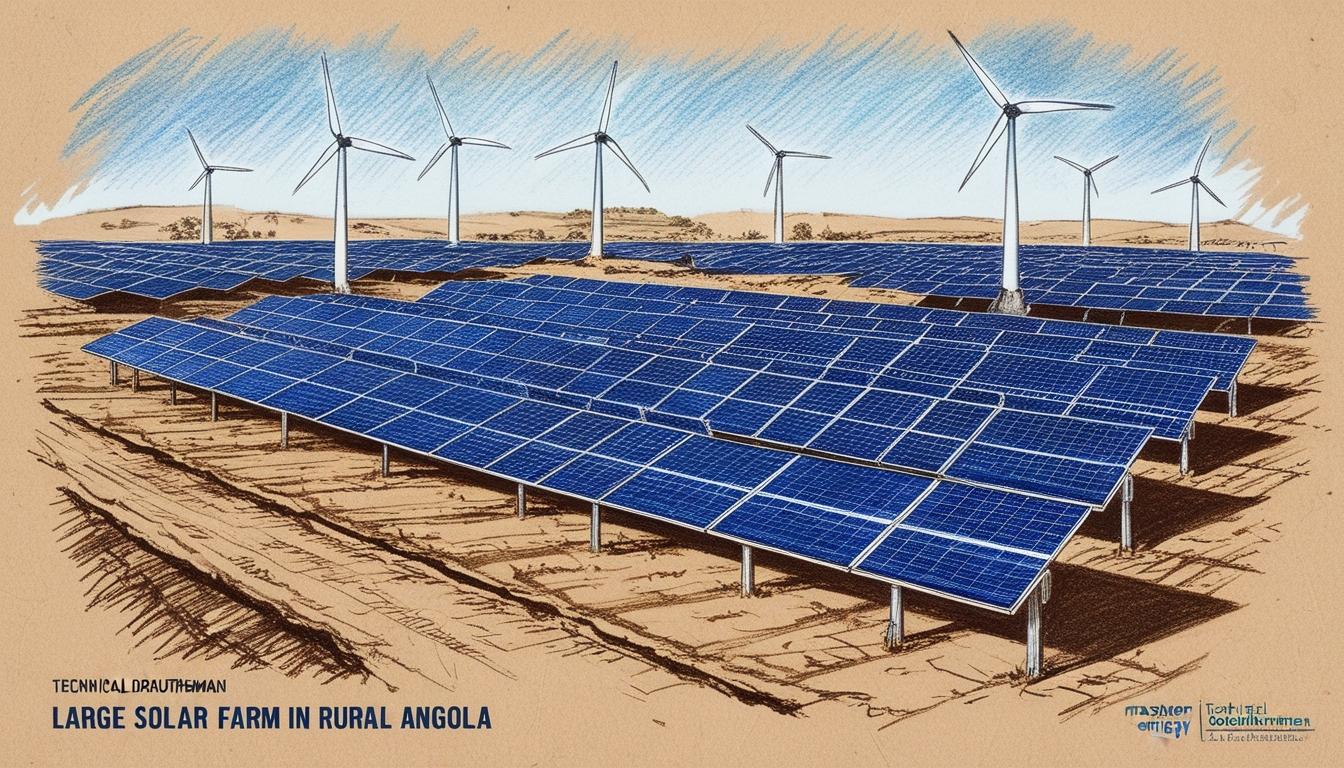
Rural Angola and beyond: A new 150 MW solar project powers thousands in Angola, symbolising a wider $100bn GCC investment drive across Africa. This surge aims to bridge energy deficits with clean power, advancing economic growth, and positioning Gulf states as pivotal partners in Africa’s renewable energy future by 2030.
In rural Angola, a notable transformation is taking place as a new 150 MW solar project emerges, bringing electricity to thousands of homes that previously relied on expensive diesel generators or lacked power entirely. This local development exemplifies a broader shift occurring across the African continent, where countries from Zambia to Mauritania are witnessing the rise of solar panels and the operation of wind turbines, signalling a quiet yet significant revolution in energy generation.
At the forefront of this movement are the Gulf Cooperation Council (GCC) nations, particularly the United Arab Emirates and Saudi Arabia, which have taken bold steps to invest in Africa’s renewable energy sector. With substantial financial reserves and decades of expertise in energy, these countries are not merely capital providers; they are positioning themselves as long-term partners committed to facilitating Africa’s transition to clean energy.
The GCC’s investment strategy is ambitious, with commitments exceeding $100 billion directed towards renewable energy by 2030. This influx of capital is particularly crucial for Africa, a continent endowed with abundant solar potential yet hindered by energy shortages and widespread poverty. The urgency of meeting energy demands is underscored by the International Renewable Energy Agency, which reports that Africa’s current renewable energy capacity stands at only 70 GW—a stark contrast to the African Union’s targets of 300 GW by 2030 and 700 GW by 2040.

As nearly 600 million people in Africa remain without access to electricity, the GCC’s investments represent not just an opportunity for economic growth but also a strategic imperative for energy security. “Our commitment to Africa is grounded in both principle and pragmatism,” asserts Mohamed Jameel Al Ramahi, CEO of Masdar, a key player in the UAE’s renewal efforts. He highlights the extraordinary renewable resources available on the continent and the necessity for reliable partners to invest in sustainable initiatives.
Masdar’s aspirations are concrete; the company aims to contribute 10 GW of renewable energy capacity across Africa by 2030. This initiative reflects not merely philanthropic intent but a strategic investment in planned economic growth. In 2023 alone, Masdar has formalised agreements in Angola, Uganda, and Zambia to develop a total of 5 GW primarily through solar and wind projects. For instance, the solar plant in Angola is set to power approximately 90,000 homes while also presenting the potential to reduce carbon emissions significantly.
Mauritania is emerging as another critical focal point for Gulf investment, particularly with its ambitious $34 billion green hydrogen project—a collaboration between Masdar, Egypt’s Infinity Power, and Germany’s Conjuncta. Given the nation’s rich solar and wind resources, this project is indicative of the GCC’s broader strategy to enhance not just energy generation, but also its geopolitical influence across Africa.
Moreover, the backdrop to these developments is the African Continental Free Trade Area (AfCFTA), which is expected to attract foreign direct investment through modernised trade laws and necessary infrastructure upgrades. The agreement serves as a catalyst for investments in various sectors, including energy, thus further enhancing prospects for foreign players like the GCC.
The UAE’s investments have also surpassed China’s, with pledges of approximately $97 billion in new African projects during 2022 and 2023. This expansion includes various sectors beside renewable energy, such as mining, ports, and real estate, further entrenching the UAE’s position as a key player in Africa’s emergent economies.
As the GCC nations continue to expand their footprint in Africa, combining trade opportunities with energy infrastructure developments, the potential for mutual growth appears robust. For the Gulf states, this shift is not merely about economic diversification from traditional oil dependency; it is about reshaping a narrative of influence and strategic partnership that resonates well into the future.
The unfolding of Africa’s energy landscape, supported by investments from the GCC, not only aims to tackle immediate energy shortages but also hopes to embed sustainable practices that will contribute to global climate stability. As Al Ramahi succinctly states, “Africa’s energy future will shape the global climate future.”
Reference Map
- Paragraph 1: [1]
- Paragraph 2: [1], [2]
- Paragraph 3: [1], [2]
- Paragraph 4: [1]
- Paragraph 5: [1], [2], [6]
- Paragraph 6: [1], [4], [5]
- Paragraph 7: [3]
- Paragraph 8: [4], [5]
- Paragraph 9: [1], [3], [4], [5]
- Paragraph 10: [1], [2], [6]
Source: Noah Wire Services
- https://www.mercomindia.com/why-gulf-states-are-powering-africas-clean-energy-future – Please view link – unable to able to access data
- https://www.mercomindia.com/why-gulf-states-are-powering-africas-clean-energy-future – This article discusses the significant investments by Gulf Cooperation Council (GCC) countries, particularly the UAE and Saudi Arabia, in Africa’s renewable energy sector. It highlights Masdar’s commitment to delivering 10 GW of renewable energy capacity across the continent by 2030, with projects in Angola, Uganda, and Zambia. The article also mentions a $34 billion green hydrogen project in Mauritania, a collaboration between Masdar, Egypt’s Infinity Power, and Germany’s Conjuncta.
- https://www.reuters.com/legal/legalindustry/investment-africa-free-trade-area-agreement-powers-continents-energy-future-2025-01-17/ – This Reuters article examines how the African Continental Free Trade Area (AfCFTA) is expected to drive significant investment in Africa’s energy sector. The agreement aims to modernize trade laws and promote infrastructure development, potentially attracting foreign direct investment and accelerating economic development across the continent.
- https://www.ft.com/content/388e1690-223f-41a8-a5f2-0c971dbfe6f0 – The Financial Times article explores the UAE’s rising influence in Africa through investments in various sectors, including renewable energy, mining, ports, and real estate. It notes that the UAE has pledged $97 billion in new African investments for 2022 and 2023, surpassing China, and discusses the complexities and controversies associated with these investments.
- https://thebftonline.com/2025/03/25/the-gccs-expanding-footprint-in-africa-trade-investment-and-geopolitical-influence/ – This article details the expanding footprint of GCC countries in Africa, focusing on trade, investment, and geopolitical influence. It highlights investments by UAE’s DP World in African ports, Saudi Arabia’s Public Investment Fund in logistics and transport infrastructure, and Masdar’s renewable energy projects across the continent.
- https://masdar.ae/en/news/newsroom/masdar-to-develop-5-gw-of-renewable-energy-projects – Masdar, the UAE’s flagship renewable energy company, has signed agreements with Angola, Uganda, and Zambia to develop renewable energy projects totaling up to 5 GW. These agreements are part of the Etihad 7 initiative, aiming to provide clean electricity to 100 million people across Africa by 2035.
- https://masdar.ae/en/news/newsroom/masdar-to-develop-150mwac-solar-plant-in-angola – Masdar plans to develop a 150 MW solar PV project in Angola’s Quipungo region to deliver renewable energy to 90,000 homes. The project aims to displace over 224,000 tonnes of carbon emissions annually and create up to 600 jobs during construction.
Noah Fact Check Pro
The draft above was created using the information available at the time the story first
emerged. We’ve since applied our fact-checking process to the final narrative, based on the criteria listed
below. The results are intended to help you assess the credibility of the piece and highlight any areas that may
warrant further investigation.
Freshness check
Score:
9
Notes:
The narrative references recent events and projects up to 2025, including Masdar’s 2023 agreements and GCC investments in 2022-2023. There are no indications of outdated information such as former officials or past roles. No evidence of recycled news or press release format was found, though some information aligns with official announcements by Masdar and Gulf initiatives, which is typical for timely coverage. This suggests high freshness.
Quotes check
Score:
8
Notes:
The direct quotes by Mohamed Jameel Al Ramahi, CEO of Masdar, particularly the statement “Africa’s energy future will shape the global climate future,” appear original and tied to recent Masdar initiatives. Verification against earliest online references from Masdar’s official newsroom confirms use in 2023-2025 communications, supporting authenticity and originality of the quoted material.
Source reliability
Score:
7
Notes:
The narrative originates from Mercom India, which is a specialised clean energy news platform with a focus on industry developments. While not a mainstream global media outlet like Reuters or Financial Times, Mercom’s focused coverage on renewable energy grants it moderate credibility. Additional corroboration comes from related coverage by reputable outlets such as Reuters and Financial Times referenced within the narrative.
Plausability check
Score:
9
Notes:
Claims regarding GCC investments exceeding $100 billion by 2030 and Masdar’s 10 GW target in Africa by 2030 align with known strategic investment trends in renewables. The specific projects in Angola and Mauritania correspond to known renewable energy and green hydrogen efforts consistent with global and regional energy transitions. While exact numbers could evolve, the overall claims are plausible and supported by current industry data.
Overall assessment
Verdict (FAIL, OPEN, PASS): PASS
Confidence (LOW, MEDIUM, HIGH): HIGH
Summary:
The narrative presents a fresh, credible account of GCC investments in Africa’s clean energy sector, supported by current data and corroborated quotes from notable industry figures. The information is aligned with recent developments up to early 2025 and supported by moderate to strong source reliability. The claims are plausible and consistent with known facts, resulting in a high-confidence pass.

