

 6:50 am - April 3, 2026
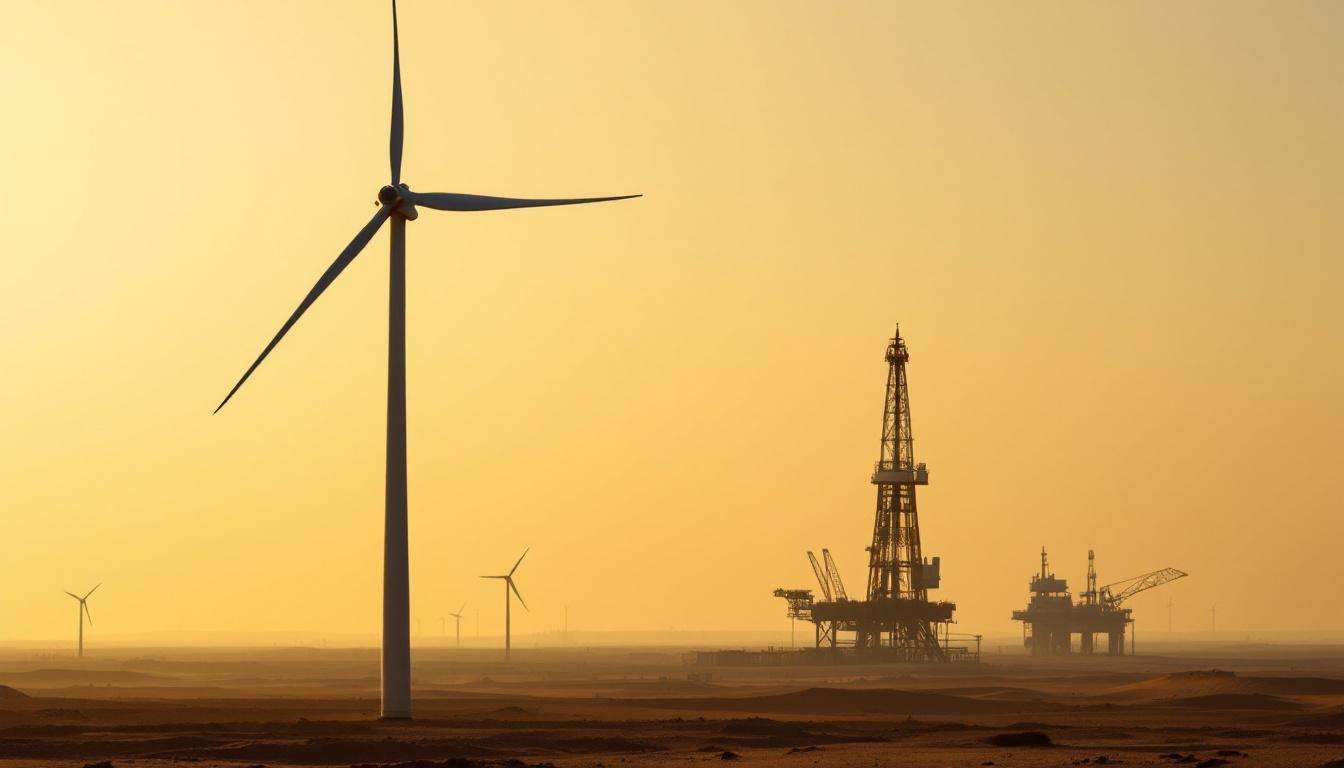
Gulf Cooperation Council nations are at a crossroads in their climate efforts, with ambitious targets hampered by uneven implementation and a dual approach of expanding fossil fuel production alongside renewable investments. The region’s future leadership in global decarbonisation depends on delivering tangible progress amid geopolitical and economic challenges.
As the Gulf Cooperation Council (GCC) nations grapple with an increasingly urgent climate agenda, the choices they make now over the next decade are going to be crucial in determining their role in the global energy transition by the year 2060. This region, known worldwide for its vast hydrocarbon production and exports, faces a pretty interesting contradiction: on one hand, it bears the brunt of climate vulnerability, yet on the other, it still depends heavily on fossil fuels for affordable, reliable energy. Even though the GCC countries have laid out some commendable net-zero goals and renewable energy targets, the progress in implementing these plans has been uneven and somewhat sluggish — which raises some serious questions about whether they can lead the way in climate action.
The GCC country group consists of six nations, each with their own take on renewable energy and net-zero commitments. For instance, Saudi Arabia has set a target for 50% of its electricity to come from renewables by 2030, with the ultimate goal of reaching net-zero emissions by 2060. Meanwhile, the UAE plans to hit 44% renewable energy by 2050, aiming for net-zero by the same year. Other members like Bahrain, Kuwait, Oman, and Qatar have also announced various targets to ramp up renewable shares and cut their emissions — but their timelines and ambitions aren’t all the same. Taken together, these objectives seem to acknowledge that the region must transition its energy system, despite contributing only around 4% of global greenhouse gases, with total emissions remaining quite significant.
There are essentially three scenarios shaping the future for the Gulf’s climate efforts. The first is a slow transition, which risks achieving only about 15–30% of the planned targets. That scenario would keep the GCC heavily reliant on fossil fuels, with minimal adoption of clean energy sources. It’d leave the region vulnerable to the worsening impacts of climate change and shrinking export markets, all while hurting its credibility on the international stage. A second, more moderate scenario, might see the region achieving around 50–60% of its goals, gradually reducing emissions thanks to expanded renewables and greater efficiency — but it would essentially follow global trends without necessarily leading them. The third, ambitious scenario involves a strong transformation, where the GCC hits 85% or more of its targets—potentially making the region a leader in clean energy innovation with massive investments in hydrogen, solar, bioenergy, carbon capture, and circular economy initiatives. That would involve sovereign wealth funds footing large bills to transition the energy landscape, turning the Gulf into both a major energy supplier and a hefty exporter of clean tech solutions.

So far, there have been more than 90 renewable energy projects launched across the GCC, with about 16.5 gigawatts (GW) already installed and another 13.5 GW under construction—although that’s still just about 18% of the 2030 goal of 160 GW. Saudi Arabia and the UAE are at the forefront, with Oman, Qatar, Kuwait, and Bahrain following behind. If these projects are completed as planned, they could slash around 120 million tons of CO2 emissions annually — roughly 8% of what the region is projected to emit in 2024 — showing the significant potential for emissions reductions.
Recently, there have been some notable developments that both indicate progress and reveal ongoing tensions. In November 2024, the UAE updated its climate commitments, pledging to cut greenhouse gas emissions by 47% by 2035 compared to 2019 levels. They plan to do this by shifting from fossil fuels to nuclear power, solar, and waste-to-energy tech. However, at the same time, the UAE also announced plans to ramp up fossil fuel production and consumption by 2030—having invested around $17 billion in oil development. Honestly, this dual approach has sparked criticism—some see it as greenwashing—and questions about whether their commitments are enough, especially considering the emissions embedded in the oil they export remain a major sticking point.
The COP28 conference, held in Dubai in 2024, turned out to be a landmark event with what’s called the UAE Consensus. This agreement focused on a fair, steady transition to cleaner energy—goal: triple renewable capacity and double energy efficiency by 2030, plus commitments to stop deforestation. The summit was also a big financial mobilisation, pulling in about $85 billion to tackle climate change, including $30 billion for clean energy projects and over $700 million dedicated to a fund for loss and damage. The discussions involved a really broad mix of stakeholders from society, industry, and government, and resulted in agreements like the Oil & Gas Decarbonization Charter. But, as always, experts warn that growing electricity demand and challenges in integrating energy sources mean there’s still a lot of work to do before these plans become reality.
Looking at the regional giants, the UAE’s state oil company, Adnoc, embodies this balancing act. They’re investing around $5 billion each year to cut their carbon footprint by adopting low-carbon energy solutions, aiming for net-zero by 2045. At the same time, they’re expanding their oil and gas output and branching out into chemicals—like ammonia, plastics, and foams. Their strategy involves increasing green energy use, tapping into solar and nuclear power, and electrifying offshore operations to lower emissions. It’s a clear example of the wider GCC pattern: leveraging plentiful fossil fuel resources to ensure economic stability, while also investing heavily in clean energy initiatives to stay competitive and meet climate commitments.
Regional renewable capacity is growing quickly, especially in Saudi Arabia, which has its sights set on reaching 130 GW of renewables by 2030 — with a big focus on solar and green hydrogen. The UAE is investing heavily, around $45 billion so far, planning for another $54 billion over the next six years. And it’s not just solar: the Middle East is quickly emerging as a wind energy hub, accounting for nearly 40% of global wind capacity expansion expected by 2030— driven by projects in Saudi Arabia, Oman, and Egypt. Overall, the global scene matches this upward trend, with renewable capacity increasing by 20% between 2023 and 2024, setting the stage for renewables to supply nearly half of global electricity before 2030.
Country-level progress paints a nuanced picture. Oman is close to fulfilling its solar and wind targets for 2027 but will need more capacity to reach 2030’s goal of 30% renewables. Qatar’s solar plants aim to decarbonise its liquefied natural gas exports — crucial for maintaining competitiveness in energy markets. Kuwait, which has historically been slower in adopting renewables, is now reinvigorating its efforts with new solar tenders, which shows a growing political and technical commitment—despite past project cancellations and delays.
Beyond technology and funding, the social side of the equation is essential. A just transition in the GCC involves more than just tech; it requires upskilling workers, reforming education, and creating inclusive pathways for employment—both for citizens and migrant workers. Without policies that promote inclusion, the human capital needed to support a circular economy and renewable sectors might fall short, potentially undermining both economic growth and climate goals.
Looking forward, the Gulf faces a pivotal decision—whether to lead through comprehensive, integrated action or risk falling behind as the world rushes toward decarbonization. Creating mechanisms like a proposed GCC Net-Zero Implementation Council could help align policies, pool investments, cut costs, and boost their credibility in the global arena. Strengthening international cooperation on climate finance, carbon pricing, and green trade will also be crucial for maintaining momentum.
While the blueprint for a transformative energy future exists, the gap between ambition and actual achievement remains wide. One analyst summarized it well when saying, “History won’t remember our promises; it will remember what we did and what we leave for future generations.” These scenarios are ultimately choices, not inevitable outcomes, and the future of GCC climate leadership depends heavily on decisions made now—balancing economic change, social equity, and urgent emissions cuts to build a resilient, prosperous future amid the increasing threats of climate change.
Source: Noah Wire Services
- https://blogs.lse.ac.uk/mec/2025/09/01/gcc-net-zero-scenarios-choosing-the-future-we-want/ – Please view link – unable to able to access data
- https://www.reuters.com/world/middle-east/short-take-uae-pledges-cut-emissions-by-47-by-2035-2024-11-07/ – In November 2024, the United Arab Emirates (UAE) committed to reducing its greenhouse gas emissions by 47% by 2035 compared to 2019 levels. This pledge is part of the UAE’s updated Nationally Determined Contributions (NDCs) submitted ahead of the COP29 climate summit in Azerbaijan. The UAE’s climate plan includes transitioning from fossil fuels to alternatives such as civil nuclear energy, solar power, and waste-to-energy technologies. However, the UAE also plans to increase fossil fuel production and consumption by 2030, having recently invested $17 billion in oil development. Critics have raised concerns about the sufficiency of these targets and the potential for greenwashing, particularly regarding emissions from exported oil.
- https://time.com/7174439/sultan-al-jaber-climate-finance-cop29-uae-consensus/ – The 2024 COP28 Climate Summit in Dubai resulted in the UAE Consensus, a pivotal agreement aimed at a just, orderly, and equitable energy transition. Key commitments include tripling renewable energy capacity, doubling energy efficiency, and ending deforestation by the decade’s end. The summit mobilized $85 billion in climate finance commitments, including $30 billion for Altérra and over $700 million for the loss and damage fund. COP29 calls for a New Collective Quantified Goal (NCQG) on climate finance to support these objectives. Inclusivity played a crucial role, engaging various society sectors and the energy industry, leading to important agreements like the Oil & Gas Decarbonization Charter. Progress in renewables and generative AI is promising, but addressing electricity demand growth and energy integration remains vital. Governments need to raise their ambitions, support renewable energy, and incentivize private investors to overcome the challenges and transform blueprints into actionable solutions.
- https://www.ft.com/content/9983be98-8a6e-4edd-be28-3eb866a9f6c7 – Abu Dhabi’s National Oil Company (Adnoc) is undertaking significant efforts to adapt to the global shift away from fossil fuels and meet climate targets. With a substantial annual investment of $5 billion in low-carbon energy, Adnoc aims to achieve net-zero emissions by 2045. Unlike other major oil companies preparing for peak oil, Adnoc is focusing on diversifying its portfolio into hydrocarbon-derived products and expanding its crude oil capacity. The acquisition of Germany’s Covestro for $16 billion highlights this strategy. Adnoc is also enhancing its green energy infrastructure, utilizing solar and nuclear power, and investing $3.8 billion to connect offshore operations to the grid to reduce carbon footprints. The UAE, led by Abu Dhabi, is leveraging clean energy domestically and aiming to export oil and gas. Adnoc’s future strategy includes prioritizing natural gas, creating a significant role for it in the energy transition, while also focusing on the chemicals sector. By focusing on industries like ammonia, plastics, and foams, Adnoc is positioning itself as a major long-term energy provider.
- https://www.agbi.com/analysis/renewable-energy/2024/10/middle-east-renewables-capacity-on-track-to-triple/ – Saudi Arabia plans to reach 130 GW of renewable capacity by 2030, with its installed renewables capacity more than tripling in 2023. The UAE has invested $45 billion in clean energy and plans to invest an additional $54 billion over the next six years. The Middle East is also expanding wind onshore capacity, driven by the development of hydrogen projects that could reach nearly 10 GW. By 2030, the region is expected to account for 40% of wind expansion, led by Saudi Arabia, Oman, and Egypt. Globally, renewables are expanding rapidly, with capacity increasing by 20% between 2023 and 2024 to 670 GW, on course to meet almost half of global electricity demand by the end of this decade.
- https://www.energypolicy.columbia.edu/sunspot-the-rise-of-renewables-in-the-gulf/ – By 2050, Saudi Arabia might need about 100 GW of solar PV for electricity and another 100 GW for green hydrogen production to meet its net-zero and hydrogen export goals. Oman should achieve about 3.7 GW of solar and wind by the end of 2027, surpassing its 2025 target but a couple of years late, but it will need additional projects to meet the goal of 30% of generation by 2030. Qatar has 800 MW of solar PV in the Al Kharsaah plant and is working on another 800 MW between two projects, so its 5 GW target by 2035 should be feasible. These plants are intended to help lower the carbon footprint of liquefied natural gas export facilities, making them more competitive. In Kuwait, the 1.5 GW Dibdibah component of the Shagaya solar project was canceled in 2020 amid the Covid-19 pandemic, leaving the country with just 114 MW of capacity. However, a new minister of electricity, Salem Al Hajraf, is an advocate of renewables, and a tender has been launched for a 1.1 GW solar farm at Shagaya, which would approach halfway to the 2030 goal.
Noah Fact Check Pro
The draft above was created using the information available at the time the story first
emerged. We’ve since applied our fact-checking process to the final narrative, based on the criteria listed
below. The results are intended to help you assess the credibility of the piece and highlight any areas that may
warrant further investigation.
Freshness check
Score:
10
Notes:
The narrative is recent, published on 1 September 2025, and appears to be original content without prior publication.
Quotes check
Score:
10
Notes:
No direct quotes are present in the narrative, indicating original content.
Source reliability
Score:
9
Notes:
The narrative originates from the LSE Middle East Centre, a reputable academic institution.
Plausability check
Score:
9
Notes:
The claims align with known data on GCC countries’ renewable energy targets and net-zero ambitions.
Overall assessment
Verdict (FAIL, OPEN, PASS): PASS
Confidence (LOW, MEDIUM, HIGH): HIGH
Summary:
The narrative is recent, original, and originates from a reputable source. It presents plausible claims consistent with known data on GCC countries’ renewable energy targets and net-zero ambitions.

