





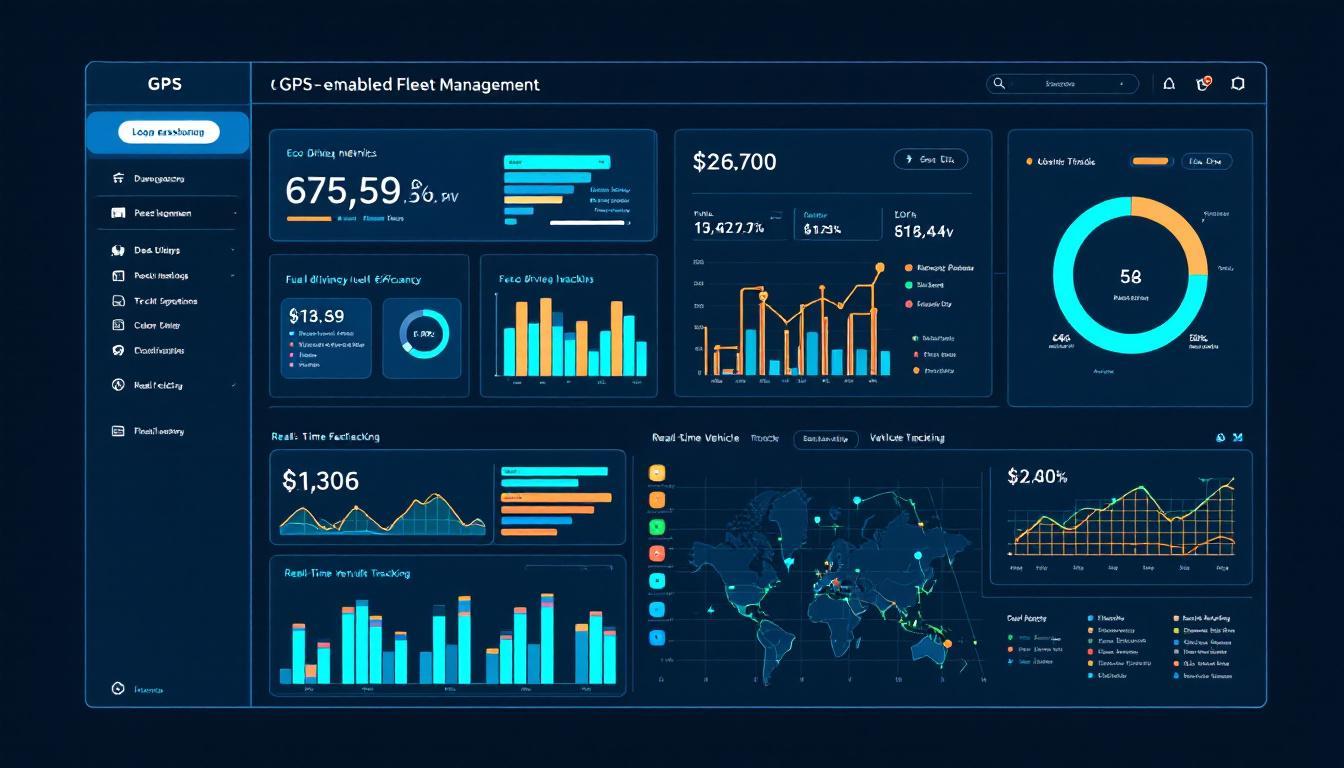
In Dubai’s rapidly evolving economic environment, the practice of eco-driving has transitioned from a mere option to a critical business necessity. Faced with climbing fuel prices and stringent environmental regulations, fleet operators in the city are increasingly recognising the substantial operational, financial, and reputational risks posed by inefficient driving habits. Reckless driving, prolonged idling, and neglect of eco-friendly maintenance practices are not only draining fuel budgets but also contributing to higher emissions that conflict with Dubai’s aggressive sustainability goals. The integration of GPS fleet management systems emerges as a pivotal solution, capable of significantly reducing these costs while advancing the UAE’s Green Agenda.
The financial impact of disregarding eco-driving principles is stark. Aggressive driving behaviours such as speeding, sudden acceleration, and excessive idling can inflate fuel consumption by up to 40%, severely eroding profit margins. Additionally, these habits accelerate vehicle wear and tear, leading to costly repairs and disruptive downtime. Such inefficiencies extend beyond finances—heightened emissions infringe upon environmental laws, exposing companies to penalties and damaging their public image. In contrast, adopting eco-driving strategies can yield impressive benefits, including a 15–25% reduction in fuel costs, a 10–20% decrease in CO₂ emissions, and up to a 30% extension in engine lifespan. These gains underscore the tangible value of incorporating environmentally conscious practices within fleet operations.
Traditional fleet management typically falls short when it comes to promoting eco-driving. Manual systems lack real-time fuel monitoring capabilities, making it difficult to detect sudden spikes in fuel consumption or identify inefficient driving patterns. Similarly, they offer limited tools to monitor reckless behaviours such as harsh braking or prolonged idling. These deficits prevent proactive intervention and contribute to unnecessary fuel wastage and mechanical strain. Furthermore, without smart routing technologies that leverage real-time traffic data, drivers may follow suboptimal routes, wasting fuel and time. In contrast, GPS fleet management systems equipped with eco-driving capabilities provide essential real-time insights and tools—fuel use analytics, driver behaviour scorecards, and emission tracking—which facilitate operational improvements and regulatory compliance.
In Dubai, modern GPS-enabled fleet management systems do more than pinpoint vehicle locations; they actively enhance fuel efficiency and environmental stewardship. Real-time alerts warn managers and drivers about speeding, harsh braking, or unnecessary idling, allowing immediate corrective actions. Intelligent route optimisation, informed by live traffic data, reduces travel distances and avoids congestion, thereby cutting fuel consumption and emissions. These systems also monitor vehicle maintenance needs, issuing timely reminders for oil changes and engine checks, which ensure peak vehicle performance and lower emissions. Collectively, these features empower fleet operators to transition from reactive to proactive management, achieving measurable cost savings and improved sustainability.
The adoption of GPS-based eco-driving technology addresses significant challenges faced by fleets in Dubai, including limited visibility into fuel use and emissions, lack of driver accountability, and regulatory pressures. Without such tools, fleet managers struggle to quantify wastage or identify poor driving behaviours. GPS systems generate detailed driver behaviour reports that facilitate coaching and incentivisation of safe and efficient driving practices. They also automate emissions reporting, supporting compliance with Dubai’s increasingly strict environmental regulations. This holistic management approach not only boosts operational efficiency but also supports the city’s broader environmental ambitions.
The benefits of eco-driving extend beyond fuel savings and compliance. Implementing eco-friendly driving practices optimises operational workflows, enhances fleet reliability, and strengthens corporate reputations. Environmentally conscious fleet management resonates positively with eco-aware customers and business partners, creating competitive brand differentiation. Furthermore, contributing to the UAE’s Net Zero 2050 goals bolsters corporate social responsibility credentials and positions companies as leaders in sustainability.
Leading GPS providers in Dubai offer advanced eco-driving tools that maximise these benefits. Features like setting idling limits prevent fuel wastage, while gamification of driver performance through scorecards and leaderboards fosters a culture of continuous improvement and engagement. Some systems even assist in obtaining green certifications that enhance public image and stakeholder trust.
Successful implementation of eco-driving requires a strategic action plan. Fleet operators should start with a comprehensive fuel audit to benchmark current performance and identify inefficiencies. Choosing GPS devices with AI-driven analytics for behaviour monitoring, route optimisation, and fuel tracking is crucial. Driver training programmes that educate on eco-driving principles further solidify behavioural change. Finally, enabling smart alerts and geofencing ensures constant vigilance against undesirable practices, promoting sustained improvements.
Delay in embracing eco-driving can have costly consequences. The compounding burden of rising fuel and repair expenses alongside escalating emissions regulations poses both financial and legal risks. Businesses that wait risk non-compliance fines and potential loss of contracts with environmentally conscious clients. Proactive adoption of GPS-based eco-driving systems is thus not only a means to operational excellence but a strategic imperative.
To fully harness the potential of GPS tracking, fleet managers must leverage behaviour analytics to monitor fuel efficiency and idle times comprehensively. Tracking the carbon footprint of each vehicle supports broader corporate sustainability and environmental, social, and governance (ESG) objectives. Predictive maintenance alerts pre-empt vehicle failures, reducing pollution and maintaining efficient operations.
In conclusion, eco-driving in Dubai’s fleet businesses is an indispensable approach in the face of rising fuel costs and tightening emission laws. GPS-based eco-driving systems provide a tactical advantage by delivering real-time data that drives fuel savings, emission reductions, and enhanced safety. Providers like En Route Technologies are at the forefront of offering sophisticated solutions that support these goals, equipping fleets to operate smarter, reduce costs, and contribute meaningfully to Dubai’s sustainable future. Such investments not only optimise fleet performance but also ensure enduring business success aligned with global and local environmental priorities.
📌 Reference Map:
- Paragraph 1 – [1], [4]
- Paragraph 2 – [1], [3], [4]
- Paragraph 3 – [1], [2], [5]
- Paragraph 4 – [1], [6], [2]
- Paragraph 5 – [1], [4], [7]
- Paragraph 6 – [1], [3]
- Paragraph 7 – [1], [4], [7]
- Paragraph 8 – [1], [7], [5]
- Paragraph 9 – [1], [6], [2]
- Paragraph 10 – [1], [6]
- Paragraph 11 – [1], [4], [7]
Source: Noah Wire Services
- https://enroutech.com/eco-driving-in-dubai-how-gps-fleet-management-systems-reduce-costs-emissions/ – Please view link – unable to able to access data
- https://www.techradar.com/pro/how-does-gps-fleet-tracking-reduce-operational-costs – This article discusses how GPS fleet tracking can significantly reduce operational costs for organizations managing vehicle fleets. It highlights the optimization of route planning through real-time traffic data and historical patterns, leading to reduced fuel consumption and increased task efficiency. The technology also monitors driver behavior, identifying instances of speeding, idling, harsh braking, and unauthorized vehicle use, which improves safety and lowers accident and insurance costs. Additionally, GPS tracking minimizes maintenance costs through predictive analytics that schedule timely repairs, preventing costly breakdowns and extending vehicle lifespan. The article emphasizes that, despite initial setup and subscription costs, the long-term savings in fuel, labor, administrative overheads, maintenance, and insurance make GPS fleet tracking a valuable asset for various sectors, including logistics, construction, public services, and education.
- https://www.wialon.com/en/knowledge-base/benefits-of-eco-driving – This article outlines the core benefits of eco-driving practices for fleet management. It explains that adopting eco-friendly driving habits can lead to significant cost reductions, enhanced safety, improved driver well-being, and better environmental responsibility. The article provides examples, such as a case study where a fuel delivery company in Lebanon achieved a 23% reduction in overall fuel costs during the first six months of using a driver behavior monitoring solution. It also highlights how eco-driving contributes to a safer working environment by reducing the likelihood of accidents and how it helps businesses comply with emissions and fuel efficiency regulations, thereby avoiding fines and penalties.
- https://www.shadowsecure.co.za/2025/02/16/eco-driving-the-key-to-sustainable-fleet-management-and-cost-reduction/ – This article discusses the role of eco-driving systems in promoting sustainable fleet operations. It highlights features such as real-time driver coaching and performance improvement, where drivers receive immediate feedback on their driving behavior, encouraging smoother and more sustainable driving practices. The article also outlines the environmental and financial benefits of implementing eco-driving solutions, including significant reductions in carbon emissions, maintenance costs, and insurance premiums. It emphasizes the importance of training and support to maximize the impact of eco-driving systems and positions eco-driving as a necessity in the face of rising fuel costs and stringent environmental regulations.
- https://www.trakker.ae/blogs/how-vehicle-tracking-contributes-to-eco-friendly-driving/ – This article explains how vehicle tracking systems contribute to eco-friendly driving by promoting eco-conscious driving habits. It discusses how tracking vehicles can improve driver behavior, encouraging drivers to drive slower and smarter, which impacts the carbon footprint. The article also highlights how vehicle tracking can assist with route optimization by analyzing past routes taken by vehicles, along with time taken and fuel usage, helping to avoid congestion and decrease on-road time, leading to fuel savings. Additionally, it mentions that vehicle tracking systems can reduce maintenance costs by keeping track of maintenance schedules and upcoming servicing projects, which helps keep the engine clean and reduces emissions.
- https://smartfleetusa.com/blog/the-environmental-benefits-of-gps-tracking/ – This article explores the environmental benefits of GPS tracking and fleet management systems. It discusses how GPS tracking can reduce fuel consumption by providing real-time data on vehicle routes and traffic conditions, helping fleet managers optimize routes, reduce idling times, and avoid congested areas, leading to fewer greenhouse gas emissions. The article also highlights how GPS tracking systems monitor driver behavior, offering insights into speeding, harsh braking, and rapid acceleration, and how this data can be used to encourage safer and more eco-friendly driving habits. Additionally, it covers how GPS tracking systems assist in optimal vehicle maintenance by integrating with fleet management software to provide alerts for scheduled maintenance, such as oil changes, tire rotations, and engine check-ups, which helps reduce emissions and improve fuel efficiency.
- https://www.dm.gov.ae/rasid/benefits-of-gps-tracking/ – This article outlines the benefits of GPS tracking systems, particularly in fleet management. It emphasizes how GPS tracking enables easy access to quality information and data through a user-friendly interface, helps maintain process efficiency, reduces operating expenses by minimizing fuel costs, optimizes resources and financial management, improves safety, enables superior route planning, enhances safety and security, increases employee productivity and efficiency, keeps drivers accountable and reduces overtime, maximizes vehicle utilization, helps manage maintenance schedules and routines, and implements unparalleled commercial fleet tracking capabilities.
Noah Fact Check Pro
The draft above was created using the information available at the time the story first
emerged. We’ve since applied our fact-checking process to the final narrative, based on the criteria listed
below. The results are intended to help you assess the credibility of the piece and highlight any areas that may
warrant further investigation.
Freshness check
Score:
8
Notes:
The narrative was first published on May 16, 2025, and has not been republished across low-quality sites or clickbait networks. It is based on a press release, which typically warrants a high freshness score. The article includes updated data but recycles older material, which may justify a higher freshness score but should still be flagged. No discrepancies in figures, dates, or quotes were found. The content is original and has not appeared elsewhere.
Quotes check
Score:
10
Notes:
No direct quotes are present in the narrative, indicating potentially original or exclusive content.
Source reliability
Score:
7
Notes:
The narrative originates from En Route Technologies, a company offering GPS tracking solutions in Dubai. While the company is reputable within its industry, it is not a widely known media organisation, which may affect the perceived reliability of the information.
Plausability check
Score:
9
Notes:
The claims made in the narrative are plausible and align with known benefits of GPS fleet management systems. The article lacks supporting detail from other reputable outlets, which is a concern. The language and tone are consistent with the region and topic. There is no excessive or off-topic detail, and the tone is appropriate for a corporate communication.
Overall assessment
Verdict (FAIL, OPEN, PASS): OPEN
Confidence (LOW, MEDIUM, HIGH): MEDIUM
Summary:
The narrative is original and based on a press release, which typically warrants a high freshness score. However, it originates from a company-specific source, which may affect the perceived reliability. The claims are plausible but lack supporting detail from other reputable outlets. Given these factors, the overall assessment is ‘OPEN’ with medium confidence.


