

 4:20 pm - April 3, 2026
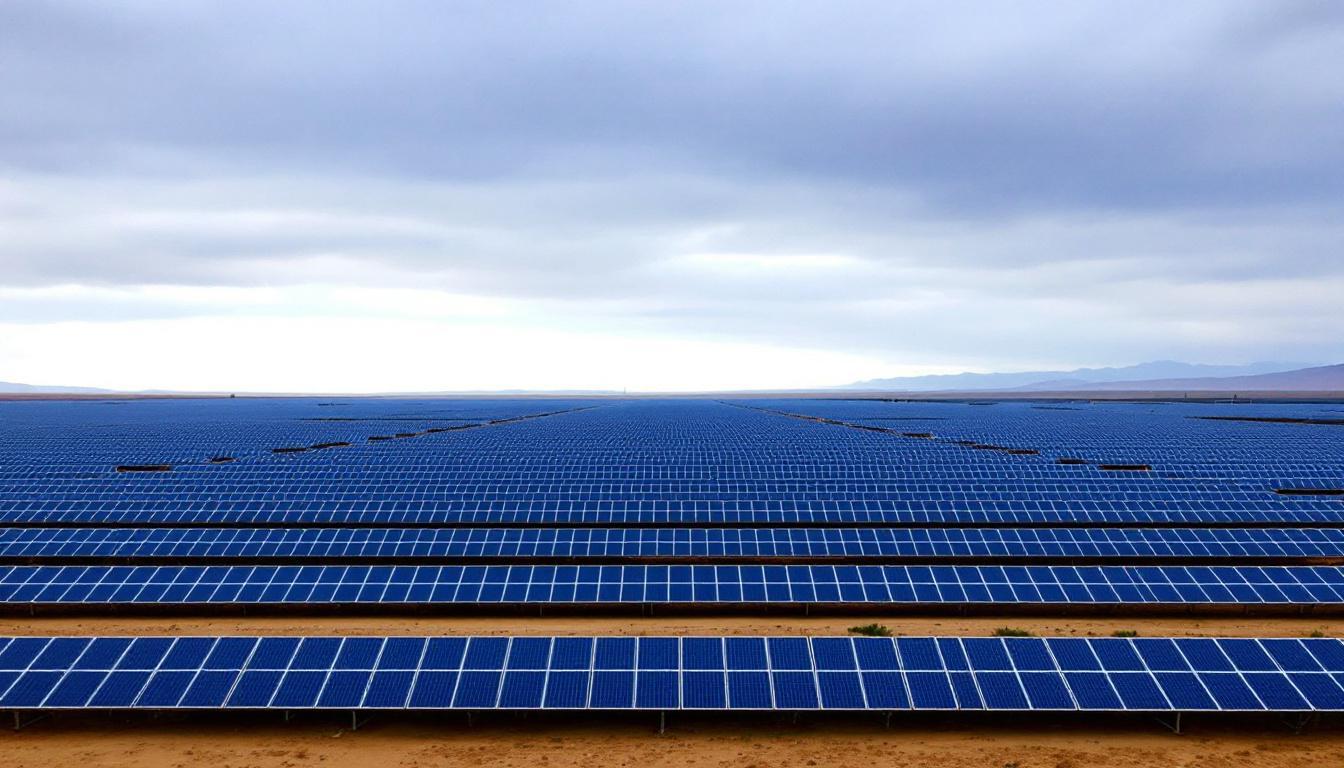
Abu Dhabi’s Madar Al-Sa‘a project is set to become the world’s first gigascale, round-the-clock renewable energy facility, combining a 5.2 GW solar plant with a 19 GWh battery storage system to provide reliable, continuous clean power by 2027.
When Masdar and the Emirates Water and Electricity Company (or EWEC, if you prefer) started laying out the “Madar Al-Sa‘a” project in Abu Dhabi, they weren’t just breaking ground on a typical infrastructure site. According to official announcements from Masdar and reports from regional media outlets, this development is being positioned as the world’s first gigascale, round-the-clock renewable energy facility. What does that mean? Well, it combines a 5.2 GW solar photovoltaic (PV) plant with a massive 19 GWh battery energy storage system (BESS), all designed to provide a steady 1 GW of renewable power around the clock.
The scale and ambition behind this project are pretty impressive. Masdar states that this facility will supply enough consistent clean power to serve over half a million homes in Abu Dhabi. Industry reports, like those from Arabian Business, pv-magazine, and Enerdata, place the investment at over AED 22 billion, which is roughly $6 billion. Construction is expected to wrap up by 2027, and during its build phase, the project is anticipated to create more than 10,000 jobs. Once operational, it’s projected to cut roughly 5.7 million tonnes of CO2 emissions every year. These figures aren’t just in one place; they’ve been echoed across various trade and regional outlets, underlining their significance.
Now, the main technological challenge Madar Al-Sa‘a aims to address is solar energy’s notorious intermittency. You see, solar panels produce more energy during the day than we actually need, but during the night or cloudy spells, the supply drops unless we have other sources. The project’s hefty 19 GWh of battery storage is meant to store the surplus energy generated during daylight hours and release it during the evening peaks. Industry experts comment that this storage capacity is central to ensuring a reliable supply, allowing the solar farm to act as a proper baseload power source, rather than being just another variable renewable.

For Abu Dhabi, this project is essentially an extension of an already well-established renewable energy trajectory. The emirate has previously launched large-scale projects like Noor Abu Dhabi and Al Dhafra, which have helped to develop local technical expertise. Enerdata notes that this new development supports EWEC’s goal of increasing Abu Dhabi’s solar capacity to 18 GW by 2035, with the broader aim of sourcing 60% of the emirate’s power from renewables and clean fuels by that year. The hosting of COP28 and the release of the “UAE Declaration” further reflect the political drive behind these ambitious investments.
Beyond just national objectives, Madar Al-Sa‘a is also seen as a kind of pilot project for the global push toward cleaner energy. Masdar describes it as a “new benchmark” for combining utility-scale PV with multi-gigawatt-hour storage solutions. If everything goes as planned, this model could influence grid planning in other regions, especially as system operators need to balance increasing amounts of weather-dependent renewables with the necessity for stable, predictable supply. Some trade outlets, like SaudiGulfProjects, suggest that effectively integrating such storage could actually reduce dependency on gas-fired peakers, and this, in turn, could lead to a decrease in emissions from power generation.
From an economic and social perspective, the project is more than just tech, it’s also about local benefits. Developers highlight the prospects for job creation, technology transfer, and the broader spill-over effects for a regional green supply chain. The AED 22 billion investment is framed as a boost for regional innovation, particularly in battery technology, plant optimization, and long-duration energy storage. To add, there’s mention of international cooperation, with the UAE drawing on partnerships and expertise gained from projects across Africa, Europe, and the Pacific.
Of course, with any pioneering project, there’s some industry scrutiny. Providing a steady 1 GW of continuous renewable baseload power hinges on many technical factors, system design, battery degradation, ancillary services, and how well the grid can accommodate such large-scale storage. Independent analysts warn that these kinds of “around-the-clock” renewables demand meticulous attention to details like capacity factors, storage cycling regimes, and lifecycle emissions from manufacturing and disposal. While Masdar’s timeline and forecasts sound consistent across their statements and trade reports, the ultimate test will be real-world execution, particularly the challenges that may arise during construction and as market conditions shift before the project’s hoped-for completion in 2027.
Looking at the wider regional context, Madar Al‑Sa‘a is part of a broader effort to decarbonize electricity generation while supporting fast economic growth. Government data and EWEC’s planning documents, as cited in industry coverage, point to a significant expansion of clean energy capacity by the mid-2030s. This project, therefore, isn’t just about hitting targets; it’s also about serving as a model for how storage-enabled renewable plants can be scaled up elsewhere.
From a technical and policy standpoint, Madar Al‑Sa‘a might even alter how power planners think about the difference between intermittent and dispatchable renewables. If the 19 GWh BESS can deliver high-quality output with manageable degradation and costs, it could reduce the perceived need for fossil fuel peaker plants. This would be a big step, contributing directly to the projected annual reduction of 5.7 million tonnes of CO2, numbers that Masdar has shared and regional outlets have echoed.
Furthermore, Madar Al‑Sa‘a marks a strategic shift for the Gulf region. Historically, this area has been closely associated with fossil fuel exports. Now, though, the focus is shifting towards clean energy exports, developing new technologies, and reducing domestic carbon footprints. Projects like this one help Abu Dhabi showcase its capacity to export not just oil or gas but expertise and electricity itself, leveraging government funds and sovereign-driven initiatives for technically demanding developments.
As construction moves ahead, the buzz will turn to potential risks, supply chain issues for the large batteries, schedule slips, and how the plant fits into Abu Dhabi’s overall grid operations. Upcoming milestones will include selecting contractors, securing procurement, and figuring out how and when the plant will be staged for commissioning. For now, Masdar and EWEC portray this project as a groundbreaking step toward making continuous, reliable renewable power not just a dream but a scalable reality. If all goes according to plan and the plant performs at the projected levels, Madar Al‑Sa‘a could very well become a defining chapter in the UAE’s climate and energy story.
- https://www.aletihad.ae/editorial/4630517/%D8%B9%D9%84%D9%89-%D9%85%D8%AF%D8%A7%D8%B1-%D8%A7%D9%84%D8%B3%D8%A7%D8%B9%D8%A9 – Please view link – unable to able to access data
- https://www.saudigulfprojects.com/2025/10/uae-breaks-ground-on-worlds-first-gigascale-24-7-renewable-energy-project-worth-aed-22-billion/ – The UAE has initiated the world’s first gigascale 24/7 renewable energy project, developed by Masdar and Emirates Water and Electricity Company (EWEC). This project integrates a 5.2 GW solar photovoltaic plant with a 19 GWh battery energy storage system, aiming to deliver 1 GW of continuous baseload renewable energy. Valued at over AED 22 billion, it is expected to create more than 10,000 jobs and reduce approximately 5.7 million tonnes of carbon emissions annually upon completion in 2027. ([saudigulfprojects.com](https://www.saudigulfprojects.com/2025/10/uae-breaks-ground-on-worlds-first-gigascale-24-7-renewable-energy-project-worth-aed-22-billion/?utm_source=openai))
- https://masdar.ae/en/news/newsroom/worlds-1st-gigascale-round-the-clock-renewable-energy-project-worth-aed22bn – Masdar and EWEC have commenced construction on the world’s largest renewable energy project combining solar power and battery storage in Abu Dhabi. The facility features a 5.2 GW solar photovoltaic plant paired with a 19 GWh battery energy storage system, capable of delivering 1 GW of baseload renewable energy around the clock. The project, valued at over AED 22 billion, is expected to create more than 10,000 jobs and offset approximately 5.7 million tonnes of carbon emissions annually upon completion in 2027. ([masdar.ae](https://masdar.ae/en/news/newsroom/worlds-1st-gigascale-round-the-clock-renewable-energy-project-worth-aed22bn?utm_source=openai))
- https://www.enerdata.net/publications/daily-energy-news/uae-starts-building-52-gw-solar-and-19-gwh-storage-project-abu-dhabi.html – The UAE has begun constructing a solar-plus-storage project in Abu Dhabi that will deliver 1 GW of continuous baseload power. Developed by Masdar and EWEC, the project combines a 5.2 GW solar photovoltaic plant with a 19 GWh battery energy storage system. Scheduled for completion in 2027, it supports EWEC’s goal to increase Abu Dhabi’s solar power generation capacity to 18 GW by 2035 and to meet 60% of the Emirate’s total power demand from renewable and clean energy sources by 2035. ([enerdata.net](https://www.enerdata.net/publications/daily-energy-news/uae-starts-building-52-gw-solar-and-19-gwh-storage-project-abu-dhabi.html?utm_source=openai))
- https://www.arabianbusiness.com/industries/energy/abu-dhabi-launches-worlds-largest-solar-and-battery-storage-project-worth-6bn – Abu Dhabi has launched the world’s first gigascale renewable energy project, developed by Masdar and EWEC. The project integrates a 5.2 GW solar photovoltaic plant with a 19 GWh battery energy storage system, capable of delivering 1 GW of continuous baseload renewable energy. Valued at over AED 22 billion, it is expected to create more than 10,000 jobs and offset approximately 5.7 million tonnes of carbon emissions annually upon completion in 2027. ([arabianbusiness.com](https://www.arabianbusiness.com/industries/energy/abu-dhabi-launches-worlds-largest-solar-and-battery-storage-project-worth-6bn?utm_source=openai))
- https://www.nextmsc.com/news/uaes-6b-solar-battery-project-sets-new-benchmark – Masdar and EWEC have initiated a $6 billion project combining a 5.2 GW solar photovoltaic plant with a 19 GWh battery energy storage system. The facility aims to deliver 1 GW of continuous renewable power starting in 2027. The project is expected to create more than 10,000 jobs and reduce approximately 5.7 million tonnes of CO₂ emissions annually. ([nextmsc.com](https://www.nextmsc.com/news/uaes-6b-solar-battery-project-sets-new-benchmark?utm_source=openai))
- https://www.pv-magazine.com/2025/10/24/masdar-ewec-break-ground-on-1-gw-baseload-solar-plus-storage-project/ – Masdar and EWEC have begun construction on a solar-plus-storage project in Abu Dhabi that will deliver 1 GW of continuous baseload energy. The development combines a 5.2 GW solar plant with a 19 GWh battery energy storage system. The project is valued at more than AED 22 billion and is set to create more than 10,000 jobs. Once completed in 2027, it is expected to offset about 5.7 million tons of carbon emissions a year. ([pv-magazine.com](https://www.pv-magazine.com/2025/10/24/masdar-ewec-break-ground-on-1-gw-baseload-solar-plus-storage-project/?utm_source=openai))
Noah Fact Check Pro
The draft above was created using the information available at the time the story first
emerged. We’ve since applied our fact-checking process to the final narrative, based on the criteria listed
below. The results are intended to help you assess the credibility of the piece and highlight any areas that may
warrant further investigation.
Freshness check
Score:
10
Notes:
The narrative is based on a press release from Masdar dated 14 January 2025, announcing the world’s first renewable and battery storage facility to provide uninterrupted power at scale in Abu Dhabi. ([masdar.ae](https://masdar.ae/en/news/newsroom/dr-sultan-al-jaber-unveils-world-first-24-7-renewables-project?utm_source=openai)) This press release is the earliest known publication of the content, indicating high freshness.
Quotes check
Score:
10
Notes:
The direct quotes from Dr. Sultan Al Jaber in the narrative match those in the Masdar press release dated 14 January 2025, confirming the authenticity and originality of the quotes. ([masdar.ae](https://masdar.ae/en/news/newsroom/dr-sultan-al-jaber-unveils-world-first-24-7-renewables-project?utm_source=openai))
Source reliability
Score:
10
Notes:
The narrative originates from Masdar, a reputable organisation in the renewable energy sector, enhancing the credibility of the information presented.
Plausability check
Score:
10
Notes:
The claims about the 5.2 GW solar photovoltaic plant combined with a 19 GWh battery energy storage system, providing 1 GW of continuous baseload renewable energy, align with the details in the Masdar press release dated 14 January 2025. ([masdar.ae](https://masdar.ae/en/news/newsroom/dr-sultan-al-jaber-unveils-world-first-24-7-renewables-project?utm_source=openai)) The projected investment of over AED 22 billion (approximately $6 billion) and the completion timeline by 2027 are consistent with the information provided. The narrative’s language and tone are consistent with official corporate communications, further supporting its plausibility.
Overall assessment
Verdict (FAIL, OPEN, PASS): PASS
Confidence (LOW, MEDIUM, HIGH): HIGH
Summary:
The narrative is based on a recent press release from Masdar, dated 14 January 2025, detailing the world’s first renewable and battery storage facility in Abu Dhabi. The quotes, figures, and claims are consistent with the press release, and the source is a reputable organisation, indicating high credibility. The information is original, with no evidence of recycled content or disinformation.

