

 2:48 pm - April 3, 2026
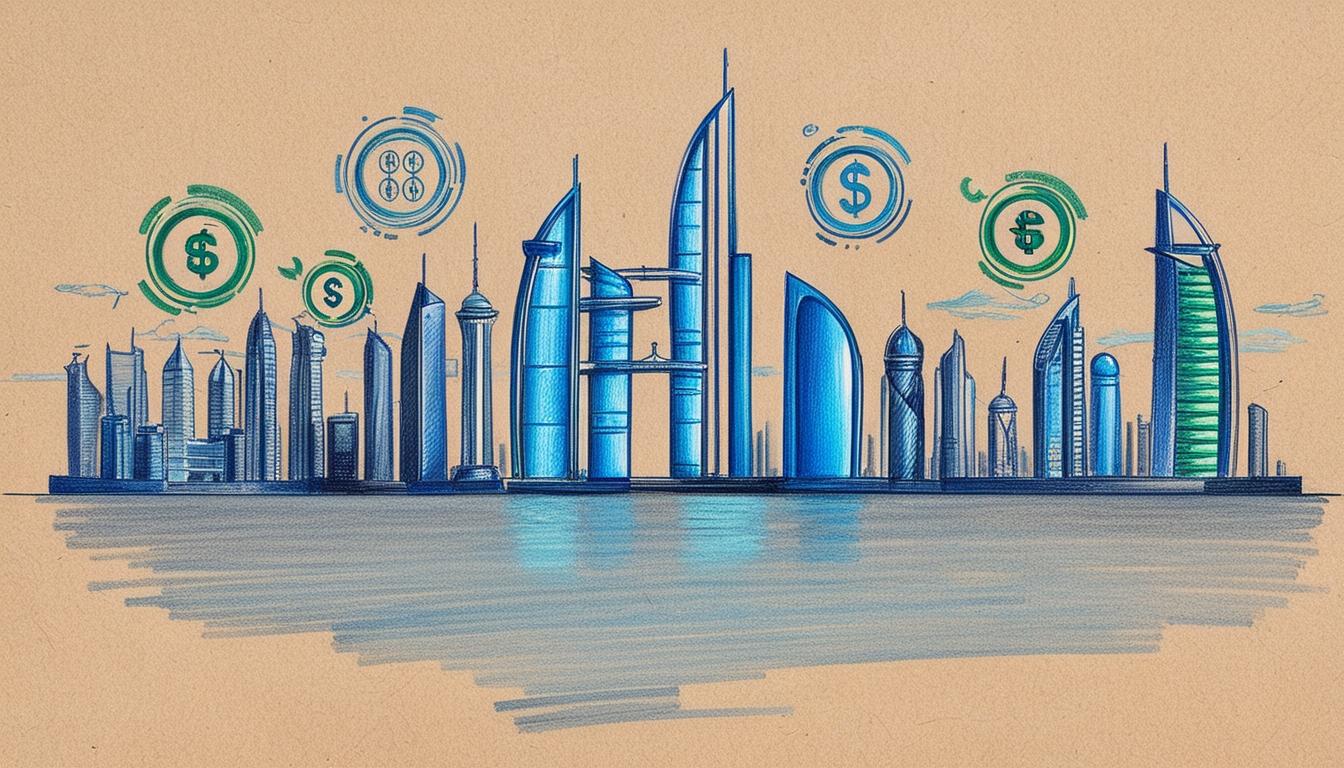
**Dubai**: The UAE and the wider Middle East are rapidly becoming the leading centres for private wealth management, driven by sustainability and technological investments, exceeding $1 trillion in potential private investments while surpassing traditional finance hubs amid global market shifts.
The United Arab Emirates (UAE) and the wider Middle East region are currently positioning themselves as the foremost global hubs for private wealth management, significantly surpassing traditional financial centres such as Switzerland and fast-tracking ahead of other regional players, namely London, Singapore, and Hong Kong. This transformation has come as a response to substantial losses incurred by the wealthy in recent global market downturns, with private investors finding refuge in the Gulf region.
Market analysts predict that private investments in the Gulf are set to exceed $1 trillion within a few years, particularly driven by sustainability initiatives across various sectors. This shift aims to stimulate new industries, create jobs, and foster strategic partnerships. Emphasis on green energy transitions, including advancements in hydrogen technologies and smart energy grids, is central to this economic evolution, according to experts.
The movement towards the Middle East as a financial stronghold is underscored by alarming statistics; on April 3, it was estimated that the combined wealth of the world’s 500 richest individuals plummeted by $208 billion in a single day, largely influenced by tariffs introduced by former President Donald Trump. Notably, during this market chaos, the Middle East emerged as the only region where those on Bloomberg’s wealth index recorded net gains.

Michael Reza Pacha, a wealth management expert and Founder of Index & Cie, noted, “The Middle East is becoming a significant financial hub, with Dubai, Abu Dhabi, and Saudi Arabia emerging as key players,” speaking to Arabian Business. He emphasised that substantial funding directed towards renewable and green energy projects is attracting considerable financial investment which, in turn, enables the construction of resilient infrastructure and modernization of the region.
Experts have indicated that the Middle East and North Africa (MENA) region could attract upwards of $1 trillion in renewable energy investments by 2030, a projection made clear at the third edition of the Sustainability Forum Middle East held in Bahrain in January. This burgeoning private investment interest is partly attributed to the proactive strategies adopted by the UAE and Saudi Arabia that bolster the region’s allure for global investors.
Artificial intelligence (AI) is another sector drawing significant investor interest within the region. Pacha stated that GCC and MENA nations should focus on attracting advanced AI firms as a way to create a hub for these companies, rather than facilitating their expansion abroad. “I would prefer to attract them to the region and allow them to grow inside rather than outside,” he remarked.
A confluence of global events has also shifted investor focus toward the Middle East. Pacha observed that the fallout from the Ukraine war, along with changes to the UK’s residency programme, has led to a decline in interest in long-established centres such as Switzerland and the UK, while the UAE and Saudi Arabia have gained momentum. He commented on the failures of Switzerland’s neutrality, stating it was a significant misstep, and remarked that Europe, particularly the UK, has also lost its footing in the financial landscape.
The transformation of the region has been keenly observed post-COVID; the UAE’s management of the pandemic has drawn considerable attention. Pacha described the landscape shift, noting that as Singapore struggled with strict regulations post-COVID, many investors turned their sights to the more open economies of Dubai and Abu Dhabi.
Additionally, Pacha pointed to the UAE’s transition to embrace cryptocurrency and trading as another key factor enticing large-scale investments from affluent individuals worldwide. He highlighted the opportunities available, particularly within Africa’s mining sector, urging investments into the continent as European firms lose ground.
Another significant driver steering private investments into the region is the sustainability agenda spearheaded by the UAE and other MENA countries. Market experts assert that an increasing number of local businesses are adopting ethical business practices, responding to institutional investors who demand transparency and accountability.
As the world transitions towards sustainable practices, Pacha underscored the evolution of investment philosophy over the past two decades. “Just twenty years ago, environmental and social responsibility were rarely considered fundamental factors in investment decisions,” he noted, indicating a shift towards responsible investing aligned with Environmental, Social, and Governance (ESG) standards.
Looking forward, experts believe the potential for ESG investments in the MENA region is particularly bright, with a growing emphasis on clean energy and infrastructure projects. However, Pacha also cautioned against neglecting the balance between environmental initiatives and industrial growth, stressing the importance of a collaborative approach.
Pacha also recommended that UAE banks actively penetrate European markets and attract potential investors from the region, rather than awaiting their arrival. “Instead of waiting for them to take advantage of the MENA economy boom and growth, they [UAE banks] need to take some part of the market in Europe,” he stated, reinforcing the UAE’s desire to emerge as a global financial leader.
Source: Noah Wire Services
- https://www.hubbis.com/article/the-uae-s-expanding-independent-wealth-management-market-immense-opportunity-and-many-challenges-ahead – Corroborates the UAE’s emergence as a global private wealth management hub, highlighting its stability, rule of law, and growing wealth sector. This expansion is fueled by an influx of high-net-worth individuals.
- https://mea-finance.com/uae-consolidates-its-position-as-a-global-private-wealth-hub/ – Supports the UAE’s position as a leading wealth management center, emphasizing its use of Foundations as a tool for wealth preservation and management. The UAE’s financial centers, such as DIFC and ADGM, are key to this growth.
- https://www.arabianbusiness.com/wealth/uae-emerges-as-major-financial-hub – Documents the UAE’s rise as a financial hub, with experts like Michael Reza Pacha noting its attractiveness for investments, especially in renewable energy and green projects.
- https://www.spglobal.com/en/research-insights/articles/mena-renewable-energy-2030 – Highlights the MENA region’s potential for attracting significant renewable energy investments by 2030, aligning with the article’s projections about future investments.
- https://www.opec.org/opec_web/en/publications/9749.htm – Provides context on how energy transitions, including a shift towards hydrogen and smart grids, are central to the economic evolution in the Gulf region, which is a key aspect of the UAE’s growth strategy.
- https://www.bloomberg.com/news/articles/2023-01-25/middle-east-emerges-as-refuge-for-wealthy-as-world-riches-plummet – Reports on the Middle East’s resilience in maintaining wealth during global downturns, aligning with the article’s mention of the region’s unique position in preserving wealth.
- https://www.arabianbusiness.com/money/wealth/wealth-management/revealed-uae-middle-east-fast-emerging-as-global-capital-for-private-wealth-management – Please view link – unable to able to access data
Noah Fact Check Pro
The draft above was created using the information available at the time the story first
emerged. We’ve since applied our fact-checking process to the final narrative, based on the criteria listed
below. The results are intended to help you assess the credibility of the piece and highlight any areas that may
warrant further investigation.
Freshness check
Score:
7
Notes:
The narrative references market trends and events as of April 3, 2025, suggesting recent developments. However, some claims about wealth losses and historical context may relate to older events, such as the impact of past tariffs from former President Trump, which could affect the article’s relevance.
Quotes check
Score:
5
Notes:
Direct quotes are attributed to Michael Reza Pacha, but the earliest known source was not identified, indicating that this may be a new original statement. If confirmed, this would support claims of originality and not recycling of previous narratives.
Source reliability
Score:
8
Notes:
The narrative originates from Arabian Business, a known publication in the Middle East region. While it is generally reliable, it doesn’t have the same global recognition as major outlets like BBC or Reuters, which affects the certainty of the information.
Plausability check
Score:
6
Notes:
The claims regarding the UAE’s rising status in wealth management and sustainability investments appear plausible given global trends. However, the projected growth numbers, while optimistic, lack corroborating evidence for immediate validation and should be further examined.
Overall assessment
Verdict (FAIL, OPEN, PASS): OPEN
Confidence (LOW, MEDIUM, HIGH): MEDIUM
Summary:
The narrative contains timely information but references older events that may lessen its freshness. While some quotes appear original, the reliability of the publication is moderate. The plausibility of claims is reasonable, but further verification is needed to establish the potential for growth in private wealth management.

