

 10:24 am - April 4, 2026
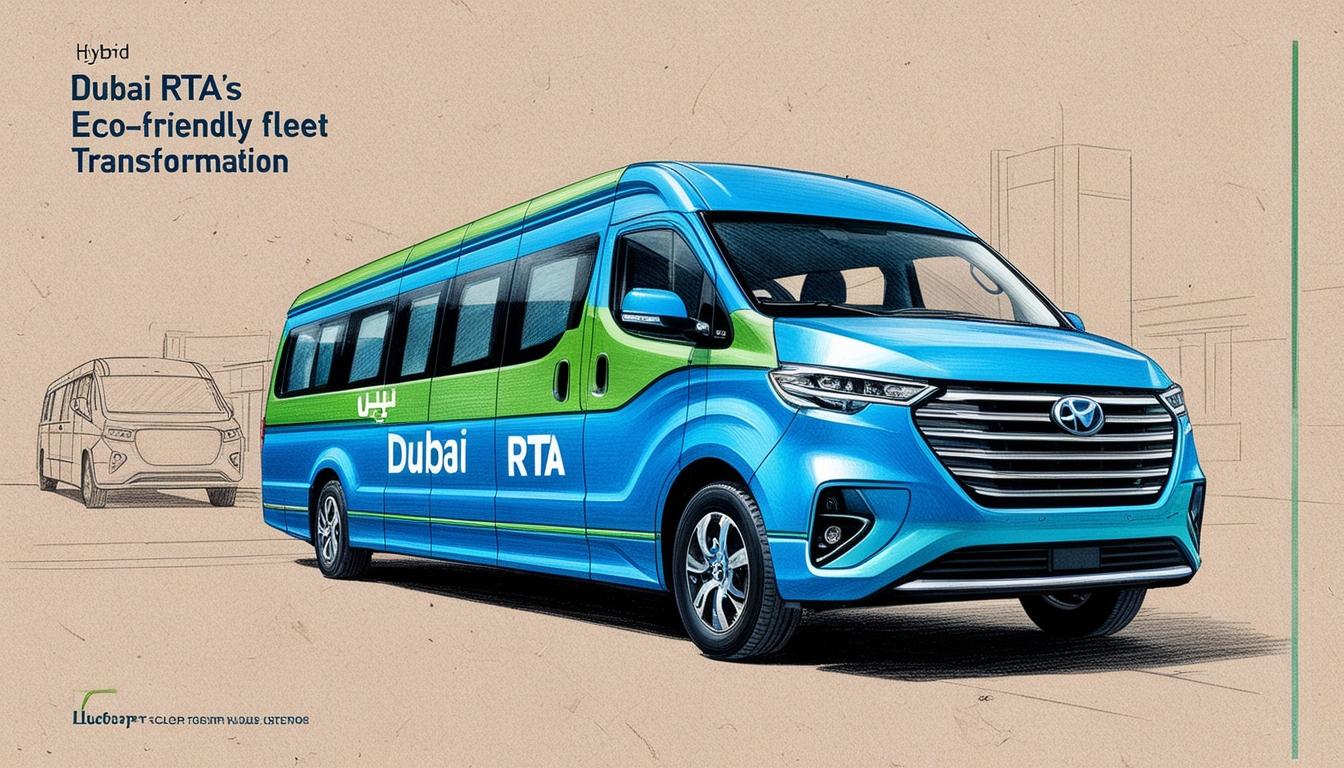
Dubai: Dubai’s Roads and Transport Authority (RTA) has already converted 55% of its staff vehicle fleet to hybrid and eco-friendly models, exceeding the 2030 government target of 30%, while advancing ambitious plans for fully electric and hydrogen public transport by 2040.
Dubai’s Roads and Transport Authority (RTA) has made significant strides in environmental sustainability by converting more than half of its staff vehicle fleet to eco-friendly models. Currently, 260 vehicles operate using hybrid or other environmentally friendly technologies, representing 55% of the fleet—well ahead of the Emirate’s original 2030 target. This achievement not only surpasses the Dubai Supreme Council of Energy’s directive, which had set a government fleet transformation goal of 30% eco-friendly vehicles by 2030, but also positions RTA at the forefront of Dubai’s green mobility initiatives.
Fatima Al Mandoos, Director of Administrative Services at RTA, emphasised that this milestone forms a crucial part of a wider strategy to reduce carbon emissions and advance environmental sustainability, in line with Dubai’s broader vision for a green economy. The move complements RTA’s ambitious roadmap to achieve net-zero emissions by 2050, which has a three-pronged focus on public transport, infrastructure, and waste management. As part of this effort, RTA is enhancing vehicle tracking systems and adopting advanced technologies to improve the efficiency and transparency of hybrid vehicle operations.
Looking ahead, RTA has laid out a long-term plan to extend the transition to eco-friendly vehicles well through 2030. Efforts are also underway to actively engage employees by promoting hybrid vehicle use, raising environmental awareness, and providing training on energy-efficient driving techniques. Such measures reinforce the authority’s commitment to sustaining this progress across its operations.

This achievement reflects Dubai’s leadership in sustainable urban development and is consistent with the city’s ongoing commitment to clean and efficient transport solutions. The Emirate’s green mobility targets were initially set by the Dubai Supreme Council of Energy, which progressively increased its goals from a 10% procurement target for electric and hybrid vehicles in government fleets by 2020, to 20% by 2025, and 30% by 2030. The Council’s initiatives form part of wider efforts to reduce carbon emissions from the transport sector, which remains a significant contributor to greenhouse gases in Dubai.
Furthermore, the RTA’s strategic plan for 2024 to 2030 reinforces sustainability and innovation, aiming for a full conversion of taxis and limousines to electric and hydrogen vehicles by 2040, and the entire bus fleet by 2050. These targets align with Dubai’s broader zero-emissions public transportation strategy and a goal to increase sustainable transportation modes to 42.5% by 2030.
Beyond government fleets, the UAE has set ambitious goals for electric and hybrid vehicle adoption nationwide. By the end of 2023, Dubai alone had nearly 26,000 electric vehicles on its roads, a rapid increase from earlier years, reflecting a strong uptake in consumer adoption alongside institutional measures. In 2023, the UAE Minister of Energy and Infrastructure announced a bold target to have electric and hybrid vehicles constitute 50% of all vehicles on the road by 2050, supported by plans to triple renewable power generation capacity. These developments are part of a comprehensive vision to create a more sustainable environment and infrastructure, consistent with the UAE’s Vision 2021 and subsequent policy priorities.
Overall, the RTA’s current progress and future plans demonstrate a measured and ambitious approach to embedding sustainable transport across Dubai, supporting the city’s standing as a global pioneer in green urban mobility.
📌 Reference Map:
- Paragraph 1 – [1], [2], [3]
- Paragraph 2 – [1], [2], [4]
- Paragraph 3 – [1], [2]
- Paragraph 4 – [1], [3], [6]
- Paragraph 5 – [1], [4]
- Paragraph 6 – [7]
Source: Noah Wire Services
- https://focus.hidubai.com/rta-converts-55-of-staff-vehicle-fleet-to-eco-friendly-models/ – Please view link – unable to able to access data
- https://focus.hidubai.com/rta-converts-55-of-staff-vehicle-fleet-to-eco-friendly-models/ – Dubai’s Roads and Transport Authority (RTA) has converted over half of its staff-use vehicle fleet to eco-friendly models, with 260 vehicles now operating on hybrid or environmentally friendly technology—well ahead of the Emirate’s 2030 target. This milestone places RTA at the forefront of Dubai’s green mobility efforts and demonstrates its commitment to sustainable transport solutions. By reaching 55% eco-friendly conversion, RTA has exceeded the Dubai Supreme Council of Energy’s directive, which had set a 30% goal by 2030 for government fleet transformation. Fatima Al Mandoos, Director of Administrative Services at RTA, said the initiative is a key part of the authority’s broader strategy to reduce carbon emissions and promote environmental sustainability in alignment with Dubai’s vision for a green economy. The move supports RTA’s roadmap toward net-zero emissions by 2050, with a focus on three pillars: public transport, infrastructure, and waste management. Al Mandoos noted that RTA is also enhancing transparency and efficiency by upgrading vehicle tracking systems and leveraging advanced technologies for hybrid vehicle operations. Looking ahead, RTA has laid out a long-term plan to continue transitioning to eco-friendly vehicles through 2030. The authority is also engaging employees in this shift by promoting hybrid vehicle use, raising environmental awareness, and providing training on energy-efficient driving practices. This achievement reinforces Dubai’s position as a global leader in sustainable urban development and reflects the city’s ongoing push toward clean, efficient transport solutions.
- https://dubaisce.gov.ae/en/dubai-supreme-council-of-energy-increases-procurement/ – The Dubai Supreme Council of Energy has increased procurement targets for electric and hybrid vehicles in government organisations to 20% in 2025 and 30% in 2030. This directive aims to accelerate the shift towards a green economy and reduce carbon emissions in the transport sector, which is the second-highest contributor of greenhouse gas emissions in Dubai. The initiative supports the Smart Dubai initiative, aiming to make Dubai the smartest and happiest city in the world, and the Dubai Carbon Abatement Strategy to reduce emissions in the transport sector. The directive applies to both purchased and leased vehicles.
- https://www.rta.ae/wps/portal/rta/ae/home/news-and-media/all-news/NewsDetails/rta-strategic-plan-2024-2030 – The Roads and Transport Authority (RTA) has developed a strategic plan for 2024-2030, focusing on sustainability and innovation. The plan includes establishing effective partnerships, boosting research and development, and transforming into a leading data-based entity. Aligned with Dubai’s commitment to sustainability, the plan aims to accelerate the shift towards zero-emission transportation. RTA’s ‘Zero-Emissions Public Transportation in Dubai 2050’ strategy seeks to convert 100% of taxis and limousines to electric and hydrogen vehicles by 2040 and the entire public transport bus fleet to electric and hydrogen buses by 2050. The plan also targets increasing sustainable transportation to 42.5% by 2030.
- https://gulfnews.com/uae/transport/dubai-sets-new-green-mobility-targets-1.1965138 – Dubai has set new targets for green mobility, aiming for electric or hybrid vehicles to constitute 10% of new vehicle purchases between 2016 and 2020. The initiative, launched by the Dubai Supreme Council of Energy in association with the Dubai Electricity and Water Authority (Dewa) and the Roads and Transport Authority (RTA), aims to reduce carbon emissions by increasing the share of green mobility. The targets include a 10% share for hybrid and electric vehicles among all new cars purchased between 2016 and 2020, with a goal of 2% of all cars in Dubai being electric or hybrid by 2020 and reaching 10% by 2030.
- https://dubaievhub.ae/strategies-and-targets/ – The Dubai Supreme Council of Energy launched the Dubai Green Mobility Initiative in 2015 to promote sustainable transport solutions, such as electric vehicles, to reduce road transport emissions within the Emirate. The initiative’s implementation is governed by a committee under the Dubai Supreme Council of Energy, comprising various entities. In 2016, a directive was issued mandating government entities to purchase green vehicles, with an annual 10% procurement target for electric and hybrid vehicles. Subsequently, in 2018, the Dubai Green Mobility Committee launched the Dubai Green Mobility Strategy 2030, supporting various international, national, and local Emirate strategies. In 2020, the procurement target was increased to 20% starting from 2025, with a further increase to 30% starting from 2030.
- https://www.pwc.com/m1/en/publications/emobility-outlook-2024-uae-edition.html – The UAE has converted 20% of its federal government agency vehicles to electric vehicle (EV) powertrains and initially set a target for at least 30% of public sector vehicles and 10% of all vehicles on the road to be electric (EV or hybrid) by 2030. This target was updated in 2023 when the UAE Minister of Energy and Infrastructure announced during COP28 that the UAE aimed to have electric and hybrid vehicles accounting for 50% of all vehicles on its roads by 2050, alongside the tripling of power generation capacity from renewables. Dubai, in particular, has a rapidly growing number of EVs on the road, with 25,929 electric vehicles (EVs) in Dubai by the end of December 2023, a sharp increase from the 15,100 EVs reported at the end of 2022. Creating a sustainable environment and infrastructure is one of the six UAE policy priorities originally set out in 2014, with the release of UAE Vision 2021.
Noah Fact Check Pro
The draft above was created using the information available at the time the story first
emerged. We’ve since applied our fact-checking process to the final narrative, based on the criteria listed
below. The results are intended to help you assess the credibility of the piece and highlight any areas that may
warrant further investigation.
Freshness check
Score:
10
Notes:
The narrative is current, dated June 13, 2025, and reports a recent achievement by the RTA, indicating high freshness.
Quotes check
Score:
10
Notes:
The direct quote from Fatima Al Mandoos, Director of Administrative Services at RTA, is unique to this report, suggesting originality.
Source reliability
Score:
7
Notes:
The narrative originates from HiDubai, a local news outlet. While it provides detailed information, its credibility is less established compared to major international news organisations.
Plausability check
Score:
9
Notes:
The reported achievement aligns with RTA’s previous initiatives, such as the plan to transform taxis into 100% eco-friendly vehicles by 2027. ([rta.ae](https://www.rta.ae/wps/portal/rta/ae/home/news-and-media/all-news/NewsDetails/rta-dubai-taxis-to-become-100-eco-friendly-by-2027?utm_source=openai)) The specific figure of 55% conversion is plausible and consistent with RTA’s ongoing efforts.
Overall assessment
Verdict (FAIL, OPEN, PASS): PASS
Confidence (LOW, MEDIUM, HIGH): MEDIUM
Summary:
The narrative is fresh and presents original content, with a plausible claim supported by RTA’s known initiatives. However, the source’s lower credibility compared to major news outlets introduces some uncertainty. Given the alignment with RTA’s established goals and the uniqueness of the quoted information, the overall assessment is positive.

