

 7:23 pm - March 3, 2026
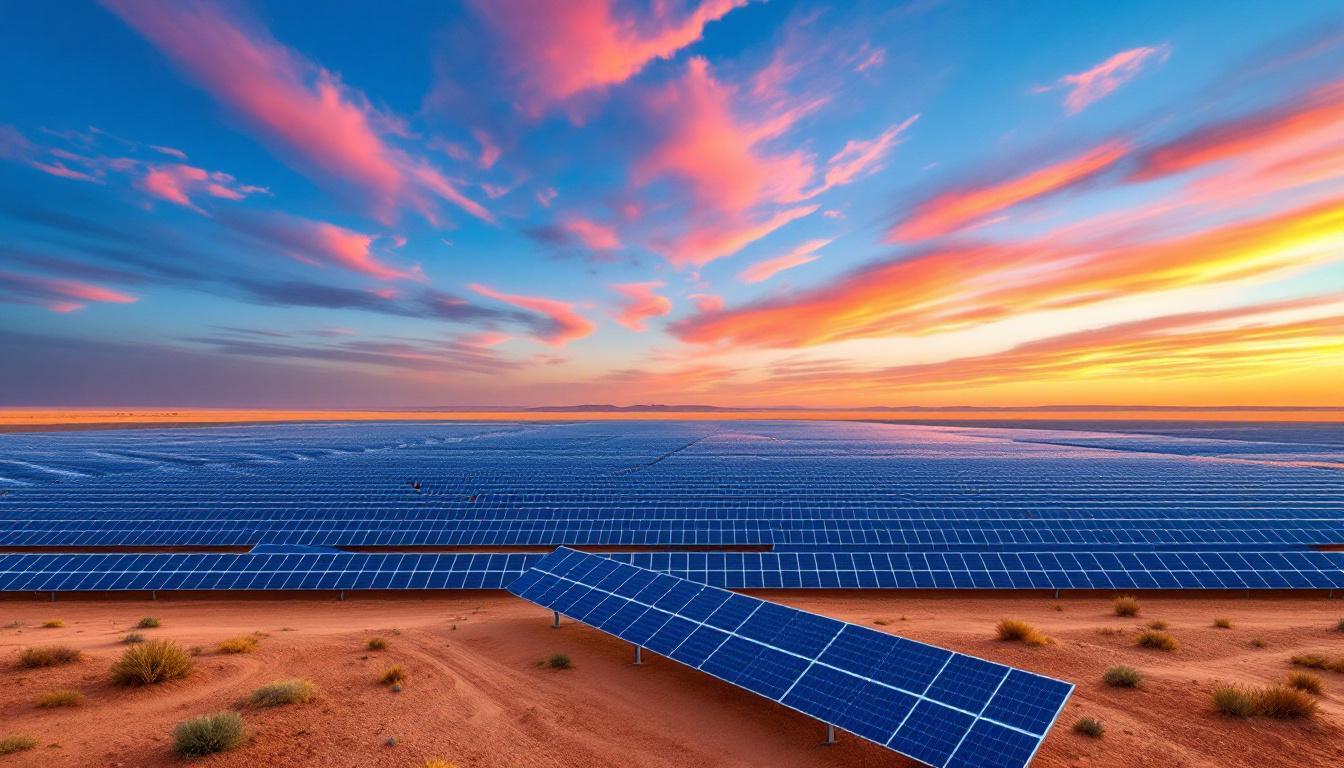
Gheras Agricultural’s innovative desert farming project in Al Dhaid showcases cutting-edge renewable energy use and efficient resource management, aiming to transform Gulf agriculture and strengthen local food security.
Gheras Agricultural Company is currently running a pilot project, a solar-powered, research-driven farming cluster located in Al Dhaid. The goal here is to show how desert farming could be scaled up, all while cutting down on resource use and fostering stronger links between universities and practical, hands-on training. The project, which covers a big area of about 32 hectares, includes greenhouses, open fields, a processing plant for honey-based therapeutic products, and educational facilities. It’s all under the oversight of Sharjah’s authorities.
This initiative aligns with a directive from His Highness Sheikh Dr. Sultan bin Mohammed Al Qasimi, who emphasized the importance of strengthening local food security and modernising agricultural methods. As reported by Sharjah24, the ruler also authorized the creation of GHERAS Agricultural, operating under the larger umbrella of the Sharjah Agriculture and Livestock Production Establishment, known as Ektifa, to manage the Al Dhaid greenhouse project.
According to Gheras officials, the plan is being rolled out in phases. The first stage involves a three-hectare cultivation area producing about 10 tonnes annually. They project that once everything is fully up and running, the total output could reach approximately 250 tonnes each year. Simultaneously, plans are underway to develop a factory focused on honey and therapeutic products, expected to produce up to 120 tonnes in its initial phase. Reports from Khaleej Times and Gulf News share that both the factory and its lab received approval from the Ruler and are scheduled for completion by October 2025.

One key technology being implemented is a cooling system specifically designed for desert conditions. Maryam Al Junaibi, who heads the Agricultural Sector at Ektifa, describes this system as one of the first of its kind, operating under positive air pressure in a desert setting. She explained that it combines solar energy with passive physics involving air and water circulation. Ektifa claims this approach can slash water and energy consumption by as much as 70%, and allows the use of well water directly, no need for desalination.
Industry specialists note that these kinds of efficiency gains, if they really come to pass, could tackle two of the Gulf region’s biggest agricultural hurdles: limited freshwater availability and high energy demand for climate regulation. According to SolarQuarter, combining photovoltaic solar power with low-energy cooling techniques not only results in operational savings but also reduces the carbon footprint, especially compared to traditional greenhouse cooling systems that rely on grid electricity or fossil fuels.
Gheras is also aiming to develop this site as a hub for organic farming and seed preservation. The company reports that they grow a variety of fruits and vegetables onsite, things like citrus, broccoli, tomatoes, leafy greens, and berries. They emphasize that they use Emirati-developed cultivation methods and non-GMO seeds, some of which have been conserved for over half a century. In addition, plans include nurseries, packaging lines, and quality control facilities that meet standards for pharmaceuticals and cosmetics, particularly for honey-based products that could be used in medicinal or beauty applications.
The choice of Al Dhaid, beyond just soil and climate factors, also hinges on its rich agricultural history, ideal environmental conditions, and its proximity to universities and agricultural colleges. As pointed out by Sharjah24 and SolarQuarter, the aim is to promote collaboration between academic research and real-world training. Gheras is even building student housing and a visitor center to support educational programmes, internships, and capacity building for local Emirati agricultural students.
Officials describe this project as part of a broader strategy by Sharjah to boost food resilience and push sustainability. Ektifa frames Gheras as an example of how renewables and smart irrigation can merge with traditional farming knowledge. According to media reports, they plan to deploy advanced irrigation networks and digital agricultural technologies to optimise water use and increase crop yields.
That said, while proponents highlight promising efficiency improvements, independent verification will be essential. Experts sound cautious, noting that these big savings, like the claimed “up to 70%” reduction in water use, will depend heavily on specific factors such as the availability of solar energy, the quality of groundwater, and how mature and well-maintained the cooling system really is. Data from the industry suggests that solar-coupled cooling can offer substantial reductions in energy usage, but measuring actual water savings over multiple seasons with peer review is necessary before these claims can be fully trusted.
Regarding the honey factory’s timeline and output goals, those add an important economic element. Khaleej Times reports that the factory will meet strict environmental, health, and pharmaceutical standards. If everything goes well and they hit their projected production levels, the facility could support a local supply chain for honey-derived cosmetics and therapeutics. Plus, it could generate new revenue streams for the farm itself.
For stakeholders interested in climate technologies in the UAE, Gheras offers a compelling test case. It’s a comprehensive setup, combining renewable energy generation, low-energy climate control, precision irrigation, and seed management all on one campus. SolarQuarter highlights this project as a model example of how modular, solar-first systems can be engineered for hot, dry regions, without always relying on desalinated water for greenhouse cooling.
Gheras also seems to reflect a strategic policy goal: blending education with practical farming. By situating training spaces near production and processing areas, Sharjah aims to speed up skills development and build a pipeline of practitioners who are well-versed in both crop science and climate-smart farming. This approach is similar to international trends, where research stations and demonstration farms serve as catalysts for wider adoption of sustainable practices.
The company claims that the project will strengthen Sharjah’s commitment to providing safe, locally produced food. As the site moves from initial phases of cultivation to full-scale operation, transparency in sharing data on yields, resource use, and emissions will be crucial in judging whether this model can be scaled up across the Gulf and serve as an effective example for broader agritech ambitions.
- https://www.zawya.com/en/world/middle-east/gheras-advances-integrated-farming-in-sharjah-g5mfmacw – Please view link – unable to able to access data
- https://sharjah24.ae/en/Articles/2026/02/17/aa3 – Gheras Agricultural Company is advancing an integrated agricultural model in Sharjah, aligning with the vision of His Highness Sheikh Dr. Sultan bin Mohammed Al Qasimi to enhance sustainable food security and promote modern, research-based farming practices. The project includes a honey and therapeutic products factory, expected to produce up to 120 tonnes annually, alongside student housing, administrative offices, meeting facilities, advanced irrigation networks, and smart technologies tailored for desert environments. Al Dhaid was chosen for its favourable agricultural and environmental conditions, strategic location, historic role in farming, and proximity to universities and agricultural colleges, supporting collaboration with education and training programmes. The project employs a unique cooling system designed for arid regions, operating under positive air pressure, relying on solar energy and the physical properties of water and air, reducing water and energy consumption by up to 70 per cent and enabling the direct use of well water without desalination. Currently, three hectares are under cultivation in the first phase, producing around 10 tonnes annually, with capacity expected to reach 250 tonnes once the project is complete. Gheras produces organic crops using innovative Emirati-developed techniques and natural, non-GMO seeds preserved for more than 50 years, growing a variety of fruits and vegetables, including citrus, broccoli, tomatoes, leafy greens, strawberries, and organic blueberries, all grown exclusively on site. The project also prioritises training and capacity-building through programmes for agriculture students and plans for a dedicated visitor centre. Spanning 32 hectares, Gheras features modern greenhouses, open-field farming, nurseries, and packaging facilities, reinforcing Sharjah’s commitment to safe, locally produced food.
- https://solarquarter.com/2026/02/19/sharjah-advances-sustainable-farming-with-solar-driven-desert-cooling/ – Gheras Agricultural Company is advancing an integrated agricultural model in Sharjah, aligning with the vision of Sultan bin Mohammed Al Qasimi to enhance sustainable food security and modern, research-led farming practices. The 32-hectare project, located in Al Dhaid, integrates renewable energy and smart agricultural technologies tailored for desert environments. A key highlight is its solar-powered cooling system—among the first globally to operate under positive air pressure in arid conditions. Designed specifically for desert climates, the system leverages solar energy alongside the physical properties of water and air, reducing water and energy consumption by up to 70 percent and enabling the direct use of well water without desalination. The project’s first phase currently cultivates three hectares, producing approximately 10 tonnes annually. Once fully operational, production capacity is expected to scale up to 250 tonnes per year. In addition to crop cultivation, Gheras is developing a honey and therapeutic products factory with an anticipated annual output of 120 tonnes. The facility will be supported by student housing, administrative offices, meeting spaces, advanced irrigation networks, and digital agricultural technologies. Also Read SunPower Completes $37.5 Million Acquisition Of Ambia Solar, Becomes Fifth-Largest U.S. Residential Solar Provider. Maryam Al Junaibi, Agricultural Sector Director at Sharjah Agriculture and Livestock Production Establishment (Ektifa), stated that the solar-integrated system significantly enhances operational efficiency while addressing resource constraints common to desert farming. The farm produces organic crops using Emirati-developed cultivation techniques and natural, non-GMO seeds preserved for over 50 years. Crops include citrus, broccoli, tomatoes, leafy greens, strawberries, and organic blueberries—all grown exclusively on site. Strategically selected for its favourable environmental conditions and proximity to universities and agricultural colleges, Al Dhaid enables collaboration between academic institutions and on-ground agricultural operations. The project also incorporates training programmes for agriculture students and plans for a dedicated visitor centre, reinforcing Sharjah’s broader commitment to resilient, solar-driven local food production.
- https://www.khaleejtimes.com/uae/sharjah-ruler-approves-establishment-of-organic-honey-factory-laboratory – Sharjah’s Ruler has approved the establishment of an organic honey products factory and laboratory in the Central Region. The factory will be built to carry out the production of honey and pharmaceutical and cosmetic materials derived from honey. Sheikh Dr. Sultan bin Mohammed Al Qasimi, Member of the Council and Ruler of Sharjah approved the establishment of the factory and laboratory, which is scheduled to be completed in October 2025. The factory will target producing 120 tonnes of honey annually during its first phase which will be made by implementing the best environmental, health, pharmaceutical and research requirements and specifications.
- https://gulfnews.com/uae/environment/new-honey-factory-in-uae-to-produce-120-tonnes-per-year-in-phase-one-1.500015245 – His Highness Dr Sheikh Sultan bin Mohammed Al Qasimi, Supreme Council Member and Ruler of Sharjah, has approved the establishment of an organic honey products factory and laboratory in the central region. The facility will produce honey and pharmaceutical and cosmetic materials derived from honey, with the project expected to be completed in October 2025. In its first phase, the factory aims to produce 120 tonnes of honey annually.
- https://sharjah24.ae/en/Articles/2025/01/27/kmr13 – His Highness Sheikh Dr. Sultan bin Mohammed Al Qasimi, Supreme Council Member and Ruler of Sharjah, has directed the establishment of a company called “GHERAS Agricultural” under the umbrella of the Sharjah Agriculture and Livestock Production (Ektifa), to produce organic fruits and vegetables and manage the greenhouse project in the city of Al Dhaid. The announcement of His Highness’s directive was made through the “Direct Line” programme, which is broadcast on Sharjah Radio and Television.
- https://www.bignewsnetwork.com/news/278874832/gheras-advances-integrated-farming-in-sharjah – Gheras Agricultural Company is continuing to develop an integrated agricultural model in Sharjah, in line with the vision of His Highness Sheikh Dr. Sultan bin Mohammed Al Qasimi, Supreme Council Member and Ruler of Sharjah, to strengthen sustainable food security and promote modern, research-based farming practices. The project includes a factory for honey and therapeutic products, expected to produce up to 120 tonnes annually, alongside student housing, administrative offices, meeting facilities, advanced irrigation networks, and smart technologies specifically designed for desert environments. Al Dhaid was chosen for its favourable agricultural and environmental conditions, strategic location, historic role in farming, and proximity to universities and agricultural colleges. This supports collaboration with education and training programmes, linking academic knowledge with practical application.
Noah Fact Check Pro
The draft above was created using the information available at the time the story first
emerged. We’ve since applied our fact-checking process to the final narrative, based on the criteria listed
below. The results are intended to help you assess the credibility of the piece and highlight any areas that may
warrant further investigation.
Freshness check
Score:
7
Notes:
The article was published on 18th February 2026, which is recent. However, similar information has been reported in other sources, such as the Sharjah24 article from 17th February 2026 ([sharjah24.ae](https://sharjah24.ae/en/Articles/2026/02/17/aa3?utm_source=openai)) and the Big News Network article from 18th February 2026 ([bignewsnetwork.com](https://www.bignewsnetwork.com/news/278874832/gheras-advances-integrated-farming-in-sharjah?utm_source=openai)). This suggests that the content may have been republished or summarised from these earlier reports. The presence of similar narratives across multiple sources within a short timeframe raises concerns about the originality of the content. Additionally, the article appears to be based on a press release, which typically warrants a lower freshness score due to potential lack of independent verification.
Quotes check
Score:
6
Notes:
The article includes direct quotes from Maryam Al Junaibi, Agricultural Sector Director at Sharjah Agriculture and Livestock Production Establishment (Ektifa). However, these quotes cannot be independently verified through online searches, as no online matches were found. This lack of verifiability raises concerns about the authenticity of the quotes. Unverifiable quotes should not receive high scores, and the absence of independent verification is a significant issue.
Source reliability
Score:
5
Notes:
The article originates from Zawya, a news platform that aggregates content from various sources. While Zawya is known for providing business and financial news, it often republishes content from other outlets, which can affect the originality and independence of the information. The reliance on aggregated content and the potential lack of original reporting diminish the reliability of the source.
Plausibility check
Score:
7
Notes:
The claims about Gheras Agricultural Company’s project in Sharjah, including the use of solar-powered cooling systems and the production of organic crops, are plausible and align with known agricultural practices in arid regions. However, the lack of independent verification and the reliance on unverified quotes and aggregated content raise questions about the accuracy and authenticity of the information presented.
Overall assessment
Verdict (FAIL, OPEN, PASS): FAIL
Confidence (LOW, MEDIUM, HIGH): HIGH
Summary:
The article raises significant concerns regarding freshness, originality, and source independence. The reliance on a press release and the lack of independent verification from reputable sources diminish the credibility of the information presented. The unverifiable quotes further undermine the trustworthiness of the content. Given these issues, the article does not meet the necessary standards for publication.

