

 4:24 pm - April 3, 2026
South Korea announces bold plans to cut greenhouse gases by 40% by 2030, including expanding renewables, upgrading the grid, and reforming energy markets amid industry and environmental debates.
On the 17th, Kim Sung-hwan, the Minister of Climate, Energy, and Environment, held a briefing at the Sejong Government Convention Center and openly announced that the government would start in earnest to implement its 2030 national greenhouse gas reduction target (NDC). The government, in this plan, committed to cutting greenhouse gas emissions by 40% relative to 2018 levels by 2030. They also plan to shift the power generation system mainly towards renewable energy and to develop what’s been called the ‘energy superhighway,’ all at the same time. During the briefing, Minister Kim emphasized that “climate response isn’t just a matter of choice anymore but a matter of national competitiveness,” especially since around 200 million tons of extra greenhouse gas reductions are expected to be necessary by 2030. He added, “We will turn this reduction process into an opportunity to grow green industries and create jobs.”
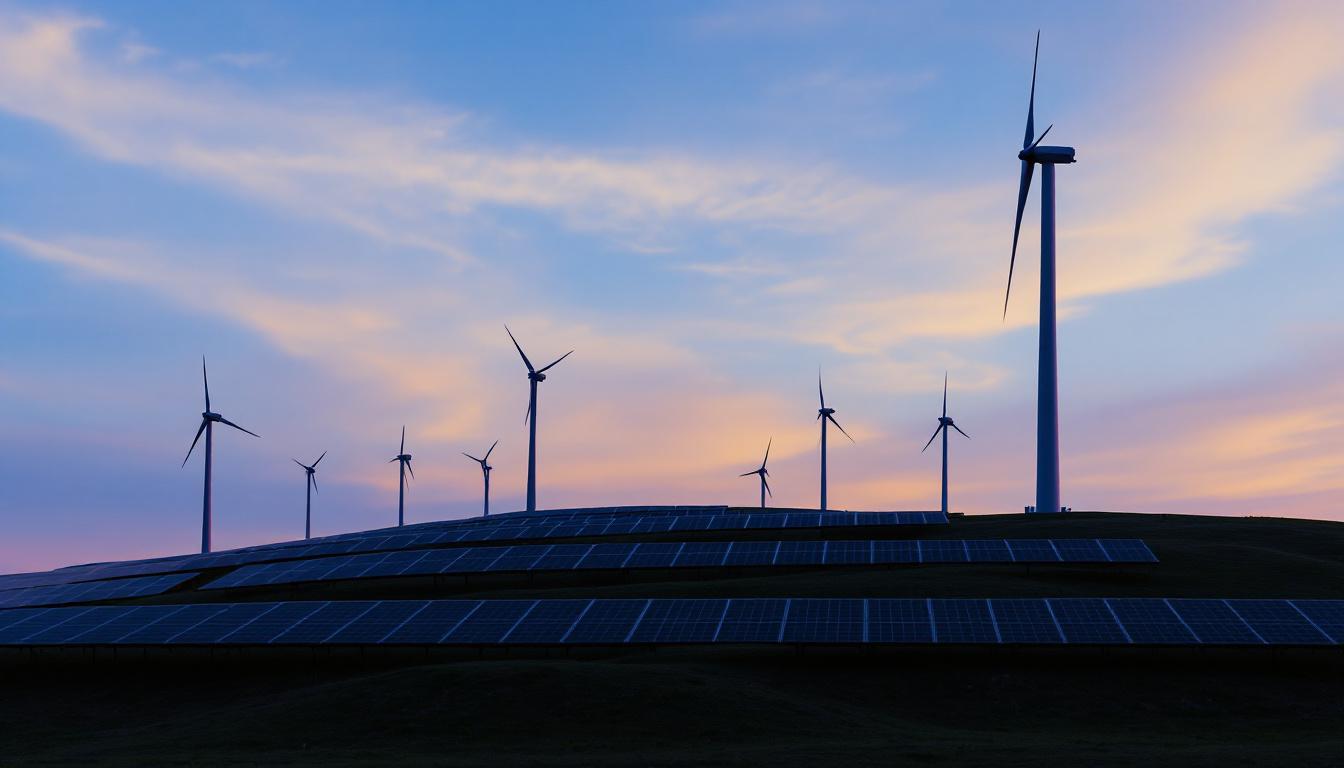
The government’s comprehensive plan covers expanding renewable energy, restructuring the power grid, and decarbonizing industries and buildings. According to the announcement, they’ve set a target of supplying 100 gigawatts of renewable energy by 2030, and they plan to streamline the process by easing regulations on solar power, passing a special law for farming-compatible solar installations, and establishing a one-stop permit support system for offshore and onshore wind power projects to speed things up. They also aim to grow the power transmission network, including the ultra-high-voltage direct current (HVDC) lines along the west coast, to accelerate the shift to a regionally distributed, bidirectional power grid.
Changes are also coming to the electricity market and how rates are set. The government plans to overhaul the renewable portfolio standards (RPS) starting in the first half of next year, moving to an auction-based system to foster competition. Plus, they want to implement a semi-centralized system that compensates extra for renewable energy when its output drops. Market participation of demand response resources, like heat pumps, energy storage systems (ESS), and bidirectional charging and discharging (V2G), will be encouraged too. Also, they’re thinking about revising industrial electricity rates depending on the time of day, with lower rates during the day and higher at night, and even considering regional electricity pricing.

Financial and technological support for a broad transition away from carbon is expected as well. The government plans to assist industries moving toward decarbonization and will focus on fostering promising startups and providing technical support. As for electric vehicles, they aim to improve subsidies by emphasizing performance and safety features while making them more affordable. Buildings will also see measures, like a “heat energy innovation roadmap,” to be developed by March next year, aiming to boost heat pump use and promote green heat industries.
Interestingly enough, these plans echo long-term and mid-term strategies that have already been publicized. For example, according to a report by S&P Global, Seoul has finalized two different 2050 roadmaps. One envisions phasing out all fossil-fuel thermal power plants and achieving net-zero electricity generation, while the other keeps LNG as a flexible backup and aims to offset residual emissions through increased carbon capture and storage (CCS). Plus, official documents submitted to the UN reveal a long-term shift away from new coal plants and an intention to retire old coal-fired facilities, favoring renewables and nuclear power in the future energy mix.
But, here’s the thing, interestingly, the 2030 NDC that’s been announced, aiming for a 40% reduction from 2018, actually falls short of some other, more ambitious targets under discussion. Reports from Asiae and Chosun suggest that Seoul has been pushing for a much tougher goal for 2035, reducing net emissions by between 53% and 61% compared to 2018. They’re also considering a plan for the power sector to cut emissions by roughly 69% to 75% by that time, mainly through more renewables and the so-called “high-speed energy highway.” Earlier analyses from S&P Global showed that there are alternative pathways for 2030, some allowing higher industrial emissions while tightening reduction efforts in the electricity sector and ramping up nuclear and CCUS capacity.
This policy package, however, does encounter some tensions across sectors. One significant point of contention is South Korea’s heavy dependence on imported biomass, which is its second-largest renewable energy resource. International critics have raised concerns over land use impacts. The Associated Press reported that Seoul would cut subsidies for biomass projects, phasing out support for new plants and a few state-owned facilities by 2027, it’s a notable shift. Privately owned and under-construction plants might keep their subsidies longer, but overall, this indicates a recalibration of what is considered sustainable within Korea’s renewable transition.
Ultimately, the success of these plans will depend heavily on rapid grid and storage expansion, reforming planning processes, and securing funding. The government has signaled efforts to streamline permits, plan renewable site locations more efficiently, increase guarantees and loans, and shorten project timelines through a single-window approval system for wind projects. Previous government data and industry forecasts underscore the sheer scale of infrastructure investment needed, vast upgrades to transmission lines, deploying more ESS, and employing demand-side measures to shift consumption into periods rich in renewables.
For international players involved in climate tech, especially in regions like the Gulf, Seoul’s comprehensive package makes the market signals quite clear. The focus on solar, offshore wind, HVDC transmission, ESS, heat pumps, and V2G creates promising opportunities for equipment suppliers, grid developers, and storage companies. According to their reports, policies such as reforming the RPS, adjusting tariffs based on time-of-use, and conducting procurement auctions are designed to mobilize investments and reduce project costs. Observers are keeping a close eye on whether these reforms, permitting, grid upgrades, and auction designs, will progress swiftly enough to hit the 100 GW target and stay on track with the country’s broader decarbonization goals.
Of course, political and economic realities will influence how these ambitions unfold. Seoul’s decision to retain LNG as a flexible option shows that they’re weighing trade-offs, between quick emissions reductions and energy security. Public acceptance, available land, and maintaining industrial competitiveness will all be key factors nudging which pathways ultimately dominate. The Minister’s framing, calling climate action a matter of national competitiveness, really signals an intent to couple decarbonization efforts with industrial policy.
In summary, Seoul’s roadmap emphasizes a strategic shift: ambitiously aiming to cut emissions while overhauling generation methods, network infrastructure, and demand management. Whether these initiatives lead to faster deployment and real emissions reductions depends heavily on execution, especially in expanding the grid, boosting storage capacity, and carrying out regulatory reforms over the next five years. For foreign investors, particularly those eyeing technology projects in Korea or beyond, the policy trajectory signals a meaningful pipeline and clear technological needs worth watching closely.
- https://www.ajunews.com/view/20251217132559895 – Please view link – unable to able to access data
- https://www.spglobal.com/energy/en/news-research/latest-news/energy-transition/101921-south-korea-finalizes-2050-carbon-neutrality-roadmaps – South Korea has finalised two roadmaps to achieve carbon neutrality by 2050. The first aims to eliminate all thermal power production using fossil fuels, achieving zero emissions in the electricity generation sector. The second roadmap focuses on abolishing coal-fired power generation while maintaining LNG as a flexible power source, with plans to boost carbon capture and storage capabilities to neutralise emissions from natural gas-fired power plants. Both plans aim to significantly reduce emissions from the power generation sector by 2050.
- https://www.asiae.co.kr/en/article/2025111109494456030 – The South Korean government has finalised its 2035 National Greenhouse Gas Reduction Target (NDC), aiming to reduce net emissions by 53% to 61% compared to 2018 levels. This ambitious target is intended to address the climate crisis and strengthen the competitiveness of green industries such as renewable energy, electric vehicles, and batteries. The plan includes expanding facilities for solar and wind power, increasing investment in power grids and energy storage systems, and promoting zero-energy buildings and green remodeling in the building sector.
- https://www.spglobal.com/commodity-insights/en/news-research/latest-news/energy-transition/041123-south-korea-revises-2030-target-for-greenhouse-gas-emissions – South Korea has revised its 2030 greenhouse gas emissions target, allowing industries to emit 230.7 million metric tonnes, an 11.4% reduction from 2018 levels. The electricity production sector faces a tightened target, aiming for a 45.9% reduction from 2018 levels. To meet these targets, the government plans to increase electricity generation from nuclear power plants and reduce coal-based power production, while expanding carbon capture, utilisation, and storage (CCUS) capabilities.
- https://www.chosun.com/english/national-en/2025/11/07/HV2Q7XXAVJECRLGZMVXVW74MS4/ – The South Korean government has proposed a 53-60% reduction in greenhouse gas emissions by 2035, compared to 2018 levels. This proposal reflects a stronger intent to decarbonise, with the higher ceiling and floor compared to previous drafts. The plan includes tightening reductions in the power, transport, and building sectors while easing the burden on manufacturing. The industrial sector is expected to cut emissions by 24.3 to 31%, while the power sector faces a 68.8 to 75.3% reduction through renewable expansion and a ‘high-speed energy highway’.
- https://apnews.com/article/40bd1ca250562f5dcaa2231cdc628a9f – South Korea has announced plans to reduce subsidies for biomass energy following criticism over its environmental impact, particularly its association with deforestation. Biomass, mainly sourced through burning imported wood pellets, is the country’s second-largest source of renewable energy. The government will discontinue or gradually phase out subsidies for new biomass plants and several existing state-owned facilities by 2027, while privately owned plants and those under construction remain eligible for subsidies, with phase-outs extending up to 15 years.
- https://unfccc.int/sites/default/files/resource/LTS1_RKorea.pdf – South Korea’s 2050 Carbon Neutral Strategy outlines the country’s plans to transition to green energy, including suspending the construction of new coal-fired power stations and shutting down 14 coal power plants that are 30 years old or older. The strategy also aims to increase the share of renewable energy sources in the energy mix, with the Renewable Energy 3020 Plan envisioning producing 20% of electricity from renewables by 2030 and the 3rd Basic Energy Plan aiming for 30-35% by 2040.
Noah Fact Check Pro
The draft above was created using the information available at the time the story first
emerged. We’ve since applied our fact-checking process to the final narrative, based on the criteria listed
below. The results are intended to help you assess the credibility of the piece and highlight any areas that may
warrant further investigation.
Freshness check
Score:
8
Notes:
The narrative presents recent developments regarding South Korea’s 2030 NDC for greenhouse gas reduction, with the earliest publication date being November 6, 2025. Updated data and quotes from Minister Kim Sung-hwan are included, indicating high freshness. However, the article contains references to older reports from S&P Global and other sources, suggesting some recycled content. The mixture of new and recycled information justifies a high but not perfect freshness score. Flagging for recycled content is suggested.

