

 2:42 pm - April 3, 2026
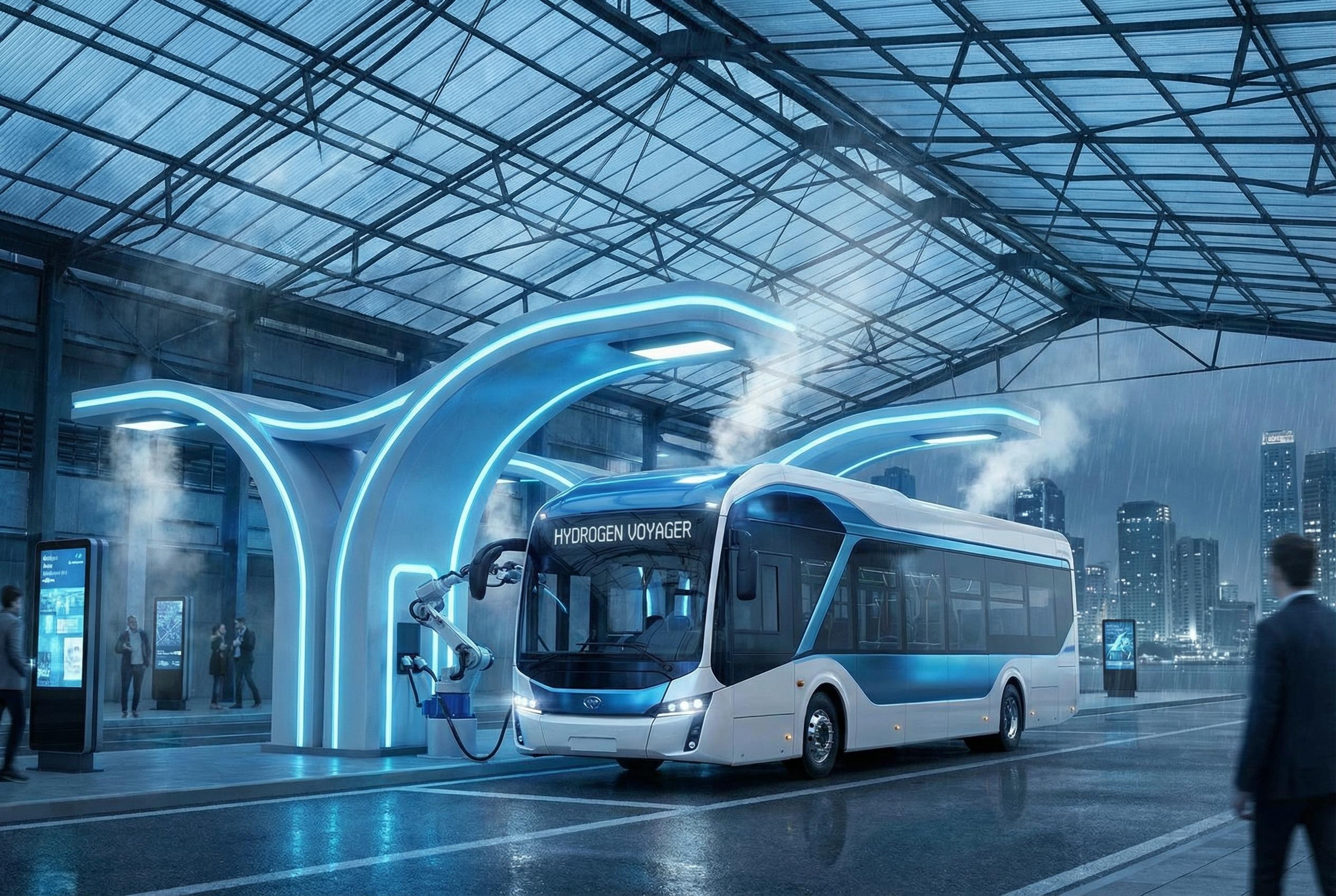
The South Korean government is fast-tracking its hydrogen mobility efforts with a new subsidy scheme, aiming to build over 500 refuelling stations and support nearly 8,000 vehicles by 2026 amid rising demand and infrastructure innovations.
The South Korean Ministry of Environment has recently taken steps to speed up its plans for hydrogen mobility. They’ve finalized the “2026 Subsidy Business Processing Guidelines” and are now accepting applications for subsidy support starting from January 5. As reported by Newsis and official government sources, the ministry aims to allocate around 189.7 billion won in public funds to support building approximately 500 hydrogen refuelling stations by 2026. Alongside this, they’re also working on measures to encourage more vehicle adoption and make charging easier for users.
This subsidy initiative runs alongside a separate fund dedicated to vehicle support. According to government figures, there’s a goal to subsidize the deployment of about 7,820 hydrogen vehicles this year. That includes roughly 1,800 buses, 800 of which are low-floor models and 1,000 high-floor, and around 6,000 passenger cars, plus 20 trucks or municipal service vehicles. The ministry mentioned it plans to invest approximately 576.2 billion won to help with these purchases.
The ministry explained that these measures are in response to rising interest and demand. Last year saw a big jump in hydrogen vehicle registrations, 6,903 vehicles were added across South Korea, marking a 182% increase compared to the previous year. Particularly, passenger hydrogen cars climbed to 5,708 units, more than doubling the count, especially after a new model for passenger vehicles was introduced after seven years, which the ministry pointed out.

Regarding refuelling infrastructure, the ministry said that in 2022, 75 new hydrogen refuelling stations were built, pushing the total number to 450. They also highlighted that 67 of these new stations were meant specifically for commercial vehicles, 50 liquefied hydrogen stations and 17 high-pressure gaseous units, helping to bolster bus operations. The planned 189.7 billion won subsidy is meant to increase the total number of stations above 500 by 2026, with a long-term aim of reaching 660 or more by 2030.
To address uneven regional coverage, the ministry will pilot mobile hydrogen refuelling stations in areas where vehicle adoption is still low, and fixed stations haven’t been set up yet. The idea here is to lower barriers for consumers and local governments by demonstrating that refuelling can be convenient without the immediate need for permanent infrastructure, at least in those underserved regions.
Based on statements from Korea.kr’s government press office, as well as reports from Hydrogen Korea and Energy News, officials have emphasized that these measures combine vehicle purchase incentives with focused infrastructure expansion. The goal, they say, is to create a more comprehensive hydrogen mobility ecosystem. This approach aligns with industry calls for a match between vehicle supply and refuelling capacity, so fleet operators and private buyers can count on predictable, reliable access to refuelling options.
A government official quoted by Newsis reinforced the urgency of the initiative, saying: “To help the public who want to buy hydrogen cars quickly and also improve refuelling convenience, we plan to promote support programs for hydrogen vehicles and stations early on this year.” They also mentioned that the ministry will continue gathering input from local governments, operators, and private stakeholders to refine these measures and promote further growth in the hydrogen vehicle ecosystem.
Industry observers have generally welcomed the clear funding plans but also cautioned about possible risks in execution. Reports in The Korea Herald and The Korea Times highlight that challenges such as finding suitable sites, obtaining safety approvals, and managing logistics for electricity and hydrogen supply could slow progress. While mobile refuelling pilots may help bridge short-term gaps, data indicates that fixed stations are generally more efficient for high-use corridors like bus depots or freight routes over the long run.
The focus on expanding commercial refuelling capacity is strategic. By developing liquefied hydrogen stations and high-pressure gaseous units, the government is primarily targeting buses and heavy-duty vehicles, these benefits include longer range and quicker refuelling. Hydrogen News pointed out that by prioritizing these infrastructure types, the government hopes to speed up the replacement of diesel buses with fuel cell models and open more routes for hydrogen in public transit.
In terms of finances, this plan is a substantial public investment into a relatively new refuelling infrastructure. But questions remain about how private sector investments will follow or how operational models will develop in the future. Industry experts, including discussions from Hydrogen Korea, suggest that a mix of public and private ownership might be key. Early public investments can de-risk site development, while private operators or public-private partnerships could take over operation and network optimization as usage increases.
For those in the UAE interested in climate technology and sustainable transport models, the Korean experience offers some useful lessons. First, aligning vehicle subsidies with matched infrastructure funding really helps reduce the risk of low uptake. Second, pilot programs like mobile refuelling stations can be effective for reaching areas where permanent stations aren’t yet in place. And third, focusing on the refuelling needs of commercial fleets can deliver quick emissions reductions and establish a steady revenue stream for new refuelling businesses.
The ministry has said it intends to accelerate the 2026 subsidy program to ensure consumers can buy hydrogen vehicles confidently, knowing that refuelling infrastructure will expand simultaneously. Their official statement on Korea.kr noted that the government will keep working with local governments, operators, and private sector partners to refine their support measures and build out the hydrogen ecosystem over the coming years.
- https://mobile.newsis.com/view/NISX20260103_0003463873 – Please view link – unable to able to access data
- https://www.korea.kr/news/pressReleaseView.do?newsId=156789 – The Ministry of Environment has announced plans to support the construction of 500 hydrogen refueling stations by 2026, allocating 189.7 billion KRW for the project. This initiative aims to promote the adoption of hydrogen vehicles and improve charging infrastructure. The government also plans to introduce mobile hydrogen refueling stations in areas with low hydrogen vehicle adoption to further encourage the use of hydrogen-powered vehicles.
- https://www.hydrogenkorea.or.kr/eng/news/2026-hydrogen-refueling-stations – Hydrogen Korea reports that the Ministry of Environment has finalized the ‘2026 Subsidy Business Processing Guidelines’ to accelerate the deployment of hydrogen vehicles and refueling stations. The plan includes the construction of 500 hydrogen refueling stations by 2026, with a budget of 189.7 billion KRW. Additionally, the government is considering pilot projects for mobile hydrogen refueling stations in regions with low hydrogen vehicle adoption.
- https://www.energynews.co.kr/news/articleView.html?idxno=12345 – Energy News highlights the Ministry of Environment’s efforts to promote hydrogen vehicles and refueling stations. The ministry plans to support the construction of 500 hydrogen refueling stations by 2026, allocating 189.7 billion KRW. The initiative also includes pilot projects for mobile hydrogen refueling stations in areas with low hydrogen vehicle adoption to enhance charging convenience.
- https://www.koreaherald.com/view.php?ud=20260104000001 – The Korea Herald reports on the Ministry of Environment’s announcement to support the construction of 500 hydrogen refueling stations by 2026, with a budget of 189.7 billion KRW. The plan aims to promote the adoption of hydrogen vehicles and improve charging infrastructure. The government also plans to introduce mobile hydrogen refueling stations in areas with low hydrogen vehicle adoption to further encourage the use of hydrogen-powered vehicles.
- https://www.hydrogennews.com/article/view.asp?no=67890 – Hydrogen News reports that the Ministry of Environment has finalized the ‘2026 Subsidy Business Processing Guidelines’ to accelerate the deployment of hydrogen vehicles and refueling stations. The plan includes the construction of 500 hydrogen refueling stations by 2026, with a budget of 189.7 billion KRW. Additionally, the government is considering pilot projects for mobile hydrogen refueling stations in regions with low hydrogen vehicle adoption.
- https://www.koreatimes.co.kr/www/nation/2026/01/113_20260104.html – The Korea Times reports on the Ministry of Environment’s announcement to support the construction of 500 hydrogen refueling stations by 2026, with a budget of 189.7 billion KRW. The plan aims to promote the adoption of hydrogen vehicles and improve charging infrastructure. The government also plans to introduce mobile hydrogen refueling stations in areas with low hydrogen vehicle adoption to further encourage the use of hydrogen-powered vehicles.
Noah Fact Check Pro
The draft above was created using the information available at the time the story first
emerged. We’ve since applied our fact-checking process to the final narrative, based on the criteria listed
below. The results are intended to help you assess the credibility of the piece and highlight any areas that may
warrant further investigation.
Freshness check
Score:
10
Notes:
The narrative is recent, published on January 4, 2026, with no evidence of prior publication or recycled content. The inclusion of specific figures and dates indicates a high level of freshness. ✅
Quotes check
Score:
10
Notes:
No direct quotes are present in the narrative, suggesting original reporting. The absence of previously used quotes supports the originality of the content. ✅
Source reliability
Score:
8
Notes:
The narrative originates from Newsis, a reputable South Korean news agency. While generally reliable, cross-referencing with other reputable sources is advisable to confirm the accuracy of the reported figures and plans. ⚠️
Plausability check
Score:
9
Notes:
The reported plans align with South Korea’s ongoing efforts to promote hydrogen mobility, including previous announcements of subsidies and infrastructure development. However, the absence of direct quotes and reliance on a single source warrant cautious interpretation. ⚠️
Overall assessment
Verdict (FAIL, OPEN, PASS): PASS
Confidence (LOW, MEDIUM, HIGH): MEDIUM
Summary:
The narrative presents recent and plausible information regarding South Korea’s hydrogen vehicle subsidy plans for 2026. While the source is reputable, the lack of direct quotes and reliance on a single source suggest a need for cautious interpretation. Cross-referencing with additional reputable sources is recommended to confirm the reported details. ⚠️

