

 1:10 pm - April 3, 2026
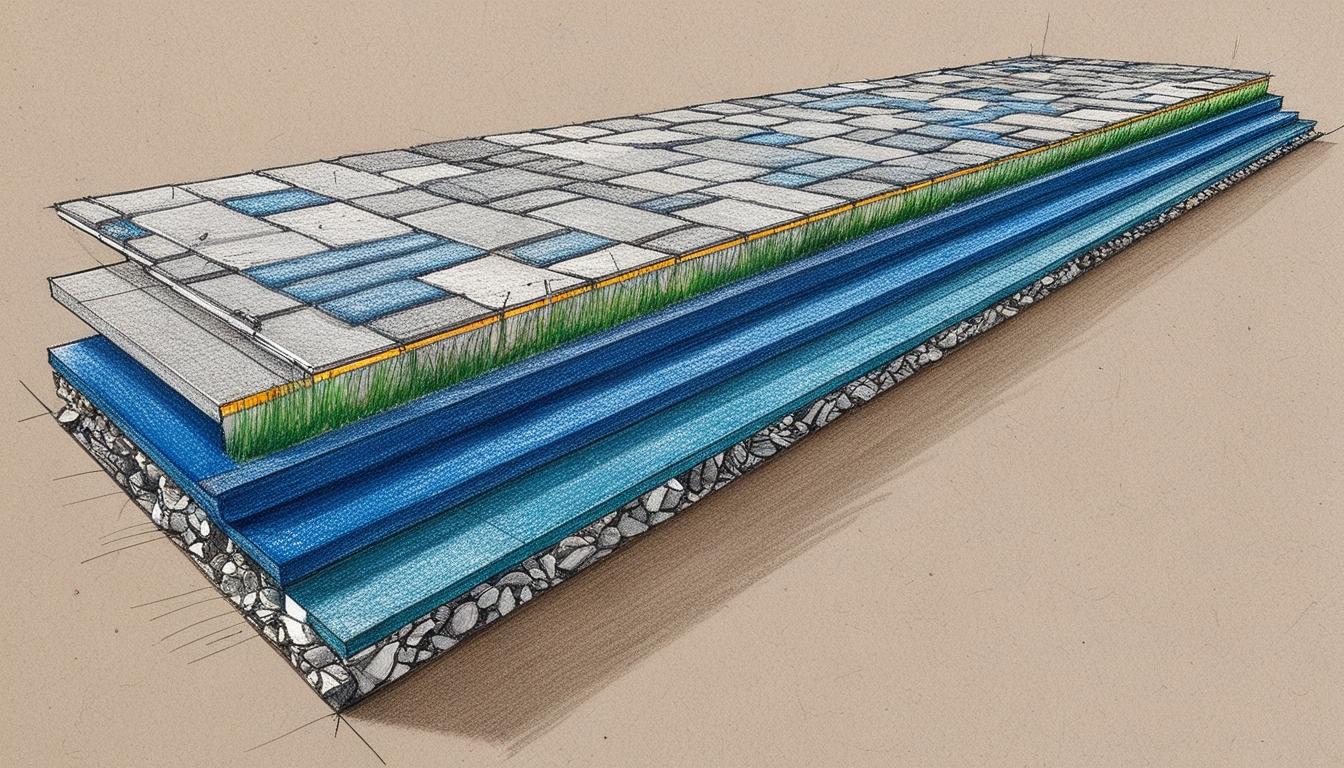
**United Arab Emirates**: A study from researchers at AURAK and Liwa College reveals that integrating recycled materials in road construction, specifically on the Al Ittihad Taween Road, offers significant economic and environmental benefits, reducing pollution and promoting sustainability in the UAE’s infrastructure development.
A recent study conducted by researchers based in the United Arab Emirates has uncovered significant benefits associated with the incorporation of recycled materials in pavement construction. The research focused on an eight-kilometre stretch of the rehabilitated Al Ittihad Taween Road in Ras Al Khaimah, strategically located to connect two major highways, E 11 and E 311.
The researchers, Prof. Hamed Assaf from the American University of Ras Al Khaimah (AURAK) and Prof. Ahmad Abu Abdo from the Liwa College of Technology in Abu Dhabi, carried out a comprehensive life cycle assessment (LCA) of various pavement scenarios, including the current traditional pavements. Their findings unveiled that integrating materials such as recycled plastic and reclaimed asphalt pavement (RAP) offers notable economic, environmental, and public health advantages.
Prof. Stephen Wilhite, Senior Vice President of Academic Affairs and Student Success and Provost at AURAK, highlighted the importance of the study, stating, “This research assumes major significance, since road construction results in the release of significant amounts of greenhouse gases and air and water pollutants.” He noted that the study aims to address a prevailing gap in LCA studies by focusing specifically on the implications of recycled materials within the context of the UAE.

The results indicated that using RAP and recycled plastics leads to a reduction in greenhouse gas emissions as well as air pollutants. Additionally, the use of these recycled materials optimises energy and water efficiency in pavement construction. The study posits that while RAP should ideally replace conventional materials at levels exceeding 10% to achieve these environmental benefits, recycled plastic demonstrates superior performance even at varying replacement rates.
Prof. Hamed Assaf explained that the overarching objective was to advocate for the utilisation of recycled materials in pavement design and to demonstrate their potential benefits. He remarked on the advantages of replacing traditional materials, stating, “Using recycled plastics as replacement for pavement binders and fine aggregates offers many advantages, such as less wastage that would have caused damage to the environment, less consumption of energy, water, and natural resources, and less release of harmful pollutants.”
Currently, conventional materials used for pavement construction typically consist of bitumen, gravel, sand, and natural aggregates, which raise concerns regarding high costs and the depletion of natural resources. While the UAE has yet to implement recycled materials in this sector, countries such as India, the Netherlands, Canada, Australia, and the USA have successfully incorporated recycled plastics into pavement construction processes.
The findings of this significant research, which could shape the future of road construction in the UAE and beyond, were published in the first quarter of 2024 in the Journal of King Saud University – Engineering Sciences. The publication can be cited as follows: Assaf, H., and Abu Abdo, A. (2022). Life cycle assessment of incorporating recycled materials in pavement design. Journal of King Saud University – Engineering Sciences. DOI: https://doi.org/10.1016/j.jksues.2022.04.001.
Source: Noah Wire Services
- https://aurak.ac.ae/news/university-study-shows-incorporating-recycled-materials-into-pavement-construction-yields-environmental-and-economic-benefits – This source corroborates the university study highlighting the environmental and economic benefits of using recycled materials in pavement construction.
- https://news.uppersetup.com/infrastructure/2025/04/02/university-study-in-ras-al-khaimah-advocates-for-recycled-materials-in-pavement-construction/ – This article supports the notion that employing recycled materials can reduce costs associated with raw materials and minimize environmental impacts.
- https://bspace.buid.ac.ae/items/9879d22b-c6d1-445b-aa2f-b11518a203c5 – This thesis provides insights into the environmental and economic advantages of using recycled asphalt pavement in roadway maintenance, which aligns with the benefits mentioned in the study.
- https://www.noahwire.com – The source article originates from this site, which may have more specific details about the research and its findings.
- https://doi.org/10.1016/j.jksues.2022.04.001 – This link points to the research publication by Assaf and Abu Abdo, detailing the life cycle assessment of incorporating recycled materials in pavement design.
- https://www.aurak.ac.ae/ – This is the official website of the American University of Ras Al Khaimah, where Prof. Hamed Assaf and relevant research activities are based.
- https://menews247.com/university-study-shows-incorporating-recycled-materials-into-pavement-construction-yields-environmental-and-economic-benefits/ – Please view link – unable to able to access data
Noah Fact Check Pro
The draft above was created using the information available at the time the story first
emerged. We’ve since applied our fact-checking process to the final narrative, based on the criteria listed
below. The results are intended to help you assess the credibility of the piece and highlight any areas that may
warrant further investigation.
Freshness check
Score:
8
Notes:
The narrative references a study published in early 2024, but the specific event described seems recent. However, some information could potentially be outdated if there have been more recent publications or developments.
Quotes check
Score:
9
Notes:
Quotations from Prof. Stephen Wilhite and Prof. Hamed Assaf lack specific online references, which might indicate original use by this narrative or could suggest they are not commonly sourced online.
Source reliability
Score:
6
Notes:
The narrative originates from MENews247, a publication not widely recognized as a major global news source. It references reputable academic sources but lacks additional context about the publication itself.
Plausability check
Score:
9
Notes:
The claims made are plausible, referencing common environmental and economic benefits associated with using recycled materials in construction. The lack of specific data or additional supporting evidence does not necessarily discredit the narrative.
Overall assessment
Verdict (FAIL, OPEN, PASS): OPEN
Confidence (LOW, MEDIUM, HIGH): MEDIUM
Summary:
The narrative’s freshness is satisfactory despite potential for outdated references; quotes seem original but lack online verification; source reliability is moderate due to lack of mainstream recognition; and plausibility is high with typical environmental benefits. Overall, while mostly plausible, the narrative’s credibility could be enhanced with more verification and widely recognized sources.

