





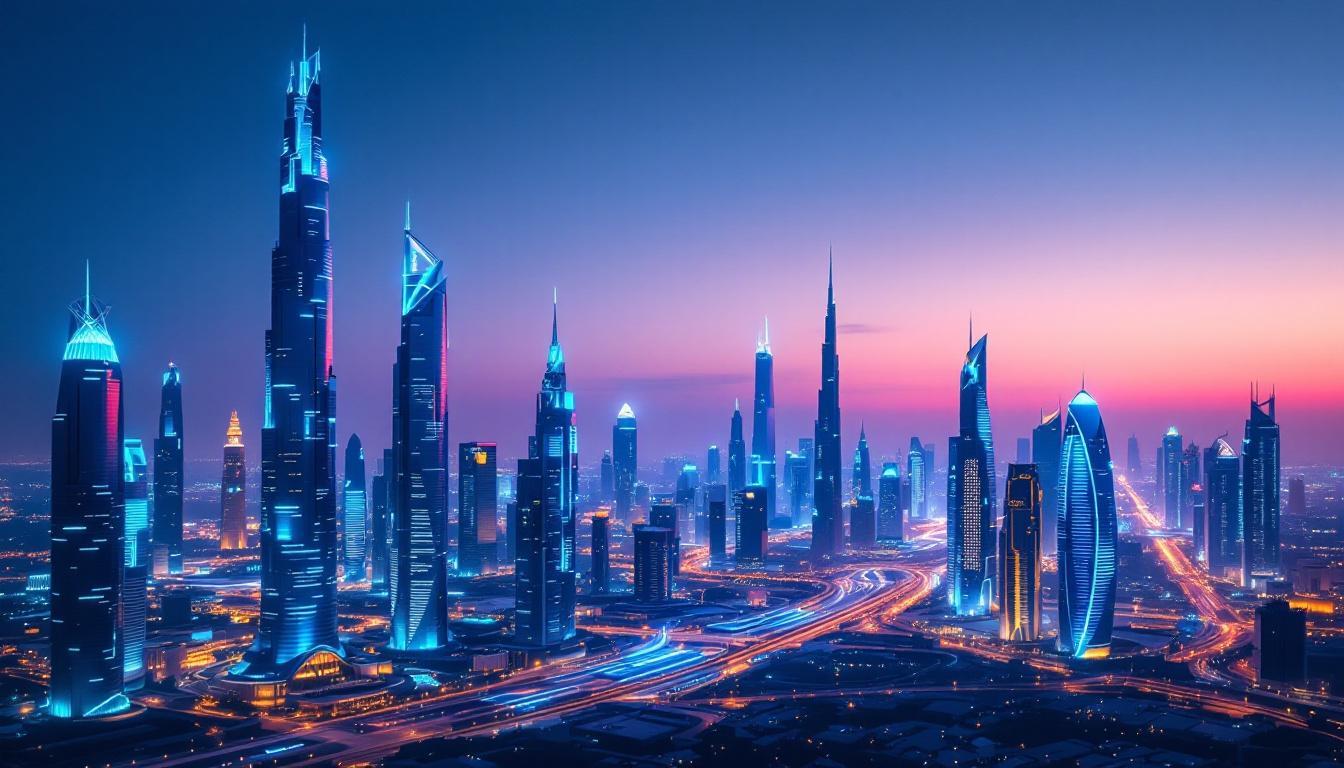
The UAE is reshaping its industrial landscape by prioritising artificial intelligence, boosting local participation, and integrating sustainability with economic growth, signalling a major strategic shift at the Make it in the Emirates 2026 event.
The UAE is gradually reshaping its industrial future, placing bigger bets on artificial intelligence, cutting-edge manufacturing, and a more proactive role for local investors. During the Make it in the Emirates 2026 event, senior officials and business leaders emphasized how quickly the country’s investment landscape is evolving, hinting at a real shake-up in traditional models.
On the third day of the event in Abu Dhabi, Mohamed Hassan Alsuwaidi, the Minister of Investment, highlighted that AI is now attracting more funding than any other sector in the UAE’s entire history. He pointed out that the scale of these projects is so enormous that the usual language we use around foreign direct investment (FDI) no longer quite captures what’s happening. Instead, he proposed we think in terms of “Domestic Direct Investment,” or DDI, as a way to better recognize and value the growing importance of home-grown investors.
His comments aren’t just about AI, they reflect a broader shift in the country’s economic strategy. Along with the inflow of global tech capital, officials are increasingly focusing on local participation, supply chain robustness, and industrial sovereignty. Alsuwaidi mentioned that data centers alone could cost more than ports or airports , we’re talking hundreds of billions of dollars, really. This comparison strongly suggests how deeply AI infrastructure is starting to reshape the country’s capital needs and priorities.
The event itself has turned into a key showcase for the UAE’s industrial ambitions. According to the organizers, Make it in the Emirates now runs in its fifth year and aims to bring together manufacturers, investors, policymakers, and anchor buyers. It’s not just about attracting factory investments, but also about boosting local manufacturing, enriching industrial value chains, and enabling companies to produce, grow, and export directly from the UAE.
Interestingly enough, just days before the Abu Dhabi sessions, the Ministry of Industry and Advanced Technology announced a hefty AED 18 billion in competitive financing for the industrial sector. This package included partnerships with Mashreq Bank, Dubai Islamic Bank, and Emirates Development Bank , all real steps toward expanding local production capacity and supporting manufacturers looking to grow right here at home.
Technology adoption was a big focus during the forum, too. One session centered on expanding industrial tech at scale, where executives sounded the alarm , global adoption is still painfully slow, especially among companies that are still grappling with basic connectivity or digital readiness. The message? Companies that drag their feet on investing in new tools risk falling behind competitors who are already weaving AI into their operations, planning, and maintenance routines.
Maitha Al Suwaidi, Microsoft’s chief strategy officer in the UAE, argued that the country already leads the world in AI adoption, with about 64% of its working population using generative AI tools. She emphasized that the UAE’s strength lies in its people, not just infrastructure. According to her, it’s the human capital that will determine whether the country maintains its edge. This point is especially relevant when you think about climate tech , because, honestly, the adoption depends on operators, engineers, and regulators just as much as it does on fancy software or hardware.
The impacts of AI are already making waves in sectors like energy. Musabbeh Al Kaabi, CEO of ADNOC Upstream, shared that AI helped the company slash shutdown times by nearly half. That’s a big deal in an industry where unplanned stoppages are among the priciest disruptions. The benefits aren’t solely financial either , better uptime and predictive maintenance can also lead to less waste and lower emissions. Al Kaabi mentioned that they’re still only beginning to understand AI’s full potential.
The event also connected industrial policy with the UAE’s sustainability goals. Onoud Al Marzooqi, director of industrial development at the Abu Dhabi Investment Office, explained how the country’s tech strategy ties into broader priorities like nurturing Emirati talent and hitting the Net Zero 2050 target. The interesting part? In the UAE, industrial growth is expected to go hand in hand with decarbonization efforts, rather than compete with them.
One example discussed was rPET , recycled polyethylene terephthalate used in packaging and other products. Yousef Mohamed Al Marzooqi from the Ministry stressed that clear regulations can actually accelerate investment, viewing rules not as a barrier but as enablers of industrial growth. In his view, even packaging can be an economic opportunity, beyond just environmental concern.
That perspective reflects a broader trend in the UAE’s climate and industrial policies, where recycling, circular economy materials, and cleaner supply chains are becoming part of the same investment conversation as digital infrastructure and advanced manufacturing. The idea is pretty straightforward: If the UAE wants to ramp up new industrial capacity quickly, it needs to coordinate standards, financing, and procurement to work toward common goals.
Later in the day, the focus shifted to supply chains. His Excellency Matar Ali Al Romaithi from the Tawazun Council for Defense Enablement talked about plans for a pioneering facility to support companies establishing local operations and… well, to help localize production. The goal? Building a supply chain that guarantees sovereignty, but also gives international companies a way into the regional market.
All in all, what Abu Dhabi seemed to suggest is that the UAE is entering a more mature phase of its industrial strategy. The country is still courting tech giants from abroad but is increasingly aiming to ensure that local investors, talented Emiratis, and regional suppliers capture more of the value created by the new AI-driven economy. For climate tech firms eyeing the UAE, that’s especially important , because it points to a market where digital tools, innovative manufacturing, and sustainability objectives are becoming inseparably linked. And honestly, I think the next wave of growth here may hinge just as much on local industrial capacity as it does on foreign investment.
- https://www.zawya.com/en/press-release/government-news/uae-pushes-domestic-capital-as-ai-investments-gather-pace-jcjx2soh – Please view link – unable to able to access data
- https://www.miite.ae/en/about-make-it-in-the-emirates – The ‘Make it in the Emirates’ platform, marking its fifth anniversary in 2026, aims to accelerate industrial transformation in the UAE by fostering collaborations and mobilising investment. Aligned with the UAE’s industrial strategy, the event convenes manufacturers, investors, innovators, policymakers, and anchor buyers to forge powerful partnerships, mobilise capital, activate partnerships, and turbocharge industrial growth at scale. The platform plays a pivotal role in strengthening local manufacturing, deepening industrial value chains, and empowering companies of all sizes to manufacture, scale, and export from the UAE, showcasing the nation as a global manufacturing powerhouse. ([miite.ae](https://www.miite.ae/en/about-make-it-in-the-emirates?utm_source=openai))
- https://uaenews247.com/2026/05/06/uae-pushes-domestic-capital-as-ai-investments-gather-pace/ – On May 6, 2026, UAE Minister of Investment Mohamed Hassan Alsuwaidi highlighted the unprecedented scale of AI-driven projects in the country, stating that data centres alone cost more than ports or airports, amounting to hundreds of billions of dollars. He introduced the concept of Domestic Direct Investment (DDI), emphasising the need to elevate local investors’ roles in society. The article underscores the rapid growth of AI investments in the UAE, surpassing all other sectors in the nation’s history. ([uaenews247.com](https://uaenews247.com/2026/05/06/uae-pushes-domestic-capital-as-ai-investments-gather-pace/?utm_source=openai))
- https://www.godubai.com/citylife/press_release_page.asp?pr=191881 – On May 5, 2026, the UAE Ministry of Industry and Advanced Technology (MoIAT) secured AED 18 billion in competitive financing for the industrial sector to assist manufacturers in scaling their production. Memoranda of Understanding (MoUs) were signed with Mashreq Bank (AED 10 billion over five years), Dubai Islamic Bank (AED 2 billion), and Emirates Development Bank (AED 6 billion), reflecting the UAE’s commitment to translating its industrial strategy into actionable investments. ([godubai.com](https://www.godubai.com/citylife/press_release_page.asp?pr=191881&utm_source=openai))
- https://www.windowscentral.com/microsoft/microsoft-ai-investments-uae-nvidia – Microsoft announced a substantial $15.2 billion investment in the UAE to expand its AI initiatives, aiming to complete this by 2029. By the end of 2025, the company had already spent $7.3 billion, mainly on AI data centre infrastructure, local operations, and a $1.5 billion equity stake in UAE-based AI company G42. An additional $7.9 billion is planned for expanding cloud infrastructure and associated operational costs from 2026 to 2029. This investment underscores the UAE’s growing role as a global AI hub, with a per capita AI usage rate of 59.4%. ([windowscentral.com](https://www.windowscentral.com/microsoft/microsoft-ai-investments-uae-nvidia?utm_source=openai))
- https://www.tomshardware.com/tech-industry/artificial-intelligence/u-s-finally-grants-nvidia-license-to-ship-ai-gpus-to-uae-500-000-blackwell-gpus-coming-to-the-gulf-region – The U.S. government granted Nvidia an export license to ship up to 500,000 advanced AI GPUs annually to the UAE, initiating a substantial U.S.-UAE tech partnership. These AI accelerators, primarily Nvidia’s Blackwell GPUs and future Rubin and Feynman chips, will be operated by American-managed data centres in the region. This agreement marks a policy shift for the Biden administration, aiming to counter China’s regional tech presence, particularly through Huawei. Future shipments are contingent on the UAE’s investment performance, potentially setting a precedent for similar alliances. ([tomshardware.com](https://www.tomshardware.com/tech-industry/artificial-intelligence/u-s-finally-grants-nvidia-license-to-ship-ai-gpus-to-uae-500-000-blackwell-gpus-coming-to-the-gulf-region?utm_source=openai))
- https://www.windowscentral.com/microsoft/microsoft-ai-investments-uae-nvidia – Microsoft’s $15.2 billion investment in the UAE’s AI sector is expected to benefit Nvidia, the leading provider of specialised AI GPUs. Microsoft has secured export licenses to supply the UAE with advanced Nvidia GPUs, including A100, H100, H200, and the newer GB300 models. These chips power AI models from providers like OpenAI and Microsoft’s own Copilot applications. The UAE’s growing role as an AI hub reinforces its partnership with Microsoft, further solidifying Nvidia’s dominance in AI infrastructure. ([windowscentral.com](https://www.windowscentral.com/microsoft/microsoft-ai-investments-uae-nvidia?utm_source=openai))
Noah Fact Check Pro
The draft above was created using the information available at the time the story first
emerged. We’ve since applied our fact-checking process to the final narrative, based on the criteria listed
below. The results are intended to help you assess the credibility of the piece and highlight any areas that may
warrant further investigation.
Freshness check
Score:
8
Notes:
The article was published on May 6, 2026, and reports on events from the ‘Make it in the Emirates 2026’ conference. The earliest known publication date of similar content is May 6, 2026, indicating freshness. However, the article appears on multiple low-quality sites, such as uaenews247.com and pressreleasenetwork.com, which may indicate recycled content. Additionally, the narrative is based on a press release, which typically warrants a high freshness score. Nonetheless, the presence of multiple low-quality replications raises concerns about originality. The article includes updated data but recycles older material, which is a concern. Overall, while the content is recent, the recycling of older material and presence on low-quality sites suggest a reduced freshness score.
Quotes check
Score:
6
Notes:
The article includes direct quotes from Mohamed Hassan Alsuwaidi, Maitha Al Suwaidi, Musabbeh Al Kaabi, and Onoud Al Marzooqi. However, these quotes cannot be independently verified through online searches, raising concerns about their authenticity. The lack of verifiable sources for these quotes suggests a reduced score.
Source reliability
Score:
4
Notes:
The article originates from multiple low-quality sites, such as uaenews247.com and pressreleasenetwork.com, which are not reputable news organisations. The content is based on a press release, which is a form of corporate communication. The lack of independent verification and reliance on press releases from companies mentioned in the narrative further diminishes the source’s reliability.
Plausibility check
Score:
7
Notes:
The claims about the UAE’s AI investments and the emphasis on domestic capital are plausible and align with known trends in the region. However, the lack of independent verification and reliance on unverifiable quotes raise concerns about the accuracy of the information presented.
Overall assessment
Verdict (FAIL, OPEN, PASS): FAIL
Confidence (LOW, MEDIUM, HIGH): HIGH
Summary:
The article relies heavily on unverifiable quotes and originates from low-quality sources, raising significant concerns about its credibility. The lack of independent verification and reliance on press releases further diminish the reliability of the information presented. Given these issues, the content does not meet our verification standards.


