

 7:57 am - April 4, 2026
The UAE is making substantial progress towards a low-carbon cement industry, driven by its ambitious Industrial Decarbonisation Roadmap announced during COP28 in December 2023. This initiative aims to significantly reduce CO₂ emissions in the industrial sector by 2.9 gigatonnes by 2050, with particular focus on heavy-emitting sectors such as cement, steel, and aluminium. The roadmap investigates over 50 decarbonisation methodologies, including cutting-edge technologies and innovations in clean electricity and carbon capture, aiming for an overall reduction in emissions of 93% by mid-century.
The UAE’s commitment to reducing greenhouse gas emissions has attracted attention from global climate initiatives, particularly due to its high rate of cement and concrete utilisation—a reflection of its extensive construction activities. Notably, as one of the largest cement producers in the Gulf Cooperation Council (GCC), the country faces scrutiny over its emissions, ranking high in CO₂ output per capita in this sector. This growing focus on sustainability comes alongside new legislation mandating the monitoring and reporting of greenhouse gas emissions, aligned with the Federal Law on the Reduction of Climate Change Effects, which began implementation in mid-2025.
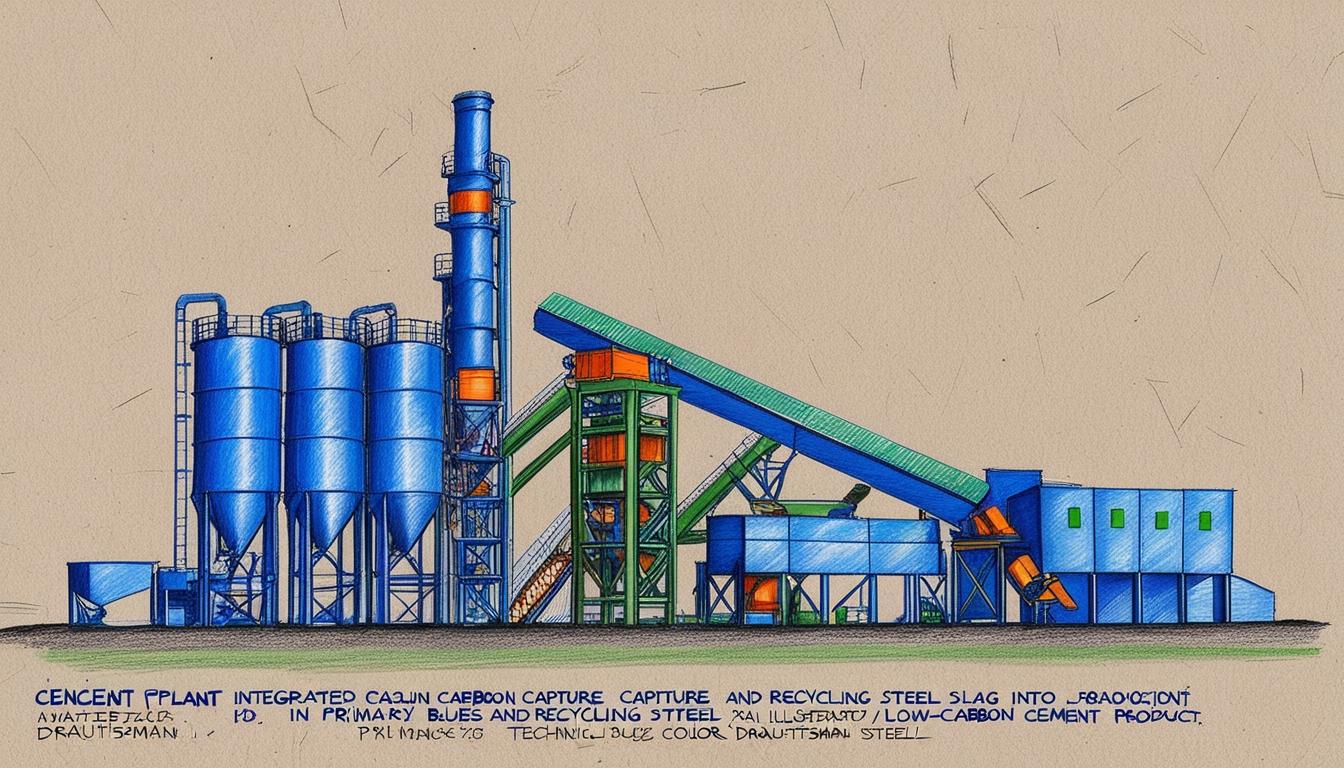
The pressures of overcapacity in the cement industry and the imperative for increased energy efficiency have fostered an environment ripe for innovation. This need for decarbonisation has led to a surge of initiatives by local producers seeking sustainable solutions. A notable example includes Emirates Steel Arkan’s recent partnership with Finnish firm Magsort, which aims to execute an industrial-scale pilot project for decarbonised cement production at the Al Ain cement plant. Magsort’s process is designed to extract steel from steel slag, reconfiguring this byproduct into zero-CO₂ raw materials for the cement industry. This approach has the potential to decrease CO₂ emissions by as much as 35% while enhancing production capacity by 20%. Furthermore, the technology could replace up to 50% of granulated blastfurnace slag, doubling the available materials for low-carbon cement.
However, the trajectory for these green initiatives is not without challenges. Reports from the Industrial Transition Accelerator launched at COP28 indicate that insufficient demand for low-carbon products is stifling the investment required—up to $700 billion—for advancing low-carbon technologies across major industries, including cement. This ongoing issue underscores a significant barrier to broader adoption and innovation, as businesses and financiers await stronger market signals to mobilise their resources towards sustainability.

In addition, the collaboration between Canada and the UAE to promote the Cement & Concrete Breakthrough Initiative at COP28 aims to catalyse investment in technologies and policies to achieve net-zero emissions in the cement and concrete sectors by 2050. This initiative seeks to facilitate international collaboration and the sharing of best practices, further enhancing the UAE’s position as a leader in sustainable construction practices.
As these developments unfold, it remains clear that while the UAE’s roadmap marks a significant step towards a more sustainable cement industry, the intersecting factors of market demand, regulatory support, and technological innovation will be critical in determining the efficacy of these efforts in achieving their overarching climate goals.
📌 Reference Map:
Source: Noah Wire Services
- https://www.cemnet.com/News/story/179297/uae-moves-increasingly-towards-a-low-carbon-cement-structure.html – Please view link – unable to able to access data
- https://moiat.gov.ae/en/decarbonization-roadmap/ – The UAE Ministry of Industry and Advanced Technology unveiled the Industrial Decarbonization Roadmap at COP28 in December 2023. This initiative aims to reduce CO₂ emissions in the industrial sector by 2.9 gigatonnes by 2050, focusing on heavy-emitting sectors such as cement, iron, steel, and aluminium. The roadmap evaluates over 50 decarbonisation methods, including clean electricity, carbon capture, utilisation and storage (CCUS), and alternative fuels, to achieve a 93% reduction in emissions by 2050. ([moiat.gov.ae](https://moiat.gov.ae/en/decarbonization-roadmap/?utm_source=openai))
- https://www.emsteel.com/press/emirates-steel-arkan-and-magsort-collaborate-in-the-first-industrial-pilot-project-to-reduce-cement-co2-footprint-up-to-15/ – Emirates Steel Arkan (EMSTEEL) has partnered with Finnish company MAGSORT to implement an industrial-scale pilot project for decarbonised cement production at EMSTEEL’s Al Ain cement plant. MAGSORT’s process extracts steel from steel slag and refines the remaining slag to produce zero-CO₂ raw materials for cement. This method aims to reduce CO₂ emissions by up to 35% and increase production by 20%, potentially replacing 50% of granulated blastfurnace slag (GBS) and doubling the availability of material for low-CO₂ cement. ([emsteel.com](https://www.emsteel.com/press/emirates-steel-arkan-and-magsort-collaborate-in-the-first-industrial-pilot-project-to-reduce-cement-co2-footprint-up-to-15/?utm_source=openai))
- https://www.reuters.com/sustainability/weak-demand-low-carbon-products-hampers-green-investment-cop28-initiative-says-2024-09-19/ – The Industrial Transition Accelerator (ITA), launched at COP28 in Dubai, reports that weak demand for green products is hindering the investment of up to $700 billion needed for low-carbon projects in heavy-emitting industries like aluminium, steel, and cement. The ITA highlights that over 450 large-scale industrial projects globally require significant funding to reduce carbon emissions. Without clear and sustained demand for low-carbon products, businesses and financiers cannot commit to these projects, creating a major barrier to investment. ([reuters.com](https://www.reuters.com/sustainability/weak-demand-low-carbon-products-hampers-green-investment-cop28-initiative-says-2024-09-19/?utm_source=openai))
- https://gccassociation.org/news/canada-launches-the-cement-concrete-breakthrough-initiative-at-cop28/ – At COP28 in Dubai, Canada and the UAE co-launched the Cement & Concrete Breakthrough initiative. This initiative aims to accelerate investments in technologies, tools, and policies necessary for the cement and concrete industry to achieve net-zero solutions by 2050. It enables countries to share best practices on decarbonising the sector and engages various global partners to make clean cement the preferred choice in global markets. ([gccassociation.org](https://gccassociation.org/news/canada-launches-the-cement-concrete-breakthrough-initiative-at-cop28/?utm_source=openai))
- https://gccassociation.org/news/new-report-highlights-decarbonisation-progress-of-global-cement-industry-as-world-leaders-debate-climate-action-at-cop28/ – A report by the Global Cement and Concrete Association (GCCA) highlights a 23% drop in CO₂ emission intensity of cement-related materials compared to 1990 levels. The report features decarbonisation projects by GCCA member companies, including carbon capture and storage (CCUS) projects by Breedon in the UK, Heidelberg Materials in Germany, Holcim in Switzerland, Taiheiyo Cement in Japan, and TITAN Cement Group in Greece. These efforts contribute to the industry’s global CO₂ reductions. ([gccassociation.org](https://gccassociation.org/news/new-report-highlights-decarbonisation-progress-of-global-cement-industry-as-world-leaders-debate-climate-action-at-cop28/?utm_source=openai))
- https://www.wam.ae/en/article/apzg8lz-uae-launches-industrial-decarbonization-roadmap – The UAE announced the launch of the Industrial Decarbonization Roadmap at COP28, aiming to reduce industrial carbon emissions by 2.9 gigatonnes by 2050. The roadmap focuses on manufacturing and hard-to-abate sectors, including cement, iron, steel, and aluminium, reflecting the country’s commitment to climate action and sustainability goals. ([wam.ae](https://www.wam.ae/en/article/apzg8lz-uae-launches-industrial-decarbonization-roadmap?utm_source=openai))

