

 7:12 pm - April 3, 2026
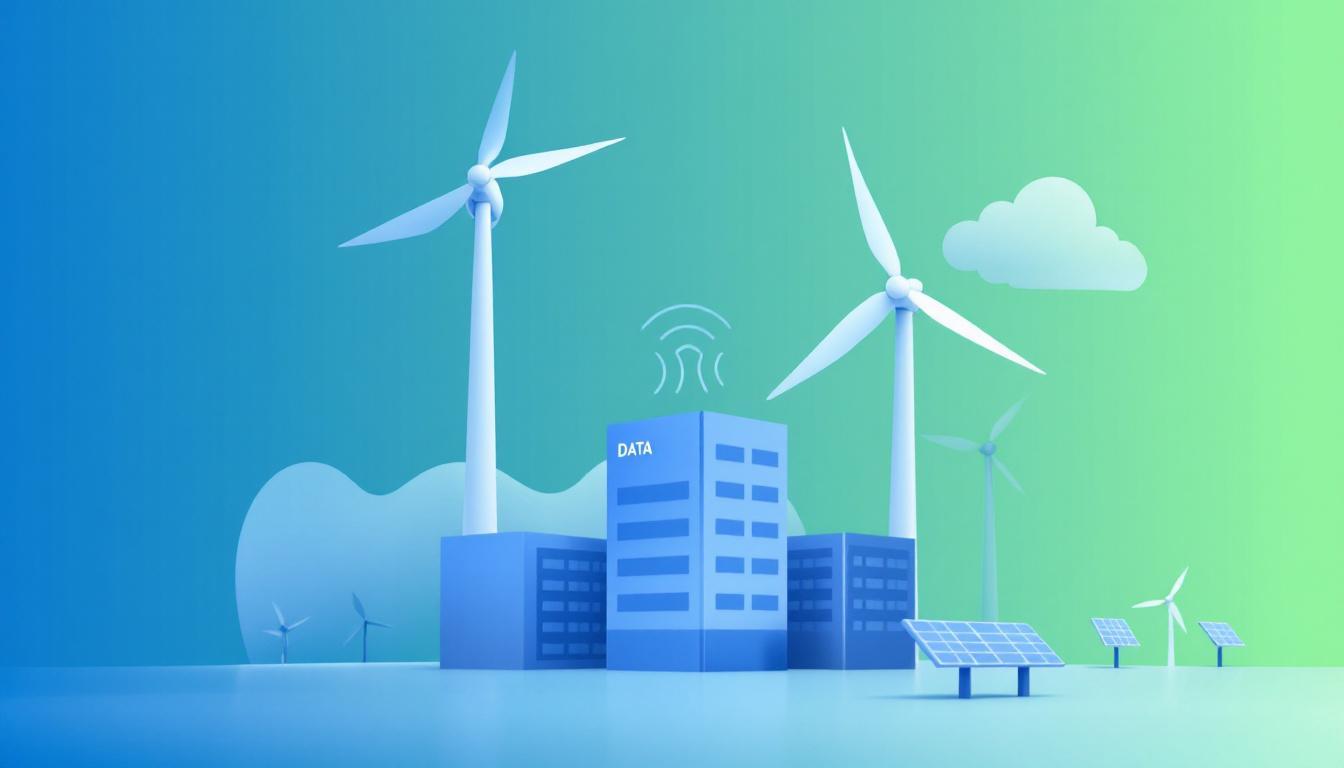
Microsoft’s $15.2 billion investment in Abu Dhabi’s data centres highlights the ongoing reliance on natural gas turbines to ensure uptime, posing a strategic challenge for the UAE’s energy transition goals amidst ambitious renewable targets.
Microsoft’s multi-billion dollar effort to establish AI infrastructure in Abu Dhabi has really brought into focus a practical dilemma at the heart of the UAE’s energy transition. As reported, Microsoft pledged around $15.2 billion for UAE data center development in 2025, alongside announcing new partnerships and sustainability targets that emphasize renewable energy. However, at the same time, engineering contracts and the realities of the grid show that natural gas turbines are still providing the quick, dependable capacity that hyperscale data centers need. This technical constraint is shaping the country’s overall energy planning at least through 2035.
The basic technical reason is pretty clear. Data centers aiming for a 99.999% uptime, the kind that only allow about 5.26 minutes of downtime each year, must have instant failover, quick load adjustments, and fuel sources unaffected by weather. Nuclear and solar power stations supply substantial base load and generation during daylight hours respectively, but neither can react immediately or sustain a multi-hour, multi-gigawatt response required during sudden server farm spikes. For example, the Barakah nuclear plant hit its full 5.6 gigawatt capacity in 2024, while the Mohammed bin Rashid Solar Park grew to nearly 3.86 gigawatts. Still, nuclear can’t ramp up quickly enough for transient surges, and solar yields drop to zero at night. Current grid-scale batteries in the UAE are small; ongoing and future projects are scheduled into the late 2020s and into the 2030s.
Industry data clearly shows that, right now, only gas turbines combine all the qualities hyperscalers look for: they can start instantly, ramp up rapidly, and use fuel that’s readily available regardless of weather conditions. That explains why every major data center announcement seems to pair shiny renewable commitments in press releases with actual engineering contracts for gas turbines. Microsoft and other cloud providers often structure their renewable energy procurements through virtual power purchase agreements or renewable energy certificates, which separate the financial claims of clean energy from the physical electrons actually powering their facilities. In essence, that approach lets firms tout their sustainability progress while still relying on a grid where gas contributes the firm capacity.
Economics also back up this engineering story. Reuters reported that Microsoft and Abu Dhabi’s G42 plan to expand capacity by an additional 200 megawatts, as part of Microsoft’s broader multiyear investment. The Stargate UAE project, a 10-square-mile complex led by G42 with international partners, is slated to begin operations in 2026 and could eventually host up to 5 gigawatts of computing capacity. Projections from the lead report suggest UAE data centers consumed about 8–10 terawatt-hours in 2024, which could rise to 15–20 terawatt-hours by 2026 , all as deployments grow. These increases will absorb more domestic gas demand, reducing pressure on exports and supporting ADNOC’s gas business model.
ADNOC itself has acknowledged these connections. In November 2024, ADNOC Group CEO Dr. Sultan Al Jaber noted that gas supplies more than a quarter of the baseload power for data centers and warned of potential turbine shortages that might push prices higher. ADNOC’s filings for 2024 predict steady growth in domestic gas demand through 2030. Additionally, the company and Masdar signed a Strategic Collaboration Agreement with Microsoft to explore powering data centers with renewables and developing low-carbon technologies. They stated the collaboration would look into options for decarbonizing energy supply to computing infrastructure.
This mix of state-led industrial planning and corporate investment makes the UAE a pretty attractive short-term spot for hyperscalers. The country’s grid reliability is among the highest worldwide, and electricity prices remain competitive compared to many Western markets. Reuters highlighted that Microsoft has secured US export licenses for advanced Nvidia GPUs to support its UAE operations, and the company plans to continue heavy investment through 2029. These factors, plus the geographic proximity to rapidly growing markets in the Middle East, Africa, and South Asia, make Abu Dhabi a strategic hub for latency-sensitive AI services.
But, of course, this trajectory involves a policy trade-off. UAE’s Energy Strategy 2050 aims for ambitious clean capacity targets by 2030, including nearly tripling renewable energy. Achieving those targets means speeding up project delivery beyond current rates. Battery storage is still the pivotal technology here. The lead report suggests that, based on realistic timelines and costs, multi-hour, gigawatt-scale storage probably won’t be competitively deployable with gas turbines until the 2030s. While additional nuclear expansion beyond Barakah may be possible, it’s unlikely to happen quickly. Therefore, the arithmetic points toward continued reliance on gas turbines as the main bridge technology to maintain data center reliability through at least 2030, possibly stretching into 2035 unless there’s faster progress on storage or new low-carbon firm capacity options.
Regionally, the UAE isn’t alone in this challenge. Reuters coverage of Stargate and similar projects indicates that Saudi Arabia and Qatar are pursuing similar ambitions. Gulf states aiming to build large-scale computational hubs face the same physical realities: intermittent renewables coupled with steady baseload plants are necessary but not enough to meet the immediate, firm capacity needs of AI infrastructure. The first country in the region to successfully crack grid-scale storage at scale will hold a real strategic advantage.
All in all, the public narrative passionately promotes renewables and AI leadership, but beneath that surface lies a more complex infrastructure reality: gas turbines remain central to current plans and operations. The partnership agreements between technology giants, state oil companies, and renewables developers seem designed to align those goals. Whether this dynamic leads to a quick transition to decarbonization or ends up locking in fossil-fuel dependency for a longer period depends heavily on advances in storage technology, the pace of renewable deployment, and policy decisions over the coming five to ten years.
For the UAE, the real challenge isn’t just about making promises; it’s about delivering on them. The strategy that helped Abu Dhabi accelerate AI infrastructure investments and attract global partners now must reconcile its short-term operational needs with medium-term climate aims. The big question: will breakthroughs in battery tech and faster clean energy deployment happen in time to avoid deepening dependence on gas for another generation?
- https://bitcoinethereumnews.com/finance/gas-turbines-power-uae-data-centers-despite-renewable-energy-goals/?utm_source=rss&utm_medium=rss&utm_campaign=gas-turbines-power-uae-data-centers-despite-renewable-energy-goals – Please view link – unable to able to access data
- https://www.reuters.com/world/middle-east/microsoft-g42-announce-200-mw-data-centre-capacity-expansion-uae-2025-11-05/ – Microsoft and Abu Dhabi-based G42 have announced a 200-megawatt expansion of data centre capacity in the UAE, part of Microsoft’s larger $15 billion investment plan in the country. This expansion will be implemented through Khazna Data Centers, a G42 subsidiary, and is expected to begin operations by the end of 2026. Microsoft revealed that $7.3 billion will be invested between 2023 and the end of 2025, with an additional $7.9 billion planned for 2026 to 2029. The initiative aligns with the UAE’s ambitions to establish itself as a global hub for artificial intelligence and cloud computing. The U.S. government has also approved the export of advanced Nvidia chips to support these efforts. Microsoft previously invested $1.5 billion in G42, supported by Silver Lake, Mubadala, and Ray Dalio’s family office. The project aims to enhance Microsoft Azure’s AI and cloud infrastructure in the UAE, offering secure and scalable services with a sovereign approach.
- https://www.reuters.com/world/china/microsoft-invest-over-15-billion-uae-secures-us-export-licenses-ai-chips-2025-11-03/ – Microsoft has announced a significant investment of over $15 billion in the United Arab Emirates (UAE) over the period through 2029, primarily for the expansion of AI data centers. This effort aligns with the UAE’s ambition to establish itself as a global hub for artificial intelligence. The investment includes a prior $1.5 billion minority stake in Abu Dhabi-based AI company G42, granting Microsoft a board seat. To support its expansion, Microsoft has secured U.S. export licenses allowing it to supply Nvidia’s advanced GPUs—A100, H100, H200, and the newer GB300 chips—to its data centers in the UAE. These licenses span two administrations, with the Trump White House recently approving an additional 60,400 A100-equivalent GB300 chips. By the end of 2025, Microsoft will have spent $7.3 billion in the UAE, with an additional $7.9 billion planned through 2029 for AI and cloud infrastructure development. Notably, these funds will not be used for the separate Stargate UAE project. Microsoft Vice Chair Brad Smith also emphasized that G42 is making strides to align with U.S. legal and technological compliance standards amid scrutiny over its historical ties to China.
- https://www.reuters.com/sustainability/edp-renewables-signs-virtual-power-purchase-agreement-with-microsoft-2025-02-10/ – EDP Renewables North America announced it has delivered three new utility-scale solar power projects and entered into a long-term virtual power purchase agreement with Microsoft. These projects collectively produce approximately 400 megawatts (MW) of power, with Microsoft acquiring around 389 MW of electricity and renewable energy credits. The agreement supports Microsoft’s goal of powering its rapidly expanding AI data centers with cleaner energy to cut carbon emissions. The solar installations include a 140 MW project in Jacksonville, Illinois, a 110 MW park near Jerseyville, Illinois, and a 150 MW facility near Austin, Texas, which began operations in November and December of the previous year. This collaboration brings the total number of operational projects between EDP and Microsoft in the U.S. to five.
- https://www.reuters.com/business/media-telecom/stargate-uae-ai-datacenter-begin-operation-2026-2025-05-22/ – The “Stargate UAE” project, a major AI data center initiative in Abu Dhabi, is set to begin operations in 2026. Spanning 10 square miles, the facility will eventually host 5 gigawatts of computing capacity, making it the world’s largest AI data center complex outside the U.S. The first 1-gigawatt phase, led by UAE state-backed firm G42 in collaboration with OpenAI, Oracle, Nvidia, Cisco Systems, and Japan’s SoftBank Group, will initially launch 200 megawatts of capacity. It is expected to utilize approximately 100,000 of Nvidia’s advanced Grace Blackwell GB300 chips. The project follows U.S. President Donald Trump’s move to reverse prior restrictions on exporting advanced AI chips to the UAE, initially imposed due to concerns about UAE-China ties. A working group between the U.S. and UAE will oversee security compliance and responsible AI deployment. The Stargate UAE platform is expected to provide high-performance AI capabilities to both UAE government agencies and private institutions.
- https://www.adnoc.ae/en/news-and-media/press-releases/2024/adnoc-and-masdar-collaborate-with-microsoft-to-drive-ai-deployment-and-low-carbon-solutions – ADNOC and Abu Dhabi Future Energy Company (Masdar) announced today the signing of a Strategic Collaboration Agreement (SCA) with Microsoft on a range of artificial intelligence (AI) and low-carbon initiatives in the UAE and globally aimed at decarbonizing the energy system of today and enabling a sustainable energy system for the future. The announcement was made at ADIPEC which is currently taking place in Abu Dhabi. As part of the SCA, the companies will evaluate opportunities to power Microsoft’s data centers with renewable energy through Abu Dhabi Future Energy Company (Masdar), which ADNOC is a shareholder in.
- https://www.datacenterdynamics.com/en/news/microsoft-signs-strategic-agreement-with-adnoc-masdar-to-support-low-carbon-initiatives-in-uae/ – As part of the agreement, the companies will seek opportunities to power Microsoft’s data centers with renewable energy through Masdar’s renewable energy portfolio. The partners will also explore using AI to advance carbon capture, storage technologies, and low carbon hydrogen and ammonia projects.
Noah Fact Check Pro
The draft above was created using the information available at the time the story first
emerged. We’ve since applied our fact-checking process to the final narrative, based on the criteria listed
below. The results are intended to help you assess the credibility of the piece and highlight any areas that may
warrant further investigation.
Freshness check
Score:
8
Notes:
The narrative presents recent developments, including Microsoft’s $15.2 billion investment in UAE data centers in 2025 and the expansion of data center capacity by 200 MW by 2026. However, similar discussions about the reliance on gas turbines for data center operations in the UAE have been reported in previous months. For instance, a report from June 2025 highlighted the UAE’s AI infrastructure build-out and the challenges associated with integrating renewable energy sources into data centers. ([emiratesnbdresearch.com](https://www.emiratesnbdresearch.com/-/media/research/article/2025/june/ai-report-2-final-draft.pdf?utm_source=openai)) Additionally, a November 2024 press release from ADNOC and Masdar discussed collaborations with Microsoft to power data centers with renewable energy and develop low-carbon technologies. ([adnoc.ae](https://www.adnoc.ae/en/news-and-media/press-releases/2024/adnoc-and-masdar-collaborate-with-microsoft-to-drive-ai-deployment-and-low-carbon-solutions?utm_source=openai)) These earlier reports suggest that while the narrative is based on recent events, the underlying themes have been previously covered. The inclusion of updated data and recent investments may justify a higher freshness score, but the recycled nature of the content warrants a slight reduction.
Quotes check
Score:
7
Notes:
The narrative includes direct quotes from ADNOC Group CEO Dr. Sultan Al Jaber and other officials. A search for these quotes reveals that similar statements have been made in previous reports, such as the November 2024 press release from ADNOC and Masdar. ([adnoc.ae](https://www.adnoc.ae/en/news-and-media/press-releases/2024/adnoc-and-masdar-collaborate-with-microsoft-to-drive-ai-deployment-and-low-carbon-solutions?utm_source=openai)) This repetition suggests that the quotes may have been reused from earlier communications. However, without access to the exact wording in the earlier reports, it’s challenging to confirm the exact match. The lack of new, exclusive quotes may indicate a reliance on previously published material.
Source reliability
Score:
4
Notes:
The narrative originates from BitcoinEthereumNews.com, a platform that aggregates news related to cryptocurrencies and technology. While it provides timely updates, the site’s credibility and journalistic standards are not well-established. The lack of transparency about the authorship and editorial process raises concerns about the reliability of the information presented. Additionally, the platform’s focus on cryptocurrency news may not align with the technical and energy-related topics discussed in the narrative, further questioning its authority on the subject matter.
Plausability check
Score:
6
Notes:
The narrative discusses Microsoft’s significant investment in UAE data centers and the reliance on gas turbines for data center operations, which aligns with known industry practices and recent developments in the UAE’s energy and technology sectors. However, the lack of specific details, such as exact figures, dates, or names of involved parties beyond those already mentioned, reduces the narrative’s credibility. The absence of supporting details from other reputable outlets and the reliance on a single, less credible source further diminish the plausibility of the claims. The tone and language used are consistent with typical corporate communications, but the lack of direct quotes or verifiable data points raises questions about the authenticity of the information.
Overall assessment
Verdict (FAIL, OPEN, PASS): FAIL
Confidence (LOW, MEDIUM, HIGH): MEDIUM
Summary:
The narrative presents information that is largely recycled from previous reports, with quotes that appear to be reused from earlier communications. The source’s reliability is questionable due to its lack of established credibility and transparency. The plausibility of the claims is reduced by the absence of specific details and supporting evidence from reputable outlets. These factors collectively lead to a ‘FAIL’ verdict with medium confidence.

