

 10:16 am - April 3, 2026
The UAE is leveraging AI and advanced analytics through a collaboration between EWEC and Khalifa University to optimise its renewable-heavy power grid, aiming for near-zero emissions water and energy production by 2030 and beyond.
Emirates Water and Electricity Company (EWEC) and Khalifa University of Science and Technology have recently launched a joint programme aimed at developing sophisticated software tools. The goal? To boost grid stability, especially as the UAE speeds up its move away from traditional fossil fuels. EWEC announced this partnership, which is set to generate machine-learning modules and analytics designed to better integrate large-scale solar photovoltaic (PV) farms and battery storage into the country’s overall power system, while also supporting water production with near-zero emissions.
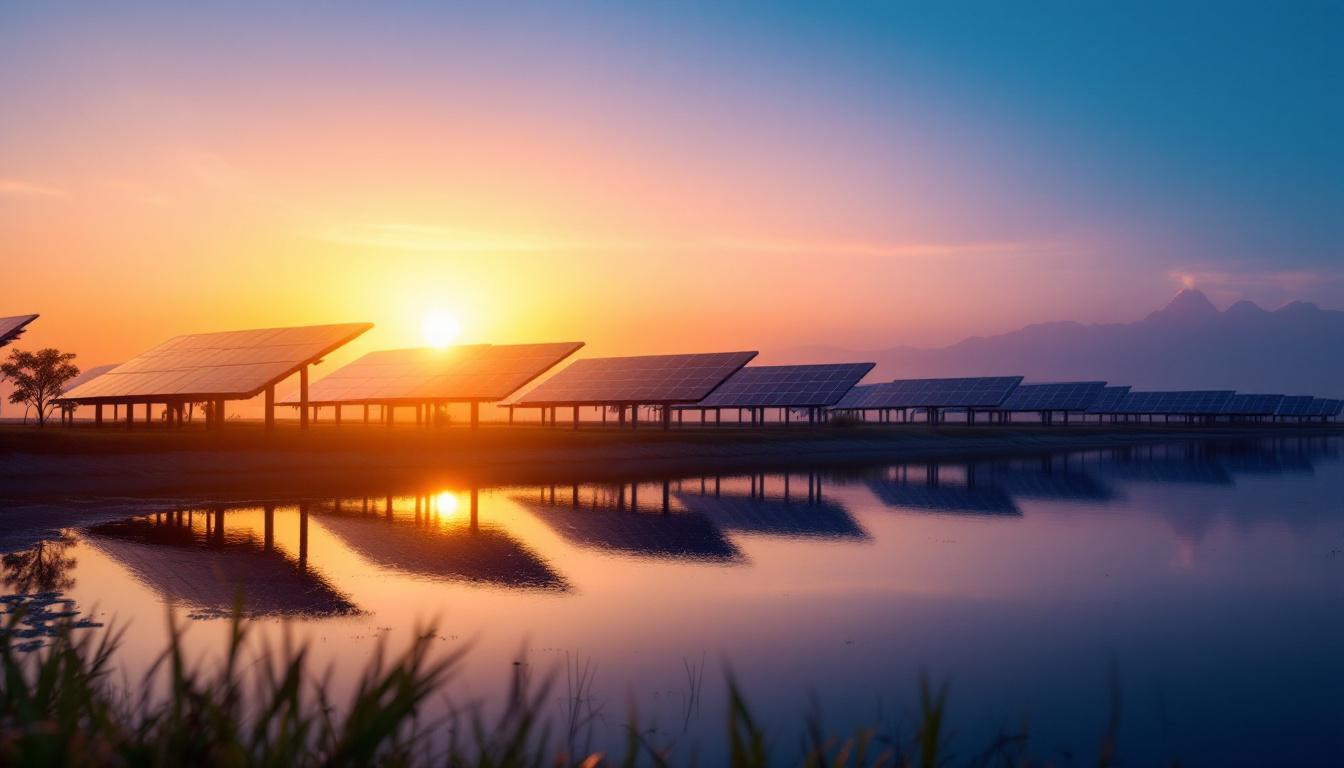
This initiative is part of a wider shift in Abu Dhabi’s water and power sectors, according to EWEC. The company states it’s working toward almost emissions-free desalination by 2030 and aims for 60 percent of Abu Dhabi’s electricity demand to be met through renewable or low-carbon sources. As part of their strategy, they plan to expand utility-scale solar capacity to over 30 gigawatts by 2035, complemented by around 8 gigawatts of battery energy storage to help manage the variability in power supply. Notably, decoupling water and power through low-carbon reverse osmosis desalination is a key element of this vision.
“By incorporating advanced analytics, AI-driven forecasting, and collaborating with national research initiatives into our operations,” EWEC explained in its statement, “we are building capabilities that will underpin a future-ready water and power sector and make meaningful progress toward the UAE’s Net Zero by 2050 Strategic Initiative.”

Khalifa University frames this project as an academic effort addressing operational challenges on the ground. Professor Ebrahim Al Hajri, president of Khalifa University, highlighted that this partnership is “a strategic investment in the UAE’s energy future.” The university will apply deep learning and intelligent modeling at a large scale to help create more resilient and data-driven power systems. Their work includes tools that can predict how fast power systems need to ramp up, estimate system inertia, forecast frequency deviations, and recommend mitigation strategies for operators.
The partnership also involves a formal knowledge-transfer component. EWEC has committed to providing training, technical documentation, and conducting multi-day workshops focused on operations. They’ve also emphasized the importance of Emirati participation in project teams and will engage in monthly updates on skills transfer. This capacity-building effort aims to prepare local system operators for the growing complexity tied to a grid heavily reliant on renewables.
This alliance emerges at a time when the UAE is actively pursuing multiple deals and targets to push forward its decarbonization plans. Reports suggest that EWEC has significantly increased its share of clean energy in Abu Dhabi’s supply mix. One official statement even claimed that over 80 percent of the emirate’s power demand is now met with renewables and nuclear energy, including solar. Additionally, EWEC is securing sites and signing long-term agreements to support the energy transition. Recently, approvals were granted for four new development sites, about 75 square kilometers, that will host renewable projects, potentially adding 4.5 gigawatts of solar and up to 140 megawatts of wind capacity, aligning with the country’s goals of installing 10 GW of solar PV by 2030 and reaching 18 GW by 2035.
At the same time, industry players are locking in long-term thermal and gas arrangements to maintain system flexibility. ADNOC Gas and EWEC signed a 10-year gas supply deal worth approximately $10 billion to ensure reliable and flexible gas availability during this transition. Meanwhile, Sumitomo Corporation extended a power purchase agreement with EWEC for another 15 years to support natural gas-fired generation, framing it as a backup resource to complement renewables. Investment is also pouring into a 1 GW gas turbine plant, a joint effort by Taqa, EWEC, and Masdar, to help support the grid’s technical needs as the share of variable renewables continues to grow.
These concurrent initiatives highlight ongoing reliance on gas and dispatchable capacity to keep grids stable amid the increasing penetration of renewables. Industry experts point out that issues like grid inertia and frequency management remain significant challenges, especially as traditional synchronous generators are phased out. The collaboration between EWEC and Khalifa University aims to directly address these problems by creating predictive tools and advisory systems for operators, designed to minimize operational risks and keep the system within safe limits.
Water sector implications are also notable. EWEC has announced plans to reach nearly emissions-free water production by 2031 through deploying low-carbon reverse osmosis plants. Independent sources estimate that by that time, desalination’s carbon footprint could be reduced by about 93 percent. Decoupling water production from thermal power cycles helps reduce dependence on fossil fuels, but it also shifts electricity demand patterns, adding another layer of complexity that the grid will need to manage.
Many experts see value in focusing on software and data, but caution that models must be validated under real-world operational conditions. Transitioning to 30GW of PV and gigawatts of storage will inevitably alter ramping behaviors, inertia characteristics, and frequency dynamics, factors that are tricky to fully reproduce in lab settings. Therefore, effective deployment depends heavily on close cooperation among system operators, asset owners, and market designers so that forecasting insights translate into practical control actions, reserve procurement decisions, and market signals.
EWEC and Khalifa University plan to keep track of their progress via knowledge transfer activities and operational workshops. If their models and tools prove successful, this initiative could serve as a blueprint for other Gulf countries facing similar technical and policy challenges. Overall, it’s a prime example of how applied research, industrial strategy, and national decarbonization goals are now intertwined, mirroring the UAE’s broader aim to promote clean energy while ensuring a secure, resilient electricity supply.
- https://www.gccbusinessnews.com/ewec-ku-data-driven-power-systems/ – Please view link – unable to able to access data
- https://www.adnocgas.ae/en/news-and-media/press-releases/2025/adnoc-gas-and-ewec-celebrate-long-term-strategic-partnership – ADNOC Gas and Emirates Water and Electricity Company (EWEC) have entered into a 10-year, $10 billion agreement to supply natural gas, supporting the UAE’s energy transformation and economic growth. This partnership ensures a stable and flexible gas supply, facilitating the integration of renewable energy sources and contributing to the UAE’s Net Zero by 2050 initiative. The collaboration underscores the commitment of both entities to sustainable development and energy security in the region.
- https://www.mediaoffice.abudhabi/en/energy/ewec-meets-over-80-per-cent-of-total-power-demand-using-renewable-and-clean-energy-sources/ – Emirates Water and Electricity Company (EWEC) has achieved a significant milestone by meeting 80% of Abu Dhabi’s power demand through renewable and clean energy sources, including solar and nuclear plants. This accomplishment reflects the UAE’s commitment to developing world-class energy infrastructure and supports the country’s strategic goals for energy transition and decarbonisation. EWEC’s efforts contribute to reducing reliance on hydrocarbons and advancing sustainable energy solutions in the region.
- https://www.sumitomocorp.com/en/easia/news/release/2025/group/19620 – Sumitomo Corporation has extended its power purchase agreement with Emirates Water and Electricity Company (EWEC) for an additional 15 years, focusing on natural gas-fired power generation. This extension aims to provide a flexible reserve supply, supporting the increased integration of renewable and clean energy sources in the UAE. The collaboration underscores the role of natural gas as a transitional fuel in achieving the UAE’s decarbonisation targets and energy strategy objectives.
- https://energy-utilities.com/emirates-water-electricity-company-ramps-up-news123835.html – Emirates Water and Electricity Company (EWEC) has announced plans to achieve nearly emissions-free water production by 2031. This initiative involves the development of low-carbon intensive reverse osmosis (RO) plants across the UAE, aiming to reduce water production carbon intensity by 93% by 2031. The strategy aligns with the UAE’s Net Zero by 2050 goals and reflects EWEC’s commitment to sustainable water and energy solutions.
- https://www.thenationalnews.com/business/energy/2025/04/03/taqa-and-ewec-to-develop-1gw-gas-turbine-plant-in-abu-dhabi-to-support-tech-push// – Emirates Water and Electricity Company (EWEC), Taqa, and Masdar are collaborating on a $9.8 billion investment in Abu Dhabi’s energy infrastructure. The project includes a 1GW gas turbine plant to support the integration of renewable energy sources, contributing to the UAE’s energy transition and decarbonisation efforts. This partnership exemplifies the UAE’s commitment to sustainable energy development and technological innovation in the sector.
- https://www.zawya.com/en/press-release/government-news/ewec-secures-four-new-sites-for-development-of-46gw-world-leading-renewable-energy-projects-cafft4ly – Emirates Water and Electricity Company (EWEC) has secured approval for four new sites covering approximately 75 square kilometres in Abu Dhabi for renewable energy projects. These developments will add 4.5GW of solar photovoltaic capacity and up to 140MW of wind capacity, supporting EWEC’s goal of achieving 10GW of installed solar PV capacity by 2030 and 18GW by 2035. The projects align with the UAE’s Clean Energy Strategic Target 2035 and Net Zero by 2050 initiatives.
Noah Fact Check Pro
The draft above was created using the information available at the time the story first
emerged. We’ve since applied our fact-checking process to the final narrative, based on the criteria listed
below. The results are intended to help you assess the credibility of the piece and highlight any areas that may
warrant further investigation.
Freshness check
Score:
8
Notes:
The article was published on 2 February 2026. A search revealed that similar content was published on 21 January 2025, detailing a 10-year, $10 billion agreement between ADNOC Gas and EWEC to support the UAE’s energy transformation through flexible gas supply. ([adnocgas.ae](https://adnocgas.ae/en/news-and-media/press-releases/2025/adnoc-gas-and-ewec-celebrate-long-term-strategic-partnership?utm_source=openai)) This earlier publication suggests that the current article may be recycling information from that announcement. Additionally, the article mentions a partnership between EWEC and Khalifa University to develop data-driven power systems, but no independent sources confirm this specific collaboration. The lack of independent verification raises concerns about the originality and freshness of the content.
Quotes check
Score:
5
Notes:
The article includes direct quotes attributed to EWEC and Khalifa University representatives. However, these quotes cannot be independently verified through other reputable sources. The absence of corroborating sources for these statements raises questions about their authenticity and accuracy.
Source reliability
Score:
4
Notes:
The article originates from GCC Business News, a niche publication. While it may have a readership within its niche, its limited reach and lack of widespread recognition reduce its reliability as a primary source. The absence of citations or links to original press releases or official statements further diminishes the credibility of the information presented.
Plausibility check
Score:
6
Notes:
The claims made in the article align with the UAE’s ongoing efforts to transition to renewable energy and enhance grid stability. However, the lack of independent verification and the recycling of information from previous announcements cast doubt on the novelty and accuracy of the claims. The absence of specific details, such as the exact nature of the partnership and the technologies involved, further weakens the plausibility of the narrative.
Overall assessment
Verdict (FAIL, OPEN, PASS): FAIL
Confidence (LOW, MEDIUM, HIGH): HIGH
Summary:
The article presents information that appears to be recycled from previous announcements, lacks independent verification, and originates from a niche publication with limited reach. These factors collectively undermine the credibility and reliability of the content, leading to a ‘FAIL’ assessment with high confidence.

