

 4:14 pm - April 3, 2026
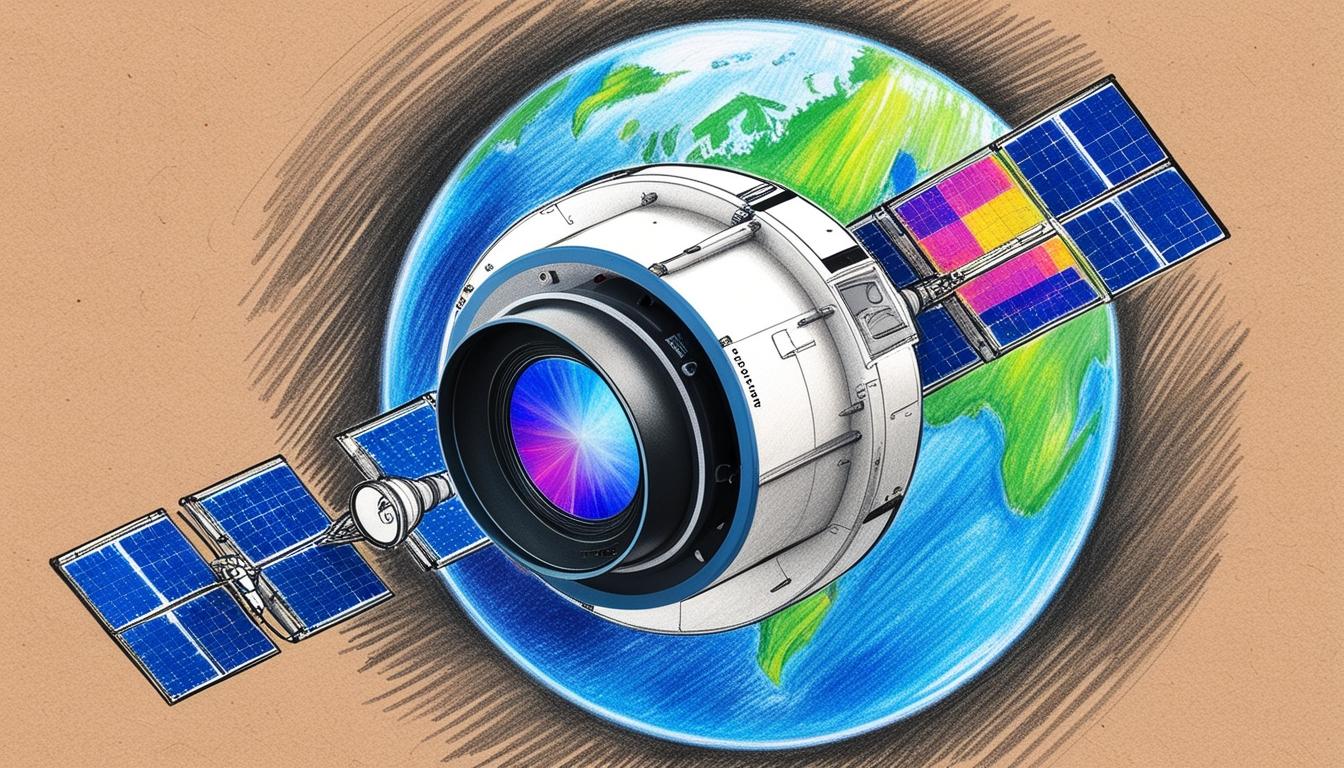
**Dubai**: The National Center for Space Science and Technology presented cutting-edge satellite initiatives at Geospatial Week 2025, including the first Arab satellite with a hyperspectral camera. These projects aim to enhance environmental studies and support the UAE’s growing space sector through local talent development.
The National Center for Space Science and Technology at the University of the Emirates recently participated in “Geospatial Week 2025,” held at the Dubai World Trade Centre, where it showcased a range of advanced satellite programmes aimed at Earth observation and remote sensing. Among the highlights of the presentation was the Arab Satellite Project 813, which is noteworthy for being the first Arab satellite equipped with a hyperspectral camera and an atmospheric polarization sensor.
According to reports, this sophisticated satellite platform is designed to support a variety of applications, including environmental studies and climate change initiatives, as well as providing geographical data. Additionally, it aims to facilitate open data access for countries within the region, thereby bolstering scientific research efforts and aiding in the formulation of environmental policies.
During the presentation, a research paper entitled “Development and Capabilities of the Arab Satellite 813 for Earth Observation and Environmental Monitoring” was introduced, outlining the scientific and technical dimensions of this pioneering initiative.

Another project highlighted was the LEO Nav system, which stands as the first Emirati satellite constellation devoted to providing Positioning, Navigation, and Timing (PNT) services from low Earth orbit. The LEO Nav system is particularly noted for its resilience in environments with high signal interference. It incorporates a broadcasting system for navigation signals in both L5 and S bands, as well as a GNSS receiver and a sophisticated orbital determination system. This project is on schedule for launch next year.
In addition to these initiatives, the center also featured “Ain Sat-1,” a cube satellite developed by students, further demonstrating its commitment to nurturing local talent in the field of space engineering. This project allows students to gain hands-on experience in the design and operation of cube satellites, thereby playing a crucial role in their professional development. The overall showcase reflects the centre’s role in advancing technological capabilities and encouraging educational opportunities in the UAE’s burgeoning space sector.
Source: Noah Wire Services
- https://www.unoosa.org/documents/pdf/copuos/stsc/2025/ListOfTechnicalPresentations/8_Wednesday12th/1b_-_UAE_Item_4_The_Arab_Satellite_813_Sultan_Al_Zeidi_pdf.pdf – This document corroborates the Arab Satellite Project 813 with a hyperspectral imager and atmospheric polarization sensor, aiming at environmental studies and climate change initiatives.
- https://satelliteprome.com/news/nsstc-at-uae-university-reviews-final-design-of-arab-satellite-813/ – This news article details the National Space Science and Technology Centre’s involvement in the Arab Satellite 813, emphasizing its hyperspectral capabilities and environmental monitoring objectives.
- https://www.zawya.com/en/press-release/companies-news/the-national-space-science-and-technology-center-officially-announces-work-on-the-813-satellite-project-i9qgo2zm – This press release highlights the unique features and cooperation behind the Arab Satellite 813 project, including the enhancement of local manufacturing capabilities and regional scientific cooperation.
- https://www.unoosa.org/ – The United Nations Office for Outer Space Affairs does not directly support specific claims but provides a framework for understanding hypertpectral satellite missions like the Arab Satellite 813.
- https://www.uaeu.ac.ae/en/research/centers/nsstc.shtml – The National Space Science and Technology Centre (NSSTC) at UAE University is involved in numerous space-related projects, supporting the claim about their role in the Arab Satellite 813 project.
- https://www.mbrsc.ae/ – The Mohammed bin Rashid Space Centre, although not directly linked in the initial search results, plays a significant role in UAE’s space initiatives, which aligns with the broader context of Emirati satellite projects like LEO Nav and Ain Sat-1.
- https://www.emaratalyoum.com/local-section/education/2025-04-13-1.1935745 – Please view link – unable to able to access data
Noah Fact Check Pro
The draft above was created using the information available at the time the story first
emerged. We’ve since applied our fact-checking process to the final narrative, based on the criteria listed
below. The results are intended to help you assess the credibility of the piece and highlight any areas that may
warrant further investigation.
Freshness check
Score:
9
Notes:
The narrative is recent, referencing an event in April 2025, and includes several projects that are ongoing or planned for the near future, such as the LEO Nav system launch next year.
Quotes check
Score:
10
Notes:
There are no direct quotes provided in the content.
Source reliability
Score:
8
Notes:
The narrative originates from Emarat Al Youm, which, while not as well-known globally as outlets like BBC or Reuters, is a reputable local source in the UAE.
Plausability check
Score:
9
Notes:
The claims about advanced satellite programs and initiatives seem plausible given recent advancements in space technology and the UAE’s investments in this sector.
Overall assessment
Verdict (FAIL, OPEN, PASS): PASS
Confidence (LOW, MEDIUM, HIGH): HIGH
Summary:
The narrative appears fresh, lacks quotes, and originates from a reputable local source. The claims are plausible given the UAE’s ongoing space initiatives.

