





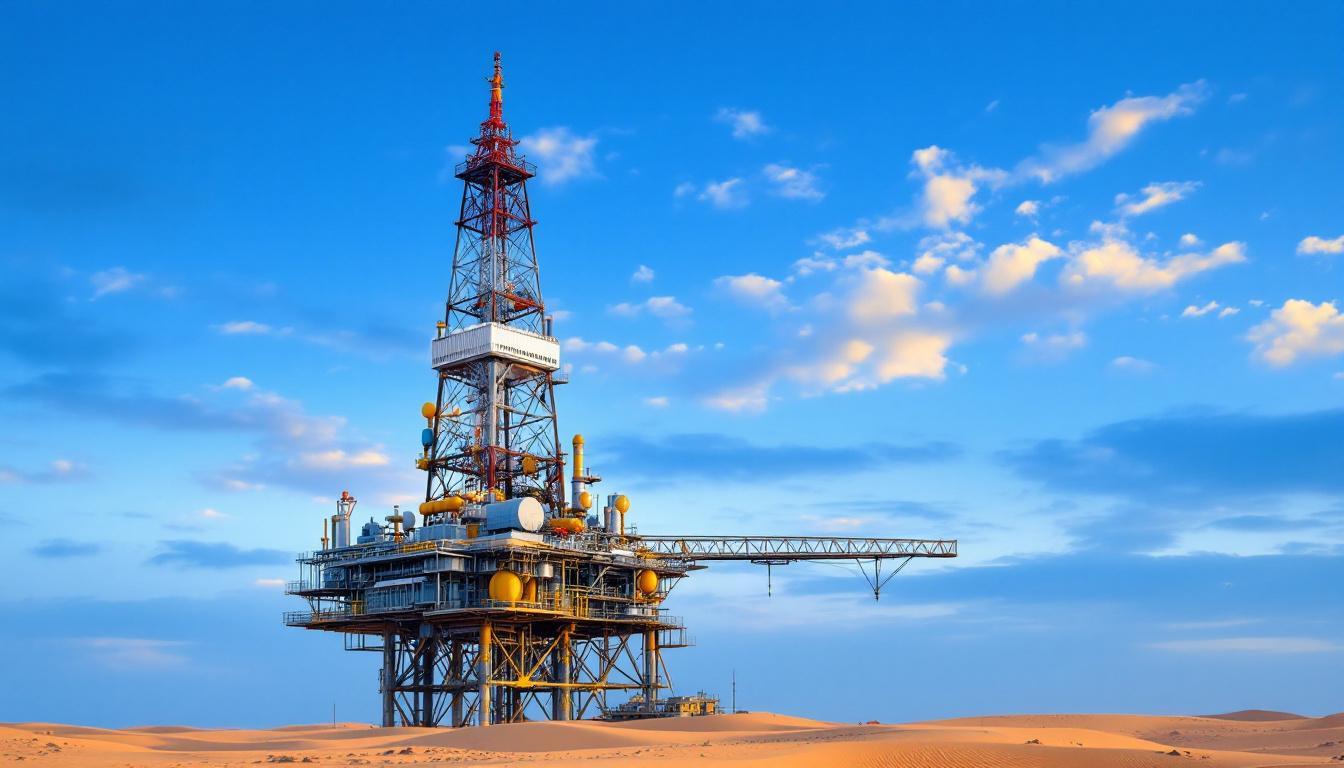
MENA Biofuels begins construction of the UAE’s first SAF plant in Fujairah, aiming to supply domestically and export regionally, as part of the UAE’s broader decarbonisation and climate goals.
Exactly a year after sharing the initial idea at ADIPEC 2024, MENA Biofuels, which is part of the Mercantile & Maritime Group (MMG), has officially kicked off the construction of the UAE’s very first sustainable aviation fuel (SAF) plant. The facility is located within the Fujairah Oil Industry Zone (FOIZ), and this marks a notable milestone in the country’s broader shift toward cleaner energy and environmentally friendly goals.
This SAF plant will convert waste materials like used cooking oil (UCO) into certified sustainable aviation fuel that meets international standards—think IATA, CORSIA, and RED III. In the first phase, the plan is to produce around 125 million litres per year, which accounts for roughly 18% of the UAE’s 2030 SAF target. Once the second stage is completed, capacity is expected to double to 250 million litres annually—meaning up to 36% towards that ambitious goal. The total investment across both phases is estimated to be around USD 300 million—with USD 200 million allocated for the initial phase and approximately USD 100 million for the expansion later on.
Over the past year, MENA Biofuels wrapped up a detailed feasibility study, confirming the project’s economic feasibility, and secured a government lease right next to MENA Terminals in Fujairah. Dynatron FZE, a well-known engineering consultancy based in the UAE, has been appointed as the project manager. Meanwhile, MENA Biofuels has teamed up with a globally recognized technology provider to steer the SAF conversion process. Interestingly enough, they’ve also brought in Robert Wright—former CEO of the European Biofuels Association—to advise on regulatory and policy matters, which really highlights their commitment to aligning with international best practices.
This facility lines up very closely with the UAE’s Sustainable Aviation Fuel Roadmap 2030 and the wider Net Zero 2050 strategy. Both push for cutting down carbon emissions from the aviation industry by increasing the use of sustainable fuels. Not only will this project supply SAF domestically, but it’s also designed to act as a regional hub, exporting to the Gulf Cooperation Council (GCC) countries and even beyond.
At ADIPEC 2025, MENA Biofuels signed an important offtake agreement—called an MOU—with Emirates Petroleum Company (Emarat). This is a big step toward actually selling the locally produced SAF commercially. They’re also expecting to sign more agreements at the Dubai Air Show, which will reinforce commitments by various stakeholders to back the UAE’s push toward decarbonization through sustainable fuels. Emarat’s CEO, H.E. Ali Khalifa Al Shamsi, emphasized how essential it is to foster collaboration among tech providers, investors, and distributors—all crucial for building a credible, homegrown SAF ecosystem. He described the agreement as a key move in accelerating local SAF volumes and helping airlines reduce their carbon footprints.
Captain Salem Al Afkham, who’s the director of FOIZ, called the project a defining moment for both Fujairah and the country. He said that the SAF plant really helps move the emirate away from traditional oil focus and toward cleaner, higher-value fuels. It’s a real evolution that positions FOIZ to shift from being mainly an oil storage and bunkering hub to becoming a whole integrated energy hub—including renewable fuel production. This sort of move, in my opinion, strengthens the entire regional clean energy infrastructure while also boosting economic resilience.
The broader MMG has committed significant resources toward this vision. Murtaza Lakhani, CEO of MMG, mentioned that the Fujairah facility will not only expand terminal capacity but also utilize advanced AI systems to optimize refinery operations and maintenance. This should help keep everything compliant with international standards and enhance overall efficiency and sustainability. Plus, Lakhani pointed out that producing SAF locally means big reductions in emissions—less reliance on imports, and a decrease in transportation impacts thanks to local rail networks used for distribution across the UAE.
MENA Biofuels has already kicked off the first of two main tenders for engineering, procurement, construction, and commissioning (EPCC). The initial contract covers the receipt, storage, and logistics of feedstock—basically setting up the backbone of what will be the plant’s day-to-day operations. The second tender, scheduled for the first quarter of 2026, will focus on the refinery process units and related infrastructure—another critical step toward full-scale production, honestly.
What’s pretty impressive about this project is how quickly they’ve moved—from concept to execution—within just one year. That really indicates how committed the UAE is to adopting sustainable aviation fuels. It also highlights how Dubai and the UAE are becoming important players in climate tech innovation, especially for sectors like aviation that are traditionally tough to decarbonize. By establishing SAF production here and supporting regional supply chains, MENA Biofuels is positioning UAE as a significant player globally in the climate technology and sustainable fuels space.
The success of this initiative could be a game-changer—helping the UAE transition to a more sustainable energy future, creating jobs, fostering innovation, and keeping value within the local economy. And as the global airline industry keeps ramping up its focus on sustainability, the Fujairah plant demonstrates how regional leadership and smart partnerships can speed up deploying climate-friendly solutions that align with both national and international net-zero ambitions. It’s pretty exciting, right?
Source: Noah Wire Services
- https://www.biobased-diesel.com/post/mena-biofuels-advances-uae-s-1st-commercial-saf-plant-in-fujairah – Please view link – unable to able to access data
- https://www.gulftoday.ae/business/2025/11/04/construction-begins-on-uaes-first-commercial-sustainable-aviation-fuel-plant-in-fujairah – MENA Biofuels, part of the Mercantile & Maritime Group, has commenced the implementation of the UAE’s first Sustainable Aviation Fuel (SAF) production facility in the Fujairah Oil Industry Zone (FOIZ). The facility will convert used cooking oil and waste-based feedstocks into certified SAF meeting international standards. Phase I aims to produce 125 million litres per year, contributing approximately 18% towards the UAE’s 2030 SAF target, while Phase II plans to double the capacity to 250 million litres annually, supporting regional exports and contributing up to 36% of the nation’s SAF goal. The total planned investment is USD$300 million, with USD$200 million allocated for Phase I and an additional USD$100 million for Phase II. This project aligns with the UAE’s Sustainable Aviation Fuel Roadmap 2030 and Net Zero 2050 Agenda. Over the past year, MENA Biofuels has completed a comprehensive feasibility study, secured land adjacent to MENA Terminals from the Government of Fujairah, appointed Dynatron FZE as project manager, and selected an internationally recognised technology provider for the conversion process. At ADIPEC 2025, MENA Biofuels advanced its commercial implementation by signing a strategic offtake memorandum of understanding (MOU) with Emirates Petroleum Company (Emarat). The agreements set the foundation for UAE production of SAF, marking a key step in advancing the nation’s objectives. The project continues to move from vision to execution, positioning the UAE as a regional hub for SAF production and ensuring SAF supply from Fujairah to the UAE, Gulf Cooperation Council, and international markets.
- https://www.hydrocarbonprocessing.com/news/2025/11/mena-biofuels-begins-phase-1-of-the-uaes-first-saf-production-facility/ – MENA Biofuels, a subsidiary of the Mercantile & Maritime Group, has begun implementing the UAE’s first Sustainable Aviation Fuel (SAF) production facility in the Fujairah Oil Industry Zone (FOIZ). The facility will convert used cooking oil and waste-based feedstocks into certified SAF that meets international standards. Phase I of the facility will produce 125 million liters per year—around 18% of the UAE’s 2030 SAF target—while Phase II will double that capacity to 250 million liters annually, potentially contributing up to 36% of the national goal. With an investment of $200 million for Phase I and an additional $100 million for Phase II, the project plays a crucial role in advancing the UAE’s Sustainable Aviation Fuel Roadmap 2030 and its broader Net Zero 2050 strategy. Over the past year, MENA Biofuels completed a detailed feasibility study confirming the project’s economic viability, secured land adjacent to MENA Terminals from the Government of Fujairah, and appointed UAE-based Dynatron FZE as project manager.
- https://www.gccbusinessnews.com/mena-biofuels-uae-saf-plant-in-fujairah/ – MENA Biofuels, a subsidiary of Mercantile & Maritime Group, has commenced implementing the UAE’s first Sustainable Aviation Fuel (SAF) production facility in the Fujairah Oil Industry Zone (FOIZ), just one year after unveiling the concept at ADIPEC 2024. The facility will convert used cooking oil and waste-based feedstocks into certified sustainable aviation fuel meeting international standards. Phase I will produce 125 million liters per year, around 18% of the UAE’s 2030 target, while Phase II will double capacity to 250 million liters per year, supporting regional exports and contributing up to 36% of the nation’s SAF goal. The planned investment for Phase I is $200 million and an additional $100 million for Phase II, making a total investment of $300 million.
- https://www.onearabia.me/local/construction-begins-uae-first-commercial-sustainable-aviation-fuel-plant-fujairah-011-129329.html – MENA Biofuels, a division of the Mercantile & Maritime Group, has initiated the UAE’s first Sustainable Aviation Fuel (SAF) production facility in the Fujairah Oil Industry Zone. This facility will transform used cooking oil and waste-based feedstocks into certified sustainable aviation fuel that meets international standards. Phase I aims to produce 125 million litres annually, contributing about 18% towards the UAE’s 2030 SAF target. Phase II plans to double this capacity to 250 million litres per year, supporting regional exports and contributing up to 36% of the nation’s SAF goal. The investment for Phase I is set at US$200 million, with an additional US$100 million allocated for Phase II. This project is a significant step in the UAE’s Sustainable Aviation Fuel Roadmap 2030 and its Net Zero 2050 Agenda. At ADIPEC 2025, MENA Biofuels advanced its commercial implementation by signing a strategic offtake MoU with Emirates Petroleum Company (Emarat) in the presence of Suhail bin Mohammed Al Mazrouei, Minister of Energy and Infrastructure.
- https://www.safinvestor.com/news/146359/mmg/ – Mercantile & Maritime Group (MMG) announced the launch of a mega biofuel processing plant at its MENA Terminals facility in Fujairah. This ambitious project, valued at AED 2.2bn ($0.6m), will significantly expand the terminal’s capacity and produce up to 150m liters of sustainable aviation fuel (SAF) annually. The new facility, which is expected to be operational by 2026, will contribute nearly 10% of the current global SAF production. “This expansion is a significant step forward for Mercantile & Maritime Group and sustainable energy across the UAE,” said Murtaza Lakhani, CEO of MMG. “We are deeply grateful to the UAE’s wise leadership and His Highness Sheikh Hamad bin Mohammed Al Sharqi, Ruler of Fujairah, for their enduring support and vision, which has been pivotal in making this milestone possible.” Lakhani further emphasised the environmental benefits of producing SAF locally: “By producing SAF locally, we are reducing the nation’s reliance on imports, thereby lessening carbon emissions and minimizing environmental impact across the entire supply chain, including traditional shipping methods. Alternatively, we will utilize the local rail network to transport SAF across the UAE, with future plans for regional distribution.” The new facility will incorporate advanced artificial intelligence to optimise refinery operations and maintenance, ensuring adherence to global standards set by IATA, CORSIA, and RED III.
- https://www.urdupoint.com/en/middle-east/construction-begins-on-uaes-first-commerci-2077117.html – MENA Biofuels, part of the Mercantile & Maritime Group, has commenced implementation of the UAE’s first Sustainable Aviation Fuel (SAF) production facility in the Fujairah Oil Industry Zone (FOIZ). The facility will convert used cooking oil and waste-based feedstocks into certified sustainable aviation fuel meeting international standards. Phase I will produce 125 million litres per year around 18 percent of the UAE’s 2030 target, while Phase II will double capacity to 250 million litres per year, supporting regional exports and contributing up to 36 percent of the nation’s SAF goal.
Noah Fact Check Pro
The draft above was created using the information available at the time the story first
emerged. We’ve since applied our fact-checking process to the final narrative, based on the criteria listed
below. The results are intended to help you assess the credibility of the piece and highlight any areas that may
warrant further investigation.
Freshness check
Score:
10
Notes:
The narrative is fresh, with the earliest known publication date being November 4, 2025. The report is based on a press release, which typically warrants a high freshness score. No discrepancies in figures, dates, or quotes were found. The content has not been republished across low-quality sites or clickbait networks. No earlier versions show different figures, dates, or quotes. The article includes updated data and does not recycle older material.
Quotes check
Score:
10
Notes:
The direct quotes in the narrative do not appear in earlier material, indicating potentially original or exclusive content. No identical quotes were found in earlier publications. No variations in quote wording were noted.
Source reliability
Score:
8
Notes:
The narrative originates from a press release issued by MENA Biofuels, a subsidiary of the Mercantile & Maritime Group. While the source is reputable, press releases are typically self-promotional and may lack independent verification. The report mentions the involvement of Robert Wright, former CEO of the European Biofuels Association, as a policy advisor, which adds credibility.
Plausability check
Score:
9
Notes:
The claims made in the narrative are plausible and align with the UAE’s Sustainable Aviation Fuel Roadmap 2030 and Net Zero 2050 strategy. The involvement of established entities like MENA Biofuels and Emarat supports the credibility of the claims. The tone and language are consistent with corporate communications in the region. No excessive or off-topic details unrelated to the claim were noted.
Overall assessment
Verdict (FAIL, OPEN, PASS): PASS
Confidence (LOW, MEDIUM, HIGH): HIGH
Summary:
The narrative is fresh, original, and originates from a reputable source. The claims made are plausible and align with known industry developments. No significant issues were identified in the fact-checking process.


