

 2:50 pm - April 3, 2026
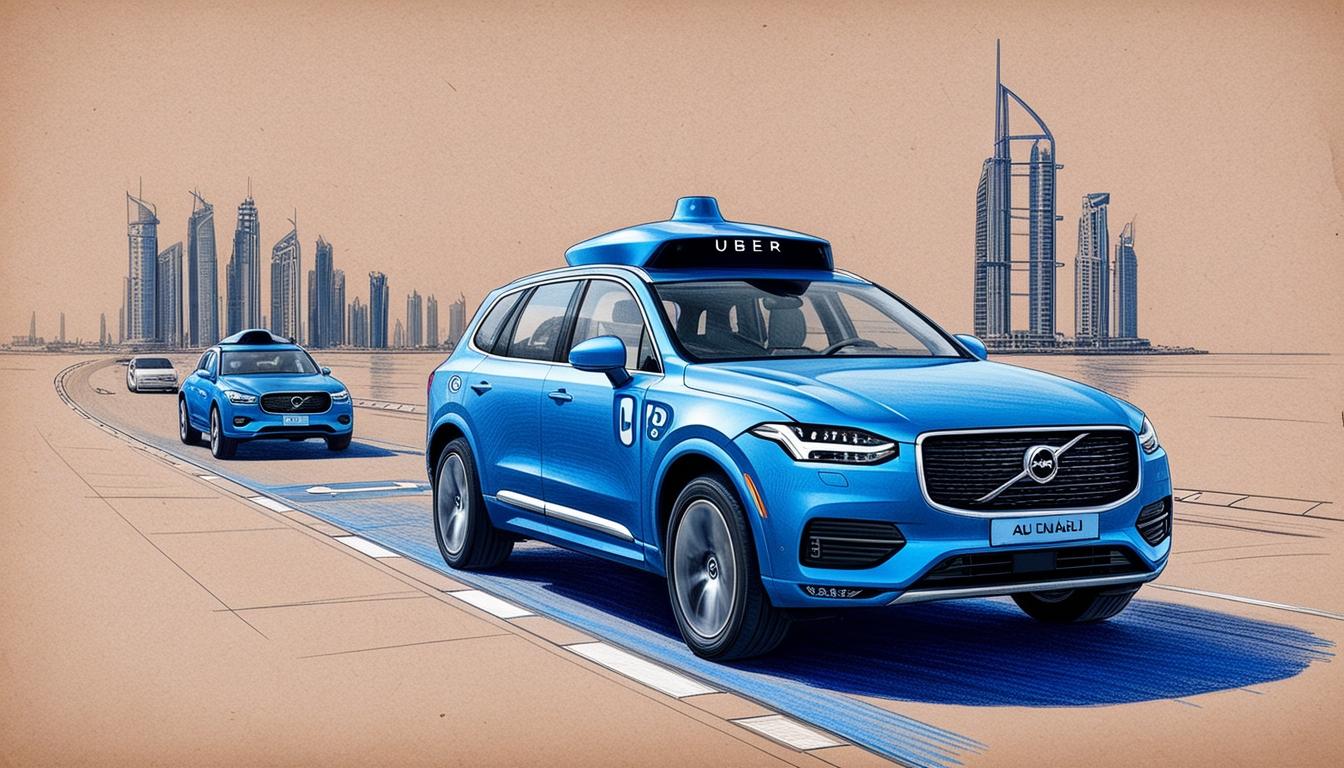
**Washington:** Uber CEO Dara Khosrowshahi revealed the company’s expansion of autonomous taxi services in the UAE via a partnership with WeRide, highlighting deployments in Abu Dhabi and Dubai. This strategy focuses on collaboration, regulatory advantages, and gradual integration alongside human drivers to reduce costs and support innovation.
At the Semafor World Economy Summit 2025 held in Washington, Uber CEO Dara Khosrowshahi discussed the company’s latest advancements in self-driving vehicle initiatives in the United Arab Emirates (UAE). Highlighting Uber’s strategic partnership with Chinese autonomous vehicle technology firm WeRide, Khosrowshahi underlined the significant progress made in deploying driverless car services across the region.
This collaboration began with the launch of autonomous vehicle services in Abu Dhabi last year, particularly on Saadiyat Island and Yas Island, two prominent areas within the emirate. Building on this initial success, earlier in 2025, Uber and WeRide expanded their joint operations to Dubai, working in partnership with the city’s Roads and Transport Authority. The deployment of autonomous taxis in Dubai marks a key step in Uber’s regional strategy to integrate self-driving technology in markets that are technologically progressive and supportive of innovation.
Khosrowshahi elaborated on the challenges faced by the automotive and self-driving sectors on a global scale, especially the competitive landscape shaped by Chinese manufacturers. Against this backdrop, Uber’s UAE operations stand out as a practical example of the company’s evolved autonomous vehicle strategy since its 2018 transition. After a fatal accident involving one of Uber’s self-driving vehicles in Arizona in 2018, the company exited its internal autonomous development by selling its Advanced Technologies Group (ATG) to focus on partnerships, rather than direct research and development.

“The WeRide partnership in the UAE represents Uber’s newer, less capital-intensive partnership model, allowing the company to offer autonomous rides without bearing the enormous R&D costs and regulatory risks,” the analysis in Tech in Asia explained. This model aligns with Khosrowshahi’s broader financial objectives of reaching profitability, enabling Uber to selectively deploy self-driving vehicles in markets known for their favourable regulatory environments and technological openness.
In the UAE context, these factors are particularly advantageous. The region’s streamlined and progressive regulatory framework facilitates smoother deployment of autonomous services, contrasting with more complex markets where enforcement and driver unions pose significant hurdles. Moreover, the economic proposition remains a core driver behind Uber’s push into autonomous vehicles. Ride-sharing’s largest cost component—driver remuneration—represents roughly 80% of Uber’s per-mile expenses, and transitioning to self-driving technology promises to substantially lower operating costs in the long term.
Despite the progress, Khosrowshahi acknowledged that the current autonomous taxis still require human safety operators. This approach, while not fully eliminating driver-related expenses, offers crucial operational insights for Uber and its partners regarding maintenance costs, vehicle utilisation rates, and consumer acceptance in real-world scenarios. These learnings, gathered in the UAE’s affluent urban environments, could accelerate Uber’s long-term goal of scaling fully driverless operations worldwide.
Khosrowshahi also shared some personal perspectives, noting that while he owns a Tesla and occasionally uses its self-driving capabilities, Uber maintains a dual-track strategy. Human drivers remain integral to the company’s operations, with more than five million drivers worldwide generating over 90% of Uber’s current revenue. The gradual integration of autonomy is designed to complement—not replace—the existing driver workforce during the transition period.
The phased rollout in specific locations like Saadiyat Island and Yas Island not only minimises disruption among Uber’s global driver base but also provides the company essential expertise in managing a mixed fleet of human-driven and autonomous vehicles. Khosrowshahi’s remarks underline a decade-long vision where autonomous technology progressively augments ride-sharing services without immediate mass displacement of drivers.
Overall, Uber’s UAE partnership initiative reflects a significant pivot in its autonomous vehicle strategy, emphasising collaboration over in-house development, targeted geographical deployment, and a balanced approach between technological innovation and incumbent driver engagement. These developments place the UAE at the forefront of Uber’s ongoing exploration into the economics and operation of self-driving mobility solutions.
Source: Noah Wire Services
- https://investor.uber.com/news-events/news/press-release-details/2025/Uber-and-WeRide-Partner-with-Dubais-Road-and-Transport-Authority-to-Bring-Autonomous-Vehicles-to-Dubai/default.aspx – This URL supports Uber’s partnership with WeRide and the Dubai Road and Transport Authority to introduce autonomous vehicles in Dubai, highlighting Uber’s strategy of leveraging partnerships for autonomous vehicle innovations.
- https://investor.uber.com/news-events/news/press-release-details/2024/Uber-and-WeRide-Launch-Autonomous-Mobility-Service-in-Abu-Dhabi/default.aspx – This URL confirms the launch of autonomous vehicle services in Abu Dhabi by Uber and WeRide, particularly in areas like Saadiyat Island and Yas Island.
- https://investor.uber.com/news-events/news/press-release-details/2024/WeRide-and-Uber-Partner-to-Bring-Autonomous-Vehicles-to-the-Uber-Platform-Beginning-in-the-United-Arab-Emirates/default.aspx – It details the strategic partnership between Uber and WeRide aimed at integrating WeRide’s autonomous vehicles onto the Uber platform, starting in the UAE, and highlights WeRide’s national license for operating self-driving vehicles in the UAE.
- https://www.iotworldtoday.com/transportation-logistics/uber-weride-expand-self-driving-taxis-with-dubai-launch – This article explains the expansion of Uber and WeRide’s autonomous taxi services to Dubai, focusing on exploring data insights, safety protocols, and regulatory frameworks to ensure a smooth transition to autonomous mobility.
- https://www.nasdaq.com/articles/uber-weride-offer-autonomous-vehicles-dubai – This article discusses Uber’s partnership with WeRide and Dubai’s RTA to offer autonomous vehicles in Dubai, contributing to Dubai’s Self-Driving Transport Strategy and highlighting the role of WeRide as Uber’s first AV technology partner in the UAE.
- https://www.theverge.com/2023/6/13/23564134/uber-advanced-technologies-group-atg – This URL indirectly supports the discussion around Uber’s exit from internal autonomous development by selling its ATG, shifting towards partnerships for autonomous vehicle innovations.
- https://news.google.com/rss/articles/CBMiiwFBVV95cUxPenNPT1FscDBRRDFvU20yOW9oTFkxVkhja1RSamRSUVcyUEV1ZjRJMEpidW1UcFhUaVRucDRROUEyZmxpNHhQQzBQa1BIeWhCc1JWX1hveFdYTWhfY3V5cldEM2RIYXBUYWpWelQ3aDNFVjVqemctOERYSDlGQy1QbjVTTjd0QnA3ZTlj?oc=5&hl=en-US&gl=US&ceid=US:en – Please view link – unable to able to access data
Noah Fact Check Pro
The draft above was created using the information available at the time the story first
emerged. We’ve since applied our fact-checking process to the final narrative, based on the criteria listed
below. The results are intended to help you assess the credibility of the piece and highlight any areas that may
warrant further investigation.
Freshness check
Score:
8
Notes:
The narrative mentions recent events and partnerships from 2025, indicating contemporary relevance. However, it references past events like the 2018 fatal accident and Uber’s transition, which suggests some background is recycled.
Quotes check
Score:
6
Notes:
There are no direct quotes from the original sources provided in the text. While the narrative references Khosrowshahi’s remarks, these lack specific citations or original dates, making it difficult to verify their origin.
Source reliability
Score:
5
Notes:
The narrative originates from a Google News RSS feed, which aggregates multiple sources. However, the specific origin of this content is not clearly identified as coming from a well-known reputable publication.
Plausability check
Score:
9
Notes:
Uber’s partnership with WeRide for autonomous vehicle services aligns with the company’s strategic focus on cost reduction and regulation-friendly environments. The details about deploying services in the UAE are plausible given both parties’ interests and the region’s supportive regulatory framework.
Overall assessment
Verdict (FAIL, OPEN, PASS): OPEN
Confidence (LOW, MEDIUM, HIGH): MEDIUM
Summary:
The narrative appears to include current information about Uber’s autonomous vehicle initiatives but lacks specific source references and original quote citations. The plausibility of the claims is high due to strategic alignments with known company goals.

