

 4:10 am - October 16, 2026
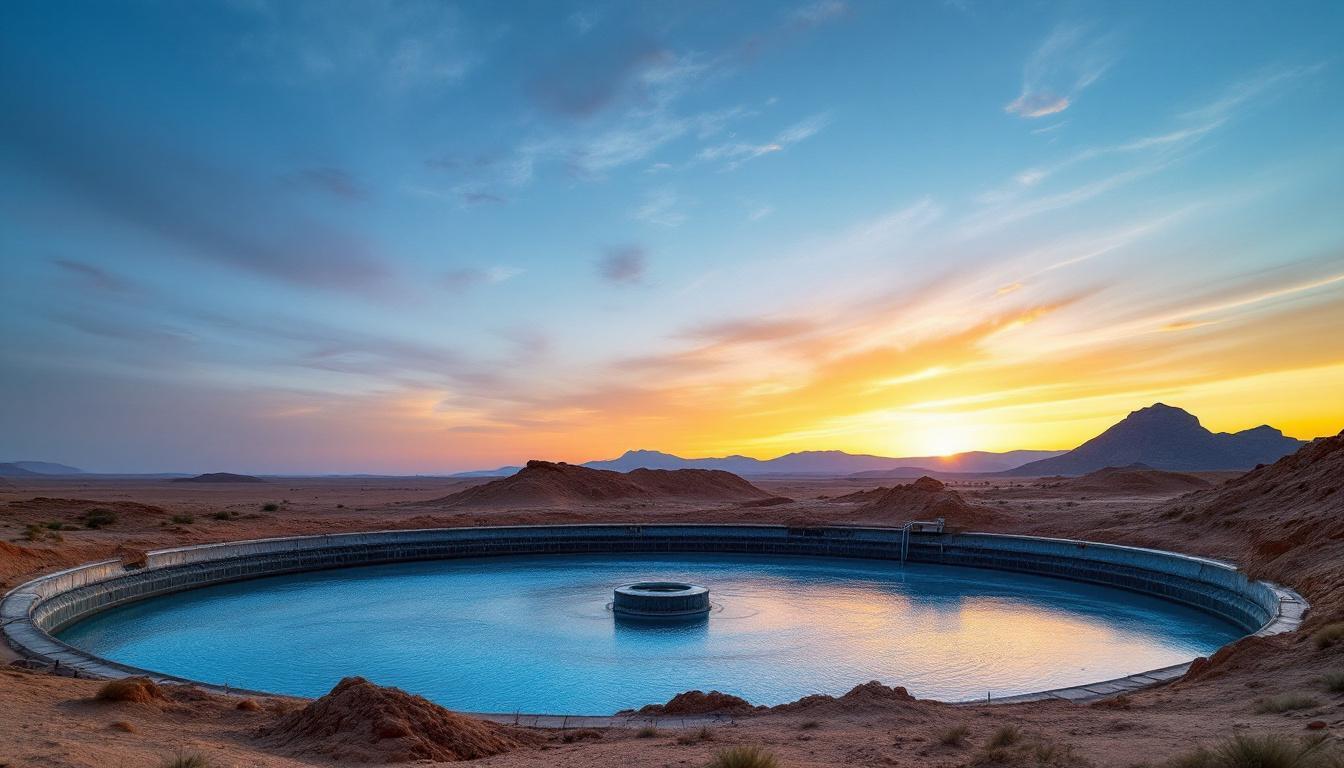
Abu Dhabi has completed the world’s largest underground reserve of desalinated water beneath the Liwa Desert, highlighting a strategic shift towards long-term water security amid climate challenges in the Gulf region.
Abu Dhabi has announced that it has completed what it claims is the world’s biggest underground reserve of desalinated water, a project that underscores how Gulf nations are adjusting their infrastructure to cope with a hotter, drier climate.
Located beneath the Liwa Desert, this facility is designed to store around 26 billion liters of treated water, providing emergency supplies for up to 90 days. That’s a significant upgrade from the emirate’s previous reserves, which could only sustain the population for a few days, not months.
The whole scheme hinges on Aquifer Storage and Recovery, or ASR, a method where high-quality desalinated water is injected into deep underground geological formations for future use. In practice, water generated at desalination plants is stored underground when demand is low, and then pumped back to the surface if there’s a supply problem. Essentially, this approach turns the desert itself into a natural storage system, shielding the water from factors like intense heat, evaporation, or potential contamination.

As reported by WaterWorld and MEED, the reserve is linked to a network of 315 recovery wells that go as deep as 80 meters below the surface. The system can generate a fallback pumping capacity of roughly 100 million gallons per day, if necessary. The project reportedly cost around AED 1.61 billion, that’s about $435 million.
For Abu Dhabi, it’s a pretty straightforward reason. The emirate relies heavily on desalination for its drinking water, much like other parts of the UAE and the Gulf region. This reliance on coastal plants and energy grids has always meant that water security depends on the continuous, failure-free operation of these systems. Any disruption, be it severe weather, technical issues, or environmental shocks, can quickly impact supply.
So, this reserve isn’t just about having extra water on hand. It’s a strategic buffer, a way to hedge against vulnerabilities. By storing water underground, planners have reduced the risks posed by extreme temperatures, sandstorms, or accidental contamination, which could otherwise jeopardize surface storage. Plus, the Liwa location is especially well-suited because, in a landscape where surface reservoirs are inefficient, the natural geological formations provide protective advantages that above-ground tanks simply can’t match.
This project mirrors a broader shift in how the region views essential infrastructure. Traditionally, water systems in the Gulf have been built mainly around production, desalinate, distribute, consume. But Abu Dhabi seems to be moving toward a model that emphasizes production, storage, and strategic protection, treating water more like a valuable resource reserve rather than just a flowing supply.
This change is particularly critical given the ongoing population growth and urban sprawl in the UAE. And it’s only becoming more urgent as the climate situation worsens, rising temperatures and more unpredictable weather patterns make long-term water planning a top priority across the Gulf. For engineers and infrastructure planners, the Liwa reserve isn’t just impressive because of how big it is, but because of how it operates, it’s an example of thinking ahead.
On a symbolic level, the engineering also carries weight. Usually, you associate strategic reserves with oil, not water. Yet, in a region where freshwater scarcity can have immediate economic and social impacts, the comparison makes sense. Abu Dhabi’s underground storage shows that water is now being regarded as a matter of national security, just like energy resources.
There’s also a practical benefit: underground storage acts as a buffer during emergencies, giving authorities time to respond, and avoiding immediate rationing or expensive short-term fixes. Since the system is heavily dependent on desalination, having that extra buffer could be absolutely crucial during prolonged crises.
This approach might influence other arid regions too. Similar ASR systems are being considered elsewhere, where governments are under pressure to improve water reliability without increasing evaporation or taking up more surface space. Abu Dhabi’s project stands out because of its size and how seamlessly it’s integrated into broader national planning.
That integration matters because this isn’t just a standalone engineering feat. It’s part of a larger strategy to secure water supply in one of the planet’s harshest environments. In that sense, the Liwa reserve isn’t just about storing water; it’s about ensuring certainty.
For a desert city like Abu Dhabi, where neither rainfall nor rivers are dependable, the message is clear: water security won’t come solely from nature. It requires smart design, careful planning, and long-term investment in infrastructure, well ahead of any crisis. Abu Dhabi’s underground reserve exemplifies this approach, hidden beneath dunes, built not just for today, but with the worst-case scenario always in mind.
- https://economictimes.indiatimes.com/news/international/us/from-2-days-to-90-abu-dhabi-unveils-worlds-largest-underground-water-reserve-that-stuns-experts/articleshow/130401558.cms – Please view link – unable to able to access data
- https://economictimes.indiatimes.com/news/international/us/from-2-days-to-90-abu-dhabi-unveils-worlds-largest-underground-water-reserve-that-stuns-experts/articleshow/130401558.cms – Abu Dhabi has unveiled the world’s largest underground desalinated water reserve, capable of supplying the emirate for up to 90 days during emergencies. This strategic shift from constant production to long-term water protection in arid regions involves injecting high-quality desalinated water deep underground using advanced Aquifer Storage and Recovery (ASR) technology. The reserve, located beneath the Liwa Desert, stores 26 billion litres of water, marking a significant advancement in water security for the region.
- https://www.waterworld.com/water-utility-management/article/16203290/worlds-largest-man-made-desalinated-water-reserve-completed-in-abu-dhabi – Abu Dhabi has completed the world’s largest reserve of high-quality desalinated water, secured in a network of 315 recovery wells up to 80 metres below the Liwa Desert. The reserve holds more than 26 million cubic metres of water, equivalent to 5.6 billion imperial gallons, and can deliver a fallback pumping capacity of 100 million gallons of water per day if required. The project was completed at an estimated cost of $435 million.
- https://www.uaetoday.com/news_details_ad.asp?newsid=23943 – Abu Dhabi has unveiled the world’s largest reserve of high-quality desalinated water, accessible via a network of 315 recovery wells up to 80 metres below the Liwa Desert. The reserve holds more than 26 million cubic metres of water, equivalent to 5.6 billion imperial gallons, and can deliver a fallback pumping capacity of 100 million gallons of water per day if required. The project was completed at an estimated cost of $435 million.
- https://www.meed.com/abu-dhabi-completes-worlds-largest-underground-water-reserve – Abu Dhabi has completed work on the world’s largest underground water reserve, revealed at the World Future Energy Summit. The reserve contains a network of 315 recovery wells lying up to 80 metres below ground level in the Liwa Desert. The project was completed at an estimated cost of AED1.6bn ($435m), and the reserve currently holds more than 26 million cubic metres of water, designed to deliver a fallback pumping capacity of 100 million gallons of water a day if required.
- https://ummid.com/news/2018/January/16.01.2016/uae-reveals-worlds-largest-desalinated-water-reserve.html – The United Arab Emirates has unveiled the world’s largest reserve of high-quality desalinated water, secured in a network of 315 recovery wells up to 80 meters below the Liwa Desert in Abu Dhabi. The reserve holds more than 26 million cubic meters of water, equivalent to 5.6 billion imperial gallons, and can deliver a fallback pumping capacity of 100 million gallons of water per day if required. The project was completed at an estimated cost of AED1.61 billion ($435.6 million).
- https://money.cnn.com/2018/01/15/news/uae-desert-water-reserve/index.html – Abu Dhabi has unveiled the largest desalinated water reserve in the world, holding 5.6 billion gallons (6.7 billion U.S. gallons, or 26 billion liters) of drinking water, enough to fill more than 10,000 Olympic swimming pools. In an emergency, it can provide one million people with 180 liters per person every day for three months, drawing water from 315 underground wells. Freshwater is in very short supply in the UAE.
Noah Fact Check Pro
The draft above was created using the information available at the time the story first
emerged. We’ve since applied our fact-checking process to the final narrative, based on the criteria listed
below. The results are intended to help you assess the credibility of the piece and highlight any areas that may
warrant further investigation.
Freshness check
Score:
3
Notes:
The article from The Economic Times was published on April 21, 2026. However, similar reports about Abu Dhabi’s underground water reserve date back to 2018, indicating that the core information is not new. ([gulfnews.com](https://gulfnews.com/uae/environment/abu-dhabi-completes-worlds-largest-desalinated-water-reserve-1.2157536?utm_source=openai)) The article appears to be a republished or updated version of older content, which raises concerns about its originality and freshness.
Quotes check
Score:
2
Notes:
The article includes direct quotes attributed to experts and officials. However, these quotes are not independently verifiable through the provided sources. Without access to the original statements or interviews, the authenticity of these quotes cannot be confirmed, which diminishes the credibility of the article.
Source reliability
Score:
4
Notes:
The Economic Times is a reputable publication; however, the article’s reliance on unverified quotes and recycled content from 2018 raises questions about its current reliability. The lack of new, independent reporting or verification from other reputable sources further diminishes the article’s trustworthiness.
Plausibility check
Score:
5
Notes:
The claims about Abu Dhabi’s underground water reserve are plausible and align with previous reports from 2018. However, the absence of new developments or independent verification in the article makes it difficult to assess the current accuracy of these claims.
Overall assessment
Verdict (FAIL, OPEN, PASS): FAIL
Confidence (LOW, MEDIUM, HIGH): HIGH
Summary:
The article from The Economic Times appears to be a republished or updated version of content from 2018, lacking new, independently verifiable information. The reliance on unverified quotes and recycled content raises significant concerns about its originality, freshness, and overall credibility.

