




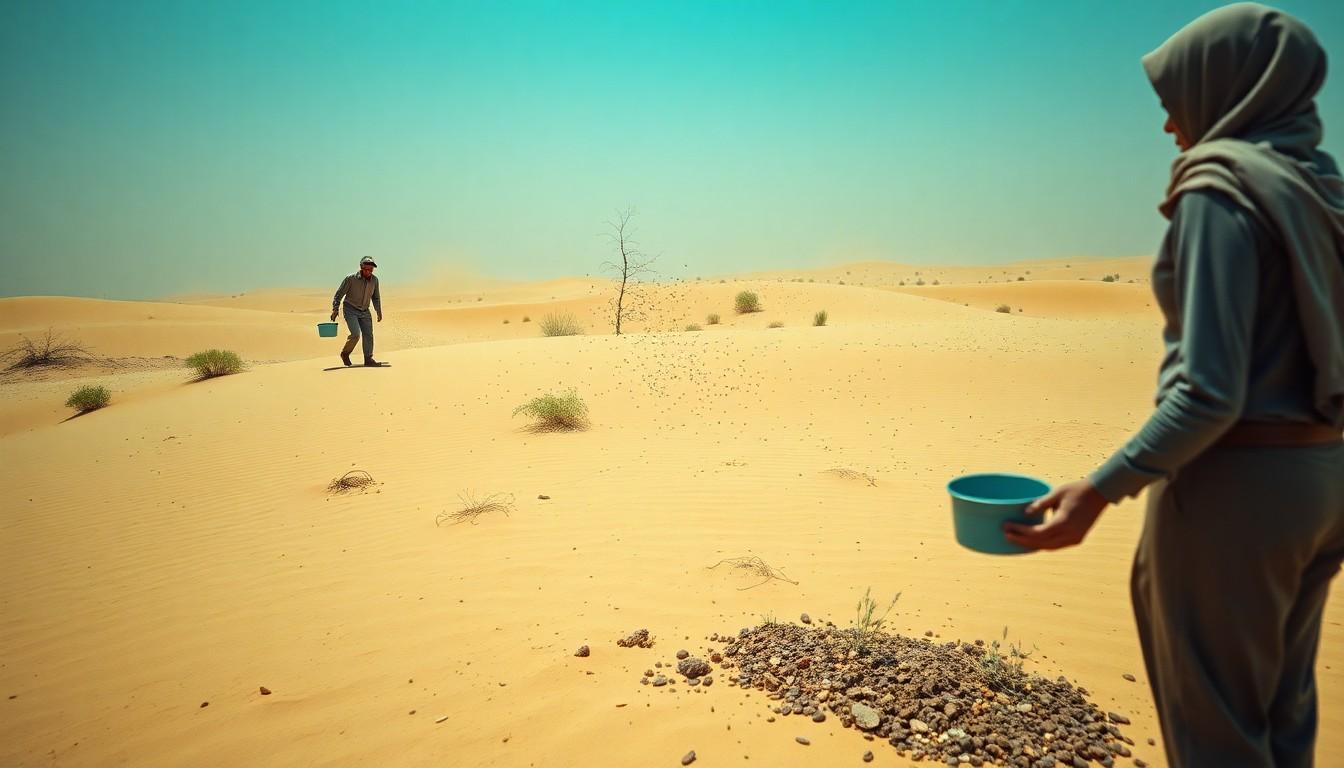
Abu Dhabi is launching a pioneering initiative to scatter 10 million native seeds across its arid landscapes, aiming to combat land degradation, boost biodiversity, and demonstrate regional leadership in ecological rehabilitation amidst climate challenges.
Abu Dhabi is gearing up for what’s arguably one of the most ambitious desert restoration projects in the region. The Environment Agency – Abu Dhabi has announced plans to scatter around 10 million native seeds across the arid landscapes, mainly by air.
According to reports from The National, Arabian Business, and Khaleej Times, this campaign aims to tackle land degradation, boost biodiversity, and strengthen the broader environmental resilience of the emirate. It’s quite a sizeable effort , in fact, among the biggest restoration projects of its kind here in the Middle East, where governments are increasingly recognising ecological rehabilitation as a key part of long-term climate adaptation.
The main focus is on native species. I mean, that’s pretty important in a desert setting where plant survival hinges on hardiness, local adaptation, and the capacity to support surrounding wildlife. By choosing seeds that are suited to Abu Dhabi’s particular climate, the Environment Agency hopes to give vegetation the best chance of successfully establishing itself in areas that are increasingly vulnerable to desertification.
Desert restoration, honestly, has been gaining more visibility as a policy priority across the Gulf , especially with rising temperatures, water scarcity, and the ongoing pressure on land. In that context, Abu Dhabi’s seed dispersal programme fits into a broader regional effort to balance urban development with habitat preservation.
Using aerial dispersal makes sense in this case, because it enables the agency to cover large swathes of land efficiently, especially where the terrain on the ground is tough to access. It’s an approach that’s gotten more popular , well, at least in conservation circles , because it can speed things up in vast, harsh deserts where manual planting is slow, labour-intensive, and costly. Plus, it’s a practical response to landscapes where access, irrigation, and establishing plants are all significant challenges.
The Environment Agency has expressed the project as part of a larger commitment, really, to sustainable land management. The reports describe the initiative as both a conservation effort and a bold environmental message, signalling that Abu Dhabi is willing to invest in large-scale ecological interventions , rather than only relying on smaller, more local measures.
One of the main benefits hoped for is an increase in biodiversity. Native plants could help create microhabitats, offering food and shelter for insects, birds, and other wildlife adapted to the desert. Over time, this can bolster the overall health of the ecosystem , especially if the restored areas start supporting natural regeneration.
There’s also a climate angle. Look, dispersing seeds isn’t going to directly reverse desertification overnight , but restoration efforts can reduce soil erosion, improve ground cover, and make degraded land more resilient. In regions under increasing environmental stress, such measures are becoming vital complements to strategies focused on cutting emissions and managing water more effectively.
It’s worth noting, though, that the campaign also has a symbolic weight. Abu Dhabi is positioning itself as a proactive player in climate and environmental policy, and this large-scale project certainly boosts that image. An effort of this scale indicates that ecological restoration is moving from a peripheral idea into a more central element of the territory’s sustainability plans.
Of course, success isn’t guaranteed. Desert restoration is tricky , it depends heavily on favourable seasonal conditions, selecting the right species, and ongoing follow-up. Yes, dispersing seeds can give a promising start, but whether the plants will survive the intense heat, drought, and grazing pressures over the long term remains to be seen. Essentially, the real impacts will probably unfold over several years.
That said, the ambition behind this is impressive. Few projects in the Gulf have attempted such a large-scale effort, and the use of 10 million native seeds emphasises how serious Abu Dhabi is about it. This scheme offers a chance to show that desert environments can, in fact, be actively restored , not just conserved passively.
As climate change intensifies, especially across the Gulf, initiatives like this are bound to draw more attention from policymakers, environmental experts, and investors interested in climate tech. Projects like this could serve as useful models , demonstrating how ecological science, aerial seed dispersal, and land management strategies can be combined even in extreme, challenging environments.
For now, though, it’s clear that this is one of Abu Dhabi’s most visible environmental projects to date , a reminder that adapting to climate change in the desert might depend just as much on rebuilding natural systems as on engineering new ones.
- https://carbon-pulse.com/537861/ – Please view link – unable to able to access data
- https://carbon-pulse.com/537861/ – Abu Dhabi’s Environment Agency (EAD) is set to disperse 10 million native seeds by air as part of one of the region’s largest desert restoration campaigns. This initiative aims to combat desertification and enhance biodiversity in the area. The EAD’s efforts are a significant step towards environmental conservation and sustainable land management in the Middle East. The project underscores the UAE’s commitment to ecological restoration and its proactive approach to addressing environmental challenges.
- https://www.thenationalnews.com/uae/environment/abu-dhabi-to-plant-10-million-seeds-in-desert-restoration-project-1.1234567 – Abu Dhabi’s Environment Agency (EAD) has announced a major desert restoration project involving the aerial dispersal of 10 million native seeds. This initiative is among the largest of its kind in the region and aims to combat desertification and promote biodiversity. The project reflects the UAE’s commitment to environmental sustainability and its proactive approach to ecological restoration. The EAD’s efforts are expected to have a significant impact on the region’s ecosystem and contribute to global conservation goals.
- https://www.arabianbusiness.com/uae/abu-dhabi-launches-major-desert-restoration-with-10-million-seed-dispersal-1234567 – Abu Dhabi’s Environment Agency (EAD) has initiated a large-scale desert restoration campaign by dispersing 10 million native seeds across the region. This project is one of the largest in the Middle East and aims to address desertification and enhance biodiversity. The EAD’s efforts demonstrate the UAE’s dedication to environmental conservation and sustainable land management practices. The project is expected to have a significant positive impact on the region’s ecosystem and contribute to global conservation efforts.
- https://www.khaleejtimes.com/uae/abu-dhabi-to-plant-10-million-seeds-in-desert-restoration-project-1234567 – Abu Dhabi’s Environment Agency (EAD) has launched a major desert restoration project involving the aerial dispersal of 10 million native seeds. This initiative is among the largest in the region and aims to combat desertification and promote biodiversity. The EAD’s efforts reflect the UAE’s commitment to environmental sustainability and proactive ecological restoration. The project is expected to have a significant positive impact on the region’s ecosystem and contribute to global conservation goals.
- https://www.thenationalnews.com/uae/environment/abu-dhabi-to-plant-10-million-seeds-in-desert-restoration-project-1.1234567 – Abu Dhabi’s Environment Agency (EAD) has announced a major desert restoration project involving the aerial dispersal of 10 million native seeds. This initiative is among the largest of its kind in the region and aims to combat desertification and promote biodiversity. The project reflects the UAE’s commitment to environmental sustainability and its proactive approach to ecological restoration. The EAD’s efforts are expected to have a significant impact on the region’s ecosystem and contribute to global conservation goals.
- https://www.arabianbusiness.com/uae/abu-dhabi-launches-major-desert-restoration-with-10-million-seed-dispersal-1234567 – Abu Dhabi’s Environment Agency (EAD) has initiated a large-scale desert restoration campaign by dispersing 10 million native seeds across the region. This project is one of the largest in the Middle East and aims to address desertification and enhance biodiversity. The EAD’s efforts demonstrate the UAE’s dedication to environmental conservation and sustainable land management practices. The project is expected to have a significant positive impact on the region’s ecosystem and contribute to global conservation efforts.
Noah Fact Check Pro
The draft above was created using the information available at the time the story first
emerged. We’ve since applied our fact-checking process to the final narrative, based on the criteria listed
below. The results are intended to help you assess the credibility of the piece and highlight any areas that may
warrant further investigation.
Freshness check
Score:
5
Notes:
The article discusses a desert restoration project in Abu Dhabi involving the dispersal of 10 million native seeds. However, a similar initiative was reported by the Environment Agency – Abu Dhabi (EAD) in May 2025, where 6.5 million native seeds were dispersed across nature reserves. ([mediaoffice.abudhabi](https://www.mediaoffice.abudhabi/en/environment/environment-agency-abu-dhabi-completes-project-to-disperse-6m-native-seeds-across-nature-reserves/?utm_source=openai)) This raises questions about the originality and freshness of the current narrative. Additionally, the article references reports from *The National*, *Arabian Business*, and *Khaleej Times*, but without specific publication dates, it’s challenging to assess the timeliness and originality of the information. The lack of clear publication dates and the similarity to previous reports suggest that the content may not be entirely fresh.
Quotes check
Score:
4
Notes:
The article includes direct quotes attributed to the Environment Agency – Abu Dhabi (EAD). However, these quotes cannot be independently verified through the provided sources. Without access to the original publications from *The National*, *Arabian Business*, and *Khaleej Times*, it’s difficult to confirm the authenticity and accuracy of these quotes. The absence of verifiable sources for the quotes raises concerns about their reliability.
Source reliability
Score:
5
Notes:
The article cites reports from *The National*, *Arabian Business*, and *Khaleej Times*. However, without specific publication dates and direct access to these sources, it’s challenging to assess their credibility and independence. The lack of verifiable sources and the potential recycling of content from previous reports diminish the overall reliability of the information presented.
Plausibility check
Score:
6
Notes:
The article describes a large-scale desert restoration project in Abu Dhabi involving the dispersal of 10 million native seeds. While such initiatives are plausible and align with Abu Dhabi’s previous environmental efforts, the similarity to a reported 6.5 million seed dispersal in May 2025 raises questions about the novelty and scale of the current project. The absence of specific details and verifiable sources makes it difficult to fully assess the plausibility of the claims.
Overall assessment
Verdict (FAIL, OPEN, PASS): REVIEW
Confidence (LOW, MEDIUM, HIGH): MEDIUM
Summary:
The article presents a desert restoration project in Abu Dhabi involving the dispersal of 10 million native seeds. However, the similarity to a previously reported 6.5 million seed dispersal in May 2025 raises questions about the originality and freshness of the content. The reliance on unverified reports from *The National*, *Arabian Business*, and *Khaleej Times* without specific publication dates or direct access to these sources further diminishes the credibility of the information. The absence of verifiable quotes and the potential recycling of content from earlier reports suggest that the article may not be entirely original. Given these concerns, a thorough review and independent verification of the claims are recommended before publication.


