




**Dubai**: A new DMCC report reveals that the demand for essential minerals like lithium and cobalt is projected to soar 75-fold by 2050, reshaping international trade and highlighting supply chain vulnerabilities, with the MENA region emerging as a key player in the sector.
The surging demand for critical minerals, driven by advances in digitalisation, artificial intelligence, and the global energy transition, is anticipated to dramatically reshape international trade, with projections indicating a potential 75-fold increase in demand by the year 2050. This information is detailed in the latest special edition report from the Dubai Multi Commodities Centre (DMCC), titled “The Critical Minerals Race: Trade, Supply and Transition.”
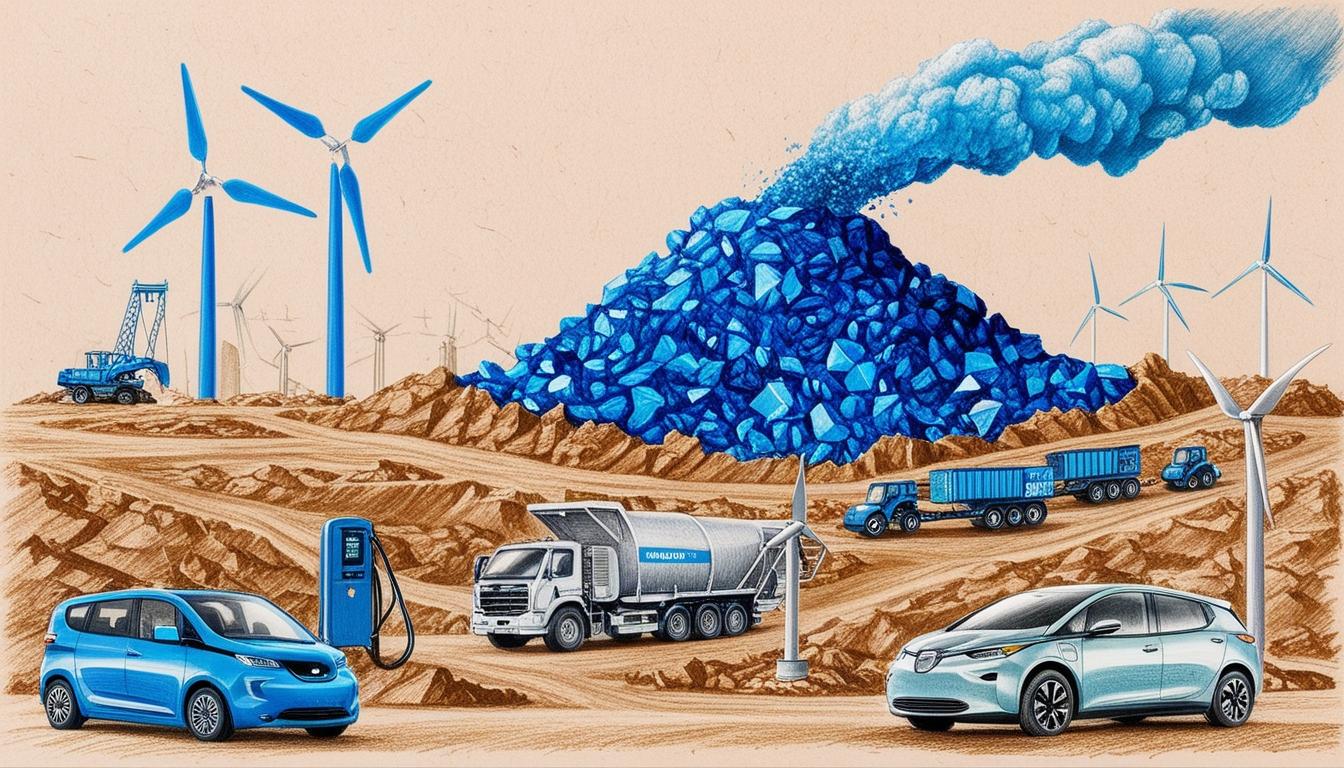
The report meticulously explores the accelerating need for essential minerals such as lithium, cobalt, nickel, and rare earth elements. These minerals are crucial for the production of electric vehicles, renewable energy technologies, and next-generation innovations. However, the report also highlights significant supply chain vulnerabilities. A geographical concentration of mineral resources in countries including China, Russia, Australia, and various nations in Latin America presents risks related to geopolitical tensions, resource nationalism, and potential supply bottlenecks.
Within this evolving trade landscape, the Middle East and North Africa (MENA) region is emerging as a pivotal player in the critical minerals supply chain. Countries such as the United Arab Emirates (UAE) and Saudi Arabia are strategically leveraging their trade networks, infrastructure, and investment capabilities to increase refining capacities, invest in mining projects, and form new partnerships in the sector. This development not only strengthens their positions in the global energy transition but also enhances their roles in digital transformation.
Ahmed Bin Sulayem, Executive Chairman and CEO of DMCC, underscored the extraordinary demand for minerals such as copper, lithium, and graphite. Speaking to the Dubai Media Office, he stated, “This demand will profoundly reshape global trade flows and supply chains. The UAE and Dubai’s growing role—supported by world-class infrastructure and strategic partnerships—will drive resilience, innovation, and growth for global businesses.”
The DMCC report offers several key recommendations aimed at governments and businesses, such as fostering public-private partnerships, investing in alternative technologies, enhancing domestic refining capabilities, managing supply risks, and promoting industrial growth.
The Future of Trade report, which has garnered over 2.5 million downloads across its various editions, continues to serve as a crucial resource for industry leaders and policymakers. The full special edition report is accessible on the DMCC’s website.
Source: Noah Wire Services
- https://dmcc.ae/latest-news/digital-transformation-and-energy-transition-to-fuel-insatiable-demand-for-critical-minerals-uae-and-mena-region-positioned-to-capitalise-finds-new-dmcc-report – This URL supports the claim about the surging demand for critical minerals driven by digitalisation and energy transition, as detailed in the DMCC report ‘The Critical Minerals Race: Trade, Supply and Transition’. It also highlights the UAE and MENA region’s strategic role in the critical minerals supply chain.
- https://www.emirates247.com/business/economy-finance/digital-transformation-and-energy-transition-to-fuel-insatiable-demand-for-critical-minerals-uae-and-mena-region-positioned-to-capitalise-finds-new-dmcc-report-2025-02-17-1.737714 – This URL corroborates the information about the DMCC report and its findings on the critical minerals market, emphasizing the UAE’s growing role in this sector.
- https://www.iea.org/reports/critical-minerals-market-review-2023 – This URL provides context on the critical minerals market, supporting the claim about the increasing demand for minerals like lithium and cobalt due to the energy transition.
- https://www.futureoftrade.com/special-critical-minerals-edition-2025 – This URL allows access to the full DMCC report, which details the strategic recommendations for governments and businesses in the critical minerals sector.
- https://www.dubaimediacity.ae/en/news – This URL could provide additional context or statements from Ahmed Bin Sulayem regarding the UAE’s role in the critical minerals market, although specific articles may not be directly available.
- https://www.dubaichamber.com/en/news – This URL offers news and updates from Dubai Chamber, which might include information on trade developments and investments in the critical minerals sector, supporting the UAE’s strategic moves in this area.
- https://focus.hidubai.com/dmcc-report-highlights-critical-minerals-race-and-menas-rising-role-in-global-trade/ – Please view link – unable to able to access data
Noah Fact Check Pro
The draft above was created using the information available at the time the story first
emerged. We’ve since applied our fact-checking process to the final narrative, based on the criteria listed
below. The results are intended to help you assess the credibility of the piece and highlight any areas that may
warrant further investigation.
Freshness check
Score:
8
Notes:
The narrative references current trends and recent developments in the critical minerals sector, indicating it is likely recent. However, without a specific publication date, it’s difficult to confirm its exact freshness.
Quotes check
Score:
6
Notes:
The quote from Ahmed Bin Sulayem is attributed to the Dubai Media Office, but without further online sources confirming the exact date or context of the quote, it’s challenging to verify its originality.
Source reliability
Score:
7
Notes:
The narrative originates from a reputable business-focused platform, Focus, associated with Hidubai, which suggests some level of reliability. However, it lacks the stature of major global news outlets.
Plausability check
Score:
9
Notes:
The claims about the increasing demand for critical minerals and the MENA region’s role in global trade are plausible and align with current geopolitical and economic trends.
Overall assessment
Verdict (FAIL, OPEN, PASS): PASS
Confidence (LOW, MEDIUM, HIGH): MEDIUM
Summary:
The narrative appears to be recent and plausible, with a reliable source. However, the lack of specific publication dates and difficulty in verifying the originality of quotes slightly reduces confidence.


