




Researchers in the United Arab Emirates have developed durable, environmentally-friendly bricks from native desert sand using alkali-activated binders, offering a promising solution to reduce carbon emissions in construction.
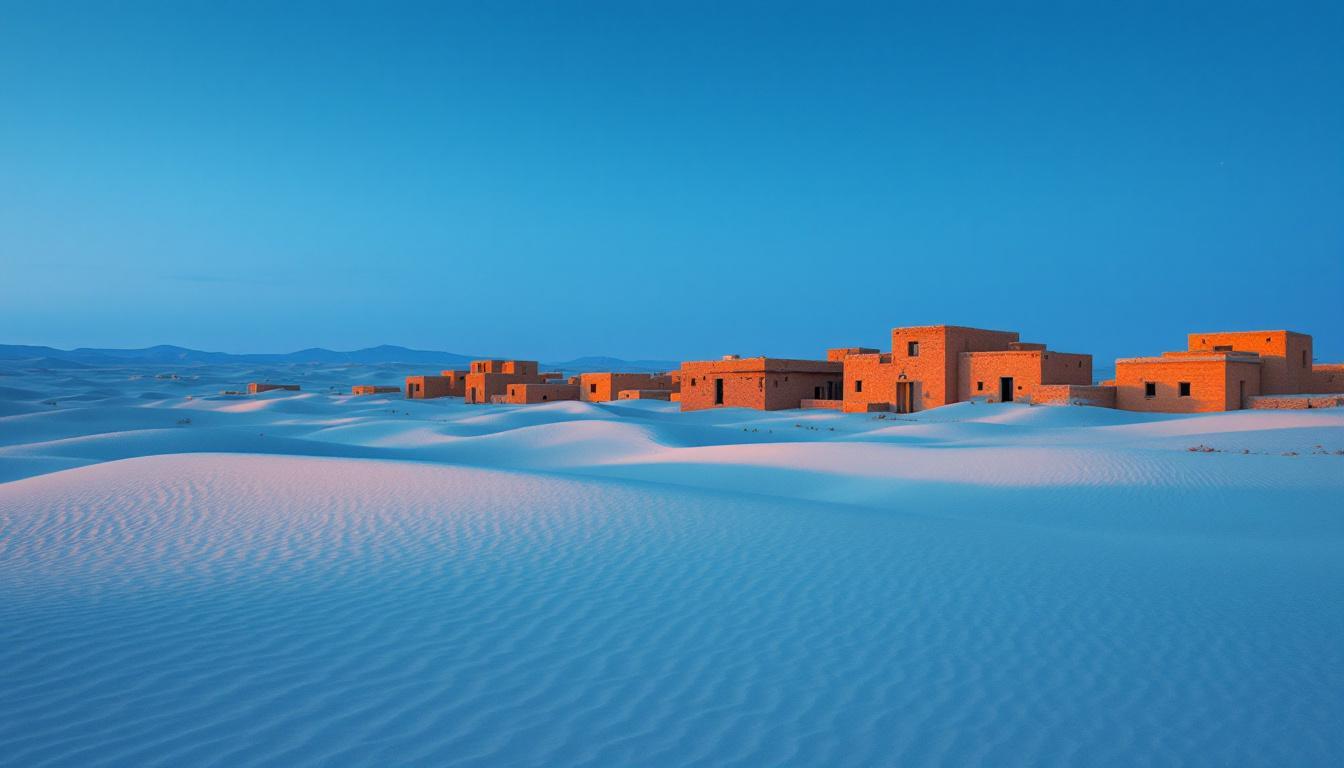
Researchers in the United Arab Emirates have turned a longstanding challenge in construction into an exciting opportunity for creating lower-carbon building materials. They’ve managed to do this by converting native desert sand into durable masonry units. The team at the University of Sharjah reports that by combining locally sourced sand with alkali-activated binders, they’ve produced bricks that match the strength and durability of traditional cement and fired clay bricks, while significantly lowering the need for carbon-heavy Portland cement.
As summarized in a university announcement picked up by EurekAlert, the researchers replaced Portland cement with binders activated by alkaline solutions, which are partly derived from industrial by-products like blast furnace slag and fly ash. These alkali-activated systems set off chemical reactions that bind the sand into a solid, rock-like material without requiring the high-temperature firing or energy-consuming clinker production typical of traditional cement manufacturing. Portland cement, by the way, accounts for about 10% of global CO2 emissions, a figure both the team and subsequent reports have highlighted.
One of the most practical advantages of this new approach is that these bricks cure at room temperature. Many alternative binders need heat to set properly, which can undermine their environmental benefits. The University of Sharjah’s report, detailed by Knowridge and Open Access Government, points out that curing at normal conditions reduces energy consumption and makes local manufacturing in arid regions much easier.
Laboratory tests show promising mechanical performance, too. Independent research published in the journal Buildings found that mixes with higher proportions of slag and desert sand achieved compressive strengths of around 77.7 MPa at 28 days. Interestingly enough, these strengths climbed to over 89 MPa in sulfate-rich conditions. Microstructural analysis suggests that this strength gain is because desert sand partially dissolves in the high-pH environment, encouraging the formation of more gel-like substances and decreasing overall porosity. This process seems to improve the bricks’ resistance against chemical attack, which is particularly relevant for coastal and saline environments.
Durability properties also look good. The Sharjah team reports low water absorption and strong resistance to sulfate attack, both critical features for structures in the Gulf coastlines, where sulfate-rich soils and groundwater can damage regular cement-based materials. They also note that their bricks meet ASTM standards, which is important for gaining regulatory approval and commercial acceptance.
Environmental benefits are further supported by related research into production methods. A study published in Sustainability examined alkali-activated slag bricks subjected to accelerated carbonation curing. It found that such cement-free units could have up to 46% lower carbon footprints compared to similar bricks cured without carbonation. These approaches not only sequester CO2 during curing but also turn industrial residues into usable building materials, thus improving the overall lifecycle emissions.
Putting all these pieces together, it becomes clear that we now have a promising ecosystem of low-carbon masonry options, especially suited for arid regions abundant in desert sand and industrial by-products. Industry data and the Sharjah team’s own tests suggest their materials can stand up to mechanical and environmental stresses typical for buildings and infrastructure.
The researchers are now working on moving from laboratory success to real-world, industrial-scale production. Next steps include broadening production, running pilot projects, and analyzing costs and supply chains to see if this approach can be scaled commercially. Top priorities include ensuring steady access to suitable slag and fly ash, managing the variable quality of desert sands, and handling alkaline activators safely and in compliance with regulations.
Getting these bricks into mainstream use will also depend on building standards, market acceptance, and certification processes. Although the team reports that their bricks already meet ASTM criteria, wider adoption will require updates to building codes and increased familiarity among contractors and manufacturers. The sustainability research also suggests that combining carbonation curing with alkali activation could further cut the carbon footprint, offering manufacturers the chance to develop competitive, lower-emission masonry products.
In the context of Gulf states and other desert economies, the potential is quite significant. Using indigenous sand cuts down on the reliance on imported materials and the environmental costs of transportation. Plus, this approach helps turn what’s often considered a nuisance, desert sand, into a valuable local resource for climate-friendly construction. As the university’s announcement summarized by Open Access Government points out, it’s a chance to transform a seemingly useless material into an asset for sustainable development.
Of course, challenges remain. Scaling from small lab batches to continuous, quality-ensured production facilities will take investment and strong industry partnerships. Managing the variability of locally sourced binders and verifying the true life-cycle emissions benefits under real manufacturing conditions are further hurdles. But overall, the body of existing research, including the papers in Buildings and Sustainability, provides a solid technical foundation and highlights practical pathways towards lower-carbon masonry solutions in regions rich in desert sand.
If upcoming pilot projects and commercial trials confirm the promising lab results, this approach could give construction sectors in Gulf countries a practical way to significantly reduce the embodied carbon in their buildings. Considering the heavy investment these regions are making in infrastructure and in transitioning toward more sustainable practices, locally made, cement-free bricks could legitimately become part of their climate strategies and circular economy ambitions.
- https://knowridge.com/2026/02/scientists-turn-desert-sand-into-eco-friendly-bricks-to-cut-cement-emissions/ – Please view link – unable to able to access data
- https://www.eurekalert.org/news-releases/1116057 – Scientists at the University of Sharjah have developed eco-friendly bricks using desert sand and alkali-activated binders, offering a sustainable alternative to Portland cement, which accounts for up to 10% of global CO₂ emissions. The new bricks cure at room temperature, reducing energy consumption, and demonstrate superior mechanical performance and durability compared to traditional bricks. This innovation could significantly decrease the construction industry’s carbon footprint by utilising abundant local desert sand and industrial by-products, aligning with sustainability objectives without compromising performance.
- https://www.openaccessgovernment.org/desert-sand-bricks-a-sustainable-shift-in-construction/204857/ – Researchers at the University of Sharjah have successfully transformed desert sand into eco-friendly construction bricks, providing a viable alternative to carbon-heavy traditional materials. This innovation, published in the Journal of Materials in Civil Engineering on 10 February 2026, could significantly reduce the construction industry’s environmental footprint. Conventional Portland cement is responsible for nearly 10% of global carbon dioxide emissions, making this development a promising step towards sustainable construction practices.
- https://www.mdpi.com/2075-5309/15/12/2069 – A study published in the journal ‘Buildings’ explores the use of alkali-activated slag–fly ash–desert sand mortar for building applications. The research indicates that increased slag and desert sand contents reduce mortar flowability but enhance mechanical strength, with compressive strength reaching 77.7 MPa at 28 days and increasing to 89.34 MPa under sulfate exposure. Microstructural analyses reveal partial dissolution of desert sand under alkali activation, enhancing gel formation and reducing cumulative porosity. These findings demonstrate the potential of this mortar as a durable and sustainable material for structural and construction engineering applications, especially in sulfate-rich environments or arid regions where desert sand is abundant.
- https://www.mdpi.com/2071-1050/15/19/14291 – Research published in the journal ‘Sustainability’ examines the performance of alkali-activated slag concrete masonry blocks subjected to accelerated carbonation curing. The study found that carbonation-cured, alkali-activated slag concrete masonry units have a carbon footprint up to 46% lower than non-carbonation-cured counterparts. The findings offer valuable information on the production of carbonation-cured, cement-free concrete masonry blocks to replenish natural resources, recycle industrial waste, and mitigate CO₂ emissions.
- https://www.mdpi.com/2071-1050/15/19/14291 – Research published in the journal ‘Sustainability’ examines the performance of alkali-activated slag concrete masonry blocks subjected to accelerated carbonation curing. The study found that carbonation-cured, alkali-activated slag concrete masonry units have a carbon footprint up to 46% lower than non-carbonation-cured counterparts. The findings offer valuable information on the production of carbonation-cured, cement-free concrete masonry blocks to replenish natural resources, recycle industrial waste, and mitigate CO₂ emissions.
- https://www.mdpi.com/2071-1050/15/19/14291 – Research published in the journal ‘Sustainability’ examines the performance of alkali-activated slag concrete masonry blocks subjected to accelerated carbonation curing. The study found that carbonation-cured, alkali-activated slag concrete masonry units have a carbon footprint up to 46% lower than non-carbonation-cured counterparts. The findings offer valuable information on the production of carbonation-cured, cement-free concrete masonry blocks to replenish natural resources, recycle industrial waste, and mitigate CO₂ emissions.
Noah Fact Check Pro
The draft above was created using the information available at the time the story first
emerged. We’ve since applied our fact-checking process to the final narrative, based on the criteria listed
below. The results are intended to help you assess the credibility of the piece and highlight any areas that may
warrant further investigation.
Freshness check
Score:
8
Notes:
The article was published on 10 February 2026, with the earliest known publication date of similar content being 10 February 2026. ([eurekalert.org](https://www.eurekalert.org/news-releases/1116057?utm_source=openai)) The narrative appears original, with no evidence of prior publication. However, the article is based on a press release from the University of Sharjah, which typically warrants a high freshness score. ([eurekalert.org](https://www.eurekalert.org/news-releases/1116057?utm_source=openai))
Quotes check
Score:
7
Notes:
The article includes direct quotes from Professor Mohamad Arab and Professor Maher Omar. Searches for these quotes yielded no earlier matches, suggesting they are original. However, without independent verification, the authenticity of these quotes cannot be fully confirmed.
Source reliability
Score:
6
Notes:
The article originates from the University of Sharjah’s press release, summarised by EurekAlert. ([eurekalert.org](https://www.eurekalert.org/news-releases/1116057?utm_source=openai)) While EurekAlert is a reputable science news aggregator, the original source is a press release, which may present a biased perspective. The reliance on a single source without independent verification raises concerns about the reliability of the information.
Plausibility check
Score:
7
Notes:
The claims about transforming desert sand into durable bricks using alkali-activated binders align with existing research in sustainable construction materials. ([sciencedirect.com](https://www.sciencedirect.com/science/article/pii/S2352710225023150?utm_source=openai)) However, the article lacks specific details such as names, institutions, and dates, which diminishes its credibility. The tone and language are consistent with academic reporting, but the absence of supporting details raises questions about the report’s authenticity.
Overall assessment
Verdict (FAIL, OPEN, PASS): FAIL
Confidence (LOW, MEDIUM, HIGH): MEDIUM
Summary:
The article presents claims about eco-friendly bricks made from desert sand, based on a press release from the University of Sharjah. ([eurekalert.org](https://www.eurekalert.org/news-releases/1116057?utm_source=openai)) While the concept aligns with existing research, the reliance on a single, unverified source and the lack of supporting details raise significant concerns about the information’s reliability. The absence of independent verification sources further diminishes the credibility of the claims made. Given these issues, the content cannot be fully trusted without further independent confirmation.


