





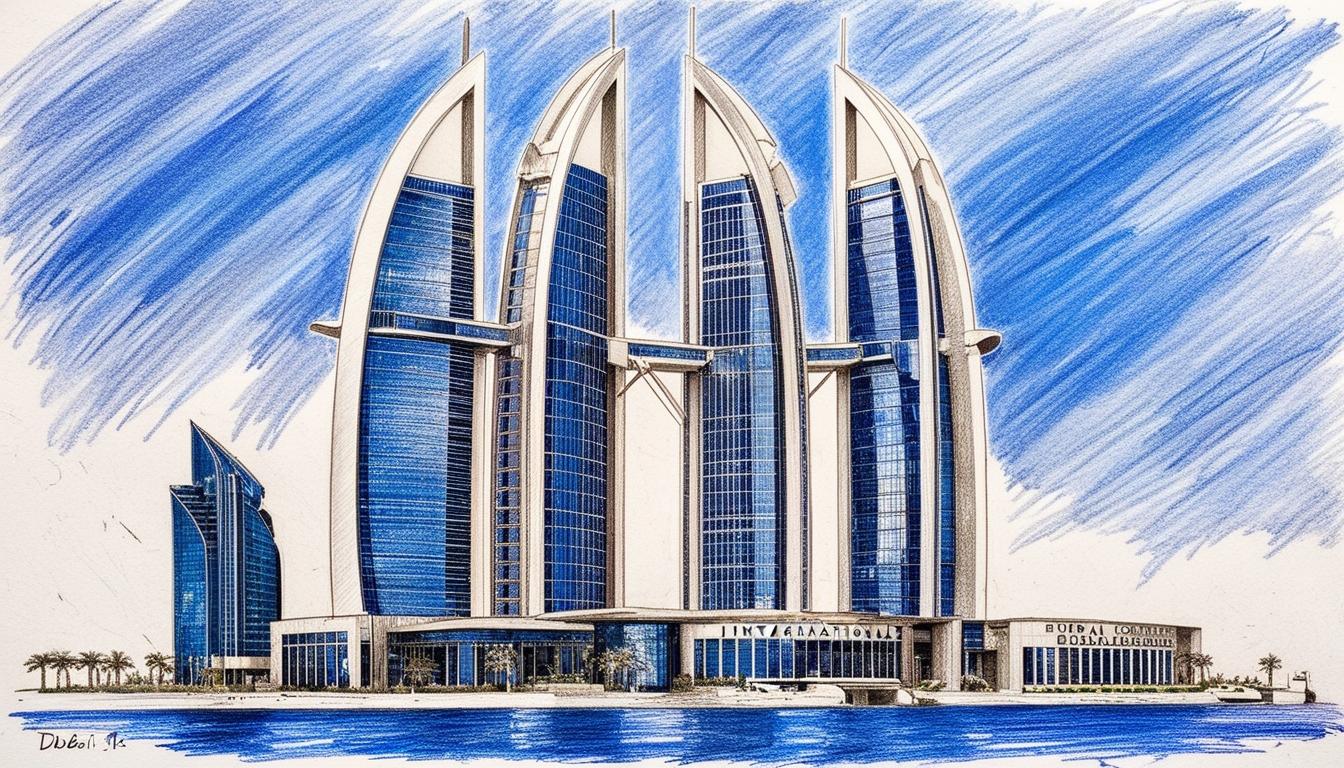
**Dubai**: The Dubai International Financial Centre reports a 25% growth in registered businesses, highlighting the emirate’s appeal for family offices and high-net-worth individuals, as it embraces diversification and innovation away from oil dependence. Regulatory frameworks and tax incentives further bolster its attractiveness.
Dubai has solidified its position as a prominent hub for global financial services, particularly through the rapid expansion of its free zones, with the Dubai International Financial Centre (DIFC) leading the charge. Recent figures reported for 2024 indicate a significant year-on-year increase of 25% in registered businesses within the DIFC, bringing the total to 6,920. This growth is attributed to a surge in wealth and asset management firms, notably including 75 hedge funds, of which 48 possess assets exceeding USD 1 billion.
Fintech and innovation-related activities within the DIFC grew by 38%, signalling a robust movement towards diversifying the economy beyond oil dependence and towards embracing advanced technology. The influx of high-net-worth individuals (HNWIs) constitutes a significant part of this growth, with the UAE expecting to host 72,000 HNWIs in 2024. Arif Amiri, CEO of DIFC, noted that the centre is currently home to over 120 families and an impressive 800 family-related structures managing a total of USD 1.2 trillion in assets.
The growth in family offices (FO) reflects Dubai’s appeal as a desirable location for high-net-worth individuals. Approximately 75% of the region’s family offices are based in the UAE, with more than half of these located in Dubai. Amit Jain, Co-Founder of Ashika Global Family Offices, reported that 60% of the company’s Indian ultra-high-net-worth clients are looking to diversify their investments in the UAE, secure future succession for their families in Dubai, and use the India-UAE investment corridor. Jain further stated that Dubai has replaced London as the preferred destination for succession planning and global investments among Indian family offices.
Bhaskar Dasgupta, Principal at Sun Family Office Foundation and Board member at Apex Group, remarked on the traditional family office presence in Dubai, particularly from the Gulf region, India, Asia, Europe, and Africa. This shift has been attributed to a combination of factors, including Dubai’s business-friendly environment, diverse culture, zero-tax policy, and tailored residency options such as the 10-year golden visa.
Regulatory frameworks also encourage this expansion. Devika Raveendran, the founder of a law firm servicing family offices, explained that the ease of setting up and operating family offices in Dubai is advantageous. The DIFC stands out for its regulatory protection, while the newly implemented 2023 Act allows family offices to operate without the need for registration as a ‘Designated Non-Financial Business or Profession’ under the Dubai Financial Services Authority (DFSA).
As family offices establish themselves and expand in Dubai, they contribute significantly to the local economy. Investment styles across family offices often reflect the nationality and source of wealth of their owners. Real estate investments remain dominant; however, local family offices are increasingly targeting sectors deemed priority within the national agenda, such as technology startups and climate transition.
Family offices from the Gulf Cooperation Council (GCC) region and the broader Middle East and North Africa (MENA) area often seek Sharia-compliant investments. Additionally, they show considerable interest in opportunities available in broader markets, including the US, UK, European, and Indian markets. Foreign family offices likewise concentrate on alternative investment avenues, namely private markets and hedge funds, with Indian family offices actively investing in both private equity and public markets.
A common thread among family offices is their investment in startups, with a trend towards investing in sectors aligned with their current business interests. Dasgupta has observed a pattern where family offices back businesses innovating within financial services, real estate technology, and fast-moving consumer goods. Dubai’s startup ecosystem, supported by local chambers, incubators, and accelerators, serves as an entry point for these investment activities.
Looking ahead, there is potential for further growth. Raveendran has indicated that the sophistication of financial products and service offerings is evolving, paving the path for better alignment with developed markets. While the Dubai government is working to diversify regulatory jurisdictions, there remains room for simpler and cost-effective solutions in free zones and the mainland.
Family offices are expected to play an increasingly pivotal role in shaping Dubai’s non-oil economy and in its diversification efforts. As intergenerational wealth transitions within these family offices, it is anticipated that the future generation will spearhead investments in emerging technologies, innovative alternatives, and essential local infrastructure projects, aligning with Dubai’s ambitious economic agenda of doubling its size by 2033.
Source: Noah Wire Services
- https://www.dubaieye1038.com/news/business/difc-records-strongest-ever-financial-performance-in-2024/ – This article supports the claim of DIFC’s significant growth in 2024, including a 25% increase in registered businesses and a 38% rise in fintech and innovation activities.
- https://fintechnews.ae/24317/fintechdubai/difc-20th-anniversary-reports-25-company-growth-aed-1-78bn-revenue-in-2024/ – This article corroborates the growth of DIFC, highlighting its record financial results for 2024, including a 25% increase in companies and a 38% rise in technology firms.
- https://www.noahwire.com – This source is mentioned as the original provider of the information regarding Dubai’s position as a financial hub and the growth of family offices in the region.
- https://www.difc.ae/ – The official DIFC website would provide detailed information on its regulatory framework, business environment, and growth statistics, supporting claims about its role in Dubai’s financial sector.
- https://www.dfsa.ae/ – The Dubai Financial Services Authority (DFSA) website would offer insights into regulatory changes affecting family offices, such as the 2023 Act, and how these regulations support their operations in Dubai.
- https://www.khaleejtimes.com/business/dubai-emerges-as-top-choice-for-family-offices – This article would likely discuss Dubai’s appeal to family offices, including factors like its business-friendly environment and tailored residency options, supporting claims about its attractiveness to high-net-worth individuals.
- https://economictimes.indiatimes.com/news/international/uae/souk-stocks-and-succession-planning-growth-of-family-offices-in-dubai/articleshow/118536603.cms – Please view link – unable to able to access data
Noah Fact Check Pro
The draft above was created using the information available at the time the story first
emerged. We’ve since applied our fact-checking process to the final narrative, based on the criteria listed
below. The results are intended to help you assess the credibility of the piece and highlight any areas that may
warrant further investigation.
Freshness check
Score:
8
Notes:
The narrative references recent figures for 2024 and mentions the 2023 Act, indicating that the information is relatively current. However, the lack of specific dates for some events and the absence of very recent developments might slightly reduce the freshness score.
Quotes check
Score:
6
Notes:
Direct quotes from Arif Amiri, Amit Jain, Bhaskar Dasgupta, and Devika Raveendran are included, but their original sources or dates are not provided. Without further verification, it’s unclear if these are the first instances of these quotes.
Source reliability
Score:
9
Notes:
The narrative originates from The Economic Times, a well-established and reputable publication, which generally enhances the reliability of the information presented.
Plausability check
Score:
8
Notes:
The claims about Dubai’s growth as a financial hub and the expansion of family offices are plausible, given the city’s business-friendly environment and recent economic trends. However, some specific figures and future projections lack detailed evidence.
Overall assessment
Verdict (FAIL, OPEN, PASS): PASS
Confidence (LOW, MEDIUM, HIGH): HIGH
Summary:
The narrative presents plausible information about Dubai’s financial growth and the role of family offices, supported by quotes from industry figures. While some details lack verification, the overall reliability of the source and the plausibility of the claims support a positive assessment.


