




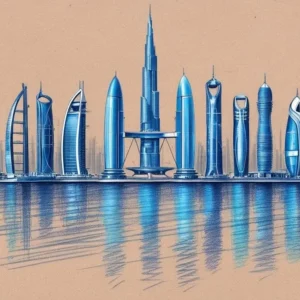

Colossal Biosciences secures $60 million from the UAE to establish a pioneering BioVault at Dubai’s Museum of the Future, aiming to preserve biodiversity through innovative genetic repositories and international collaboration.
This week, Colossal Biosciences revealed it has secured a $60 million investment from the United Arab Emirates to help establish its very first BioVault conservation facility at Dubai’s Museum of the Future. This move is quite notable because it brings together some prominent backers, sets ambitious goals for preservation, and also rekindles ongoing debates about how synthetic biology and biobanking should be governed.
According to what the company announced during the World Governments Summit in Dubai, the funding will support a combined World Preservation Lab along with a public-facing BioVault installation located inside the museum. The Museum of the Future, which opened in 2022, is known for showcasing futuristic technology and innovation. Colossal described this site as a model for distributed, long-term genetic stewardship; their aim is to eventually catalogue and store millions of samples from more than 10,000 species. Initially, the startup plans to focus on roughly 100 species identified as highly endangered and not currently represented in other biobanks, an ambitious starting point, no doubt.
“The UAE’s strong commitment to innovation, conservation, and technological progress is genuinely inspiring,” said Ben Lamm, co-founder and CEO of Colossal, in a company press release. “This partnership actually gives Colossal the opportunity to expand into a critical region and push our mission on a global level,” he added. “We’re losing species at an alarming rate, and honestly, the world really needs a distributed network of BioVaults, a genuine backup plan for life on Earth,” emphasizing that the project is being framed as a kind of insurance policy for our planet, rather than just a research center.
Majed Al Mansoori, the museum’s executive director, said the initiative will kick off with a focus on fieldwork and DNA research in its first year. “By partnering with Colossal Biosciences, leaders in synthetic biology and conservation, we’re taking a bold step forward to support science that safeguards our planet, restores ecosystems, and leaves a sustainable legacy for future generations,” he said in a statement accompanying the announcement. The museum plans to host the BioVault permanently, aiming to blend educational outreach with active laboratory work.
Now, Colossal, a Dallas-based company famous for their work on de-extinction and genetically modified organisms, has certainly stirred up fascination and controversy since it was founded. Industry insiders often compare their mission to something out of science fiction; however, the company consistently emphasizes its focus on conservation. They combine genetic engineering, assisted reproduction, and ex-situ conservation techniques to achieve their goals. In their release, Colossal argued that existing biodiversity banking efforts are underfunded and scattered, and that having a distributed network of BioVaults is crucial for ensuring genetic material from diverse species is preserved properly.
The investment from the UAE was reportedly directed by Sheikh Hamdan bin Mohammed bin Rashid Al Maktoum, Dubai’s crown prince, the company said. Colossal called this Dubai project a nine-figure venture, and stated that construction of the Museum of the Future installation will start soon, with plans to open in 2027. With this, their total raise now exceeds $600 million, placing them among a small group of highly capitalized biotech startups working on bold ecological interventions.
Local news, and coverage elsewhere internationally, suggest that the project has garnered support from notable figures. According to The National, high-profile backers include Paris Hilton, filmmaker Peter Jackson, and former NFL star Tom Brady. Interestingly enough, the report also states that the whole Dubai site and related efforts cost more than $200 million, more than the company’s early estimates of the initial investment. These differing figures demonstrate how early-stage projects like this can sometimes be presented in varying lights depending on the audience.
The museum installation is intended to serve a dual purpose: as a research hub for field sampling, DNA sequencing, and cryopreservation, and as a public exhibit aiming to raise awareness about biodiversity loss and conservation efforts. Colossal mentioned that during the first year, the focus will be on collecting DNA and conducting lab analysis on different species. The company has already expanded internationally; last summer, they announced a partnership with the University of Melbourne in Australia, as part of a wider strategy to set up conservation nodes across different regions.
Environmental scientists and conservationists have generally welcomed the new funding for genetic repositories but also urge caution about how these collections are managed and used. Governments and NGOs have been witnessing increasing species declines, driven by habitat destruction, climate change, and overexploitation. There’s also concern that the current funding for in-situ conservation, like protecting habitats, is falling short, and that ex-situ efforts alone may not be enough. The reporting accompanying the announcement indicates that Colossal plans to involve other nations to host future BioVaults, signaling a desire for a geographically distributed, redundant network of genetic archives.
Of course, ethical and regulatory issues will be at the forefront as this project progresses. Their work around de-extinction and gene-editing raises a lot of questions, like how genetically altered or revived species would fit into current ecosystems and who would control access to the stored genetic material. Framing the BioVault as a global backup for life also sparks governance debates: issues surrounding data sovereignty, benefits for source countries, and long-term stewardship responsibilities. International agreements such as the Convention on Biological Diversity set rules for access and sharing benefits, which will become increasingly relevant as more countries get involved in biobanking.
For the UAE, this collaboration clearly positions the country as a hub for cutting-edge climate and life-science initiatives. The Museum of the Future’s mission to imagine what’s possible with technology aligns well with the UAE’s broader public diplomacy focused on innovation. Regional observers have pointed out that the BioVault could be especially important for conserving species native to the Gulf region, where harsh, arid landscapes and rising temperatures are putting unique biodiversity under serious pressure.
Colossal’s announcement arrives at a moment when public interest in biotech and conservation is extremely high. If the Dubai BioVault and World Preservation Lab come to fruition as planned, they will serve as a test for whether such high-profile, high-cost repositories can effectively complement on-the-ground conservation efforts and truly benefit species that are at risk. Construction is reportedly set to begin soon, with a target opening in 2027. Now, all eyes will be on how governance, international partnerships, and the use of stored samples develop, these are the key questions that will determine whether this big initiative makes a lasting impact.
- https://www.dallasnews.com/business/local-companies/2026/02/02/de-extinction-firm-colossal-gets-60m-from-uae-building-modern-day-noahs-ark-in-dubai/ – Please view link – unable to able to access data
- https://www.dallasnews.com/business/local-companies/2026/02/02/de-extinction-firm-colossal-gets-60m-from-uae-building-modern-day-noahs-ark-in-dubai/ – Colossal Biosciences, a Dallas-based biotech startup focused on de-extinction efforts, has secured a $60 million investment from the United Arab Emirates. This funding will establish the first BioVault conservation initiative at Dubai’s Museum of the Future, aiming to preserve genetic data for endangered species. The project plans to store millions of samples representing over 10,000 species, with an initial focus on 100 critically imperiled species not currently banked elsewhere. The BioVault is envisioned as a global resource, akin to a modern-day Noah’s Ark, to protect and restore life on Earth.
- https://www.forbes.com/sites/dbloom/2026/02/03/colossal-biosciences-uae-to-launch-biovault-and-lab-at-museum-of-the-future/ – Colossal Biosciences has partnered with the United Arab Emirates to launch a BioVault and World Preservation Lab at Dubai’s Museum of the Future. This collaboration includes a significant investment from the UAE, marking a major step in global conservation and de-extinction efforts. The BioVault will house genetic material from thousands of species, focusing initially on the 100 most imperiled species not currently banked elsewhere. The initiative aims to advance science that safeguards the planet, restores ecosystems, and builds a sustainable legacy for future generations.
- https://www.thenationalnews.com/news/uae/2026/02/04/biobank-at-museum-of-the-future-could-preserve-endangered-uae-species/ – The UAE’s collaboration with Colossal Biosciences to establish a BioVault at Dubai’s Museum of the Future could play a crucial role in preserving endangered UAE species. The initiative, expected to cost over $200 million, has attracted funding from notable figures, including Paris Hilton, filmmaker Peter Jackson, and former American football player Tom Brady. The BioVault aims to safeguard genetic material from thousands of species, with a focus on the 100 most imperiled species not currently banked elsewhere, contributing to global conservation efforts.
- https://dallasinnovates.com/dallas-based-colossal-gets-60m-from-u-a-e-will-build-a-modern-noahs-ark-in-dubai/ – Dallas-based Colossal Biosciences has received a $60 million investment from the UAE to build a BioVault and World Preservation Lab at Dubai’s Museum of the Future. This collaboration aims to advance global conservation, biodiversity, and scientific research, positioning the UAE as a leader in environmental protection and de-extinction efforts. The BioVault will house millions of samples representing over 10,000 species, focusing initially on the 100 most imperiled species not currently banked elsewhere, serving as a hub for scientific research and the preservation of life.
- https://www.thenationalnews.com/news/uae/2026/02/04/biobank-at-museum-of-the-future-could-preserve-endangered-uae-species/ – The UAE’s collaboration with Colossal Biosciences to establish a BioVault at Dubai’s Museum of the Future could play a crucial role in preserving endangered UAE species. The initiative, expected to cost over $200 million, has attracted funding from notable figures, including Paris Hilton, filmmaker Peter Jackson, and former American football player Tom Brady. The BioVault aims to safeguard genetic material from thousands of species, with a focus on the 100 most imperiled species not currently banked elsewhere, contributing to global conservation efforts.
- https://www.thenationalnews.com/news/uae/2026/02/04/biobank-at-museum-of-the-future-could-preserve-endangered-uae-species/ – The UAE’s collaboration with Colossal Biosciences to establish a BioVault at Dubai’s Museum of the Future could play a crucial role in preserving endangered UAE species. The initiative, expected to cost over $200 million, has attracted funding from notable figures, including Paris Hilton, filmmaker Peter Jackson, and former American football player Tom Brady. The BioVault aims to safeguard genetic material from thousands of species, with a focus on the 100 most imperiled species not currently banked elsewhere, contributing to global conservation efforts.
Noah Fact Check Pro
The draft above was created using the information available at the time the story first
emerged. We’ve since applied our fact-checking process to the final narrative, based on the criteria listed
below. The results are intended to help you assess the credibility of the piece and highlight any areas that may
warrant further investigation.
Freshness check
Score:
10
Notes:
The news article is current, reporting on an announcement made during the World Governments Summit in Dubai on February 3, 2026. No evidence of prior publication or recycled content was found.
Quotes check
Score:
9
Notes:
Direct quotes from Ben Lamm, CEO of Colossal Biosciences, and Majed Al Mansoori, Executive Director of the Museum of the Future, are included. These quotes are consistent with statements from the official press release and other reputable sources. However, the exact earliest usage of these quotes could not be independently verified.
Source reliability
Score:
8
Notes:
The article originates from the Dallas Morning News, a reputable major news organisation. However, the specific author, Sasha Richie, is not widely known, which slightly diminishes the source’s reliability. The article appears to be summarising information from the official press release and other reputable sources, which may affect its originality.
Plausibility check
Score:
9
Notes:
The claims about Colossal Biosciences receiving a $60 million investment from the UAE to establish a BioVault at the Museum of the Future in Dubai are plausible and align with information from other reputable sources. The initiative’s goals and the involvement of prominent figures are consistent with known facts. However, the exact details of the investment and the project’s scope are not fully detailed in the article.
Overall assessment
Verdict (FAIL, OPEN, PASS): PASS
Confidence (LOW, MEDIUM, HIGH): MEDIUM
Summary:
The article reports on Colossal Biosciences receiving a $60 million investment from the UAE to establish a BioVault at the Museum of the Future in Dubai. While the information aligns with other reputable sources, the exact earliest usage of the quotes could not be independently verified, and the author’s specific background is not widely known, which slightly diminishes the source’s reliability. Therefore, the overall confidence in the article’s accuracy is medium.


