




Abu Dhabi’s leading energy players EWEC and Masdar sign a new framework to streamline large-scale renewable projects, aiming to accelerate the UAE’s ambitious aim of sourcing 60% of its energy from renewables by 2035 while enhancing grid stability and water sustainability.
EWEC and Masdar have recently agreed on a new framework aimed at speeding up the next phase of the UAE’s clean energy expansion. This move signals a deeper level of collaboration between two of Abu Dhabi’s major energy players, especially at a time when the country is doubling down on decarbonisation, ensuring power stability, and boosting industrial growth.
The Collaboration Framework Agreement is designed to make it easier for the Emirates Water and Electricity Company, which handles planning and procurement for power and water capacity in Abu Dhabi, and Masdar, the country’s flagship renewable energy developer, to move large utility-scale projects from the initial idea stage all the way to completion. Basically, this means tighter coordination on aspects like planning, procurement, and execution, particularly for solar photovoltaic installations and battery storage systems.
According to the two companies, this isn’t just a one-off deal but rather a structure meant for ongoing cooperation. They draw on an already impressive track record that includes major projects such as Al Dhafra, Al Ajban, and Khazna, as well as what Masdar describes as a gigascale solar and battery storage project capable of providing round-the-clock power. The aim of this new arrangement is to turn that experience into a steady, systematic pipeline of future projects.
Ahmed Ali Alshamsi, the CEO of EWEC, and Mohamed Jameel Al Ramahi, the CEO of Masdar, were the ones who signed the agreement. They said that this partnership would help diversify the UAE’s energy mix, improve supply security, and foster local industry development. They also pointed out the importance of In-Country Value, a policy initiative across the Gulf that promotes the use of local suppliers, contractors, and services in major infrastructure projects.
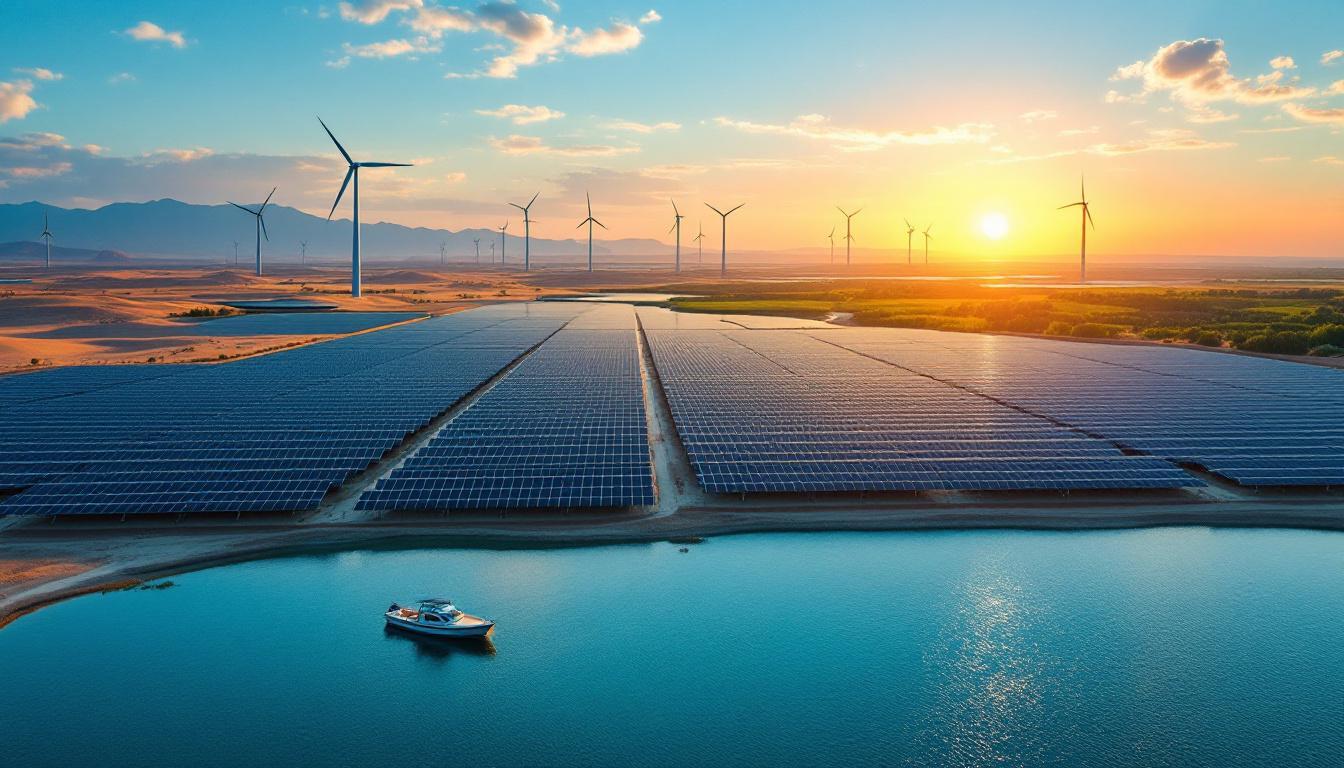
Timing’s pretty crucial here. Abu Dhabi has set a goal to source 60% of its total energy needs from renewable and clean sources by 2035. To hit that target, EWEC plans to expand solar capacity to over 30 gigawatts and pair it with at least 8 gigawatts of battery energy storage. This combo, well, it’s pretty important. While solar energy is plentiful in the UAE, large-scale storage is necessary to smooth out the power supply and keep the grid stable when sunlight isn’t available, like after sunset or during dusty weather.
That storage component also signals a broader shift in the region’s energy approach. Gulf countries have traditionally relied heavily on gas-fired power plants to balance the intermittency of renewable energy. But now, huge batteries are allowing solar to play a larger role during peak demand hours, and cutting down on the need for fossil fuel backup. In this sense, the EWEC-Masdar partnership isn’t just about adding more renewables; it’s about making that clean energy usable around the clock.
Both companies also linked the deal to the UAE’s wider goal of hitting net-zero emissions by 2050. Abu Dhabi’s clean-energy plans are increasingly framed within a broader, longer-term transition that touches on electricity, industry, transportation, and water. That’s pretty significant, especially considering how much the power sector still contributes to emissions, particularly in a country where desalination, which is energy-intensive, is vital.
Furthermore, EWEC and Masdar shared that their partnership would support cleaner water production too. Desalination consumes a lot of energy, and both firms are committed to reducing reliance on fossil fuels in that process, helping the UAE move closer to near-emission-free water production by 2030. It’s easy to overlook the water angle when talking about energy, but in the Emirates, the two are very closely linked. Any progress made in decarbonising power also impacts water sustainability.
There’s also an industrial and workforce component to this. Both sides said they want to boost opportunities for Emirati talent, which suggests the deal isn’t just about building assets but also about strengthening domestic skills in engineering, project management, and operations. This aligns with the broader UAE economic strategy, which aims to develop local expertise while still welcoming international partners and funding.
Take, for instance, the earlier Al Ajban solar project. EWEC awarded the 1.5 GW AC project to a consortium that included EDF Renewables, Korea Western Power Company, and Masdar as a local shareholder. Masdar later announced that the project had reached financial close and would use about 3 million solar panels, enough to power roughly 160,000 homes, with a projected reduction of around 2.4 million metric tonnes of carbon emissions annually in Abu Dhabi. The plant is slated to go operational in the third quarter of 2026.
This project, like Al Dhafra before it, demonstrates how Abu Dhabi is now comfortable deploying large-scale projects. It also highlights why having a formal collaboration framework can be so useful. As projects grow bigger and more technically complex, a standing arrangement can reduce friction between procurement and development, leading to fewer delays and more consistency.
For Masdar, this agreement reinforces its key role in realizing the UAE’s renewable ambitions, both locally and abroad. For EWEC, it provides a strategic pathway to convert policy ambitions into a structured flow of projects. And for Abu Dhabi, it bolsters the idea that the emirate can rapidly expand clean energy capacity without sacrificing reliability.
The message here is clear: the UAE is moving beyond isolated renewable projects and aiming for a more integrated model, where solar, storage, water, and industrial policy are planned together. This latest framework hints that Abu Dhabi intends to accelerate that transition while minimizing the gaps and seams between the institutions involved in delivering it.
- https://www.powerinfotoday.com/solar-energy/ewec-and-masdar-sign-collaboration-framework-agreement-to-accelerate-uae-renewable-energy-goals/ – Please view link – unable to able to access data
- https://masdar.ae/en/news/newsroom/wec-and-masdar-forge-strategic-framework-to-scale-renewable-energy – EWEC and Masdar have entered into a strategic Collaboration Framework Agreement (CFA) to accelerate the deployment of utility-scale renewable energy projects in the UAE. The agreement aims to diversify the UAE’s energy mix, strengthen supply security, and support local industrial growth. It also focuses on maximising In-Country Value and fostering Emirati talent. The CFA was signed by Ahmed Ali Alshamsi, CEO of EWEC, and Mohamed Jameel Al Ramahi, CEO of Masdar. The collaboration builds upon their successful history of partnership on projects such as Al Dhafra Solar PV, Al Ajban Solar PV, Khazna Solar PV, and the gigascale ‘round-the-clock’ solar and battery storage project. ([masdar.ae](https://masdar.ae/en/news/newsroom/wec-and-masdar-forge-strategic-framework-to-scale-renewable-energy?utm_source=openai))
- https://masdar.ae/en/news/newsroom/ewec-announces-partners-to-develop-solar-project-in-abu-dhabi – EWEC has awarded the 1.5 gigawatt (AC) Al Ajban Solar PV Independent Power Project to an international consortium comprising EDF Renewables, Korea Western Power Company (KOWEPO), and Masdar as the local shareholder. The project is located in Al Ajban, 70 km northeast of Abu Dhabi, and is expected to be operational by Q3 2026. Once completed, it will generate enough electricity to power 160,000 households across the UAE and is anticipated to reduce Abu Dhabi’s carbon emissions by 2.4 million metric tonnes annually. ([masdar.ae](https://masdar.ae/en/news/newsroom/ewec-announces-partners-to-develop-solar-project-in-abu-dhabi?utm_source=openai))
- https://masdar.ae/en/news/newsroom/worlds-largest-solar-power-plants-launched-by-ewec – The Al Ajban Solar PV project, a 1.5 gigawatt (GW) solar power plant in Al Ajban province, has achieved financial close. The project is a collaboration between EDF Renewables, Korea Western Power Co (KOWEPO), and Masdar, with financing from six top-tier banks and financial institutions. The plant will consist of 3 million solar panels using advanced bifacial technology, generating enough power for 160,000 UAE households and reducing CO2 emissions by over 2.4 million tons annually. ([masdar.ae](https://masdar.ae/en/news/newsroom/worlds-largest-solar-power-plants-launched-by-ewec?utm_source=openai))
- https://www.ess-news.com/2026/05/05/masdar-deal-commits-abu-dhabi-energy-company-to-8-gw-of-battery-storage/ – Masdar and EWEC have signed a strategic framework agreement to rapidly scale renewable energy deployment in Abu Dhabi, committing to the deployment of more than 30 GW of solar photovoltaic capacity and over 8 GW of battery energy storage. The agreement aims to diversify the UAE’s energy mix, strengthen supply security, and support local industrial growth. ([ess-news.com](https://www.ess-news.com/2026/05/05/masdar-deal-commits-abu-dhabi-energy-company-to-8-gw-of-battery-storage/?utm_source=openai))
- https://renewablewatch.in/2026/05/06/ewec-and-masdar-join-forces-for-30-gw-solar-and-8-gw-battery-storage-capacity-in-uae/ – EWEC and Masdar have signed a collaboration framework agreement to accelerate the development of renewable energy projects across the UAE. The agreement supports EWEC’s plans to deploy more than 30 GW of solar PV capacity and over 8 GW of battery energy storage, aligning with Abu Dhabi’s Clean Energy Strategy 2035 and the UAE Net Zero 2050 initiative. ([renewablewatch.in](https://renewablewatch.in/2026/05/06/ewec-and-masdar-join-forces-for-30-gw-solar-and-8-gw-battery-storage-capacity-in-uae/?utm_source=openai))
- https://en.aletihad.ae/news/uae/4663317/ewec–masdar-forge-strategic-framework-to-rapidly-scale-rene – EWEC and Masdar have entered into a strategic Collaboration Framework Agreement (CFA) to accelerate the deployment of utility-scale renewable energy projects in the UAE. The agreement aims to diversify the UAE’s energy mix, strengthen supply security, and support local industrial growth. It also focuses on maximising In-Country Value and fostering Emirati talent. The CFA was signed by Ahmed Ali Alshamsi, CEO of EWEC, and Mohamed Jameel Al Ramahi, CEO of Masdar. The collaboration builds upon their successful history of partnership on projects such as Al Dhafra Solar PV, Al Ajban Solar PV, Khazna Solar PV, and the gigascale ‘round-the-clock’ solar and battery storage project. ([en.aletihad.ae](https://en.aletihad.ae/news/uae/4663317/ewec–masdar-forge-strategic-framework-to-rapidly-scale-rene?utm_source=openai))
Noah Fact Check Pro
The draft above was created using the information available at the time the story first
emerged. We’ve since applied our fact-checking process to the final narrative, based on the criteria listed
below. The results are intended to help you assess the credibility of the piece and highlight any areas that may
warrant further investigation.
Freshness check
Score:
10
Notes:
The article reports on a recent agreement signed on May 5, 2026, between EWEC and Masdar, with no evidence of prior publication or recycled content. The earliest known publication date of similar content is May 5, 2026, indicating high freshness. ([masdar.ae](https://masdar.ae/en/news/newsroom/wec-and-masdar-forge-strategic-framework-to-scale-renewable-energy?utm_source=openai))
Quotes check
Score:
8
Notes:
Direct quotes from Ahmed Ali Alshamsi and Mohamed Jameel Al Ramahi are present. These quotes are consistent with those found in the official press release from Masdar. ([masdar.ae](https://masdar.ae/en/news/newsroom/wec-and-masdar-forge-strategic-framework-to-scale-renewable-energy?utm_source=openai)) However, the absence of independent verification sources raises concerns about the authenticity of these quotes.
Source reliability
Score:
6
Notes:
The primary source is Masdar’s official press release, which is a direct communication from the company. While it provides firsthand information, it may lack independent verification. The article also references other sources, but their credibility is uncertain due to limited information.
Plausibility check
Score:
7
Notes:
The claims about the collaboration between EWEC and Masdar to deploy over 30 GW of solar PV capacity and 8 GW of battery storage by 2035 align with the UAE’s renewable energy goals. However, the lack of independent verification and the reliance on a single source for these figures reduce the confidence in their accuracy.
Overall assessment
Verdict (FAIL, OPEN, PASS): FAIL
Confidence (LOW, MEDIUM, HIGH): MEDIUM
Summary:
The article reports on a recent collaboration between EWEC and Masdar to advance renewable energy projects in the UAE. However, the reliance on Masdar’s press release as the primary source, the lack of independent verification, and the absence of corroborating reports from other reputable outlets raise significant concerns about the accuracy and reliability of the information presented. ([masdar.ae](https://masdar.ae/en/news/newsroom/wec-and-masdar-forge-strategic-framework-to-scale-renewable-energy?utm_source=openai))


