

 10:08 pm - October 15, 2026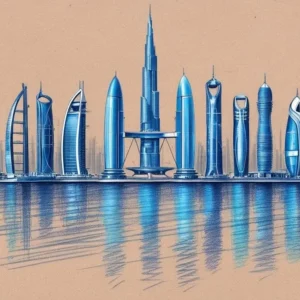
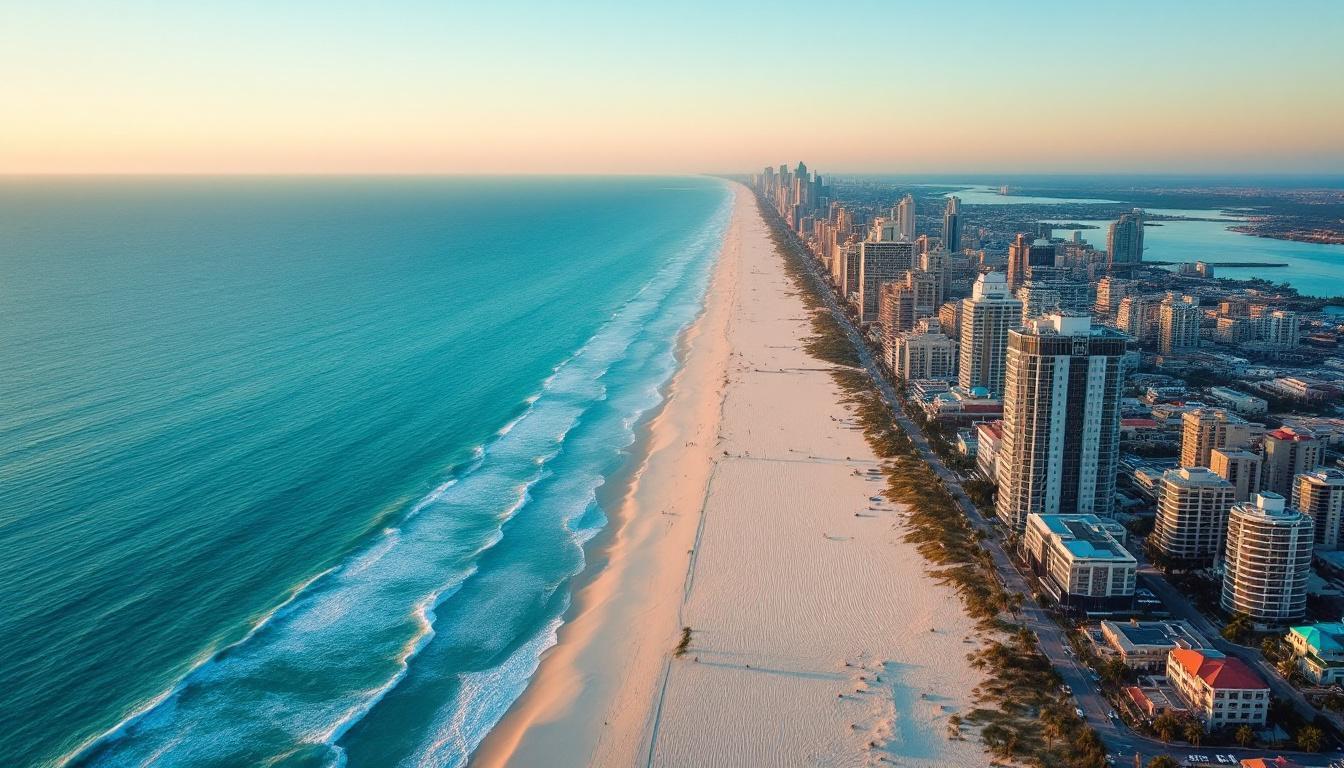
Once dominated by glass towers and climate-controlled exteriors that overlooked the desert environment, Gulf cities are gradually embracing traditional principles and innovative technologies to create more sustainable, climate-adapted urban landscapes.
For many years now, the iconic buildings of the Gulf have seemed to promise a kind of insulation from their extreme environment. Walk into a lobby in Dubai, Abu Dhabi, or Doha, and the desert outside feels oddly distant. The air inside is cool, the glass is tightly sealed, and the oppressive heat outside is kept at bay by energy systems that turn climate control into a managed process, rather than something you just live with naturally.
That image of sleek modernity has become a cornerstone of the region’s architectural identity. Cities transformed rapidly by oil wealth embraced reflective towers as symbols of progress, financial strength, and international relevance. Their shiny surfaces did more than just hold offices or hotel rooms, they sent a message that the Gulf had arrived on the world stage and was building in the style of global financial centers.
However, as ArchDaily’s recent review of Gulf modernism points out, that urban image was built on a pretty tricky trade-off. The rise of glass skyscrapers, climate-controlled interiors, and sprawling master plans depended heavily on cheap energy and cheap construction materials like petrochemicals. Air conditioning, synthetic insulation, membranes, plastics, and asphalt allowed these deserts to be transformed into sprawling urban landscapes with little regard for the heat, sunlight, or limited resources. Essentially, that approach often treated the climate as a problem to be overridden rather than accommodated.

Now, it’s worth noting that this wasn’t always the way architecture worked in those regions. Even before the era of curtain walls and tower blocks, settlements across the Gulf had evolved with the desert climate in mind. Dense neighborhoods, shaded alleys, courtyards, thick walls, and wind towers all aimed to cut down solar gain and promote airflow. These weren’t merely nostalgic gestures, they were practical responses to the extreme heat and scarce resources.
The modern Gulf city, however, diverged sharply from that tradition. As Dubai, Doha, and Abu Dhabi rapidly urbanized, architecture became a way to visibly showcase the region’s Oil Era prosperity. The skyline no longer just served as a backdrop, it morphed into a tool for branding, signaling growth, connectivity, and importance. Tall towers built in the international style and artificial landscapes made clear that the region had entered a new phase, even if, truth be told, that new era was still largely dependent on fossil fuels.
Rem Koolhaas captured some of this tension when writing about the Gulf, describing a place where global urban models were quickly reproduced. His account highlighted how shopping malls, airports, and towers often borrowed the aesthetics of modernity without addressing the deeper social or environmental issues. That critique still holds water today, much of Gulf’s built environment has prioritized spectacle over climate compatibility, often leaving environmental responses as afterthoughts.
The repercussions of this approach are now more evident. Glass façades, exposed to harsh sunlight, perform poorly under such intense solar heat. Cooling needs skyrocket, infrastructure sprawls to accommodate expansion, heat island effects worsen, and in a region already suffering from some of the world’s hottest summers, these issues make the limits of petro-urbanism painfully visible.
Meanwhile, climate change is nudging policymakers in the Gulf toward reevaluation. Urban strategies are increasingly focusing on resilience, efficiency, and sustainability. Abu Dhabi’s Estidama, for instance, has become a notable framework for sustainable development. Across the region, net-zero ambitions are becoming part of the conversation, even if actual progress remains inconsistent.
Some of the most promising efforts to shift away from that old paradigm have tried to reconnect contemporary design with traditional spatial principles. Masdar City, designed by Foster + Partners, was among the first large-scale attempts to imagine a low-carbon desert community. Instead of isolated towers, it prioritized compact streets, shading, and passive cooling inspired by historic Arab settlements. While the project has evolved and faced ongoing debate, it marked a significant departure from the idea that modern Gulf cities have to be sealed off from their climate.
Other examples have embraced more technological solutions. The Al Bahr Towers in Abu Dhabi, with their responsive façades, reinterpret mashrabiya screens as dynamic shading devices that adapt to sunlight. Similarly, the Louvre Abu Dhabi employs its vast dome to create filtered light and a microclimate underneath. In both cases, environmental performance isn’t hidden away; it becomes an integral part of the architecture’s identity.
Msheireb Downtown Doha might be a clearer reflection of this broader shift. Instead of repeating the sprawling, isolated mega-projects of the past, the district emphasizes denser, walkable neighborhoods and shaded public spaces. It draws on traditional principles but integrates modern engineering, not as a mere nostalgic throwback, but as a way to re-center climate considerations in urban design.
This change isn’t just about looks, it matters for much bigger reasons. Architecture in the Gulf has historically been intertwined with large-scale systems of energy, movement, and land development. Oil didn’t just give a city its buildings; it shaped the very infrastructure that made those buildings possible. So, rethinking architectural practices now also involves reconsidering the petro-economic system that created these cities in the first place.
That said, the future isn’t entirely straightforward. Projects like NEOM and The Line continue to operate at the grand scale of spectacle, reminiscent of earlier Gulf megaprojects. They now claim to embrace sustainability and a post-oil vision, but the question remains: can those claims really match the resource demands of such enormous development efforts?
What’s pretty clear, though, is that the desert cannot be just a neutral background to be subdued through technology and cheap energy anymore. It has returned as a force that architecture must contend with directly. For Gulf cities, this means moving beyond the outdated idea that modernity relies on insulating inhabitants from climate. The more compelling projects now acknowledge heat, shade, and airflow as fundamental design principles, not obstacles to be overcome but realities to work with.
It doesn’t necessarily mean the end of glass towers, far from it. But it does suggest that the region is heading for a period of more self-aware urban growth. The most forward-thinking projects aren’t trying to wipe out or ignore the desert; instead, they’re learning once again how to build with it.
- https://www.archdaily.com/1041515/oil-glass-and-identity-gulf-modernism-between-global-image-and-local-climate – Please view link – unable to able to access data
- https://www.archdaily.com/1041515/oil-glass-and-identity-gulf-modernism-between-global-image-and-local-climate – This article examines the evolution of Gulf modernism, highlighting how architecture in cities like Dubai, Doha, and Abu Dhabi transitioned from traditional designs to glass towers symbolising financial power and global ambition. It discusses the reliance on petroleum for energy-intensive cooling systems and the environmental challenges posed by this approach. The piece also explores the shift towards sustainable urban planning, citing projects like Masdar City and Msheireb Downtown Doha that integrate traditional design principles with modern technology to address climate concerns.
- https://arquitecturaviva.com/articles/el-golfo-3 – Rem Koolhaas’s essay ‘The Gulf’ delves into the rapid urbanisation of the Gulf region, driven by oil wealth. He critiques the region’s development, noting the construction of skyscrapers, shopping centres, and airports that mimic global urban prototypes. Koolhaas highlights the region’s ambition and the sometimes ambiguous outcomes of this development, suggesting a farewell performance of an ‘Urban’ that has become dysfunctional due to age and lack of invention.
- https://en.wikipedia.org/wiki/Tropical_Modernism – Tropical Modernism is an architectural style that emerged in the mid-20th century, blending modernist principles with tropical vernacular traditions. It responds to the unique climatic and cultural conditions of tropical regions, primarily in Asia, Africa, Latin America, and the Pacific Islands. Pioneering architects like Geoffrey Bawa and Charles Correa balanced modern techniques with traditional building practices, influencing contemporary sustainable design solutions in tropical climates.
- https://sedici.unlp.edu.ar/handle/10915/162820 – This chapter investigates the sustainability issues of postmodern coastal metropolises in the Arabian Gulf during the global climate change crisis. Focusing on Doha and Dubai, it analyses environmental data and policy documents to provide an overview of climate change impacts in these emerging metropolises. The text identifies key areas for further research and urban reform, highlighting the urgent need for more sustainable and resilient urban development in the region.
- https://link.springer.com/chapter/10.1007/978-981-15-1529-3_7 – This chapter explores how architecture influences identity formation in Kuwait and the Gulf. It examines the transition from traditional Arab medinas to modern cities and how this redefined notions of tradition, locality, and identity. The text discusses the rapid transformation of the built environment and its impact on local culture and sense of place, focusing on Kuwait as a case study.
- https://pure.udem.edu.mx/en/publications/identity-lost-and-found-architecture-and-identity-formation-in-ku/ – This research examines the role of architecture in identity formation in Kuwait and the Gulf. It traces the transition from traditional Arab medinas to modern cities and how this redefined notions of tradition, locality, and identity. The study highlights the rapid transformation of the built environment and its impact on local culture and sense of place, focusing on Kuwait as a case study.
Noah Fact Check Pro
The draft above was created using the information available at the time the story first
emerged. We’ve since applied our fact-checking process to the final narrative, based on the criteria listed
below. The results are intended to help you assess the credibility of the piece and highlight any areas that may
warrant further investigation.
Freshness check
Score:
10
Notes:
The article was published on May 18, 2026, making it highly fresh. No evidence of prior publication or recycled content was found. The narrative appears original and timely.
Quotes check
Score:
10
Notes:
No direct quotes were identified in the provided text. The content is paraphrased and does not rely on unverifiable direct quotations.
Source reliability
Score:
10
Notes:
The article is published on ArchDaily, a reputable platform known for its focus on architecture and urbanism. The author, Ananya Nayak, is associated with ArchDaily, indicating a direct and independent source. No signs of derivative content were found.
Plausibility check
Score:
10
Notes:
The claims made in the article align with established knowledge about Gulf modernism and its relationship with climate. The discussion on the evolution of Gulf architecture and its environmental considerations is plausible and consistent with existing literature.
Overall assessment
Verdict (FAIL, OPEN, PASS): PASS
Confidence (LOW, MEDIUM, HIGH): HIGH
Summary:
The article is original, timely, and published on a reputable platform. It presents plausible claims supported by existing knowledge and is freely accessible for independent verification. No significant concerns were identified in any of the checks.

