





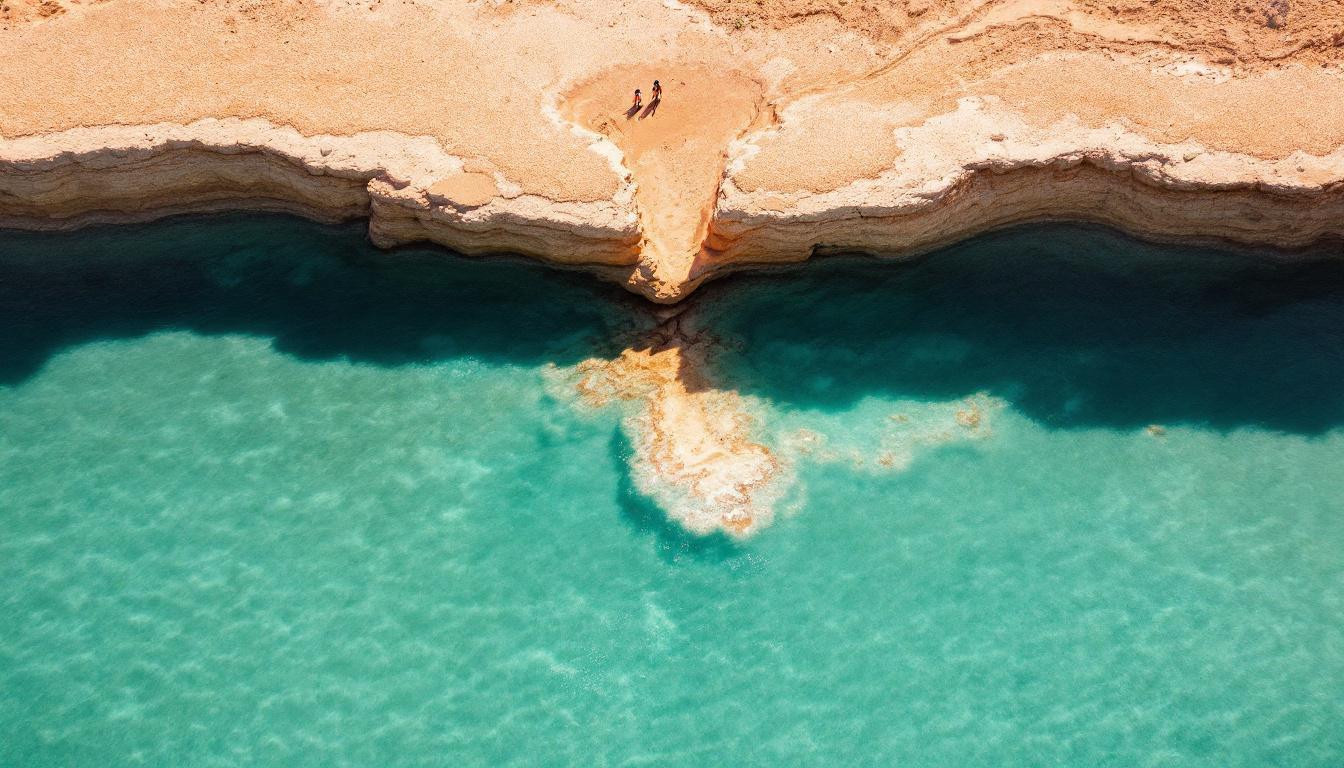
A new report warns that the environmental damage stemming from the US-Israeli conflict on Iran could have enduring effects on Gulf ecosystems, water supplies, and critical infrastructure, necessitating a shift towards proactive resilience measures.
A recent report from the Arab Gulf States Institute issues a warning that the environmental impacts resulting from the US-Israeli conflict on Iran could last much longer than the fighting itself. The fragile ecosystems, water supplies, and energy infrastructure in the Gulf are all vulnerable to enduring harm.
The study, authored by Omani researcher and policy specialist Dr. Aisha Al Sarihi along with environmental policy researcher Dr. Naser Alsayed, suggests that the region faces an increased danger of what they call ecocide , that is, serious, sometimes intentional or reckless destruction of the environment during warfare. The report emphasizes that in a region already under severe climate stress, the fallout from war might not simply end when hostilities cease.
At the core of this warning is the Gulf’s heavy reliance on intertwined energy and water systems. The report explains that assaults on oil and gas facilities, storage tanks, or maritime routes could lead to spills, toxic discharges, or air pollution. These incidents could harm marine ecosystems, fisheries, agriculture, and tourism. Damage to these vital assets might also compromise air quality and pollute land and seawater, creating problems that are tough and costly to fix later on.
Desalination stands out as a particularly vulnerable component. Gulf nations depend heavily on desalination for their freshwater supplies, which means even brief disruptions could quickly turn into public health emergencies. The report notes that prolonged interruptions to desalination plants could lead to water shortages, especially since alternative sources are quite limited. In an area where water demand just keeps climbing, this dependence leaves very little margin for error.
The report also highlights threats posed by nuclear facilities. Should these sites be struck or suffer accidents, the contamination could spread over large areas and persist for many years. Unlike visible war damages, environmental contamination tends to move slowly through soil, water, and air, with effects that can linger well after military actions have moved elsewhere.
According to Ahram Online, some analysts consider this conflict to be like a kind of fourth Gulf war, but with unique features shaped by the presence of US and Western infrastructure in the region. This situation makes Gulf states less like passive observers and more like active parts of the conflict environment itself. The article pointed out that the proximity of Iran’s possible retaliation, combined with strategic ties to Washington, has increased the chances of spillover effects.
Similarly, the Arab Center in Washington DC argues that Gulf states have already been pulled into the broader conflict through missile and drone strikes attributed to Iran or its allied militias. Their analysis notes that oil and gas facilities are among the most vulnerable sites, highlighting how regional security concerns are closely linked to the stability of economic infrastructure. For Gulf economies, it’s not just about military security but also about safeguarding the systems that support everyday life and exports.
The AGSI report mentions that some preparedness measures are already in place. Oman, for example, set up its National Committee for Natural Disasters back in 1988 and later bolstered its emergency response capabilities with the National Centre for Emergency Management in 2020. Other Gulf Cooperation Council (GCC) nations have developed their own disaster response systems, while the GCC Secretariat has established an Emergency Management Centre to monitor environmental and radiological threats and to collaborate more closely with international partners on nuclear safety.
Regional cooperation on dealing with oil spills is another vital area the report highlights. The Kuwait Regional Convention of 1978 remains a key legal framework for joint efforts, supported by the Regional Organisation for the Protection of the Marine Environment. This organization has previously helped coordinate major spill responses, providing the Gulf with a shared platform to manage incidents that cross borders or threaten common waters.
However, the report contends that the current approach is too reactive. It advocates for stronger coordination beforehand, not just after disasters happen. That would require improved monitoring, quicker sharing of information, and more investment in building resilience over the long haul. The authors argue that the region needs to shift away from crisis management that kicks in only once visible damage occurs, towards a proactive, preventative stance.
On the international legal front, the report notes that the Rome Statute of the International Criminal Court doesn’t presently recognize ecocide as a crime, though there are ongoing discussions about including it. The authors believe that Gulf states have a vested interest in backing those efforts, given how exposed they are to environmental damage from conflict and their dependence on vulnerable coastal and energy systems.
This view finds support among various environmental groups. Greenpeace International, for instance, has pointed out that war damages homes, hospitals, power grids, farmland, and water systems, and that the consequences of such destruction can last for decades. Similarly, the Center for American Progress warns that destroying oil facilities and water infrastructure carries long-lasting health and environmental costs, especially for displaced populations and future generations.
In a March report, The Guardian described pollution stemming from refinery strikes and infrastructure damage in Iran, including smoke, soot, and oil particles that can lead to acid rain and contaminate marine environments. These findings reinforce the worry that the environmental toll of war doesn’t stay confined to the battlefield , it crosses borders and long outlives the fighting.
For the Gulf region, the key takeaway from the AGSI report is clear. Climate vulnerability, water dependence, and concentrated energy infrastructure all make the area especially susceptible to long-term environmental damage caused by conflict. The authors emphasize that building resilience depends now on proactive planning, rather than just cleaning up after the damage has been done.
- https://www.omanobserver.om/article/1188224/business/economy/wars-environmental-toll-could-outlast-conflict-report – Please view link – unable to able to access data
- https://agsi.org/analysis/a-silent-casualty-of-war-the-rising-risk-of-ecocide-in-the-gulf/ – The Arab Gulf States Institute’s report, ‘A Silent Casualty of War: The Rising Risk of Ecocide in the Gulf’, examines the environmental impact of the US-Israeli conflict on Iran. Authored by Dr Aisha Al Sarihi and Dr Naser Alsayed, the paper highlights the threat of ecocide in the Gulf, a region vulnerable to climate change. It discusses how attacks on energy infrastructure could lead to oil spills, air pollution, and toxic contamination, affecting water resources, ecosystems, and sectors like fisheries, agriculture, and tourism. The report also addresses the risk of disruptions to desalination plants and nuclear facilities, which could have long-term environmental and health consequences. The authors call for proactive environmental crisis management and stronger coordination at national and regional levels to enhance resilience.
- https://english.ahram.org.eg/NewsContent/2/8/565714/World/Region/Study-%7C-The-impact-of-war-on-Iran-on-Gulf-states.aspx – An article from Ahram Online discusses the potential impact of the US-Israeli war on Iran on Gulf states. It suggests that the conflict could be considered the Fourth Gulf War, with effects differing from previous conflicts. The article highlights the Gulf states’ proximity to Iranian attacks and their efforts to manage regional conflicts through preventive diplomacy. It also addresses the challenges posed by the presence of American military bases and Western infrastructure in the Gulf, which could make these states part of the conflict’s operational environment. The article examines the hybrid threats facing the Gulf, including attacks on energy infrastructure and the potential for regional instability.
- https://arabcenterdc.org/resource/caught-in-the-crossfire-gulf-security-and-strategy-in-the-us-israel-war-on-iran/ – The Arab Center Washington DC’s article, ‘Caught in the Crossfire: Gulf Security and Strategy in the US–Israel War on Iran’, explores the evolving conflict between the US, Israel, and Iran and its implications for Gulf states. It discusses how the conflict has expanded beyond initial exchanges into a broader war involving multiple actors, threatening regional stability. The article highlights the Gulf states’ strategic partnerships with Washington and their role in the global energy system. It notes that all Gulf countries have experienced missile and drone attacks attributed to Iran or allied militias, targeting oil and gas facilities. The piece underscores the risks of further escalation and the need for Gulf states to reassess their security strategies.
- https://www.americanprogress.org/article/the-human-and-environmental-costs-of-the-war-in-iran/ – The Center for American Progress article, ‘The Human and Environmental Costs of the War in Iran’, examines the devastating health and environmental impacts of the US and Israeli war with Iran. It discusses mass displacement, polluted air and water, and long-term health risks for future generations. The article highlights the destruction of critical infrastructure, including oil facilities and water systems, leading to environmental degradation. It also addresses the challenges of post-conflict environmental remediation and the need for international recognition of ecocide as a crime. The piece calls for a comprehensive approach to address the human and environmental costs of the conflict.
- https://www.greenpeace.org/international/story/82201/iran-lebanon-war-environment-climate-impacts/ – Greenpeace International’s article, ‘The US-Israel war on Iran and how war and conflict are destroying the environment’, discusses the environmental consequences of the ongoing conflict in the Middle East. It highlights the destruction of homes, hospitals, power grids, water systems, farmland, and coastlines, showing that conflict is not only a human tragedy but also an environmental one. The article addresses the impact on public health, ecosystems, and climate, noting that the damage can last for decades. It calls for early environmental assessments during conflicts and emphasizes the need for international recognition of ecocide as a crime.
- https://www.theguardian.com/environment/2026/mar/19/down-to-earth-iran-us-israeli-war-environmental-destruction – An article from The Guardian, ‘From black rain to marine pollution, the war in Iran is an environmental disaster’, reports on the environmental repercussions of the US-Israeli conflict with Iran. It details the destruction of oil refineries, military bases, industrial areas, and nuclear facilities in Iran, leading to environmental contamination. The article discusses the release of pollutants such as soot, smoke, oil particles, and sulphur compounds, resulting in black acid rain. It also addresses the potential for marine pollution due to attacks on naval facilities and the risk to desalination plants, which are crucial for the region’s water supply. The piece underscores the long-term ecological risks and the need for international attention to the environmental impact of the conflict.
Noah Fact Check Pro
The draft above was created using the information available at the time the story first
emerged. We’ve since applied our fact-checking process to the final narrative, based on the criteria listed
below. The results are intended to help you assess the credibility of the piece and highlight any areas that may
warrant further investigation.
Freshness check
Score:
10
Notes:
The article was published on April 20, 2026, making it current and timely. No evidence of recycled or outdated content was found.
Quotes check
Score:
10
Notes:
The article includes direct quotes from Dr. Aisha Al Sarihi and Dr. Naser Alsayed. No earlier instances of these quotes were found, suggesting originality. However, the absence of independent verification for these quotes is noted.
Source reliability
Score:
7
Notes:
The article originates from the Oman Observer, a regional publication. While it provides valuable insights, its reach and influence are more limited compared to major international news organisations. The authors, Dr. Aisha Al Sarihi and Dr. Naser Alsayed, are identified as Omani and environmental policy researchers, respectively. Further verification of their credentials and affiliations is recommended to assess their expertise and potential biases.
Plausibility check
Score:
8
Notes:
The claims regarding the environmental impact of the US-Israeli conflict on the Gulf region are plausible and align with existing concerns about regional vulnerabilities. However, the article lacks specific data or references to support these claims, which diminishes its credibility. The absence of corroborating reports from other reputable sources further raises questions about the accuracy of the information presented.
Overall assessment
Verdict (FAIL, OPEN, PASS): FAIL
Confidence (LOW, MEDIUM, HIGH): MEDIUM
Summary:
The article presents timely and plausible claims about the environmental impact of the US-Israeli conflict on the Gulf region. However, it lacks specific supporting data and independent verification from other reputable sources, raising concerns about its accuracy and reliability. The reliance on a single source and the absence of corroborating reports further diminish the credibility of the information presented. Given these issues, the article does not meet the necessary standards for publication under our editorial guidelines.


