




The Higher Colleges of Technology has launched a significant solar project across six campuses, aligning with the UAE’s national net zero ambitions and advancing campus-based renewable energy initiatives.
The Higher Colleges of Technology has started ramping up its on-site solar generation efforts across its campuses after signing a deal with Three Eight Six, an independent power producer. This move aligns with the UAE’s broader push toward decarbonising its electricity grid and boosting overall energy efficiency, which is pretty interesting, right?
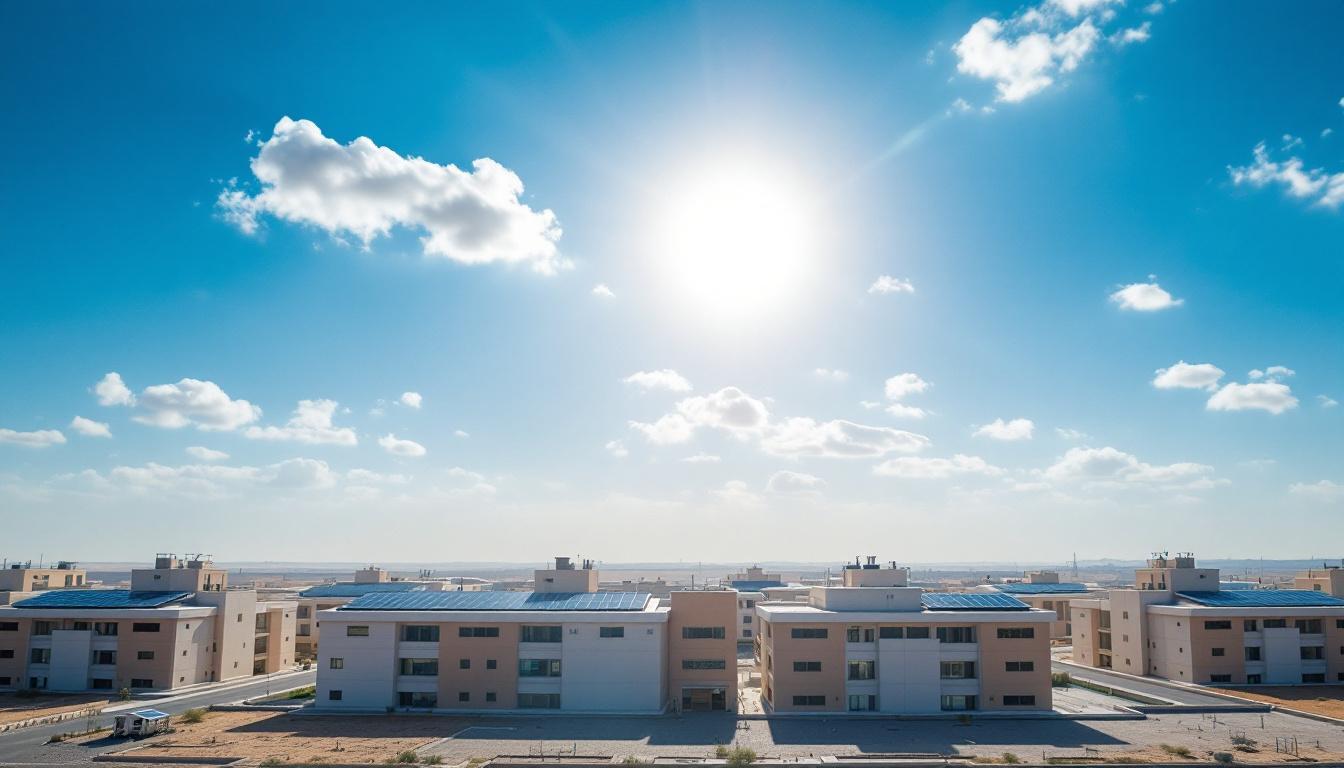
According to the announcement, the project will cover six campuses spread across Abu Dhabi, Dubai, and Al Ain, where approximately 7,000 solar modules will be installed. When everything is up and running, the system is expected to reach a peak capacity of 4.3 MW and generate nearly 8 GWh of clean electricity annually. This should help meet the campuses’ everyday energy needs through local power, reducing reliance on the main grid, talk about a smart move.
The colleges estimate that this array will account for around 16 to 17 percent of their total electricity consumption. And there’s more, it’s projected to cut carbon emissions by roughly 90,000 metric tonnes over its entire lifespan, which is quite significant. To put it in perspective, that’s like taking about 21,000 cars off the road for a year or the amount of carbon absorbed by 1.5 million trees. Pretty impactful, don’t you think?
Work on the project is already underway. The first phase, which generates 2.3 MW, was energised back in April 2026, wait, 2026? Yep, that’s the date mentioned, and since then, it has been offsetting over 4 GWh of energy each year, according to the latest updates. The remaining 2 MW are scheduled for completion sometime in the last quarter of 2026.
Mohammed Al Nuaimi, the vice president of shared services at HCT, pointed out that this initiative is a pretty strategic step toward making campus operations more sustainable and resource-efficient. He also emphasized that it fits nicely into the wider UAE sustainability agenda, including the country’s Net Zero 2050 Strategy and Energy Strategy 2050. Honestly, these plans are kind of ambitious, but they’re crucial for the country’s future.
Now, those national frameworks give this project more significance. The UAE Energy Strategy 2050, for example, aims to triple renewable energy’s share, hitting a capacity of nearly 20 GW by 2030 and ensuring that about 30 percent of the energy mix comes from clean sources by then. Plus, the plan seeks to improve energy efficiency dramatically, targeting a reduction in energy consumption intensity of around 42 to 45 percent by 2030. It’s quite an ambitious roadmap, but it’s also a vital part of the country’s environmental and economic vision.
Aside from its national role, for HCT, deploying solar isn’t just about infrastructure, it’s also an educational opportunity. The colleges say the system will give students hands-on experience with clean energy tech and bolster engineering and innovation programs. This aspect is becoming increasingly important in the Gulf region, where universities are expected not just to lower their own carbon footprints but also to prepare students for careers in energy transition industries. I find that particularly interesting, it combines education with sustainability practically.
Ahmad Al Khayyat, chairman of Three Eight Six, mentioned that the project demonstrates an integrated approach from design all the way through to operation and maintenance, adhering to strict performance and sustainability standards. His comments highlight a wider regional trend, with many public and semi-public institutions turning to long-term power purchase agreements and rooftop solar setups to reduce emissions and make energy costs more predictable. It’s a smart strategy, I think.
This HCT project is also part of a larger UAE strategy aimed at diversifying its energy sources. Government officials say the country is balancing traditional and alternative energy options to sustain growth while meeting environmental targets. The official energy mix involves renewables, nuclear power, and other sources, not to mention that renewables are expected to play an even bigger role as time goes on.
The direction of this policy has sharpened in recent years. The UAE has presented its net zero pathway as both a climate commitment and an economic boost, linking decarbonization efforts to investment, industrial growth, and job creation. While campus solar systems like HCT’s are small compared to major utility projects, they do serve a clear purpose: showing how institutions can be active participants in the energy transition while also saving on operational costs.
Timing-wise, the move makes sense, too. Across the UAE, solar power has become one of the most practical tools for institutions looking to dodge rising electricity costs and cut emissions, without waiting on large-scale grid reforms. For educational institutions, the benefits are twofold: they support technical training and also see tangible operational savings.
If all goes according to schedule, the HCT installation will be another piece in the puzzle of distributed clean energy in the country. It probably won’t change the entire national energy mix overnight, but it’s a good example of how the transition is happening gradually, campus by campus, roof by roof, aligned with the UAE’s long-term climate and energy goals.
- https://abudhabimagazine.ae/archives/135149 – Please view link – unable to able to access data
- https://www.moei.gov.ae/en/about-ministry/energy-strategies-to-achieve-net-zero – The UAE Energy Strategy 2050 aims to triple the contribution of renewable energy and invest AED 150 to AED 200 billion by 2030 to meet the country’s increasing demand for energy. The strategy outlines a long-term national program to balance meeting the rising energy demand and sustaining natural resources for generations to come. In the first phase, which runs till 2030, the strategy aims to reduce emissions from the water and energy sectors to ensure they achieve net zero by 2050, eliminate the contribution of clean coal to the energy mix, increase individual and institutional energy consumption efficiency by 42-45%, and triple the share of renewable energy. The strategy also aims to increase the installed clean energy capacity from 14.2 GW to 19.8 GW by 2030, surge the share of installed clean energy capacity in the total energy mix to 30%, and increase the contribution of clean energy generation to 32% to ensure the country is on track to achieve its climate change mitigation goals. Additionally, the strategy aims to create 50,000 new green jobs by 2030 and achieve financial savings of AED 100 billion, mobilizing investments between AED 150-200 billion to ensure energy demand is met and to sustain economic growth in the UAE. The UAE has one of the lowest grid emission factors compared to the global average and aims to achieve a grid emission factor of 0.27 kg CO2/kWh by 2030.
- https://u.ae/en/about-the-uae/strategies-initiatives-and-awards/strategies-plans-and-visions/environment-and-energy/uae-energy-strategy-2050 – The UAE Energy Strategy 2050 aims to triple the contribution of renewable energy and invest AED 150 to AED 200 billion by 2030 to meet the country’s increasing demand for energy. The updated strategy outlines a long-term national program to balance meeting the rising energy demand and sustaining natural resources for generations to come. In the first phase, which runs till 2030, the strategy aims to reduce emissions from the water and energy sectors to ensure they achieve net zero by 2050, eliminate the contribution of clean coal to the energy mix, increase individual and institutional energy consumption efficiency by 42-45%, and triple the share of renewable energy. The strategy also aims to increase the installed clean energy capacity from 14.2 GW to 19.8 GW by 2030, surge the share of installed clean energy capacity in the total energy mix to 30%, and increase the contribution of clean energy generation to 32% to ensure the country is on track to achieve its climate change mitigation goals. Additionally, the strategy aims to create 50,000 new green jobs by 2030 and achieve financial savings of AED 100 billion, mobilizing investments between AED 150-200 billion to ensure energy demand is met and to sustain economic growth in the UAE. The UAE has one of the lowest grid emission factors compared to the global average and aims to achieve a grid emission factor of 0.27 kg CO2/kWh by 2030.
- https://www.uae-embassy.org/discover-uae/climate-and-energy/uae-energy-diversification – The UAE is pairing traditional and alternative energy sources to sustainably produce the power needed to fuel its economy. The UAE’s Net Zero by 2050 Strategic Initiative is working to expand innovation across the energy sector. The UAE has taken aggressive action to diversify the UAE energy mix and economy. Today, oil and gas exports account for about 30 percent of the UAE’s total economic activity. The share of additional energy sources is rapidly expanding to meet growing energy demands. The UAE Energy Strategy 2050 targets an energy mix that combines commercially-viable renewable, nuclear and alternative energy sources to meet the UAE’s economic requirements and environmental goals as follows: 44 percent alternative energy, 38 percent gas, 12 percent clean coal, 6 percent nuclear. In 2023, the UAE updated its National Energy Strategy to include several new goals, including: Create 50,000 new jobs by 2030, Triple renewable energy capacity to 14 GW by 2030.
- https://www.moccae.gov.ae/en/media-center/news/16/11/2023/climate-neutrality-a-national-priority-as-uae-net-zero-2050-strategy-accelerated-following-the-annou – Following the announcement at The UAE Government Annual Meetings earlier this month of the nation’s comprehensive Net Zero 2050 Strategy, Her Excellency Mariam bint Mohammed Almheiri, the UAE Minister of Climate Change and Environment, outlined a detailed nation-wide action plan to achieve climate neutrality by 2050. Her Excellency Mariam Almheiri said: “As early as 2021, the UAE Net Zero Strategic Initiative, coordinated by the Ministry of Climate Change and Environment, started to study, evaluate, and propose National Climate Pathways to achieve Net Zero emissions by 2050. Following UAE Cabinet endorsement of our plan, we are now unveiling a suite of enablers and initiatives which will accelerate our journey to becoming a climate-neutral nation.” Her Excellency added: “The UAE Net Zero 2050 Strategy is designed to act as an engine for economic and societal advancement by leading the transition to Net Zero emissions and thereby contributing to global mitigation efforts. It builds on Net Zero by 2050 Strategic Initiative, launched in 2021, which set out the UAE’s ambition, followed by the launch of the National Net Zero by 2050 Pathway (2022), which set out the timeline and mechanisms. Crucially, the Net Zero 2050 Strategy showcases how the country will build on the momentum created by the UAE’s Third Update to the Second NDC, moving from 40% emission reduction by 2030, to Net Zero by 2050.
- https://site.moccae.gov.ae/en/our-sustainable-environment/strategies/uae-renewable-energy-strategy.aspx – 2017 saw the launch of the UAE Energy Strategy 2050 – the first unified energy strategy in the country that is based on supply and demand. The strategy aims to increase the contribution of clean energy to the total energy mix from 25 per cent to 50 per cent by 2050, and reduce the carbon footprint of power generation by 70 per cent, thus saving AED700 billion by 2050. It also seeks to boost the consumption efficiency of individuals and corporates by 40 per cent. The strategy targets an energy mix that combines renewable, nuclear and clean energy sources to meet the UAE’s economic requirements and environmental goals as follows: 44% clean energy, 38% gas, 12% clean coal, 6% nuclear power. The UAE government aims to invest AED600 billion by 2050 to meet the growing energy demand and drive the sustainable growth of the country’s economy. His Highness Sheikh Mohammed bin Rashid Al Maktoum, Vice President and Prime Minister of the UAE
Noah Fact Check Pro
The draft above was created using the information available at the time the story first
emerged. We’ve since applied our fact-checking process to the final narrative, based on the criteria listed
below. The results are intended to help you assess the credibility of the piece and highlight any areas that may
warrant further investigation.
Freshness check
Score:
7
Notes:
The article mentions that the first phase of the solar project was energised in April 2026, which is a future date as of May 11, 2026. This suggests that the content may be speculative or based on projections rather than actual events. Additionally, the article’s publication date is not provided, making it difficult to assess the freshness of the information. Without a clear publication date, it’s challenging to determine if the content is recycled or based on press releases.
Quotes check
Score:
5
Notes:
The article includes direct quotes from Mohammed Al Nuaimi, vice president of shared services at HCT, and Ahmad Al Khayyat, chairman of Three Eight Six. However, these quotes cannot be independently verified through the provided sources. Without access to the original press release or official statements, it’s difficult to confirm the authenticity of these quotes. The lack of verifiable sources raises concerns about the reliability of the information presented.
Source reliability
Score:
4
Notes:
The article appears to be sourced from a publication named ‘Abu Dhabi Magazine’. However, there is limited information available about this publication’s credibility and independence. Without a clear understanding of the publication’s reputation and editorial standards, it’s challenging to assess the reliability of the information presented. The absence of verifiable sources and the speculative nature of the content further diminish the trustworthiness of the article.
Plausibility check
Score:
6
Notes:
The article discusses a solar energy project involving the installation of approximately 7,000 solar modules across six campuses in Abu Dhabi, Dubai, and Al Ain, aiming to generate 4.3 MW of power and reduce carbon emissions by 90,000 metric tonnes. While these figures are plausible, the lack of verifiable sources and the speculative nature of the content raise questions about the accuracy of the claims. The absence of supporting evidence from reputable sources makes it difficult to fully trust the information presented.
Overall assessment
Verdict (FAIL, OPEN, PASS): FAIL
Confidence (LOW, MEDIUM, HIGH): LOW
Summary:
The article presents information about a solar energy project involving the Higher Colleges of Technology and Three Eight Six. However, the speculative nature of the content, the lack of verifiable sources, and the absence of a clear publication date raise significant concerns about its accuracy and reliability. The absence of independent verification sources and the inability to confirm the authenticity of the quotes further diminish the trustworthiness of the information. Given these issues, the content cannot be considered reliable for publication.


