

 1:37 am - October 16, 2026
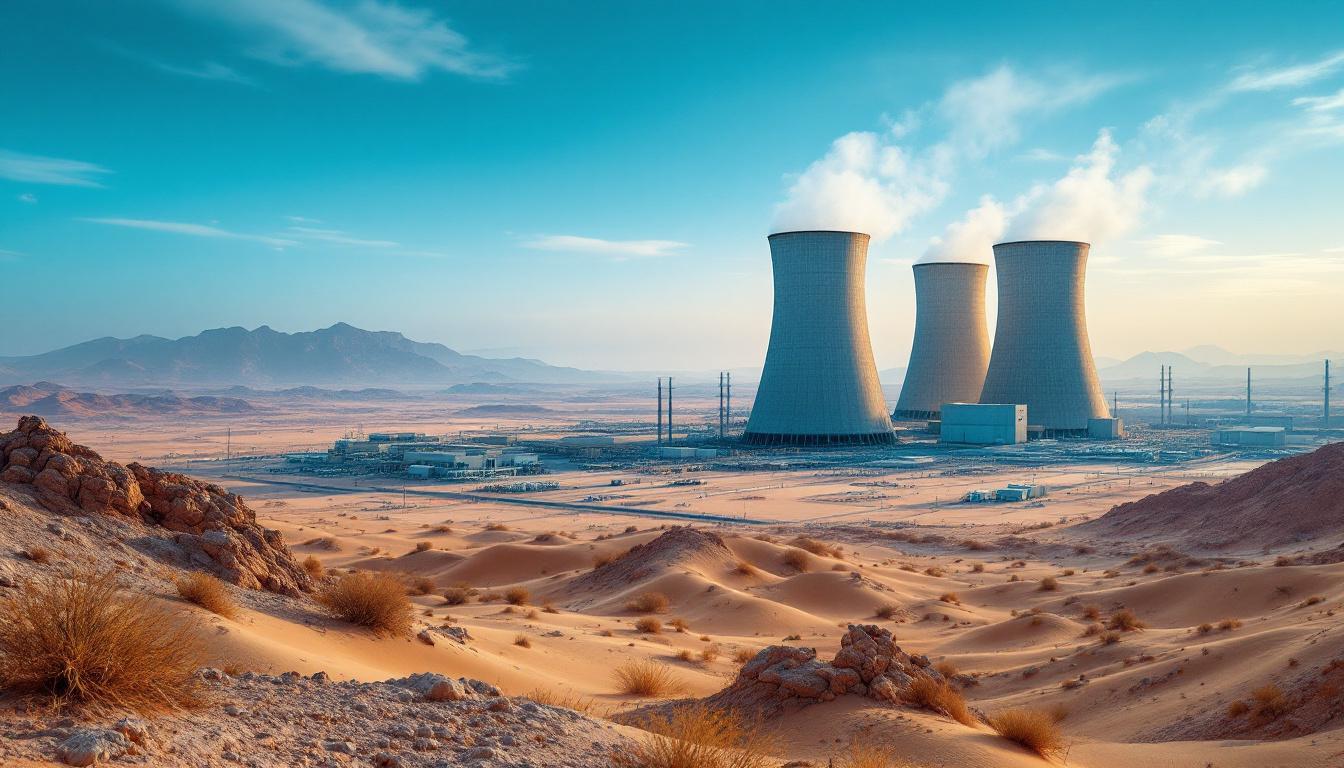
As the Middle East considers expanding its nuclear capacity to meet surging demand and climate goals, it grapples with security, climate risks, and regional stability, highlighting a complex debate over the future of low-carbon energy in a volatile region.
Nuclear power is once again grabbing the spotlight across the Middle East, as governments grapple with surging electricity needs, the impacts of climate change, and the desire for more stable, low-carbon energy sources. Yet, those same projects that aim to secure energy supplies also come with some tough questions, regarding safety, long-term stability, and how regional cooperation might play out.
This tension is really at the core of an ongoing debate, one that’s spreading beyond the traditional nuclear big players. Shota Kamishima, who’s a senior coordination officer at the International Atomic Energy Agency, explains that nuclear technology sits right where energy demand, innovation, and security worries intersect. In his view, that creates a pretty interesting opening for nations eager to diversify their energy mix without ramping up their emissions.
The push for nuclear has gotten a boost thanks to the global climate agenda. At the 2023 UN Climate Change Conference, nuclear energy was officially recognized as a low-emission technology, and there was a push to ramp up its expansion. Since then, 33 countries have thrown their support behind a goal to triple the world’s nuclear capacity by 2050, showing how much the industry hopes to bounce back after the shake-up caused by Fukushima in 2011.

In the Middle East, the United Arab Emirates often gets praised as a prime example of what a modern nuclear program can deliver. The Barakah plant, for example, has become a key part of the UAE’s energy mix, providing roughly a quarter of the country’s electricity. For policymakers in the Gulf interested in climate tech, Barakah is important not just as a power source, but as proof that large-scale nuclear projects can work in a hot, rapidly growing market.
Egypt is working on a similar path, though the country faces different energy pressures and has a broader development plan in mind. Along with big renewable energy projects, like the Benban Solar Park and the Gulf of Suez Wind Farm, Cairo is close to finishing the El Dabaa nuclear plant, which is expected to have an installed capacity of about 4,800 megawatts. Officials in Egypt argue that having nuclear alongside solar and wind will help create a more resilient grid, and might even support future exports of electricity.
Growing demand is definitely part of the story here. Almuntaser Albalawi, a researcher at the United Nations Institute for Disarmament Research, mentions that energy consumption in the Middle East and North Africa has tripled since 2000 and is still climbing, driven by AI advancements and broader economic shifts. The region also has a particularly heavy demand for desalination and cooling, which both require lots of electricity. That’s why finding stable, continuous baseload power is more urgent there than in many other parts of the world.
However, the obstacles are pretty significant. Nuclear plants aren’t short-term investments. Professor Zia Mian from Princeton University, who co-leads the Science and Global Security Programme, emphasizes that any serious discussion must consider the full lifecycle of a nuclear facility, roughly 75 years from start-up to decommissioning. The thing is, the Middle East’s recent history has been riddled with wars, revolutions, and long periods of instability, from the Arab-Israeli conflicts and the Iran-Iraq war to the US-led invasions of Iraq and the ongoing Syrian civil war.
That doesn’t necessarily rule out nuclear, but it definitely complicates the idea that big reactors are an easy or straightforward fit for the region. Security isn’t just about avoiding military attacks; it also involves good governance, solid regulations, emergency preparedness, and maintaining a highly specialized industrial sector for decades, things that are hard to guarantee amidst conflict and instability.
Climate makes things even trickier. The World Meteorological Organization has pointed out that the Middle East is warming up twice as fast as the global average. Temperatures could soar by as much as five degrees Celsius in some parts by the century’s end. Now, for nuclear operators, that’s important because reactors need a lot of cooling water and depend on stable thermal conditions. Extreme heat can cut efficiency and sometimes even force temporary shutdowns.
France, for example, has already seen this during summer months, when hotter weather limits the output of several reactors. In the Middle East, when peak demand hits, often during those hottest days, the strain could be even more severe. That doesn’t mean nuclear is impossible, but it does mean that reactors, cooling systems, and water sourcing need to be adapted to withstand harsher climates.
The political side is just as critical. For many governments, civilian nuclear projects are tied to national pride, industrial ambitions, and regional influence. But they also bring proliferation concerns, especially in a region where strategic mistrust remains widespread. The Central Asian Nuclear-Weapon-Free Zone, established in 2006 by Kazakhstan, Kyrgyzstan, Tajikistan, Turkmenistan, and Uzbekistan, is often brought up as a reminder that nuclear cooperation and restraint can coexist. That treaty, also known as the Semipalatinsk Treaty, bars those nations from developing, testing, or possessing nuclear weapons. Its anniversary this year has gained renewed relevance amid rising global worries over nuclear risks.
So, the key question isn’t really whether nuclear energy should or shouldn’t be part of the Middle East’s future, but rather what kind of role it can realistically play. Supporters argue it provides reliable, low-carbon electricity, a buffer against fuel price swings, and a pathway to cleaner industrial growth. Critics, on the other hand, point out that the costs, long timelines, and security risks make renewables, paired with storage, better grids, and demand management, more attractive options.
Mian highlights that solar and wind can be deployed faster and for a lot less money. He sees the so-called nuclear renaissance as a familiar sales pitch, one that’s recycled old promises for a technological breakthrough that often overlooks the political realities and historical baggage. He insists the region’s climate goals should be based on what can actually be built and operated reliably, rather than utopian visions of a future that might never materialize.
For the Middle East, especially the climate-conscious economies in the Gulf, the debate isn’t likely to end anytime soon. Nuclear power remains one of the few large-scale options capable of delivering steady, low-emission electricity. But in a region where heat, water scarcity, security, and diplomacy are all deeply interconnected, choosing nuclear involves weighing risks alongside promising possibilities.
- https://www.tajikistannews.net/news/279040768/nuclear-energy-in-the-middle-east-a-realistic-choice-or-a-risk – Please view link – unable to able to access data
- https://www.ungeneva.org/en/news-media/news/2026/05/118474/nuclear-energy-middle-east-realistic-choice-or-risk – This article discusses the growing interest in nuclear energy in the Middle East, highlighting the balance between regional security, climatic conditions, and international cooperation. It features insights from Shota Kamishima of the International Atomic Energy Agency (IAEA), who emphasises the potential of nuclear energy to support sustainable development and regional cooperation. The piece also mentions the 2023 UN Climate Change Conference, where nuclear energy was recognised as a low-emission technology, and notes that 33 countries aim to triple their nuclear power capacity by 2050, including the UAE’s Barakah nuclear power plant, which meets about 25% of the nation’s domestic energy needs.
- https://www.ungeneva.org/en/news-media/news/2026/04/118164/central-asia-celebrates-20-years-nuclear-weapon-free-zone – This article celebrates the 20th anniversary of the Central Asian Nuclear-Weapon-Free Zone (CANWFZ) Treaty, signed in 2006 by Kazakhstan, Kyrgyzstan, Tajikistan, Turkmenistan, and Uzbekistan. The treaty, also known as the Semipalatinsk Treaty, is a legally binding commitment by these countries not to manufacture, acquire, test, or possess nuclear weapons. The piece highlights the treaty’s significance in promoting regional security and non-proliferation, noting that it has become more relevant in the context of rising nuclear threats.
- https://en.wikipedia.org/wiki/Central_Asian_Nuclear_Weapon_Free_Zone – This Wikipedia article provides detailed information about the Central Asian Nuclear-Weapon-Free Zone (CANWFZ) Treaty, signed on 8 September 2006 at the Semipalatinsk Test Site in Kazakhstan. The treaty is a legally binding commitment by Kazakhstan, Kyrgyzstan, Tajikistan, Turkmenistan, and Uzbekistan not to manufacture, acquire, test, or possess nuclear weapons. It entered into force on 21 March 2009 after ratification by all five countries. The article discusses the treaty’s objectives, significance, and the role of the International Atomic Energy Agency (IAEA) in its implementation.
- https://www.kas.de/en/web/multilateraler-dialog-wien/to-the-third-nuclear-age-a-timeline/detail/-/content/semipalatinsk-nwfz-treaty-signed – This article from the Konrad-Adenauer-Stiftung discusses the signing of the Central Asian Nuclear-Weapon-Free Zone (CANWFZ) Treaty on 8 September 2006 at the former Semipalatinsk nuclear test site in Kazakhstan. The treaty, also known as the Semipalatinsk Treaty, is a legally binding commitment by Kazakhstan, Kyrgyzstan, Tajikistan, Turkmenistan, and Uzbekistan not to manufacture, acquire, test, or possess nuclear weapons. The piece highlights the treaty’s significance in promoting regional security and non-proliferation.
- https://www.un.org/nwfz/content/treaty-nuclear-weapon-free-zone-central-asia – This United Nations page provides an overview of the Central Asian Nuclear-Weapon-Free Zone (CANWFZ) Treaty, signed on 8 September 2006 at the former Semipalatinsk nuclear test site in Kazakhstan. The treaty is a legally binding commitment by Kazakhstan, Kyrgyzstan, Tajikistan, Turkmenistan, and Uzbekistan not to manufacture, acquire, test, or possess nuclear weapons. The page discusses the treaty’s objectives, significance, and the role of the United Nations in supporting its implementation.
- https://www.belfercenter.org/publication/nuclear-energy-middle-east-regional-security-cooperation-needed – This article from the Belfer Center for Science and International Affairs examines the challenges and considerations associated with nuclear energy in the Middle East. It discusses the high capital costs of nuclear reactors compared to gas or coal-fired plants and the safety, security, and proliferation risks specific to the region. The piece emphasises the need for major investments in technology, regulatory institutions, education, and training, as well as unprecedented regional cooperation to address these challenges.
Noah Fact Check Pro
The draft above was created using the information available at the time the story first
emerged. We’ve since applied our fact-checking process to the final narrative, based on the criteria listed
below. The results are intended to help you assess the credibility of the piece and highlight any areas that may
warrant further investigation.
Freshness check
Score:
6
Notes:
The article was published on 9 May 2026. A similar article titled ‘Nuclear energy in the Middle East: A realistic choice or a risk’ was published on 9 May 2026, suggesting potential recycling of content. The narrative aligns with discussions from 2024, indicating a lack of new developments. The inclusion of a press release from the International Atomic Energy Agency (IAEA) adds freshness but may not be entirely original. The presence of similar content across various platforms raises concerns about originality.
Quotes check
Score:
5
Notes:
The article includes quotes from Shota Kamishima, Senior Coordination Officer at the IAEA, and Almuntaser Albalawi, a researcher at the United Nations Institute for Disarmament Research. While these individuals are real and their affiliations are verifiable, the specific quotes cannot be independently verified through available sources. This lack of verifiable quotes raises concerns about the authenticity of the content.
Source reliability
Score:
4
Notes:
The article originates from Tajikistan News, a lesser-known publication. The presence of similar content across various platforms suggests potential recycling of material. The reliance on a press release from the IAEA adds credibility but may not be entirely original. The lack of independent verification for the quotes further diminishes the source’s reliability.
Plausibility check
Score:
7
Notes:
The article discusses the growing interest in nuclear energy in the Middle East, referencing real projects like the Barakah nuclear power plant in the UAE and Egypt’s El Dabaa nuclear power plant. However, the lack of new developments and the recycling of content from 2024 raise questions about the timeliness and relevance of the information.
Overall assessment
Verdict (FAIL, OPEN, PASS): FAIL
Confidence (LOW, MEDIUM, HIGH): MEDIUM
Summary:
The article raises concerns regarding freshness, originality, and the independence of verification sources. The recycling of content from 2024 and the lack of independently verifiable quotes diminish the article’s credibility. Given these issues, the content cannot be covered under our standard editorial indemnity.

