





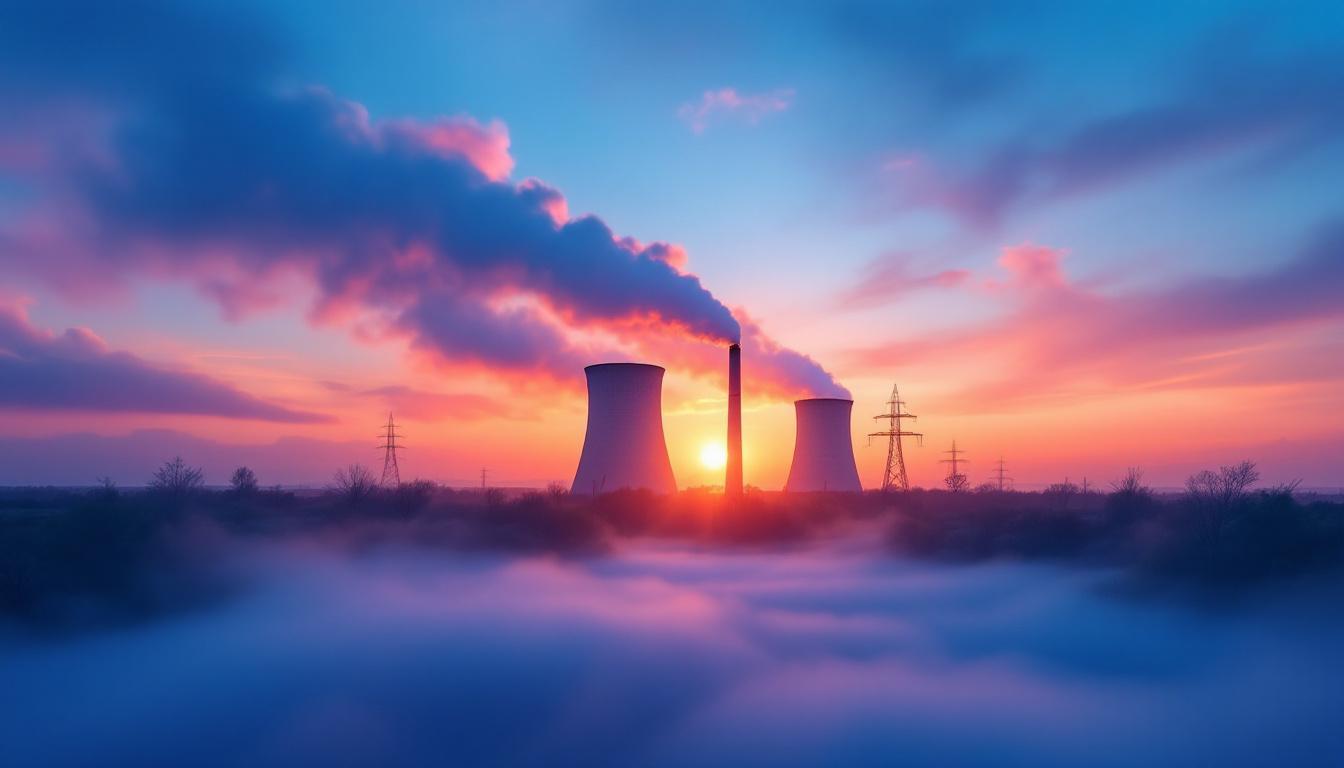
Despite technological progress, the adoption of post-combustion carbon capture and storage in power plants faces significant commercial and logistical challenges, risking delaying climate goals.
Post‑combustion carbon capture and storage (CCS) has definitely moved beyond the early lab and pilot stages. Still, despite the clear technical advancements, the broader adoption of this technology in the power sector is being driven less by chemistry and more by practical factors like project execution, funding, and how the public perceives it.
As per the October 2025 update from the Global CCS Institute, there are currently 77 commercial CCS plants in operation, while about 734 projects are at various developmental phases, with 47 of those actively under construction. The global capture capacity is expected to rise from around 64 million tonnes per year today to approximately 337 million tonnes annually by 2030. The Institute also highlights a growing pipeline of power-related projects, there are 93 projects linked to electricity generation and heating, spanning coal, gas, bioenergy, and other sources. A recent example is China’s Huaneng Longdong project, which started operations in September 2025 at 1.5 million tonnes per year. It’s interesting because, according to the Global CCS Institute, that facility captured over 90% of CO2 from desulfurized flue gases using its proprietary solvent system.
But, then again, industry experts and investors say the biggest challenges now are practical and commercial rather than scientific. During recent conferences, many industry voices claimed that the chemistry of capture processes and membrane technologies has matured, capture rates on natural gas combined cycle plants now approach their design goals. However, just because something works on a test skid doesn’t mean a real, bankable project will happen. As POWER magazine pointed out, lenders want projects that are significantly de-risked before they put their money in. This includes obtaining permits and Class VI injection approvals (where needed), securing strong offtake agreements, proving how tax incentives like the U.S. 45Q credit can generate revenue, and signing EPC contracts that transfer risks around costs and schedules to the contractors.
Another persistent problem is site integration. Retrofit plants with capture systems tend to be big and complex. Industry sources say absorber towers can be taller than 300 feet, creating logistical headaches with transportation and construction that can turn what might seem like cost advantages into liabilities. Brownfield sites, existing facilities, may offer infrastructure like utilities and roads, but local constraints such as height restrictions, narrow delivery routes, water shortages, or rules governing plume management can force operators to come up with expensive, custom solutions. Investors emphasize that the capture “island”, the part of the plant dedicated to CO2 separation, must be isolated from the host plant’s core operations, so that the facility’s reliability isn’t compromised, especially when industrial steam or grid services are involved.
Financing is also a major sticking point. The era of large, lump-sum, turnkey EPC contracts, those straightforward, all-in bids, is pretty much over and, honestly, those projects are expensive when they do exist. Breaking a project down into multiple packages means the owner takes on more risk for completion. They then need to provide guarantees, which can be unattractive to traditional financial backers. Jake Kramer from Ares Management told POWER that the next wave of projects will likely need to involve big, vertically integrated partnerships that handle everything from development and engineering to construction and long-term operations.
Plus, the revenue models for low-carbon power aren’t quite settled. Developers once thought that a modest premium for carbon credits could make projects financially viable. However, investors are now saying that the total power price needed to support post-combustion CCS is actually much higher than previously thought. Most of this shortfall comes down to how carbon credits are valued in the market. Industry insiders suggest that credits for captured emissions might need to reach levels similar to removal-focused pathways, rather than the low tens of dollars per tonne typically seen with offsets. The U.S. 45Q tax credit can help, but it doesn’t fully cover the costs of capture, transport, and storage for many configurations, especially those post-combustion setups.
Looking at the bigger picture, industry analysis reveals additional hurdles. The Society of Chemical Industry points out that long lead times, high capital requirements, and still-evolving business models discourage early-stage investors. According to GlobalData, over 70% of CCUS projects at the end of 2024 were in the energy sector, led mainly by oil and gas companies pushing deployment. The International Energy Agency warns that sector-specific challenges, including the need for emitters to be close to storage sites and the tech suitability varying across industries, pose real obstacles.
Policy approaches and international practices differ too. A recent preprint comparing global strategies notes that the U.S. relies heavily on incentives to promote deployment, while European schemes often combine subsidies with penalties, such as carbon pricing. This divergence impacts how predictable revenue streams are and whether markets will back projects confidently. Interestingly, direct air capture (DAC) currently receives much larger subsidies per tonne than many point-source options, reflecting policy priorities and the perceived importance of permanent removal.
Community acceptance and supply chain readiness are also crucial. Successful local engagement is seen as absolutely necessary before final investment decisions are made. Meanwhile, the specialized supply chain for CCS equipment isn’t quite scaled up to meet the projected demand, so early projects are often forced to secure long-lead items well before the final investment decision (FID).
For developers and policymakers in the UAE’s climate tech and energy scene, these lessons carry weight. Growing demand for firm, low-carbon power, driven globally by AI, data centers, and electrification, creates strong commercial incentives to develop dispatchable generation coupled with capture. But they must also navigate the same challenges that have been observed elsewhere: complex integration, clear risk allocation, credible revenue mechanisms, reliable permitting pathways, and effective public outreach. International examples show that aligning incentives through long-term carbon pricing or subsidies can help attract investment, and building cross-sector partnerships can significantly reduce risks associated with project execution.
Participants in the industry believe two key developments could really boost deployment: first, scaling up the number of full-scale projects, which would help grow supply chains and improve learning-by-doing; second, improving public communication to make CCS more understandable and socially accepted, this is essential to building the social license needed for CO2 transport and storage infrastructure. Until those changes happen, CCS in the power sector will remain technologically ready but hampered by commercial uncertainties.
- https://www.powermag.com/the-real-barriers-to-power-sector-carbon-capture/ – Please view link – unable to able to access data
- https://www.powermag.com/the-real-barriers-to-power-sector-carbon-capture/ – This article discusses the challenges facing post-combustion carbon capture and storage (CCS) projects in the power generation sector. Despite technical advancements, issues such as integration complexity, financing structures, and risk allocation are central to project success. The Global CCS Institute’s October 2025 update reports 77 commercial CCS facilities worldwide, with 734 projects in various development stages, including 47 under construction. Global operating capacity is projected to rise from 64 million tonnes per annum (Mtpa) to approximately 337 Mtpa by 2030. The article also highlights the emergence of natural gas combined cycle plants with CCS in North America, driven by increasing electricity demand from artificial intelligence and data centers. Experts suggest that the next phase of CCS deployment will focus on execution strategies and overcoming project-specific challenges.
- https://www.soci.org/news/2025/9/carbon-capture-and-storage-three-factors-holding-back-progress – This article examines three key factors hindering the progress of carbon capture and storage (CCS): long development timelines, high capital requirements, and immature business models lacking well-defined revenue routes. These challenges create barriers to conventional early-stage investment forms, such as traditional venture capital. The report also emphasizes the need for unprecedented cross-sectoral collaboration for successful deployment of carbon capture and utilization (CCU) technologies. Additionally, it discusses the substantial cost hurdles for emerging pathways, particularly for fuels and chemicals, and suggests that direct subsidies, carbon prices, and consumption mandates could play a role in offsetting costs and driving demand for carbon dioxide-derived products.
- https://www.power-technology.com/features/examining-the-barriers-to-a-successful-ccus-implementation/ – This article explores the barriers to successful implementation of carbon capture, utilization, and storage (CCUS). It identifies high costs, lack of incentives, limited public awareness, excessive regulation, and limited available technology as key hindrances. The article highlights that the energy sector drives CCUS growth, accounting for over 70% of projects by the end of 2024. Despite this growth, the article notes that CCUS is not delivering at scale, with over-reliance on this technology being risky. It also mentions that the International Energy Agency (IEA) reduced its 2050 expectations for CCUS in the power sector by about 40% in its 2023 Net Zero Emissions update.
- https://www.globaldata.com/energy-sector-drives-ccus-growth-accounting-70-projects-end-2024-reveals-globaldata/ – This article reports that the energy sector is driving the growth of carbon capture, utilization, and storage (CCUS), accounting for over 70% of operational and planned facilities by the end of 2024. It highlights that over 50 commercial-scale carbon capture projects were active within the global energy sector alone as of 2024, representing a cumulative carbon capture capacity of approximately 45 million tonnes per annum (Mtpa). The article emphasizes the role of oil and gas companies in leading the development and deployment of CCUS technologies, indicating a growing commitment by the energy sector to reduce its emissions intensity through innovation in carbon capture and storage.
- https://www.preprints.org/manuscript/202507.1382/v1 – This article discusses the risks and challenges in CO₂ capture, use, transportation, and storage, focusing on the barriers to sustainably scaling carbon capture and storage (CCS). It highlights that direct air capture (DAC) projects receive higher subsidies—USD 180 per tonne for permanent storage and USD 130 per tonne for use. The article also notes that as of March 2024, the United States accounted for 260 of the 564 CCS projects worldwide. It mentions that several countries, including Denmark, Norway, the Netherlands, and the United Kingdom, have national CCS strategies and are developing cross-border agreements for transporting and storing CO₂. The article contrasts the U.S. approach, which has relied almost entirely on incentives, with other countries that combine subsidies with penalties for emissions through carbon taxes or cap-and-trade systems.
- https://www.iea.org/reports/ccus-in-clean-energy-transitions/ccus-in-the-transition-to-net-zero-emissions%E2%81%A0 – This report by the International Energy Agency (IEA) examines the role of carbon capture, utilization, and storage (CCUS) in achieving net-zero emissions. It identifies principal CCUS and alternative technologies to reduce CO₂ emissions in selected sectors, including cement and steel. The report outlines barriers such as high reliance on coal for high-temperature heat, large share and quantity of process emissions, low margins, and the need to locate capacity relatively near to the point of use. It also discusses technology options like chemical absorption with full capture rates, calcium looping, direct separation, oxy-fuel, and novel physical adsorption. The report emphasizes the need for a mix of technologies and strategies to address the challenges in these sectors.
Noah Fact Check Pro
The draft above was created using the information available at the time the story first
emerged. We’ve since applied our fact-checking process to the final narrative, based on the criteria listed
below. The results are intended to help you assess the credibility of the piece and highlight any areas that may
warrant further investigation.
Freshness check
Score:
7
Notes:
The article references the Global CCS Institute’s October 2025 update, which is recent and relevant. However, the specific content of the article cannot be verified due to the lack of a direct URL. Without access to the full text, it’s challenging to confirm the originality and freshness of the content. The absence of a direct link raises concerns about the article’s authenticity and potential recycling of content. Therefore, the freshness score is moderate.
Quotes check
Score:
5
Notes:
Without access to the full text, it’s impossible to verify the authenticity and originality of any direct quotes used in the article. The lack of a direct URL prevents cross-referencing with other sources to confirm the uniqueness of the quotes. Therefore, the quotes score is low.
Source reliability
Score:
6
Notes:
The article is hosted on powermag.com, a publication that focuses on the power industry. However, without access to the full text, it’s difficult to assess the depth of research and the credibility of the information presented. The absence of a direct URL raises concerns about the source’s reliability. Therefore, the source reliability score is moderate.
Plausibility check
Score:
7
Notes:
The article discusses challenges in the power sector’s adoption of carbon capture and storage (CCS), referencing the Global CCS Institute’s October 2025 update. While the general themes align with known industry challenges, the lack of a direct URL prevents verification of specific claims and data points. Therefore, the plausibility score is moderate.
Overall assessment
Verdict (FAIL, OPEN, PASS): OPEN
Confidence (LOW, MEDIUM, HIGH): LOW
Summary:
The article references the Global CCS Institute’s October 2025 update but lacks a direct URL, making it impossible to verify the content’s originality, accuracy, and source reliability. The absence of a direct link raises significant concerns about the article’s authenticity and credibility. Therefore, the overall assessment is ‘OPEN’ with low confidence.


