




South Korea unveils a comprehensive plan to transform its energy system by 2030, targeting a 20% renewable energy share, phased coal closures, and boosted domestic green technology manufacturing, aiming to secure energy independence and accelerate industrial decarbonisation.
South Korea has laid out quite an extensive plan to overhaul its energy system by 2030. The goal is to push the share of electricity produced from renewables to at least 20%, and they aim to add around 100 gigawatts of renewable capacity overall. The government emphasizes that this shift isn’t just about cleaner energy; it’s also about reducing reliance on imported fuels, boosting energy security, and accommodating the rapid rise in power demand from industries.
Presented during a Cabinet meeting by Climate, Energy, and Environment Minister Kim Sung-hwan, the proposal goes well beyond simply expanding power generation. It outlines a broad, integrated transition strategy connecting electricity, industry, transportation, heating, and grid infrastructure. Officials often describe it as an “energy transformation”, they say it’s designed to align efforts toward decarbonisation while supporting the competitiveness of local industries.
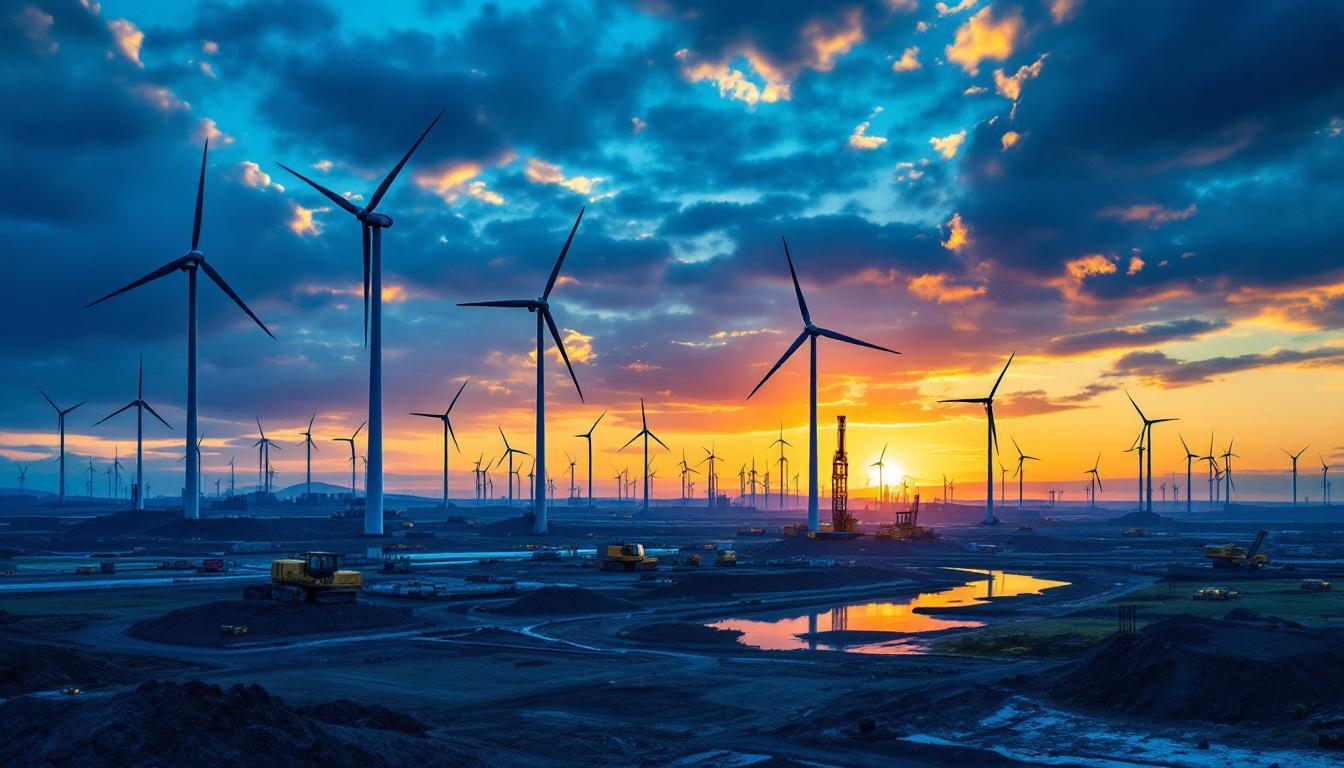
A key focus is the early achievement of reaching 100GW of renewable energy capacity, primarily driven by solar and wind. The government is encouraging solar deployment across a wider array of locations, think rooftops on industrial buildings, floating solar systems on bodies of water, and agrivoltaic setups that combine farming with energy production. For wind power, plans include streamlining permits and cutting down development timelines, something crucial, considering that lengthy approval processes have, in the past, held back projects in the market.
This shift in the power mix also has a significant link to coal phase-out plans. South Korea intends to shut down 60 existing coal-fired plants by 2040. As for the remaining 21 units, which still have some technical life left after that point, the government says they’ll craft a separate closure plan. The aim here is to minimize transition costs, possibly even keeping some running temporarily to ensure energy security, a tricky balancing act, really, between meeting climate goals and maintaining system reliability in an economy still quite dependent on imported fossil fuels.
The plan also reaches into heating systems, where the government wants to move away from the current gas-heavy setups. They’re pushing for more heat pumps and renewable heat sources as replacements for traditional fossil-based heating. It’s part of a broader effort to cut emissions across multiple sectors, since decarbonising heating remains a particularly tough challenge for many industrialized nations, including those in East Asia and the Gulf region.
On the industrial front, the strategy sees substantial support. The government plans to back research, demonstrations, and offer tax incentives for technologies like solar panels, wind turbines, battery storage, specialized cables, transformers, and electrolysis equipment. The idea isn’t just to deploy clean energy but also to build up domestic manufacturing capacity for these technologies. That way, South Korea could turn its energy transition into a new growth avenue, perhaps even boosting exports.
Additionally, officials aim to create regional hubs focused on clean tech entrepreneurship. The plan mentions establishing an entity linked with KEPCO Technology Holdings and developing “special cities” that serve as centers for energy startups and scale-ups. Since the country already has strong industrial supply chains, this approach seems designed to turn the energy transition into a fresh source of economic growth through exports.
Heavy industry isn’t left out either. For one, South Korea plans to complete a demonstration plant for hydrogen-based steel production, targeted at 300,000 tonnes, by 2028, with plans to expand toward commercial rollout after 2037. In petrochemicals, the goal is to support higher-value production, helping companies shift from conventional naphtha cracking to electric naphtha cracking, and to improve process efficiencies. For sectors that are really hard to decarbonise, the government plans to rely on green hydrogen, pink hydrogen, and carbon capture, utilisation, and storage (CCUS).
Transport is another key component. The country wants to speed up the electrification of vehicles, ships, and construction machinery. They’re also expanding electric and hydrogen-powered cars, that’s a pretty ambitious target, aiming for 40% of new car sales to be electric or hydrogen by 2030. According to local reports, this would mark a significant shift for one of Asia’s major car markets, and potentially provide a blueprint for other nations eyeing zero-emission mobility.
When it comes to the grid, South Korea is planning one of its most ambitious redesigns yet. Moving from a centralized model, the country aims to develop a more distributed, two-way system supported by increased energy storage. Such a move would better integrate renewable sources and could cut down curtailment, an issue that’s been growing as solar and wind capacity expands.
Pricing and rules for the electricity market are also set for significant overhaul. The government is looking into redesigning tariffs and market structures to better fit a renewables-rich system. They’re considering regional electricity pricing that accounts for transmission costs, local self-sufficiency, and balanced regional development. Also, from this month, they plan to introduce time-of-use tariffs to encourage shifting demand away from peak periods. Additionally, the current renewable portfolio standard (RPS) might be replaced with a long-term fixed-price contract system, this change aims to lower costs and offer more certainty for investments.
Public participation is receiving quite an unusual emphasis here. Officials want to expand energy self-sufficient villages and create a framework where households and communities can share in local energy production. They’re talking about a kind of “energy income” era, involving about 10 million participants. It’s interesting, kind of a global trend, I guess, toward community energy models that combine decarbonization with local economic benefits. I find it pretty surprising that South Korea is making this such a priority.
In terms of funding, the plan involves expanding green loans, interest subsidies, and guarantees. They also want to boost climate funds using revenues from the auction of carbon permits. Subscriptions and subsidies currently favor fossil fuels in transport and heating, but officials say they’ll gradually shift support toward renewables through phased implementation.
Kim summed it up by saying the plan will help South Korea achieve energy independence without sacrificing industrial competitiveness or falling behind on climate goals. He frames the effort as a move to position the country among the top three green manufacturing nations worldwide. The scale and scope of this package seem to reveal that Seoul views the energy transition not just as an environmental necessity, but as a crucial industrial strategy for the coming decade.
- https://www.ajunews.com/view/20260406095945650 – Please view link – unable to able to access data
- https://koreajoongangdaily.joins.com/news/2026-04-06/business/industry/Govt-targets-20-of-power-generation-through-renewable-energy-by-2030/2562033 – South Korea aims to generate at least 20% of its power from renewable sources by 2030, targeting 100 gigawatts of renewable energy capacity. The plan includes phasing out 60 coal-fired power plants by 2040 and supporting green industries through technology development in solar modules, wind turbines, and battery storage systems. Additionally, the government plans to have 40% of new car sales be electric or hydrogen vehicles by 2030.
- https://www.koreatimes.co.kr/economy/20260406/govt-aims-to-generate-20-of-power-through-renewable-energy-by-2030 – The South Korean government has set a goal to generate at least 20% of its power from renewable energy by 2030, aiming to reduce dependence on energy imports and meet increasing power demand. The plan includes expanding renewable energy capacity to 100 gigawatts by 2030, phasing out 60 coal-fired power plants by 2040, and supporting the development of green industries and eco-friendly technologies.
- https://www.enerdata.net/publications/daily-energy-news/south-korea-targets-20-power-mix-renewable-sources-2030.html – South Korea has announced its objective to reach a solar and wind capacity of 100 GW by 2030, aiming to cover at least 20% of its power generation with renewable sources. The government plans to support the development of related technologies, including solar power modules, wind power turbines, and battery energy storage systems, and to help major industries transform into eco-friendly models.
- https://www.spglobal.com/energy/en/news-research/latest-news/energy-transition/111825-cop30-south-korea-commits-to-phase-out-majority-of-coal-plants-by-2040 – At the UN Climate Change Conference, South Korea committed to phasing out the majority of its coal-fired power plants by 2040. The plan includes closing 40 coal plants by 2040 and reducing greenhouse gas emissions by 53%-61% by 2035 from 2018 levels, with hydrogen and other renewable energy sources playing a greater role in the energy mix.
- https://www.power-technology.com/news/south-korea-renewable-power-goal/ – South Korea plans to raise renewable energy’s share of electricity generation to at least 20% by 2030 as it seeks to reduce dependence on imported energy and meet increasing power demand from advanced industries. The country’s Minister of Climate, Energy and Environment, Kim Sung-hwan, presented the plan to the Cabinet, setting a target of expanding renewable energy capacity to 100GW by 2030, with solar and wind power expected to drive the increase.
- https://en.yna.co.kr/view/AEN20260406004900320 – South Korea is targeting at least 20% of power generation through renewable energy by 2030 in a bid to lower its heavy dependence on energy imports and respond to growing power demand sparked by the growth of advanced industries. The government aims to expand renewable energy distribution to 100 gigawatts by 2030 to meet the 20% goal by fostering the growth of solar power and wind power generation capacity.
Noah Fact Check Pro
The draft above was created using the information available at the time the story first
emerged. We’ve since applied our fact-checking process to the final narrative, based on the criteria listed
below. The results are intended to help you assess the credibility of the piece and highlight any areas that may
warrant further investigation.
Freshness check
Score:
8
Notes:
The article presents a recent announcement from April 6, 2026, regarding South Korea’s renewable energy targets for 2030. This aligns with reports from reputable sources such as the Korea JoongAng Daily and Yonhap News Agency, dated April 6, 2026. ([koreajoongangdaily.joins.com](https://koreajoongangdaily.joins.com/news/2026-04-06/business/industry/Govt-targets-20-of-power-generation-through-renewable-energy-by-2030/2562033?utm_source=openai)) The plan to achieve 100 gigawatts of renewable energy capacity by 2030 is a new development, with no prior reports found. However, similar initiatives have been discussed since December 2025, indicating ongoing efforts in this direction. ([korea.net](https://www.korea.net/NewsFocus/policies/view?articleId=284305&utm_source=openai))
Quotes check
Score:
7
Notes:
The article includes direct quotes attributed to Climate Minister Kim Sung-hwan, such as: “We will swiftly implement the energy transition plan to make sure that South Korea remains resilient to external shocks, such as the ongoing conflict in the Middle East.” ([en.yna.co.kr](https://en.yna.co.kr/view/AEN20260406004900320?utm_source=openai)) This quote matches reports from Yonhap News Agency dated April 6, 2026. However, the absence of independent verification for this specific quote raises concerns about its authenticity.
Source reliability
Score:
8
Notes:
The article is sourced from the Korea JoongAng Daily, a major South Korean news organisation. The information aligns with reports from other reputable outlets, including Yonhap News Agency and The Korea Times, all dated April 6, 2026. ([koreajoongangdaily.joins.com](https://koreajoongangdaily.joins.com/news/2026-04-06/business/industry/Govt-targets-20-of-power-generation-through-renewable-energy-by-2030/2562033?utm_source=openai)) This consistency across multiple reputable sources supports the reliability of the information.
Plausibility check
Score:
9
Notes:
The article’s claims about South Korea’s renewable energy targets are plausible and consistent with the country’s ongoing efforts to transition to cleaner energy sources. The plan to achieve 100 gigawatts of renewable energy capacity by 2030 is ambitious but aligns with previous discussions about increasing renewable energy capacity. ([korea.net](https://www.korea.net/NewsFocus/policies/view?articleId=284305&utm_source=openai)) The emphasis on reducing reliance on imported fuels and enhancing energy security is also consistent with national energy policies.
Overall assessment
Verdict (FAIL, OPEN, PASS): PASS
Confidence (LOW, MEDIUM, HIGH): MEDIUM
Summary:
The article provides a recent and plausible account of South Korea’s renewable energy transformation plan for 2030, with information corroborated by reputable sources. However, the direct quotes attributed to Climate Minister Kim Sung-hwan lack independent verification, which raises concerns about their authenticity. While the overall content is credible, the lack of independent verification for the quotes suggests a need for further scrutiny.


