





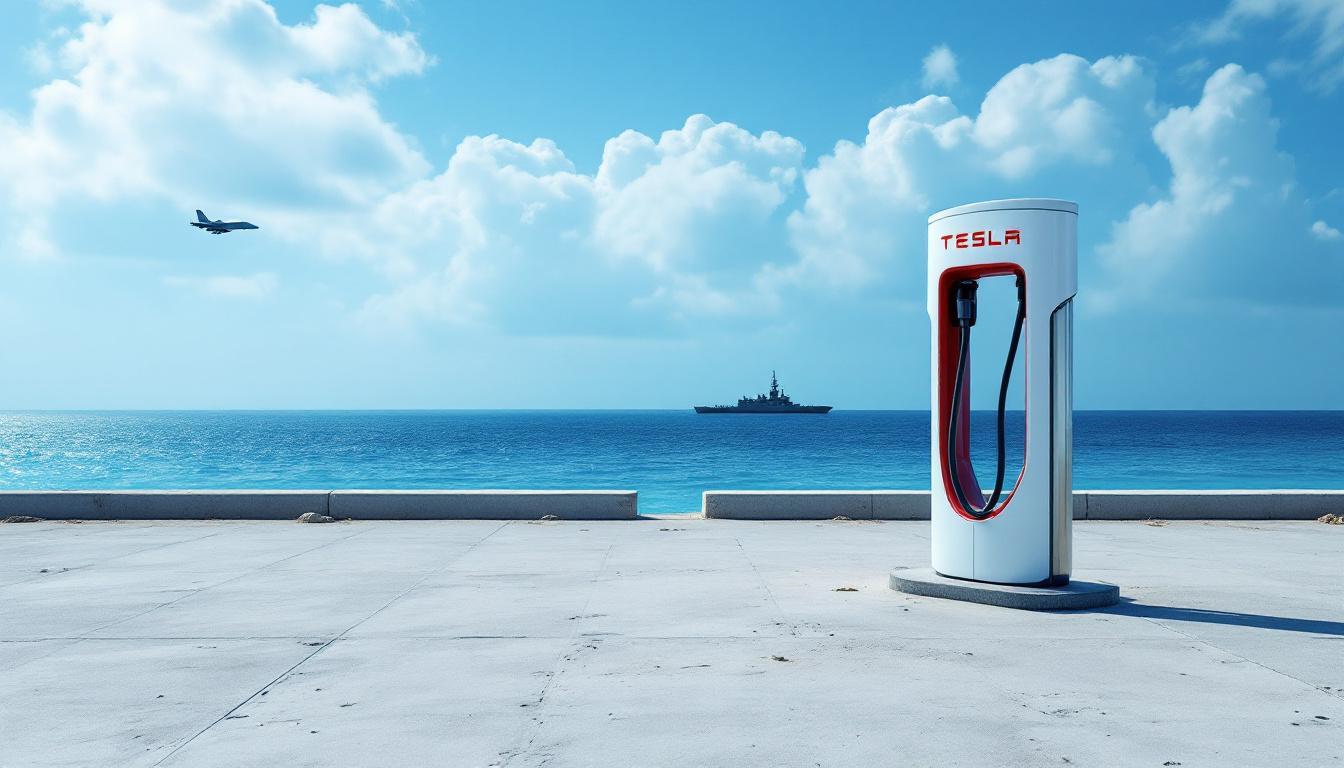
Tesla is reportedly exploring a temporary halt to Supercharger fees across the Gulf region amid rising regional security tensions, but official confirmation is yet to come, raising questions about the logistical and regulatory challenges involved.
Tesla is currently considering a temporary change to its Supercharger charging policy across the Gulf Cooperation Council (GCC) countries, amid rising regional security concerns linked to Iran. However, the company hasn’t made any official statement suggesting that all Supercharging in the Gulf will now be free of charge. Several industry observers have cautioned that the rumors circulating on social media seem premature and lack verification at this stage.
Looking at Tesla’s regional support pages, it’s clear that Supercharger pricing, including congestion fees, is typically set on a national or regional basis and tends to differ from country to country. The company’s guidelines mention that these fees, which also include penalties for occupying a charging stall once batteries reach 80%, are part of a broader strategy to manage station availability and cover operating costs. Tesla’s service information also points out the scale and purpose of the network: worldwide, the Supercharger system includes tens of thousands of stations designed to support long-distance travel by quickly adding hundreds of kilometers of range in about 15 minutes. Tesla claims that their charging is not only faster but often more affordable than refueling with gasoline. Plus, their vehicles’ navigation systems incorporate these features, so drivers can plan their charging stops in real time, pretty handy, really.
Now, industry specialists warn that suspending regional fees entirely would be quite complicated. Why? Well, electricity supply agreements, laws, and partnerships with government-backed utilities all influence how charging stations operate in Gulf countries. In several nations across the Levant and Gulf, the infrastructure has been built in partnership with government-linked energy companies, which could complicate any unilateral decisions by Tesla. An energy economist based in Riyadh, speaking to us, highlighted that electricity isn’t free, any extended waiver of user fees would likely need coordination with local utilities or some form of government support.
That said, there’s precedent for temporary relief during crises. For example, in October 2023, Tesla temporarily offered free Supercharging in Israel after security situations worsened there. This covered all Supercharger stations within the country and was presented as a way to ease range anxiety and keep essential mobility going. Regional observers often cite that incident as a model for how a major private charging operator might respond during times of high risk. But, interestingly enough, scaling such a response across multiple countries introduces additional legal, commercial, and grid stability issues that weren’t as prominent in Israel’s case.
The Gulf region has definitely become a focus for electric vehicle investment, especially as governments aim to diversify their energy sources and cut emissions. Saudi Arabia’s Vision 2030 and the UAE’s various incentives and network expansions have helped boost EV adoption and charging station rollout. Experts say that a large-scale promotional or emergency measure from Tesla could not only bring some humanitarian benefits but also boost the company’s visibility in a market where, compared to North America, Europe, or China, Tesla’s presence is still growing steadily.
Regional transport consultants note that public expectations are evolving. “People are starting to think that companies like Tesla should support mobility during crises,” shared a Dubai-based transport strategist. That feeling seems to be growing as electric vehicles become more commonplace, fast-charging infrastructure is increasingly viewed as part of critical national infrastructure.
At the same time, though, the nuts and bolts of the business mean that Tesla’s Supercharger system relies on congestion fees that differ by country, and the network’s economics depend on recouping electricity and station costs. Any move to waive fees temporarily would probably involve renegotiating power purchase agreements, assessing grid resilience, and, quite likely, talking to regulators and utility companies. Experts warn that during tense geopolitical episodes, misinformation can spread quickly, social media posts claiming free charging might seem convincing but could end up causing confusion among consumers and investors if not carefully verified.
Looking at the bigger picture, different countries and companies have tackled EV charging issues during trade or security disagreements in various ways. Japan, for instance, has considered expanding subsidies to include Tesla’s Superchargers during trade negotiations with the U.S., illustrating how government support can influence the economics of proprietary charging networks. Meanwhile, in Europe, Tesla is shifting some of its focus toward greater interoperability, rolling out higher-power chargers and opening certain stations to non-Tesla vehicles. These trends show how policy changes and technological advancements can significantly affect how charging networks are financed and managed.
For Gulf policymakers, utility providers, and fleet operators, this episode underscores two key priorities. First, ensuring a resilient electricity supply to charging stations is crucial. Second, establishing clear regulatory frameworks that define the roles of private operators in emergencies could reduce uncertainties. Industry insiders suggest that coordinated contingency plans, possibly including temporary tariff relief supported by public funds, would be more practical than unilateral commercial waivers.
At this point, Tesla has yet to confirm or deny any plans to suspend fees across the region. Consumers in the Gulf should be cautious about social media rumors and stick to official channels for accurate information. If Tesla does decide to implement temporary relief measures, it would be a significant shift in how private charging networks participate in crisis response across multiple countries. Until there’s an official announcement, all of this remains speculative, essentially a topic for debate, rather than an established fact.
- https://thearabianpost.com/tesla-weighs-gcc-charging-relief-after-tensions/ – Please view link – unable to able to access data
- https://www.tesla.com/en_qa/support/charging/supercharger/fees – Tesla’s Supercharger network is designed to provide a seamless road trip experience. To enhance network efficiency, Tesla requests that vehicles be moved once fully charged, similar to the practice at traditional fuel stations. The Supercharger Congestion Fee applies when a site is busy, and the vehicle’s battery is at or above 80% charge or the charging session has ended. This fee encourages drivers to charge only as much as needed for their trip, increasing Supercharger availability for all users. The fee varies by country and region, with specific rates listed on Tesla’s website.
- https://www.tesla.com/en_sa/supercharger – Tesla’s Supercharger network offers over 75,000 global charging stations, enabling Tesla owners to recharge up to 275 km in just 15 minutes. The network is designed to be faster and more cost-effective than traditional petrol stations, providing a convenient charging solution for long-distance travel. Tesla’s Superchargers are strategically located along major routes and in high-demand destinations, ensuring that drivers have access to charging facilities when needed. The Supercharger experience is integrated with Tesla’s navigation system, allowing drivers to plan routes and monitor charging status in real-time.
- https://www.tesla.com/en_sa/support/charging/supercharger/fees – Tesla’s Supercharger network is designed to provide a seamless road trip experience. To enhance network efficiency, Tesla requests that vehicles be moved once fully charged, similar to the practice at traditional fuel stations. The Supercharger Congestion Fee applies when a site is busy, and the vehicle’s battery is at or above 80% charge or the charging session has ended. This fee encourages drivers to charge only as much as needed for their trip, increasing Supercharger availability for all users. The fee varies by country and region, with specific rates listed on Tesla’s website.
- https://driveteslacanada.ca/news/japan-considers-subsidies-for-tesla-superchargers-to-ease-u-s-trade-tensions/ – Japan is considering subsidising Tesla’s Supercharger electric vehicle (EV) charging stations as part of its ongoing tariff negotiations with the United States. Currently, Japan’s EV infrastructure subsidies are restricted to chargers using the domestic CHAdeMO standard, developed by Japanese automakers, excluding Tesla’s proprietary Supercharger network. This policy has drawn criticism from the U.S. Trade Representative (USTR), which has reportedly asked Japan to expand its subsidy framework to allow fair competition for American EV manufacturers. The inclusion of Tesla’s charging technology in Japan’s subsidy program could serve as a key concession aimed at securing broader trade compromises with the U.S.
- https://gearmusk.com/2023/10/11/tesla-free-supercharging-stations-across-israel/ – In October 2023, Tesla offered free Supercharging to all owners in Israel amid escalating regional tensions. This initiative allowed drivers to charge at any of Tesla’s 22 Supercharger locations across Israel at no cost. The move aimed to alleviate range anxiety and provide charging assurance to Israeli customers during a period of instability. Tesla’s decision to waive Supercharger fees in Israel reflects the company’s history of unlocking its charging network during crises and natural disasters to support owners and communities. The free charging was available 24/7 and was reevaluated based on the evolving situation.
- https://www.teslaacessories.com/blogs/news/supercharger-strategy-faster-expansion-interoperability-in-europe – Tesla’s Supercharger strategy in Europe is evolving towards faster expansion and increased interoperability. The company is rolling out V4 Supercharger cabinets, which offer higher peak power, more stalls, payment terminals, and CCS connectors at select sites. Tesla is also selectively opening Superchargers to NACS-equipped non-Tesla vehicles and collaborating with automakers like Porsche, BMW, and VW Group, who are adopting Tesla’s NACS plug or providing adapters. This approach aims to provide more fast-charging options on major routes, with a transition period of mixed connector types and regional permitting lasting through 2026.
Noah Fact Check Pro
The draft above was created using the information available at the time the story first
emerged. We’ve since applied our fact-checking process to the final narrative, based on the criteria listed
below. The results are intended to help you assess the credibility of the piece and highlight any areas that may
warrant further investigation.
Freshness check
Score:
7
Notes:
The article discusses Tesla’s consideration of temporary changes to its Supercharger policy in the GCC region amid rising security concerns linked to Iran. While the specific article from The Arabian Post is dated March 18, 2026, the topic has been covered by other sources, such as a report from October 2023 detailing Tesla’s temporary free Supercharging in Israel during security escalations. ([auto.hindustantimes.com](https://auto.hindustantimes.com/auto/electric-vehicles/tesla-superchargers-in-israel-are-now-free-for-users-declares-elon-musk-41697084486407.html?utm_source=openai)) This suggests that the narrative is not entirely original. Additionally, the article includes detailed information about Tesla’s Supercharger network and regional partnerships, which may have been sourced from Tesla’s official communications or other industry reports. The presence of similar content elsewhere and the potential reliance on existing sources raise concerns about the freshness and originality of the article. Given these factors, the freshness score is moderate.
Quotes check
Score:
6
Notes:
The article includes direct quotes from an energy economist based in Riyadh and a Dubai-based transport strategist. However, these quotes cannot be independently verified through online searches, as no online matches are found for these specific statements. This lack of verifiability raises concerns about the authenticity and accuracy of the quotes. Without independent confirmation, the credibility of these quotes is questionable. Therefore, the quotes check score is low.
Source reliability
Score:
5
Notes:
The article originates from The Arabian Post, a niche publication. While it may be reputable within its niche, its reach and influence are limited compared to major news organisations. Additionally, the article appears to summarise or aggregate content from other sources, including Tesla’s official communications and industry reports. This reliance on secondary sources and the limited reach of the publication raise concerns about the reliability and independence of the information presented. Given these factors, the source reliability score is moderate.
Plausibility check
Score:
7
Notes:
The article discusses Tesla’s consideration of temporary changes to its Supercharger policy in the GCC region amid rising security concerns linked to Iran. This is plausible, given Tesla’s previous actions in response to security situations, such as offering free Supercharging in Israel during the Israel-Hamas conflict in October 2023. ([auto.hindustantimes.com](https://auto.hindustantimes.com/auto/electric-vehicles/tesla-superchargers-in-israel-are-now-free-for-users-declares-elon-musk-41697084486407.html?utm_source=openai)) However, the article lacks specific factual anchors, such as names, institutions, and dates, which would provide more concrete evidence for the claims made. The absence of these details makes the claims less verifiable and raises questions about the article’s authenticity. Therefore, the plausibility score is moderate.
Overall assessment
Verdict (FAIL, OPEN, PASS): FAIL
Confidence (LOW, MEDIUM, HIGH): MEDIUM
Summary:
The article raises concerns regarding freshness, originality, and the verifiability of its content. The reliance on unverified quotes and the summarisation of existing information from other sources further diminish its credibility. Given these issues, the overall assessment is a FAIL.


