





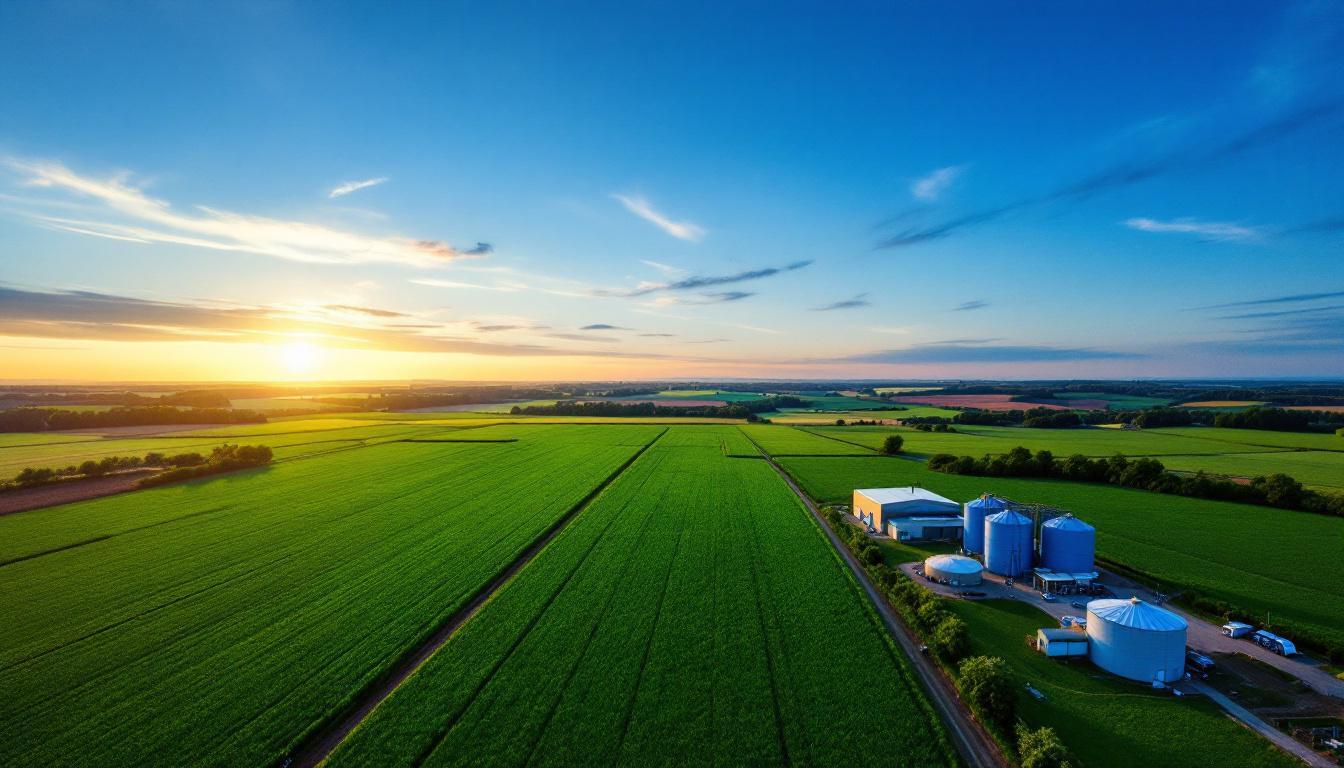
The UAE’s comprehensive food security strategy is embracing cutting-edge technologies, innovative awards, and sustainable farming practices to transform its food system into a resilient, self-sufficient network by 2051.
Innovation has really become a core part of the UAE’s food security plans, with policymakers seeing the issue not just as an economic thing but as a matter of national resilience. That message is consistent throughout the country’s long-term strategy to create a safer, more productive, and less wasteful food system, while also lowering reliance on imports.
At the center of all this is the UAE’s National Food Security Strategy 2051, which aims to make the country one of the top food-secure nations in the world by mid-century. The strategy emphasizes sustainable farming, the use of modern technologies, increasing local food production, diversifying sources for imports, and building international partnerships. It also links food security with nutrition policies and waste reduction efforts, highlighting a broader goal: to make sure people have consistent access to safe and nutritious food all year round.
In this context, the Sheikh Mansour bin Zayed Award for Agricultural Excellence has gone beyond just being a symbolic honor. It’s actually meant as a practical tool for fostering change, rewarding farmers and livestock breeders who improve their methods, boost efficiency, and adopt new technologies. As the UAE government describes, the award encourages best practices, agricultural innovation, responsible resource use, and stronger food and biosecurity. The program’s total value is Dh6.7 million, and it covers three main categories, including innovation and commercial farms.
This award really matters because it helps convert policies into a noticeable competition. Gulf News, for example, mentioned that the award has been used to promote sustainability and innovation across the sector, highlighted during events like the Sheikh Zayed Festival in Al Wathba, where experts discussed how technology and advanced farming practices can enhance food security. The newspaper also noted that the prize has grown over time: the second edition honored 57 farmers from different emirates and boasted a Dh10 million prize pool. Earlier reports showed about 50 winners from 832 participants, which really indicates how much interest there is among producers.
These kinds of incentives are part of a bigger push to make agriculture more resilient to climate challenges. Given the UAE’s geography and limited water resources, traditional farming has long been tough. But those challenges have spurred more experimentation, think vertical farms, hydroponic systems, and controlled-environment agriculture. These approaches are seen as strategic tools that use less water, produce more food per square meter, and protect crops from heat, salinity, and seasonal changes.
Artificial intelligence is playing a role too, adding another layer to this transformation. An article from Al Ittihad, produced by the Emirates Centre for Strategic Studies and Research, describes smart farming as a field where data analysis helps optimize irrigation, monitor plant health, and predict crop needs with greater precision. Machine learning and connected sensors can also track livestock, cut down on losses, and improve product quality. The same idea is now evident in automated vertical farms, where software manages environmental conditions with minimal human oversight.
Dubai’s Food Tech Valley is a prime example of this movement. It’s a project that reflects the UAE’s goal to become a hub for food innovation, bringing together research, startups, and investments within a single ecosystem. What’s attractive about the UAE is not just its willingness to experiment but also its capacity to link public policy directly with commercial applications. That’s crucial if these advanced farming methods are going to move beyond demo projects and start making a real difference in the country’s food supply.
Meanwhile, the Abu Dhabi Agriculture and Food Safety Authority has also been active in promoting more sustainable practices across the entire food chain. The article mentions that they support efforts to reduce food waste and provide technical assistance, helping connect producers with consumers via digital platforms. This kind of intermediary role is becoming more and more important, especially in a system where production, logistics, and retail all need to become more efficient simultaneously.
Interest in biotech and genetic engineering is growing as well, as tools for adapting crops and livestock to high temperatures, scarce water, and harsh conditions. At the same time, the spread of solar-powered greenhouses and other renewable energy solutions in farming is helping to lower emissions and cut operational costs. For a nation that sees climate resilience as part of its food security, the connection between energy use and agriculture is increasingly impossible to ignore.
Entrepreneurship also plays a key role. Start-ups focused on agri-tech and food-tech are being encouraged to fix bottlenecks in supply chains, logistics, and production processes. Because, honestly, food security today isn’t just about growing more crops; it’s also about storage, distribution, traceability, digital coordination, and being able to handle shocks, whether those come from climate crises, geopolitical conflicts, or market fluctuations.
The UAE’s strategy definitely has a social component too. Building confidence in local produce is viewed as part of establishing a strong, trusting relationship between consumers and domestic producers. That means not only increasing supply, but also improving quality, branding, and consumer trust. A more vibrant local market supports farmers, cuts down reliance on imports, and helps stabilize the economy at large.
What makes the UAE’s approach stand out is how it combines big-picture national goals with practical tools, like awards, funding, research platforms, and supportive regulations. The overall food security agenda is becoming more integrated with innovation, sustainability, and tech development.
For those involved in climate-tech in the UAE, it’s pretty clear. Food security isn’t just a narrow agricultural issue anymore; it’s a strategic domain where data, automation, renewable energy, and cutting-edge production methods are all converging. And as the country aims to meet its 2051 ambitions, the real challenge might be how well it can grow and scale these innovations, taking them from experimental projects into the broader, everyday framework of national food systems.
- https://www.aletihad.ae/opinion/4659042/%D8%A7%D9%84%D8%A7%D8%A8%D8%AA%D9%83%D8%A7%D8%B1-%D9%81%D9%8A-%D9%85%D9%86%D8%B8%D9%88%D9%85%D8%A9-%D8%A7%D9%84%D8%A3%D9%85%D9%86-%D8%A7%D9%84%D8%BA%D8%B0%D8%A7%D8%A6%D9%8A-%D8%A7%D9%84%D9%88%D8%B7%D9%86%D9%8A%D8%A9 – Please view link – unable to able to access data
- https://u.ae/en/about-the-uae/strategies-initiatives-and-awards/strategies-plans-and-visions/environment-and-energy/national-food-security-strategy-2051 – The UAE’s National Food Security Strategy 2051 aims to position the country as a global leader in food security by 2051. It focuses on enhancing sustainable food production through modern technologies, improving local production, and establishing international partnerships to diversify food sources. The strategy also emphasizes legislation and policies to improve nutrition and reduce waste, with the goal of achieving zero hunger and ensuring access to safe, nutritious, and sufficient food year-round.
- https://u.ae/en/about-the-uae/strategies-initiatives-and-awards/awards/agriculture – The Sheikh Mansour Bin Zayed Award for Agricultural Excellence is an annual award in the UAE that recognises outstanding farmers and livestock breeders. It aims to encourage the adoption of best practices and modern farming systems, promote agricultural innovation, increase production, ensure resource sustainability, and enhance food and biosecurity. The award has a total value of AED 6.7 million and is presented across three main categories: outstanding farmer and breeder, agricultural innovation, and commercial farms.
- https://gulfnews.com/uae/sheikh-mansour-award-spurs-agricultural-innovation-and-sustainability-in-uae-1.500405707 – The Sheikh Mansour Bin Zayed Agricultural Excellence Award has been instrumental in promoting agricultural innovation and sustainability in the UAE. The award’s pavilion at the Sheikh Zayed Festival in Al Wathba, Abu Dhabi, hosted a panel discussion on integrating technology and advanced techniques to achieve sustainability and food security. The session highlighted the role of the award in fostering innovation and supporting local production in the agricultural sector.
- https://gulfnews.com/uae/environment/uae-57-farmers-reap-dh10-million-sheikh-mansour-bin-zayed-agricultural-excellence-award-1.101539462 – In the second edition of the Sheikh Mansour Bin Zayed Agricultural Excellence Award, 57 farmers from various emirates were honoured across different categories. The award, with a total prize pool of Dh10 million, aims to promote agricultural practices that enhance sustainability and food security in the UAE. The winners’ agricultural practices will be promoted to exchange expertise on best practices in the sector.
- https://gulfnews.com/uae/uae-50-honoured-with-sheikh-mansour-bin-zayed-agricultural-excellence-award-1.94693040 – The Sheikh Mansour Bin Zayed Agricultural Excellence Award honoured 50 winners from a total of 832 participants across the UAE. The award recognises excellence in various categories, including plant and animal agriculture, and aims to promote agricultural practices that enhance sustainability and food security. The winners’ practices will be promoted to exchange expertise on best practices in the sector.
- https://gulfnews.com/uae/government/uae-dh10-million-for-sheikh-mansour-agricultural-excellence-awards-1.97927747 – The UAE has increased the prize pool for the Sheikh Mansour Bin Zayed Agricultural Excellence Award to Dh10 million, divided among participants in the main award categories. The award highlights the crucial role of farmers and livestock breeders in achieving agricultural sustainability, food security, and elevating the quality of local production. It also aims to foster a spirit of positive competition in the sector.
Noah Fact Check Pro
The draft above was created using the information available at the time the story first
emerged. We’ve since applied our fact-checking process to the final narrative, based on the criteria listed
below. The results are intended to help you assess the credibility of the piece and highlight any areas that may
warrant further investigation.
Freshness check
Score:
7
Notes:
The article discusses the UAE’s National Food Security Strategy 2051 and the Sheikh Mansour bin Zayed Agricultural Excellence Award. The most recent award ceremony was held on April 18, 2026, honouring 34 winners. ([mediaoffice.abudhabi](https://www.mediaoffice.abudhabi/en/environment/4th-sheikh-mansour-bin-zayed-agricultural-excellence-award-honours-farmers-for-uae-agriculture-contribution/?utm_source=openai)) The article also references a previous award edition launched in December 2022. ([mediaoffice.abudhabi](https://www.mediaoffice.abudhabi/en/environment/sheikh-mansour-bin-zayed-award-for-agricultural-excellence-launches-in-abudhabi/?utm_source=openai)) The content appears to be a synthesis of recent and older information, with the latest data from April 2026. However, the inclusion of older material without clear updates may affect the overall freshness.
Quotes check
Score:
5
Notes:
The article includes direct quotes attributed to various officials and entities. However, these quotes cannot be independently verified through the provided sources. Without access to the original speeches or interviews, the authenticity of these quotes remains uncertain. This lack of verifiable sources raises concerns about the reliability of the quoted information.
Source reliability
Score:
6
Notes:
The article is published on Aletihad News Center, which appears to be a news outlet. However, the credibility and independence of this source are not well-established. Without information about the publication’s editorial standards, ownership, and history, it’s challenging to assess its reliability fully. The lack of transparency about the source’s background is a significant concern.
Plausibility check
Score:
7
Notes:
The article discusses the UAE’s National Food Security Strategy 2051 and the Sheikh Mansour bin Zayed Agricultural Excellence Award, both of which are plausible and align with known UAE initiatives. However, the article’s reliance on unverified quotes and a less-established source raises questions about the accuracy of the information presented. The plausibility of the claims is undermined by these factors.
Overall assessment
Verdict (FAIL, OPEN, PASS): FAIL
Confidence (LOW, MEDIUM, HIGH): MEDIUM
Summary:
The article presents information on the UAE’s National Food Security Strategy 2051 and the Sheikh Mansour bin Zayed Agricultural Excellence Award. However, it relies on unverified quotes and is published by a source with questionable reliability. The lack of independent verification and the use of a less-established source raise significant concerns about the accuracy and trustworthiness of the content.


