




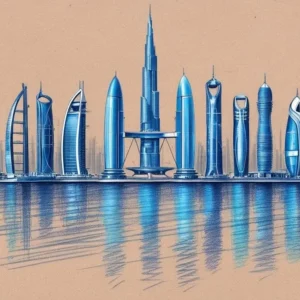

Schneider Electric highlights the UAE’s rapid progress in reshaping its industrial landscape through bold investments in automation, AI, and smart manufacturing, positioning the country as a global leader in industrial innovation.
Schneider Electric has noted that the UAE has really taken the lead compared to most countries when it comes to reshaping its industrial landscape. They argue that in just a few years, the emirate has managed to develop a more ambitious manufacturing model than many economies achieve over several decades, pretty impressive, if you ask me.
Aml Al Shazli, who’s the president of Schneider Electric for the Gulf region, mentioned that the UAE’s industrial strategy skillfully blends policy, capital, and technology. This mix, well, at least to me, seems to be drawing quite a bit of global attention. In a chat with Al Ittihad, she remarked that the country has made what she called an “unprecedented” leap forward by embracing automation, artificial intelligence, robotics, advanced software, and data analytics across its industries.
Her comments come right as Abu Dhabi hosts the fifth edition of Make in the Emirates 2026, the federal industrial showcase. The event runs from May 4 to 7 at ADNEC, and according to the Ministry of Industry and Advanced Technology, this year’s gathering features over 1,000 exhibitors. It’s designed, they say, to turn opportunities in industry into real investments, increased production, and export growth.
This platform has also become a kind of signal about where the UAE wants to position itself on the global stage. The ministry explains that the exhibition aims to strengthen local value chains, boost industrial resilience, and support businesses of all sizes in manufacturing, expanding, and exporting from the country. New initiatives introduced this year include four platforms that connect producers with procurement opportunities, help bridge supply and demand gaps, and assist startups in securing strategic contracts.
Al Shazli points out that the UAE’s approach isn’t just about modernizing factories. It’s also about creating a broader ecosystem, something that supports energy flexibility, digital industry, and infrastructure designed for the future. And, interestingly enough, this combination of efforts seems to have helped the country move swiftly from just setting ambitions to actually putting plans into action.
Schneider Electric has been working to align closely with this vision. Al Shazli mentioned that the company views Make in the Emirates as a key event, sort of a strategic hub where both global and local manufacturers can come together. It’s also a place where digitalization in industry can turn into practical, real-world projects. Schneider Electric aims to support this by embedding smarter energy systems into industrial sites, helping plants become more resilient, more efficient, and better prepared for future demands.
That focus is particularly important as the UAE expands its industrial ambitions. The ministry notes that the event forms part of a larger national drive to bolster advanced manufacturing and achieve industrial sovereignty. Summaries of the platform describe it as a practical model for boosting resilience in supply chains and turning industrial plans into investments that can actually be implemented.
On the numbers side of things, the case for the UAE is partly built on solid figures. Al Shazli pointed to government data showing that industrial exports hit Dh262 billion by the end of 2025, with an annual growth rate of 25 percent. She also drew attention to the newly established Dh1 billion National Industrial Resilience Fund, which officials see as another key pillar of the country’s industrial strategy.
For Schneider Electric, this mix of policy backing and market opportunities opens the door for deeper collaborations. Al Shazli said they’ve already established partnerships with major players in the UAE’s industrial sector and have worked on projects involving highly automated plants and smart facilities. She believes these efforts can not only make local industry more competitive but also support the national content program, which, she mentioned, has contributed over Dh473 billion to the UAE economy.
Looking at the bigger picture, it’s clear that the global industrial transition isn’t slowing down, it’s actually speeding up. Al Shazli pointed out that electrification, automation, and digitalization are all happening simultaneously. Plus, she highlighted the rising demand for artificial intelligence, driven sharply by growth in cloud computing and data centers. She even said that electricity demand could nearly double, reaching about 1,000 terawatt-hours, by 2030. That’s a substantial growth projection.
Schneider Electric strives to position itself as more than just a supplier of industrial equipment in this landscape. Al Shazli explained that the company wants to be seen as a trusted technology partner for energy systems across the Gulf. Their aim is to help clients improve efficiency, resilience, and preparedness. The focus isn’t just on factories either; they’re also working toward smarter energy and automation solutions for commercial buildings, homes, and broader infrastructure projects.
Interestingly, their latest global assessment, released in March 2026, shows that the UAE and the Gulf region are leading the charge in adopting autonomous operations, at least in the energy sector. Al Shazli argues this clearly indicates how quickly the region is moving from trial phases into full implementation.
Trade policy also plays a role here. She mentioned that the UAE’s Comprehensive Economic Partnership Agreements are helping to broaden access to markets and strengthen logistics. These agreements support the overall development plans. As of February 2026, the country had signed 37 such agreements, according to official data.
She sees this trade setup not just as a strategic move for manufacturing, but as a foundation for broader diversification, covering supply chains and digital services too. The vision, she says, is to help weave systems, people, and data into a truly integrated industrial model.
Finally, for the UAE, events like Make in the Emirates 2026 are about putting that model into the public eye. And for companies like Schneider Electric, it’s a chance to emphasize that the nation’s future depends not only on building new factories but on developing smarter, high-tech ones.
- https://www.aletihad.ae/news/%D8%A7%D9%84%D8%A7%D9%82%D8%AA%D8%B5%D8%A7%D8%AF%D9%8A/4662497/%D8%B4%D9%86%D8%A7%D9%8A%D8%AF%D8%B1-%D8%A5%D9%84%D9%83%D8%AA%D8%B1%D9%8A%D9%83—%D8%A7%D9%84%D8%A5%D9%85%D8%A7%D8%B1%D8%A7%D8%AA-%D8%AD%D9%82%D9%82%D8%AA-%D9%86%D9%82%D9%84%D8%A9-%D9%86%D9%88%D8%B9%D9%8A%D8%A9-%D8%BA%D9%8A%D8%B1-%D9%85%D8%B3%D8%A8%D9%88%D9%82%D8%A9-%D9%81%D9%8A-%D8%A7%D9%84%D9%82%D8%B7 – Please view link – unable to able to access data
- https://al-ain.com/article/make-in-uae-ministry-industry-4-quality-platforms – The UAE Ministry of Industry and Advanced Technology has launched four new platforms during the ‘Make in the UAE 2026’ event to enhance the competitiveness of the industrial sector. These platforms aim to connect manufacturers with real purchasing opportunities, bridge the gap between production and demand, and support startups in securing strategic contracts. The initiative reflects the ministry’s commitment to developing an integrated industrial system that focuses on quality, advanced technology adoption, and supply chain resilience, thereby enabling investors, manufacturers, and entrepreneurs to grow and expand.
- https://www.miite.ae/ar/ – The ‘Make in the Emirates 2026’ exhibition, scheduled from May 4 to 7, 2026, at the Abu Dhabi National Exhibition Centre (ADNEC), serves as a national platform for industrial transformation. Aligned with the UAE’s industrial strategy, the event brings together advanced technology and national ambition to bolster local industry, deepen industrial value chains, and empower companies of all sizes to manufacture, expand, and export from the UAE. The exhibition features over 1,000 exhibitors and aims to showcase the nation’s industrial capabilities.
- https://al-ain.com/article/uae-consolidate-integrated-industrial-model – In response to global supply chain transformations, the UAE is launching the ‘Make in the Emirates 2026’ platform in Abu Dhabi to convert industrial opportunities into investments and projects that enhance industrial growth and competitiveness. The event, hosted by the Ministry of Industry and Advanced Technology, aims to support supply chain resilience and promote sustainable industrial growth in the UAE.
- https://al-ain.com/article/made-in-the-uae-2026 – The ‘Make in the Emirates 2026’ platform, scheduled from May 4 to 7, 2026, at ADNEC in Abu Dhabi, is set to present a practical model for enhancing industrial resilience in the UAE. The event is organized by the Ministry of Industry and Advanced Technology in collaboration with the Ministry of Culture, Abu Dhabi Investment Office, ADNOC, and Al Imad Holding Company, under the theme ‘We Appear Stronger’.
- https://al-ain.com/article/make-in-uae-2026-promising-prospects-potential – The fifth edition of the ‘Make in the Emirates’ platform for 2026, themed ‘Advanced Industry: We Appear Stronger’, is set to take place at ADNEC in Abu Dhabi. The event aims to clearly chart the UAE’s path towards achieving industrial sovereignty, with opportunities valued at 180 billion dirhams to localize 5,000 products, marking a significant increase from previous editions.
- https://al-ain.com/article/ministry-of-industry-make-it-in-uae-2026-awards – The Ministry of Industry and Advanced Technology has announced the winners of the ‘Make in the Emirates’ awards, recognizing leaders and institutions driving transformation and innovation. The awards were presented during the first day of the fifth edition of the ‘Make in the Emirates’ platform, held from May 4 to 7, 2026, in collaboration with the Ministry of Culture, Abu Dhabi Investment Office, ADNOC, and Al Imad Holding Company, and organized by ADNEC Group.
Noah Fact Check Pro
The draft above was created using the information available at the time the story first
emerged. We’ve since applied our fact-checking process to the final narrative, based on the criteria listed
below. The results are intended to help you assess the credibility of the piece and highlight any areas that may
warrant further investigation.
Freshness check
Score:
8
Notes:
The article was published on May 6, 2026, and references events from May 4 to 7, 2026. The content appears to be original, with no evidence of prior publication or recycling. However, the article is based on a press release from Schneider Electric, which typically warrants a high freshness score. Given the reliance on a press release, the freshness score is slightly reduced.
Quotes check
Score:
7
Notes:
The article includes direct quotes from Aml Al Shazli, President of Schneider Electric for the Gulf region. A search for these quotes reveals no earlier usage, suggesting they are original. However, without independent verification of these quotes, the score is reduced.
Source reliability
Score:
6
Notes:
The article originates from Al Ittihad, a reputable UAE-based news outlet. However, the content is based on a press release from Schneider Electric, which may introduce bias. The reliance on a single source for the narrative raises concerns about source independence.
Plausibility check
Score:
7
Notes:
The claims about the UAE’s industrial advancements align with recent developments, such as the launch of the Industrial Resilience Program by ADNOC and the activation of Green Certificates by the Ministry of Energy and Infrastructure. However, the article lacks specific factual anchors, such as names, institutions, and dates, which diminishes its credibility.
Overall assessment
Verdict (FAIL, OPEN, PASS): FAIL
Confidence (LOW, MEDIUM, HIGH): MEDIUM
Summary:
The article presents information based on a press release from Schneider Electric, with no independent verification sources provided. The reliance on a single source and the lack of specific factual anchors diminish the credibility of the content. Given these concerns, the overall assessment is a FAIL.


