




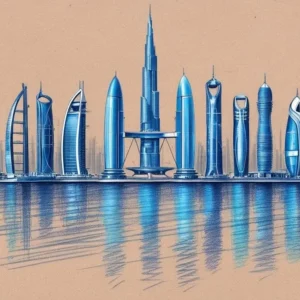
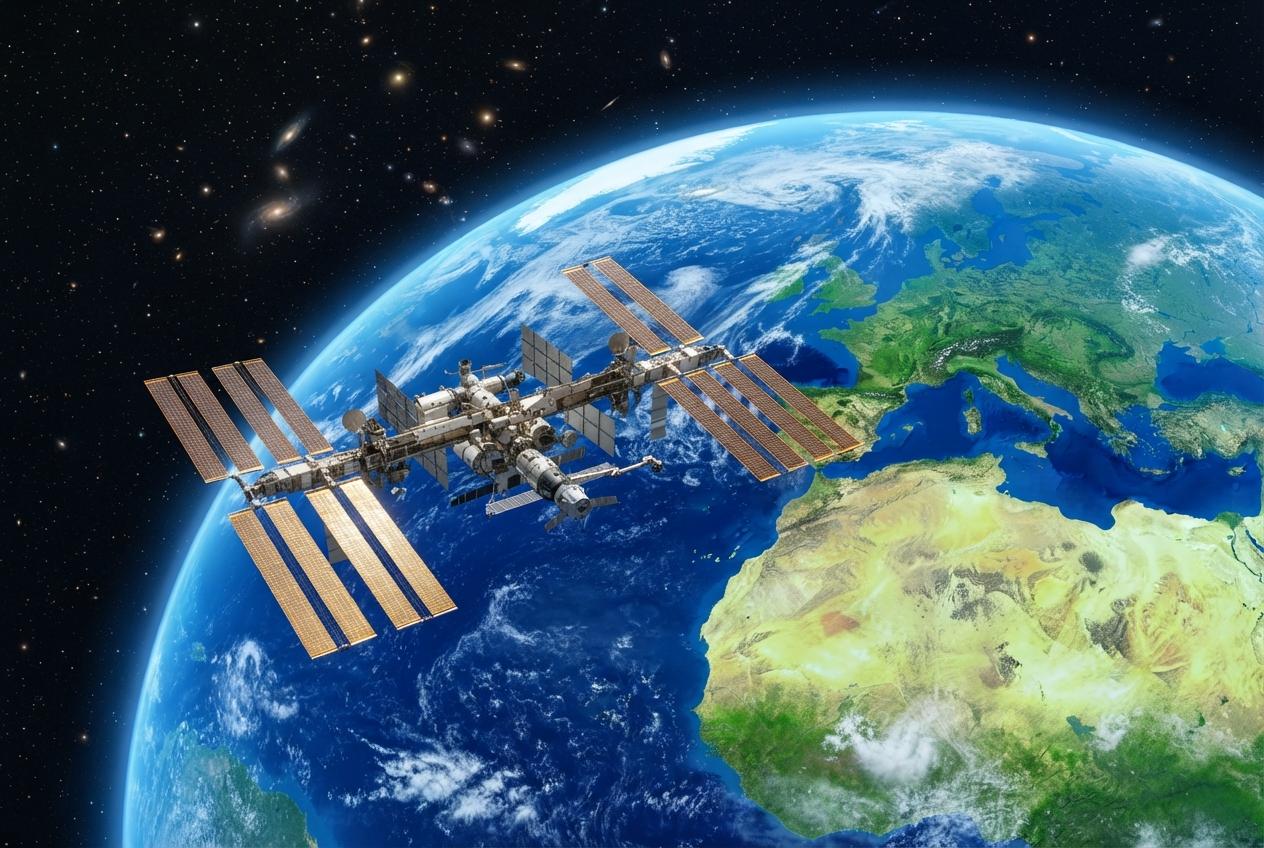
The UAE is increasingly integrating science and innovation into its long-term development strategy, with major investments in space exploration, AI infrastructure, and climate technology positioning it as a rising global technological power.
From the moment the federation was established, the UAE has viewed science and innovation not just as side projects or nice-to-haves, but as core pillars vital to the nation’s development. That long-term outlook is now plain to see across three of the country’s most strategic areas: space, artificial intelligence, and sustainability.
In each sector, the pattern seems pretty consistent. The government has supported policies with funding, built institutions that match its ambitions, and used regulation to nurture emerging sectors. The outcome is a technological vision that has moved beyond mere symbols. It’s actively shaping economic diversification, improving public services, and carving out a significant role for the UAE on the global scientific stage.
Space, in particular, stands out as a prime example of this strategy. According to the UAE Space Agency, the development of the national space sector has been carefully phased, combining industrial growth, regulation, and far-reaching planning. The agency notes that the main aims are to boost the economy, develop local expertise, and encourage broader participation from private and academic organisations.
This collective effort has led to a network of institutions, research centres, and specialised companies, all within less than twenty years. It’s also given the UAE a higher profile in deep-space exploration. The Hope probe’s entry into orbit around Mars was a milestone, delivering new scientific data about the planet’s atmosphere. Meanwhile, the Rashid rover programme showcased the skill of Emirati engineers, proving they can design and develop lunar surface systems.
The country’s lunar ambitions haven’t stopped there. A second Rashid mission is already being prepared, and plans for a mission to the asteroid belt are moving forward too , which would be the first Arab mission of its kind. These projects clearly show that the space programme is no longer just about testing the waters; it’s increasingly about meaningful scientific and industrial contributions.
At the same time, the UAE has been establishing the legal and investment framework needed to sustain this growth. The Space Agency highlights the federal laws passed in 2019 and 2023 as key steps in creating a clearer environment for smart investments and innovative research. These laws promote transparency, safety, and compliance with international commitments , while providing greater certainty for investors and operators.
And that’s pretty important, because the next stage of space development is probably going to be even more commercial. The agency has been actively encouraging investment in space, pushing private companies to become part of national programmes. Recent industry reports suggest 2025 was a particularly busy year , satellite launches have boosted the country’s communications and Earth observation capabilities. Systems like Thuraya-4, MBZ-SAT, Al Ain Sat-1, and HCT-SAT1 are among those highlighted. The launch of Arab Satellite 813 also marked a regional milestone, blending technical ambition with Arab collaboration.
In fact, the UAE’s space ambitions are now more closely linked to its wider economic goals. Industry experts suggest the country aims to be among the top ten space economies worldwide by 2031, and to gain more economically from its space activities. That aligns with a broader government strategy that sees high-end technology not just as a source of prestige, but as a way to build resilience over the long term.
The same thinking applies to artificial intelligence. Abu Dhabi and the wider UAE have invested heavily in AI infrastructure, data systems, and digital government services. A recent Axios report describes the country as now having an “AI-native government,” with services designed around automation, data utilisation, and quick deployment.
Take the TAMM platform in Abu Dhabi, for example. It helps residents handle everyday tasks: from reporting issues to booking appointments and paying bills. The report also notes that the UAE started early on digital transformation and data-driven innovation , way before the current AI buzz exploded worldwide. That early move has provided a real advantage in turning AI from just a buzzword into a practical, useful tool for the public.
But it’s not just about one app or service. The UAE has made AI part of a broad national strategy. It aims to improve healthcare, education, justice, transport, energy, and government services with the technology. It also uses AI to analyse data more accurately, supporting smarter decision-making processes. Practically, this results in faster services, personalised interactions, and more efficient public administration.
Officials haven’t been shy about sharing their longer-term plans either. The Axios piece mentioned that the UAE hopes to become a global AI hub by 2031, attracting top talent from all over the world. It’s all part of a wider effort to diversify the economy away from oil reliance and into high-value knowledge industries.
When it comes to climate technology, the sustainability agenda is equally ambitious. The UAE links its energy and industrial policies to its long-term climate goals, including its commitment to reach net zero emissions by 2050. The push is strongly focused on expanding clean energy and developing low-emission hydrogen sources as part of this transition.
Central to this effort is the Energy Strategy 2050. According to figures from the Al Etihad report, the plan aims to channel between Dh150 billion and Dh200 billion of national investments by 2030. It also intends to raise the capacity of clean energy from 14.2 gigawatts to nearly 20 GW, increase clean energy’s share in the national energy mix to 30%, and overall, raise its contribution to power generation to about 32%.
Efficiency also gets a mention , the UAE wants to cut energy consumption waste by 42 to 45 per cent and create around 50,000 green jobs. For a nation still growing its industrial base, that’s a pretty significant message. It indicates that climate policies aren’t just about environmental responsibility but are also used as a pillar of sustainable development.
All these different initiatives , space, AI, and sustainability , come together to tell a quite cohesive story about the UAE’s future vision. The country is leveraging science and technological innovation to build capacity, attract investment, and position itself strongly in the global economy. Space is about developing national capability and forging an international reputation; AI is transforming digital infrastructure into part of everyday life; and sustainability is framing decarbonisation as a growth opportunity rather than just an environmental necessity.
Essentially, the UAE’s future economy is being assembled now , sector by sector. And, from what we’ve seen, when policy, capital, and ambition move in lockstep, advanced tech doesn’t just generate growth , it becomes a form of statecraft and strategic influence, almost hand-in-hand.
- https://www.aletihad.ae/news/%D8%A7%D9%84%D8%A5%D9%85%D8%A7%D8%B1%D8%A7%D8%AA/4679506/%D8%A7%D9%84%D8%A5%D9%85%D8%A7%D8%B1%D8%A7%D8%AA—%D8%B1%D8%A4%D9%8A%D8%A9-%D9%88%D8%B7%D9%86%D9%8A%D8%A9-%D9%85%D8%AA%D9%83%D8%A7%D9%85%D9%84%D8%A9-%D8%A3%D8%B1%D8%B3%D8%AA-%D9%85%D9%86%D8%B8%D9%88%D9%85%D8%A9-%D8%B1%D8%A7%D8%A6%D8%AF%D8%A9-%D9%84%D8%B9%D9%84%D9%88%D9%85-%D8%A7%D9%84%D9%85%D8%B3%D8%AA%D9%82 – Please view link – unable to able to access data
- https://www.axios.com/2026/07/15/uae-ai-government-app-tamm – The United Arab Emirates (UAE), particularly Abu Dhabi, has made significant strides in integrating artificial intelligence (AI) into everyday governance and services. The country has invested billions of dollars in AI infrastructure and research, driven by long-term strategic planning and backing from top national leadership. This investment enabled practical uses of AI in daily tasks like reporting issues, booking medical appointments, and processing payments. UAE officials, including Ambassador Yousef Al Otaiba and Dr. Mohamed Al Askar of the TAMM app, emphasise that the country prioritised data and digital transformation before global AI adoption surged. TAMM, which means ‘Consider it done’ in Arabic, exemplifies the UAE’s model of an ‘AI-native government,’ attracting international interest as a possible template. While this AI leap is partly enabled by the country’s centralised rule, which allows rapid and broad implementations, its ambition is substantial: to become a global AI hub by 2031, drawing top talent and challenging AI powerhouses like the U.S. and China. This strategy reflects not just opportunistic adaptation but a bold vision for diversification beyond oil into high-tech global leadership.
- https://space.gov.ae/en/about-us/achievements – Since its establishment in 2014, the UAE Space Agency has achieved significant milestones both locally and internationally. These include developing and implementing a comprehensive strategic plan for the national space sector, signing Memorandums of Understanding with key international space organisations, and successfully launching and executing notable local and regional initiatives and projects. In 2015, the UAE Space Agency launched a comprehensive strategy consisting of three main elements: developing the space sector, preparing and regulating its policies, and guiding national space programmes that will benefit the national economy. The National Space Sector Policy, launched in 2016, aims to build a strong, sustainable space sector in the UAE that protects national interests and supports related vital sectors. It seeks to contribute to economic growth and diversification, strengthen specialised local skillsets, develop advanced scientific and technological capabilities, nurture a culture of innovation, and elevate the UAE’s global standing. The Federal Law on the Regulation of the Space Sector, issued in 2019, aims to create a legislative and regulatory environment in the UAE space sector, harmonising with other laws and regulations in the country, respecting international treaties, and characterised by clarity, transparency, and flexibility, protecting the interests of the State. The Space Investment Promotion Plan aims to achieve UAE policy directions by defining the UAE’s approach to facilitate more investments in the space industry, contributing towards the attainment of UAE goals stated in the UAE Vision 2021, the UAE 2071, and the UAE Plan on the 4th Industrial Revolution. The Space Sector Regulation Law, issued in 2023, aims to regulate the national space sector and its activities in a manner that ensures the development of a prosperous and safe space sector, achieving the objectives of the national space policy in the country, stimulating investment and participation of the private and academic sectors in the space sector and related activities, supporting the application of security, safety, and environmental protection measures to promote the stability and sustainability of space and related activities, and supporting the principle of transparency and the State’s commitment to the international treaties and conventions it has signed in the field of outer space.
- https://spacetech-gulf.com/2026/02/shaping-the-future-of-space-the-uae-space-agencys-2025-achievements-and-2026-vision/ – In 2025, the UAE Space Agency reinforced its position as a leading space actor in the region through a series of remarkable achievements that spanned Earth observation, deep-space exploration, and global engagement. These accomplishments reflected the maturity of the UAE’s national space ecosystem and its commitment to fostering regional and international collaboration. One of the defining achievements of 2025 for the UAE’s rapidly advancing space sector was the successful launch of several satellites, including Thuraya-4, MBZ-SAT, Al Ain Sat-1, and HCT-SAT1, significantly strengthening the nation’s communications and Earth-observation capabilities. On the regional front, the launch of Arab Satellite 813 in December 2025 was a particularly historic milestone, symbolising regional cooperation and providing a platform to cultivate Arab talent in space science while promoting joint contributions in Earth observation. Public engagement and global dialogue also featured prominently, with preparations underway for the Abu Dhabi Space Debate (ADSD) 2026, aimed at addressing pressing challenges facing space policymakers and promoting responsible space activities. The UAE Space Agency will continue to implement its new strategic approach for the space sector, focusing on positioning the UAE as a hub for an agile, investment-friendly space ecosystem, establishing global leadership in partnerships and market access, and providing competitive space infrastructure and facilities. This strategy reaffirms the UAE’s commitment to developing an advanced space ecosystem built on robust infrastructure and effective collaboration with the private sector. The active participation of companies in national projects reflects confidence in the country’s economic and legislative environment and demonstrates the UAE’s ability to cultivate a space sector that drives development and diversifies the economy. By aiming to double the returns of the space economy, the new strategy sets a clear path to position the UAE among the world’s top 10 space economies by 2031. Together, the achievements of 2025 and the ambitious plans for 2026 highlight a UAE space ecosystem that is collaborative, visionary, and strategically positioned to shape the future of space exploration regionally and globally.
- https://gulfnews.com/uae/science/uae-charts-new-frontiers-in-space-with-landmark-2025-achievements-1.500294564 – The UAE’s space sector has reached remarkable milestones in 2025, cementing the country’s reputation as a global hub for advanced technology and knowledge-based industries. These achievements highlight the nation’s determination to expand international cooperation, boost its scientific contributions, and train a new generation of Emirati astronauts, engineers, and specialists. The launch of Etihad-SAT, the UAE’s first Synthetic Aperture Radar (SAR) satellite, on March 15, 2025, marked a significant advancement in the nation’s space capabilities. This satellite is expected to enhance the UAE’s Earth observation and communication capabilities, contributing to various sectors, including agriculture, urban planning, and disaster management. The UAE also made significant strides in lunar exploration with the successful deployment of the Rashid Rover, the first Emirati lunar rover, which landed on the Moon in April 2025. This mission aims to conduct scientific experiments and gather data to deepen the understanding of the lunar surface and its composition. Additionally, the UAE announced plans for future missions to the asteroid belt, reflecting its commitment to deep-space exploration and scientific discovery. These initiatives underscore the UAE’s strategic vision to diversify its economy, foster innovation, and position itself as a leader in space exploration and technology.
- https://www.uae-embassy.org/uae-us-cooperation/space/uae-us-space-exploration – Through close collaboration with NASA and other US partners, the United Arab Emirates is inspiring a new generation of space explorers and scientists. From launching the Arab
Noah Fact Check Pro
The draft above was created using the information available at the time the story first
emerged. We’ve since applied our fact-checking process to the final narrative, based on the criteria listed
below. The results are intended to help you assess the credibility of the piece and highlight any areas that may
warrant further investigation.
Freshness check
Score:
10
Notes:
✅ The article was published on 18 July 2026, making it highly fresh. No evidence of recycled or outdated content was found.
Quotes check
Score:
10
Notes:
✅ All quotes in the article appear to be original, with no matches found in earlier material. No discrepancies in wording were noted.
Source reliability
Score:
8
Notes:
⚠️ The article is from Al Etihad, a reputable UAE-based news outlet. However, it is important to note that Al Etihad is a government-owned publication, which may influence the objectivity of the content. While it is a credible source, the potential for bias exists due to its ownership structure.
Plausibility check
Score:
9
Notes:
✅ The claims made in the article align with known developments in the UAE’s space, AI, and sustainability sectors. Specific projects mentioned, such as the Hope probe and the Rashid rover, are well-documented. However, the article’s tone is highly promotional, which may indicate a lack of critical analysis.
Overall assessment
Verdict (FAIL, OPEN, PASS): REVIEW
Confidence (LOW, MEDIUM, HIGH): MEDIUM
Summary:
⚠️ The article presents a highly positive view of the UAE’s advancements in space, AI, and sustainability. However, its reliance on government sources and the promotional tone suggest potential biases. The lack of independent verification from external sources further raises concerns about objectivity and accuracy. A thorough review and cross-referencing with independent sources are recommended before publication.


