





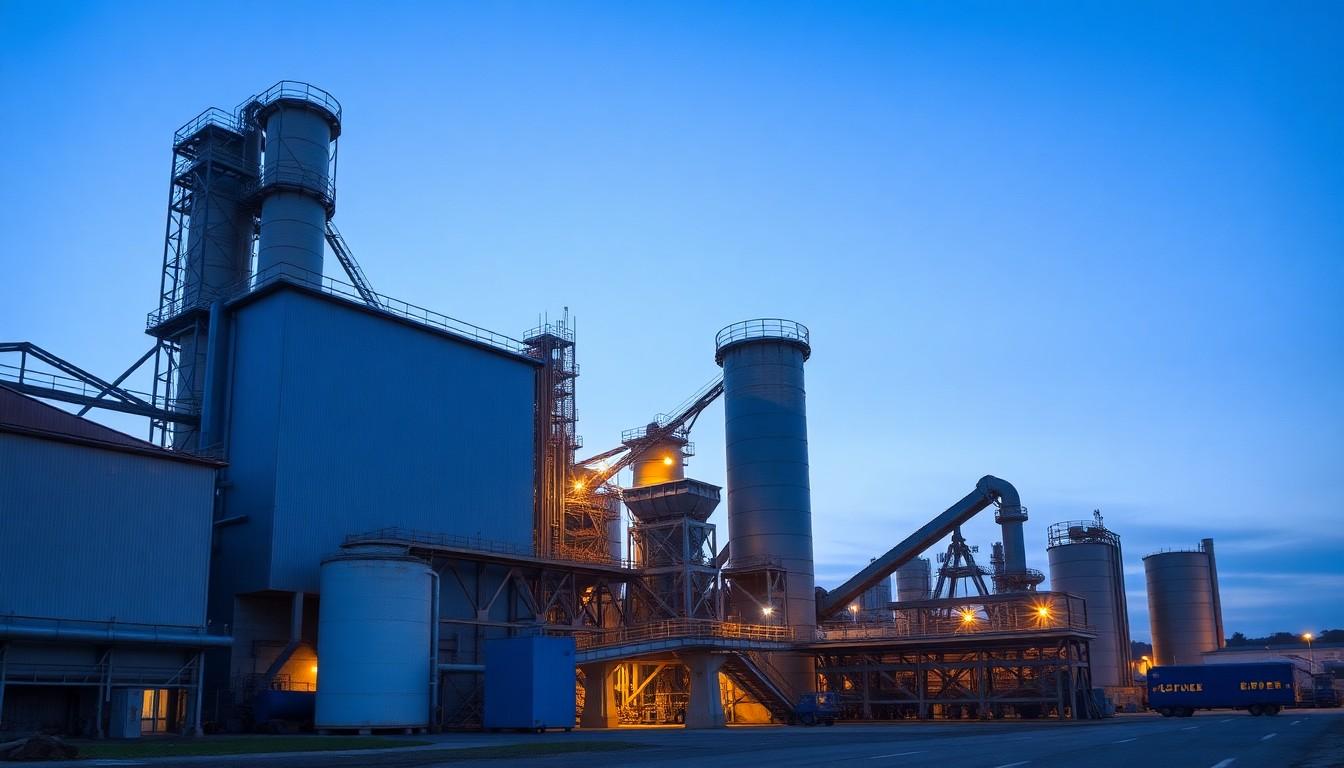
The UAE cement market is set for robust growth over the next decade, driven by infrastructure projects and urban expansion, but increasingly shaped by sustainability and technological innovation as producers seek to balance demand with environmental targets.
The UAE cement market is looking set for ongoing growth over the next ten years, but honestly, the story is increasingly about more than just increasing quantities. The landscape is now heavily influenced by infrastructure investments, housing needs, sustainability rules, and the push for producers to modernise their operations.
Based on a market report supplied by Vocal Media and research referenced by IMARC Group, the UAE’s market was valued at around USD 2.07 billion in 2025 and is projected to climb to approximately USD 3.25 billion by 2034. The forecasts differ somewhat on how quick this growth will be – one anticipates a sharp double-digit compound annual growth rate, while the other suggests a more modest uptick. That difference reminds us that models predicting the market can vary, especially in a sector so heavily affected by building cycles, energy prices, and export flows.
What’s clear, though, is that demand remains robust, supported by a large and active pipeline of projects. IMARC notes that growth is driven by transport, real estate, and utilities projects, alongside urban sprawl across the Emirates. Residential construction, for its part, is also gaining momentum , population growth and expatriate settlement are backing high-rise developments especially in free zones and newer suburbs.
Looking at the wider GCC picture, it all reinforces that demand is still strong. Ken Research reports that the region’s active project pipeline hit USD 1.73 trillion in 2025, with the UAE accounting for nearly half of project awards in the second quarter alone. This kind of activity explains why the UAE remains both a major consumer of cement and clinker and a strategic hub for production.
That said, the sheer size of the industry also comes with challenges. Ken Research indicates that the UAE operates more than 20 integrated and grinding units, producing over 14 million tonnes of cement annually, along with nearly 24 million tonnes of clinker. But, at the same time, overcapacity, narrowing margins, and environmental pressures are starting to reshape the landscape. Producers face high fixed costs, volatile coal prices, increasing regulation, and targets for carbon reduction.
This ongoing tension , between rising demand and the need for efficiency , is central to the sector’s outlook. On one hand, there are large-scale infrastructure projects, logistics hubs, industrial zones, and tourism developments. On the other, issues such as utilities, energy costs, and emissions rules are compelling manufacturers to rethink their strategies. In reality, that means less focus on increasing capacity and more emphasis on boosting productivity, cutting energy consumption, and creating differentiated products.
Sustainability is no longer just a marketing spiel; it’s become a commercial necessity. IMARC highlights that developers are increasingly using low-carbon cement blends and supplementary cementitious materials to meet green building standards like Estidama and Al Sa’fat. The wider building materials market is following suit, with IMARC estimating that the UAE’s market for these products will grow from USD 7.1 billion in 2025 to USD 11.5 billion by 2034, mainly driven by demand for greener materials and technological upgrades.
Cement producers are adjusting their operations accordingly. The Vocal Media report points out expanding use of alternative fuels, energy-efficient methods, and carbon-reduction tech. Automation, AI-powered monitoring, and advanced process control are also gaining ground , all aimed at improving quality and lowering costs. For a sector that’s energy-intensive and operates with tight margins, these kinds of investments are increasingly strategic.
Plus, there’s a regional angle too. Ken Research observes that the UAE’s logistics advantage is solidifying its position as a supplier for neighbouring markets, especially South Asia and East Africa. That export role becomes even more significant because domestic demand alone probably won’t soak up all the production, especially if capacity stays high. For some producers, exports help balance competition locally and keep plants running at full tilt.
The outlook remains positive overall, but the real winners are likely to be those who adapt quickest. As construction shifts from massive projects to residential, industrial estates, and mixed-use developments, customers will probably choose suppliers that can deliver consistent, lower-carbon products and reliable service. This means industry players will need to invest not just in kilns and grinding lines, but also in digital systems, smarter supply chains, and innovative products.
For the UAE, cement remains a foundational part of the country’s growth story. But as we move into the next phase, it won’t just be about scale. Instead, success will depend on how well producers align with the wider shift towards smart, resource-efficient, and lower-emission development across the Emirates , a transition that’s already underway.
- https://vocal.media/futurism/uae-cement-market-report-2026-2034-infrastructure-development-trends-rising – Please view link – unable to able to access data
- https://www.imarcgroup.com/uae-cement-market – The UAE cement market was valued at USD 2,068.1 million in 2025 and is projected to reach USD 3,249.3 million by 2034, exhibiting a compound annual growth rate (CAGR) of 4.99% during 2026–2034. This growth is driven by large-scale infrastructure and urban expansion initiatives requiring structural-grade cement in transport, real estate, and utilities. Additionally, the surge in residential construction, driven by population growth and rising expatriate settlements, is bolstering high-rise developments across free zones and new suburbs. Real estate developers are increasingly incorporating sustainable construction practices, including low-carbon cement blends and supplementary cementitious materials, in compliance with Estidama and Al Sa’fat green building systems.
- https://www.imarcgroup.com/gcc-cement-market – The GCC cement market size reached 98.9 million tons in 2025. Looking forward, IMARC Group expects the market to reach 148.3 million tons by 2034, exhibiting a growth rate (CAGR) of 4.47% during 2026–2034. The robust economic growth, increasing urbanization, governmental investments in mega-projects, sustainable construction practices, rising population, and the focus on affordable housing solutions are among the key factors driving the market growth.
- https://www.imarcgroup.com/uae-building-materials-market – The UAE building materials market size reached USD 7.1 billion in 2025. Looking forward, IMARC Group expects the market to reach USD 11.5 billion by 2034, exhibiting a growth rate (CAGR) of 5.23% during 2026–2034. Rapid urbanization, infrastructure development, real estate growth, government initiatives like Expo 2020, and a booming construction sector are some of the factors contributing to the UAE building materials market share. Increased demand for sustainable materials, technological advancements in manufacturing, and rising investments in green buildings further support the market’s expansion.
- https://www.imarcgroup.com/uae-construction-market – The UAE construction market size was valued at USD 45,826.19 million in 2025 and is projected to reach USD 69,022.54 million by 2034, growing at a compound annual growth rate of 4.66% from 2026–2034. The UAE is one of the fastest-growing construction industries globally, due to government initiatives, the need for diversification of the economy, and the execution of transformational mega-projects. Such initiatives have again established the UAE as the leader in innovative, smart, and sustainable development projects in the entire Middle Eastern region through substantial public and private sector spending on residential, commercial, industrial, and other infrastructure projects.
- https://www.kenresearch.com/articles/gcc-cement-market-forecast-uae-logistics-advantage – Rising infrastructure investment across the Gulf Cooperation Council (GCC) is reshaping the regional cement landscape. As of 2025, the GCC’s active project pipeline is valued at USD 1.73 trillion, driving sustained demand for cement across priority sectors such as transport, logistics, housing, and industrial development. The regional cement market is expected to reach USD 8.57 billion by year-end, underpinned by large-scale, state-led construction programs. Within this context, the UAE has emerged as a key player, capturing 49.2% of all GCC project awards in Q2 2025 more than any other member state. This increase in project activity is reinforcing the UAE’s role as a strategic production and export hub for cement and clinker supply across the region.
- https://www.kenresearch.com/industry-reports/uae-cement-market – The UAE cement industry stands at a pivotal crossroads—a sector once driven by construction booms and state-led infrastructure, now facing a convergence of structural overcapacity, thinning profit margins, and mounting environmental pressures. With more than 20 integrated and grinding units spread across the Emirates, the country produces over 14 million tons of cement and nearly 24 million tons of clinker annually—a footprint that ranks among the most expansive in the Gulf Cooperation Council (GCC) region. However, scale alone is no longer a safeguard for success. Despite sustained regional infrastructure demand and robust export linkages to South Asia and East Africa, several UAE-based producers are grappling with diminishing returns. High fixed costs, fluctuating coal prices, regulatory overhauls, and carbon targets are forcing a strategic rethink across the industry.
Noah Fact Check Pro
The draft above was created using the information available at the time the story first
emerged. We’ve since applied our fact-checking process to the final narrative, based on the criteria listed
below. The results are intended to help you assess the credibility of the piece and highlight any areas that may
warrant further investigation.
Freshness check
Score:
5
Notes:
The article references a market report from Vocal Media and research by IMARC Group. The IMARC Group’s UAE Cement Market report was published in 2025, with projections up to 2034. ([imarcgroup.com](https://www.imarcgroup.com/uae-cement-market?utm_source=openai)) The Ken Research report on the UAE Cement Market Outlook to 2030 was published in July 2025. ([kenresearch.com](https://www.kenresearch.com/industry-reports/uae-cement-market?utm_source=openai)) The article appears to be based on these existing reports, suggesting limited originality.
Quotes check
Score:
4
Notes:
The article includes specific figures and projections, such as the UAE cement market being valued at USD 2.07 billion in 2025 and projected to reach USD 3.25 billion by 2034. These figures align with the IMARC Group’s report, which states the market size was USD 2,068.1 million in 2025, projected to reach USD 3,249.3 million by 2034. ([imarcgroup.com](https://www.imarcgroup.com/uae-cement-market?utm_source=openai)) The slight discrepancies in figures (e.g., 2.07 billion vs. 2,068.1 million) may be due to rounding or different data sources. However, the lack of direct attribution to these sources raises concerns about the originality and verification of the quotes.
Source reliability
Score:
6
Notes:
The article cites reports from Vocal Media and IMARC Group. IMARC Group is a known market research firm, but the article does not provide direct links or detailed information about these reports, making it difficult to assess their credibility fully. The reliance on a niche publication like Vocal Media, which may not be widely recognized, further raises questions about the source’s reliability.
Plausibility check
Score:
7
Notes:
The article discusses trends in the UAE cement market, including growth projections, infrastructure development, and sustainability efforts. These topics are consistent with industry trends and align with information from the IMARC Group’s report. ([imarcgroup.com](https://www.imarcgroup.com/uae-cement-market?utm_source=openai)) However, the lack of direct attribution to these sources and the reliance on a niche publication like Vocal Media raise concerns about the article’s credibility.
Overall assessment
Verdict (FAIL, OPEN, PASS): FAIL
Confidence (LOW, MEDIUM, HIGH): MEDIUM
Summary:
The article appears to be a summary of existing market research reports from IMARC Group and Ken Research, with limited originality. The lack of direct attribution to these sources and the reliance on a niche publication like Vocal Media raise concerns about the article’s credibility and the independence of its verification sources. The slight discrepancies in figures may be due to rounding or different data sources, but the overall lack of transparency and source verification is problematic.


